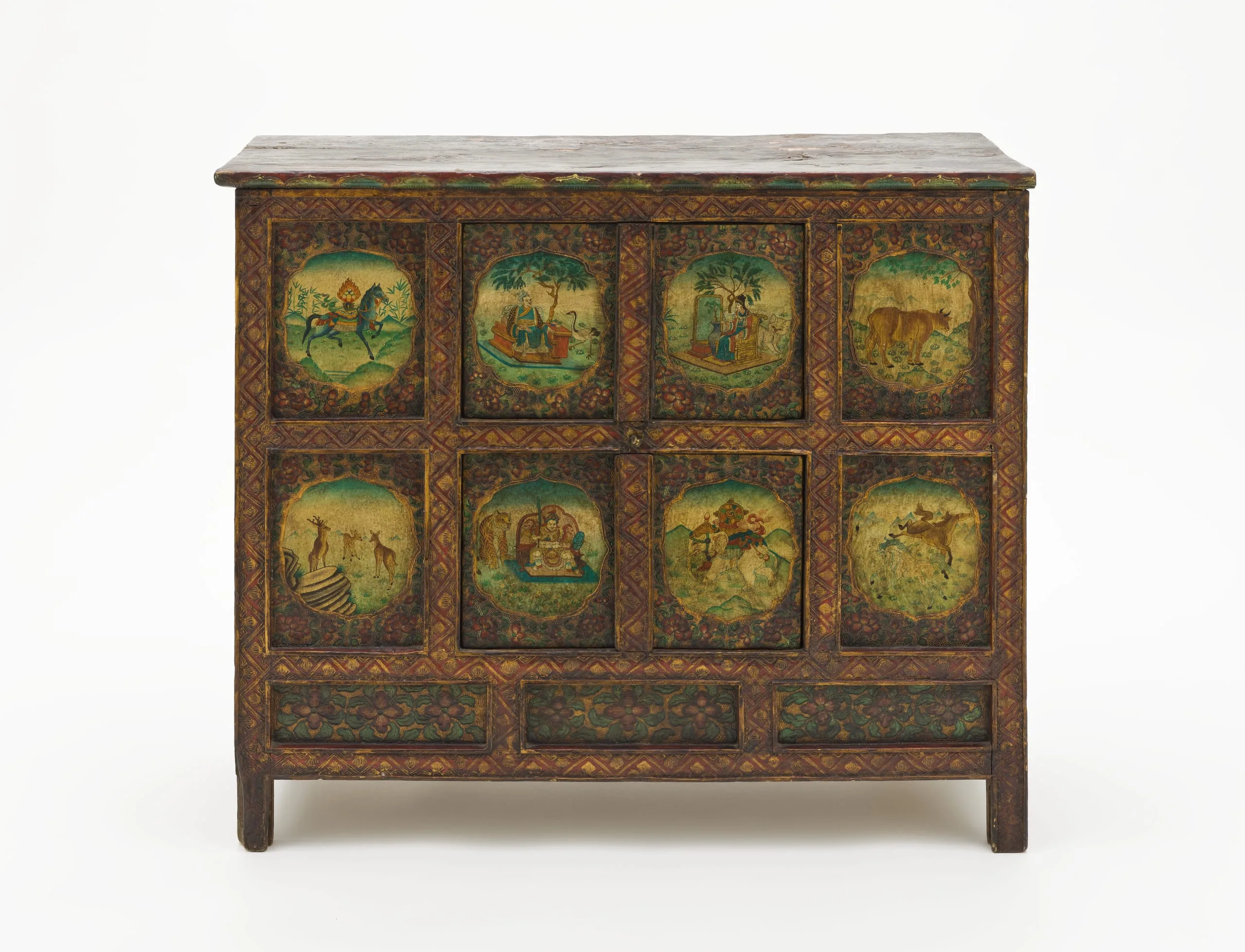
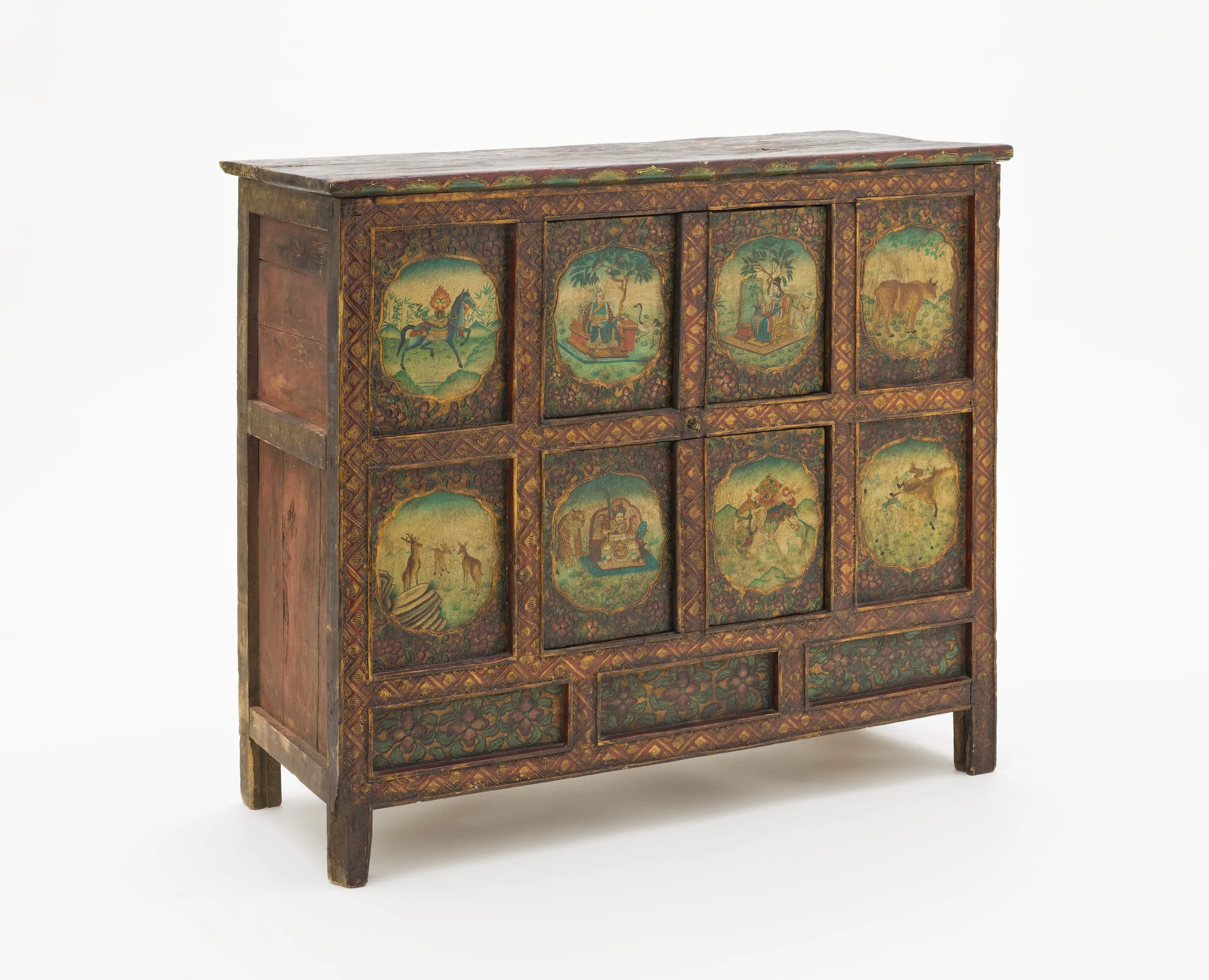
- Title
- Cabinet
- Date Made
- late 19th-20th century
- Medium
- Wood with mineral pigments, gilding, and gesso
- Dimensions
- 33 × 36 3/8 × 15 3/8 in.
- Accession Number
- M.2010.78.17
- Curatorial Notes
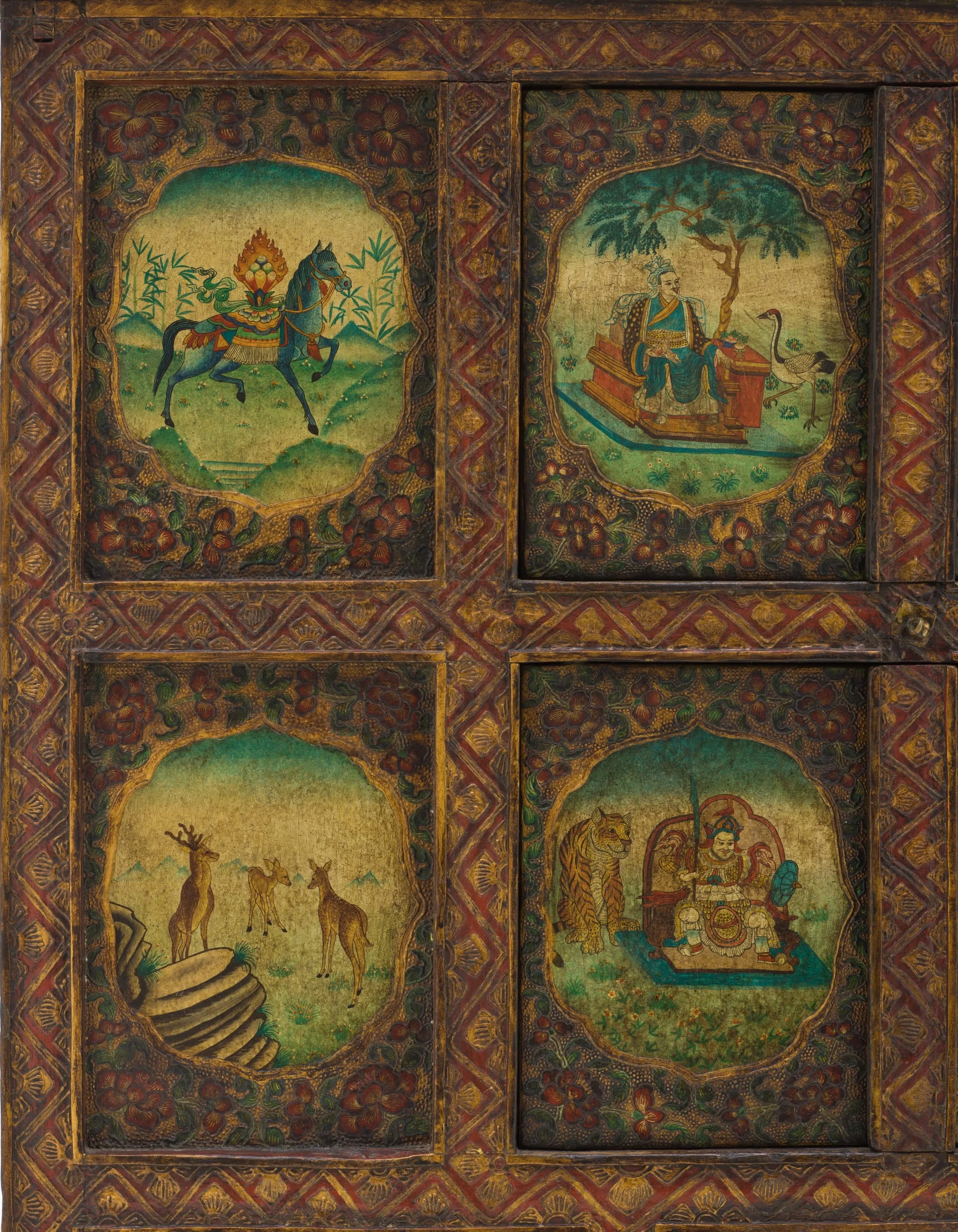
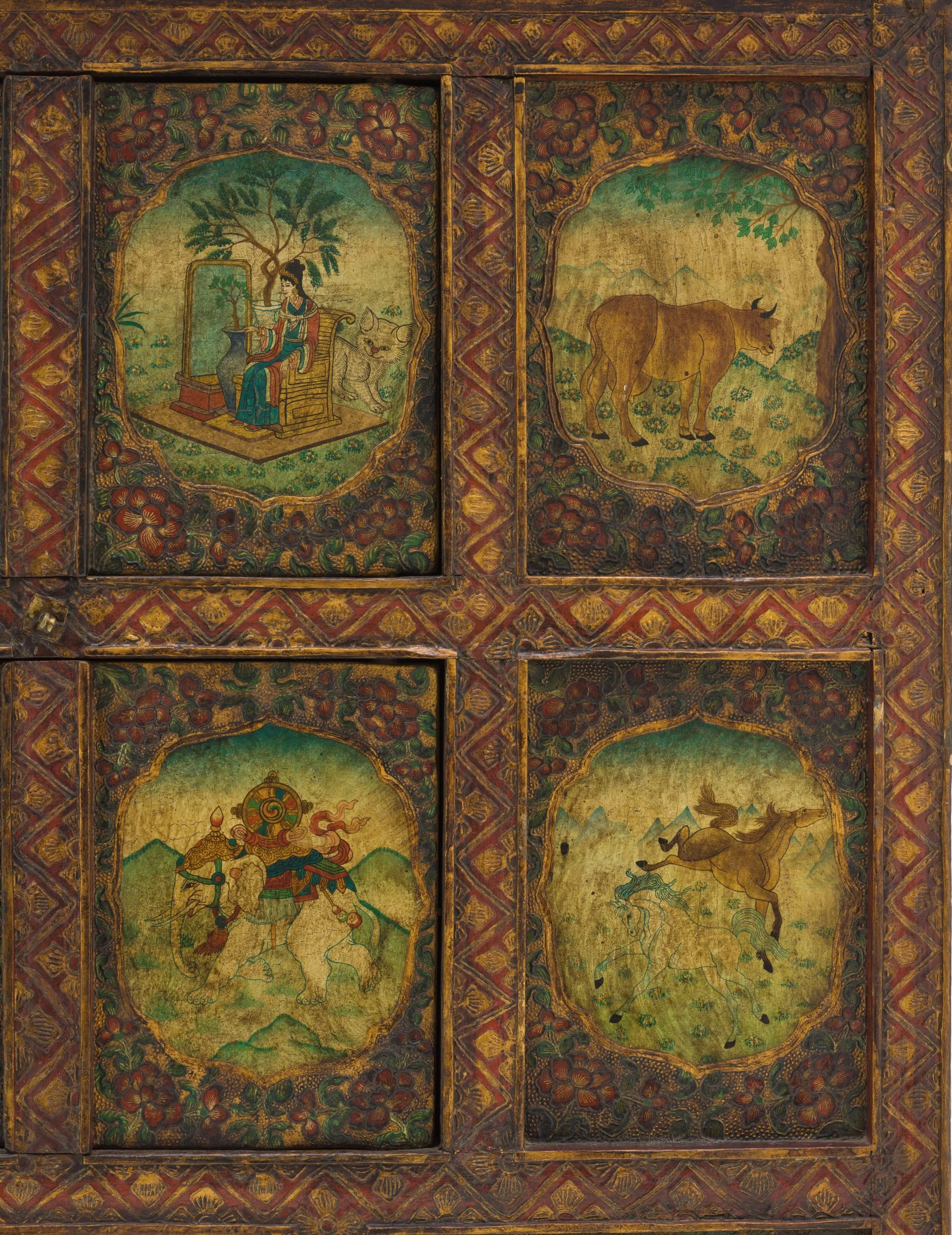
This cabinet is decorated with a Chinese-style aesthetic. It has two horizontal rows of figural scenes brilliantly painted in lobed cartouches surrounded by foliage on inset rectangular panels. The top row of panels from left to right has a horse with a flaming wish-fulfilling gem on its back; a seated Chinese monarch with a swan, probably Qin Shi Huang (259–210 BCE), the founder of the Qin Dynasty (221–206 BCE) and the first emperor of China; a seated Chinese queen in a garden with a kitten and potted tree, most likely the Empress Dowager Cixi (or Tzu Hsi), the powerful ruler of late Qing Dynasty (644–1912); and a female cow with a full udder, possibly the Spring Ox (Chun Niu) symbolic of agricultural fertility and diligence. The lower row of panels from left to right has a mountainscape with a family of three deer, generally believed to be symbolic of longevity, prosperity, and good fortune; Hu Ye, a Chinese guardian with a tiger symbol who protects temples, villages, and people (especially children) from evil; an elephant with a Buddhist Wheel of the Law (Dharmachakra) on its back; and mountainscape with a pair of wild horses symbolic of vitality and speed. One of the horses is white, emblematic of spiritual purity and a noble, free-spirited nature. Beneath the two figural rows is a row of three horizontal panels of lotuses with foliage. All three rows are bordered by a chevron pattern interspersed with half lotuses. The front edge of the topboard has large lotus petals in alternating blue-green and light green paint with gold outlines. The sides are unadorned. See also M.2010.78.18.