LACMA

ShopMembershipMyLACMATickets
LACMA
Los Angeles County Museum of Art
5905 Wilshire Blvd.
Los Angeles, CA 90036
info@lacma.org
(323) 857-6000
Sign up to receive emails
Subscribe
© Museum Associates 2025

Museum Hours

Monday

11 am–6 pm

Tuesday

11 am–6 pm

Wednesday

Closed

Thursday

11 am–6 pm

Friday

11 am–8 pm

Saturday

10 am–7 pm

Sunday

10 am–7 pm


  • About LACMA
  • Jobs
  • Building LACMA
  • Host An Event
  • Unframed
  • Press
  • FAQs
  • Log in to MyLACMA
  • Privacy Policy
© Museum Associates 2025
Collections

Unknown
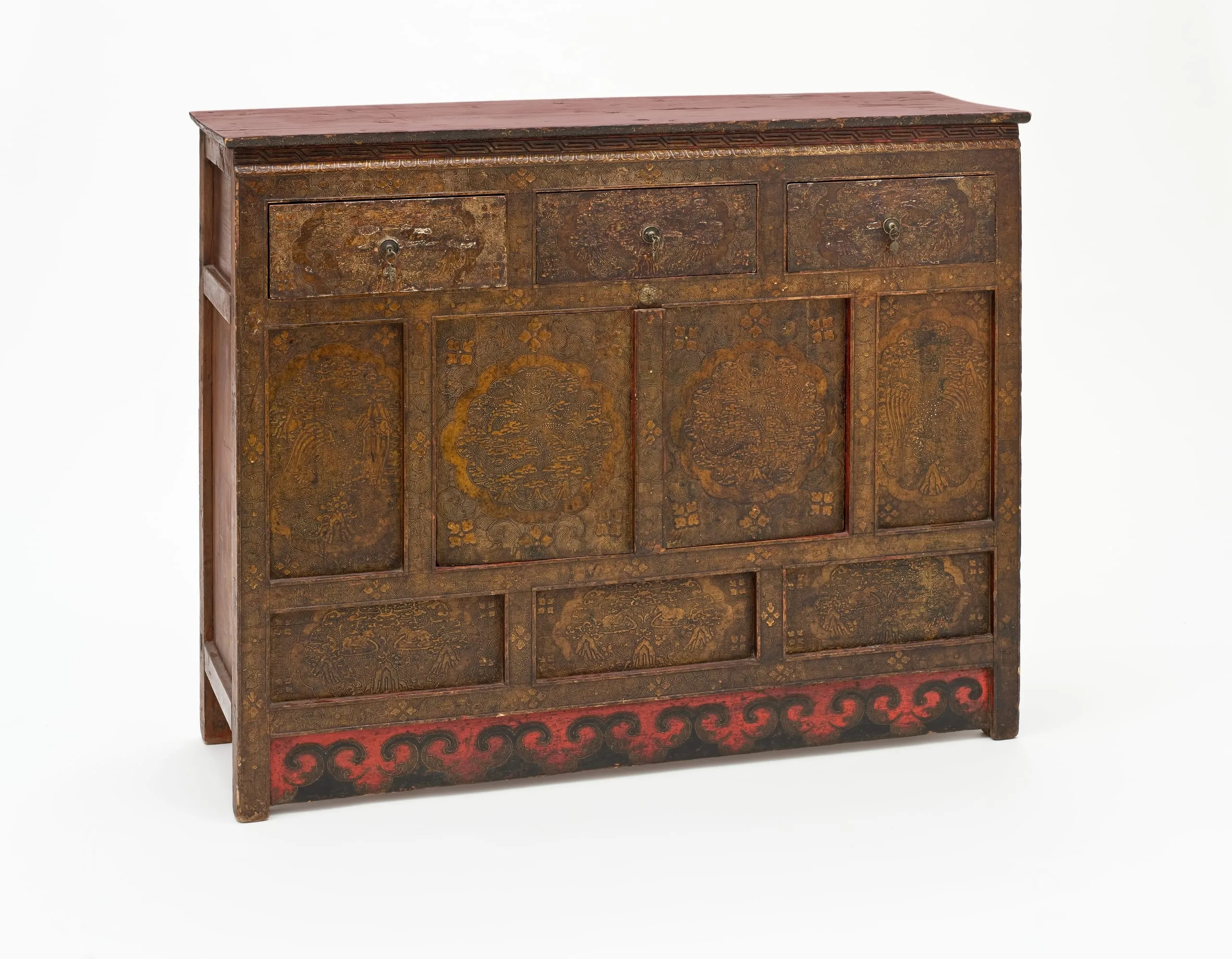
Cabinet with Dragons and Phoenixes19th century

Not on view
Painted wooden cabinet with three registers of decorated panels in worn gold and ochre tones, with a crimson scroll-motif apron at the base
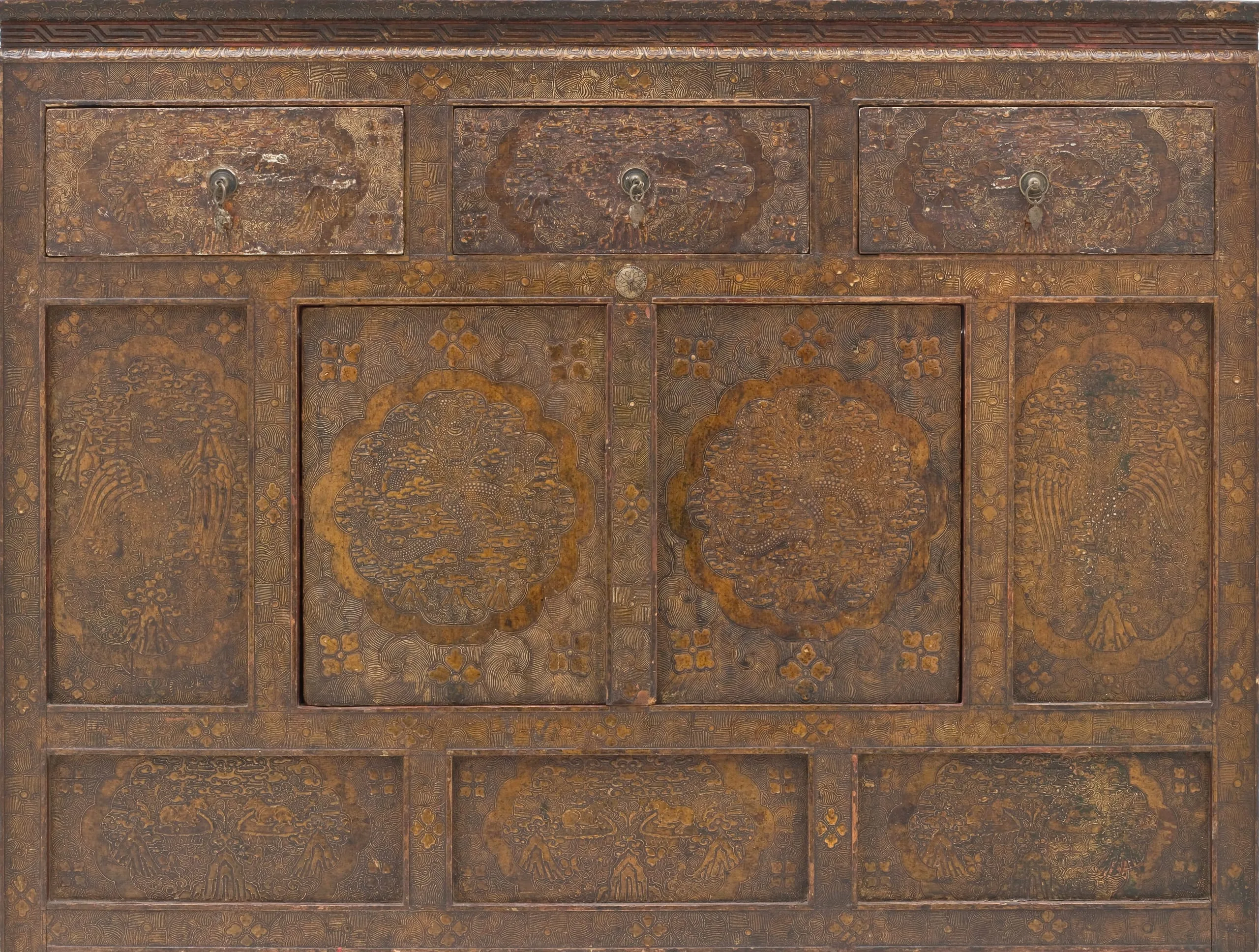
Painted wooden cabinet front with heavily worn gold and brown lacquer decoration; three small drawers across the top, central double doors flanked by side panels, all surfaces densely painted with floral medallions, birds, and botanical motifs in raised and gilded ornamental work.
Artist or Maker
Unknown
Title
Cabinet with Dragons and Phoenixes
Place Made
Tibet
Date Made
19th century
Medium
Wood with mineral pigments, gesso, and brass powder; brass fittings
Dimensions
41 1/2 × 49 1/2 × 15 1/2 in. (105.41 × 125.73 × 39.37 cm)
Credit Line
Gift of Dylan, Wendy, Emma and David Garland, through the 2010 Collectors Committee
Accession Number
M.2010.80.1
Classification
Furnishings
Collecting Area
South and Southeast Asian Art
Curatorial Notes

The front of this elaborate cabinet has a "Dutch gold" (ragdül) finish made of brass powder over finely detailed gesso (kyungbur) designs of a pair of dragons clutching precious jewels flanked by a pair of confronting phoenixes. The venerated creatures are portrayed in lobed cartouches in four vertical inset panels with a border of linear shell patterns and quatrefoils. Beneath them are three horizontal panels with confronting deer and a mountainous landscape. Under the plain topboard with scrolling lotus edge is a double border with a variant of the Greek key pattern over a row of lotus petals. The bottom border is a painted board with cloud forms that may be a replacement. See David Kamansky, ed., Wooden Wonders: Tibetan Furniture in Secular and Religious Life (Pasadena: Pacific Asia Museum and Chicago: Serindia Publications, 2004), p. 297, no. 118.