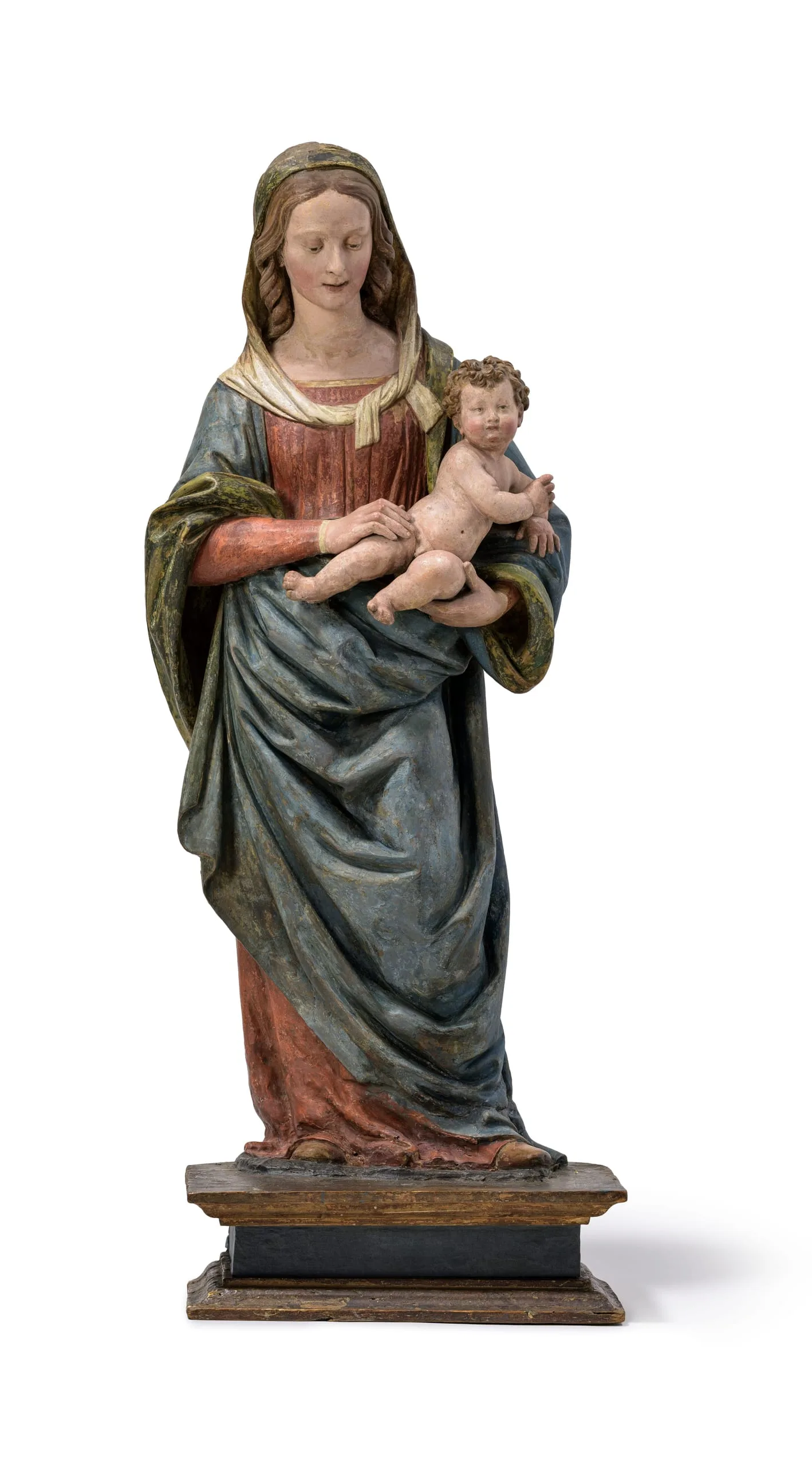
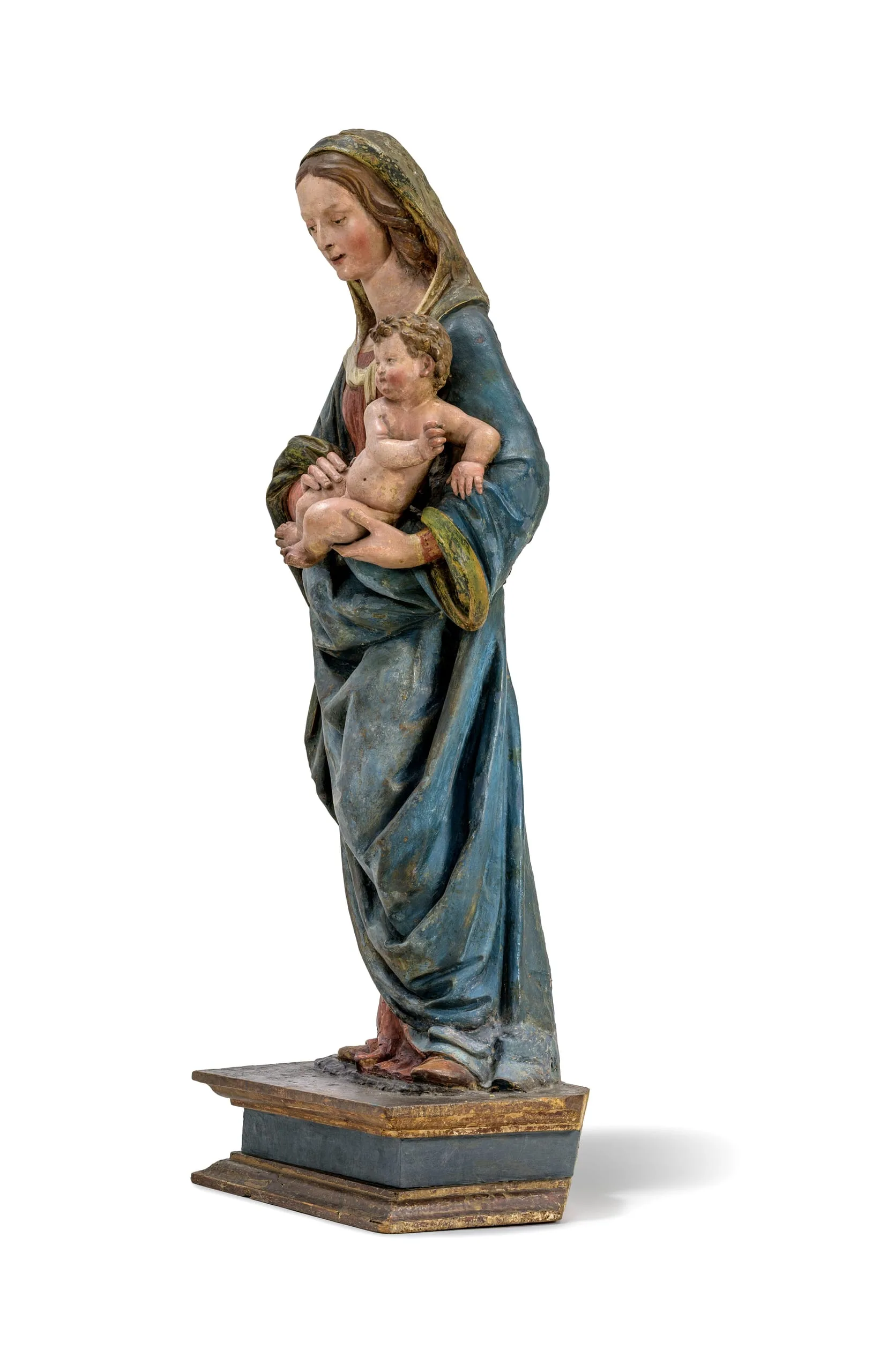
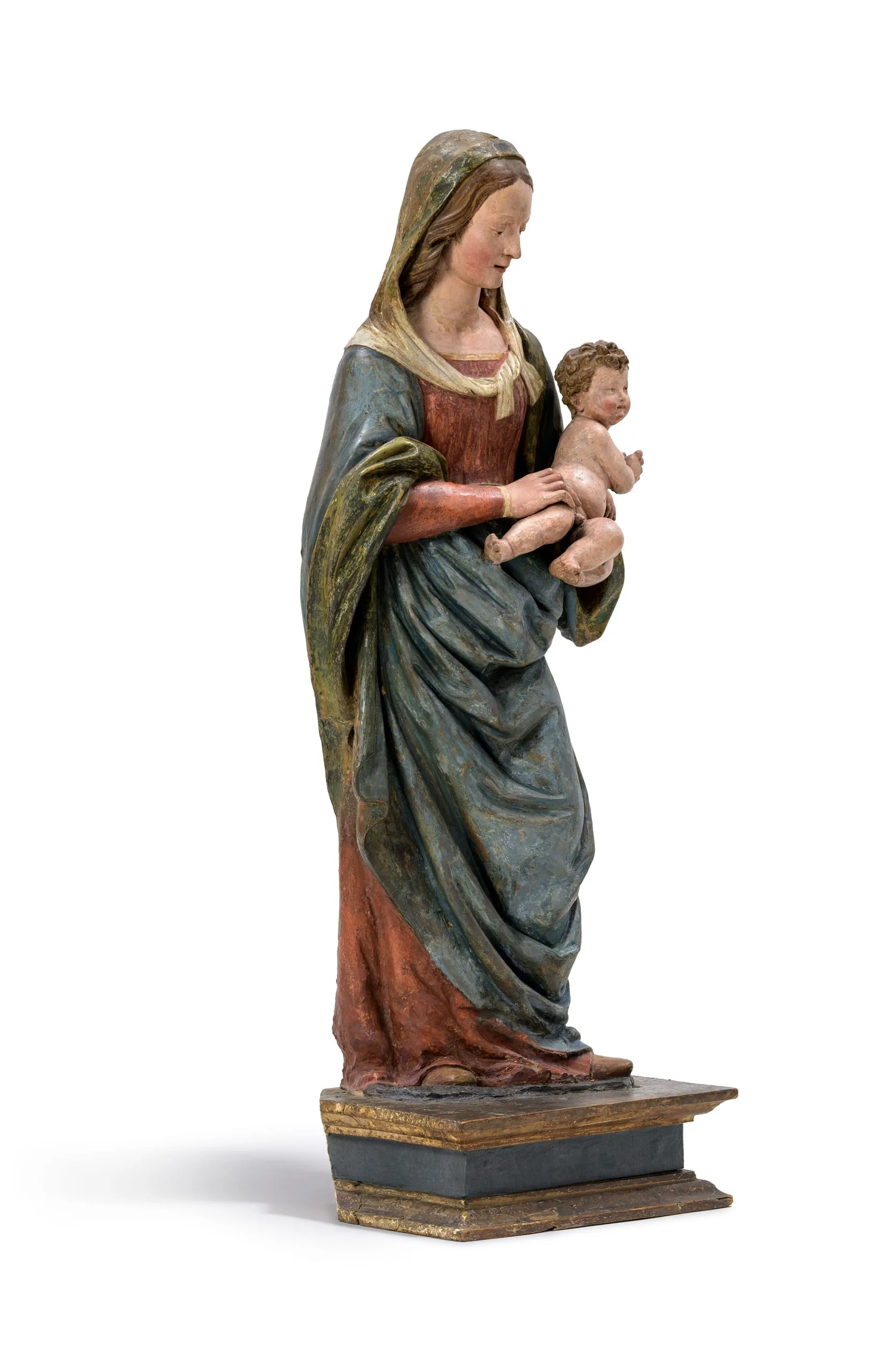
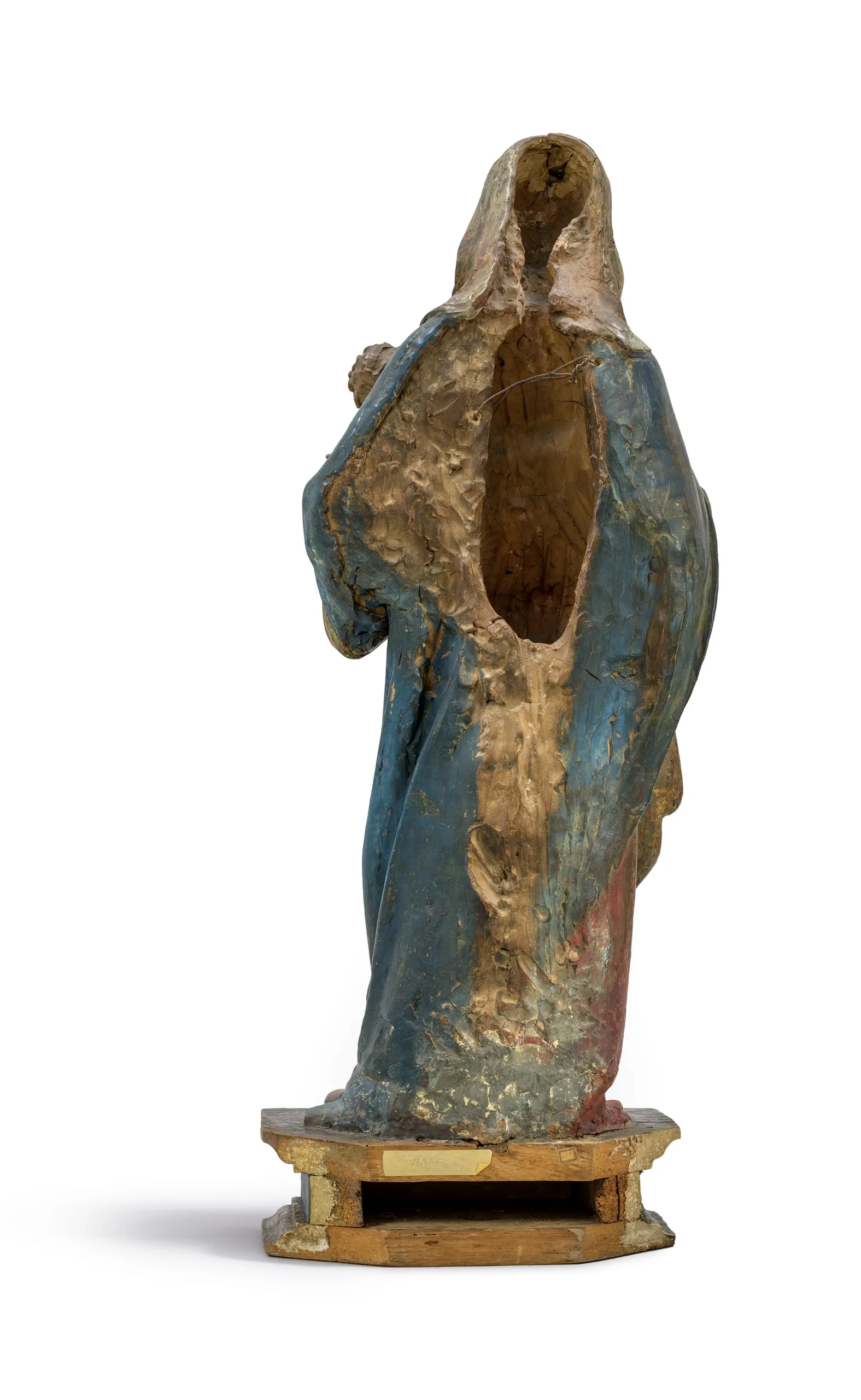
This terracotta sculpture, crafted by Agnolo di Polo, depicts the Madonna standing in contrapposto, gently cradling the twisting Christ Child in her arm. Her tender gaze, directed toward the infant, contrasts with the Child’s curious stare at the beholder. Adorned in a red tunic and draped in a blue cloak, the Madonna’s attire features palmette ornaments on her sleeve cuffs, reflecting the fashion of sixteenth-century Florence, where Agnolo was active.
Clay sculpture experienced a revival in fifteenth-century Florence, largely due to a renewed fascination with ancient Greek and Roman art and texts. The medium was commonly used in antiquity, and Florentine texts at this time reference ancient scholars’ appreciation of clay’s malleability in the modeling of detail. After firing, the clay blank was then often enhanced with painting and/or gilding. Terracotta would subsequently be used to adorn architectural facades, including medallions and friezes, by Florentine and Tuscan artists.
Terracotta’s revival coincided with the promotion of devotional images by the Dominican reformist Girolamo Savonarola (1452−1498) in public and private spaces in Florence. While marble and bronze were favored for larger public sculptures, the aristocracy and emerging merchant class sought smaller, more accessible devotional objects intended for private studies and chapels. Extant contracts attest to the range of Agnolo’s clientele, from the head cook of the Florentine Signoria to a follower of Savonarola himself, highlighting the sculptor’s significant reach and contribution to the religious facets of sixteenth-century Tuscany.
2024