LACMA

ShopMembershipMyLACMATickets
LACMA
Los Angeles County Museum of Art
5905 Wilshire Blvd.
Los Angeles, CA 90036
info@lacma.org
(323) 857-6000
Sign up to receive emails
Subscribe
© Museum Associates 2025

Museum Hours

Monday

11 am–6 pm

Tuesday

11 am–6 pm

Wednesday

Closed

Thursday

11 am–6 pm

Friday

11 am–8 pm

Saturday

10 am–7 pm

Sunday

10 am–7 pm


  • About LACMA
  • Jobs
  • Building LACMA
  • Host An Event
  • Unframed
  • Press
  • FAQs
  • Log in to MyLACMA
  • Privacy Policy
© Museum Associates 2025
Collections

Unknown
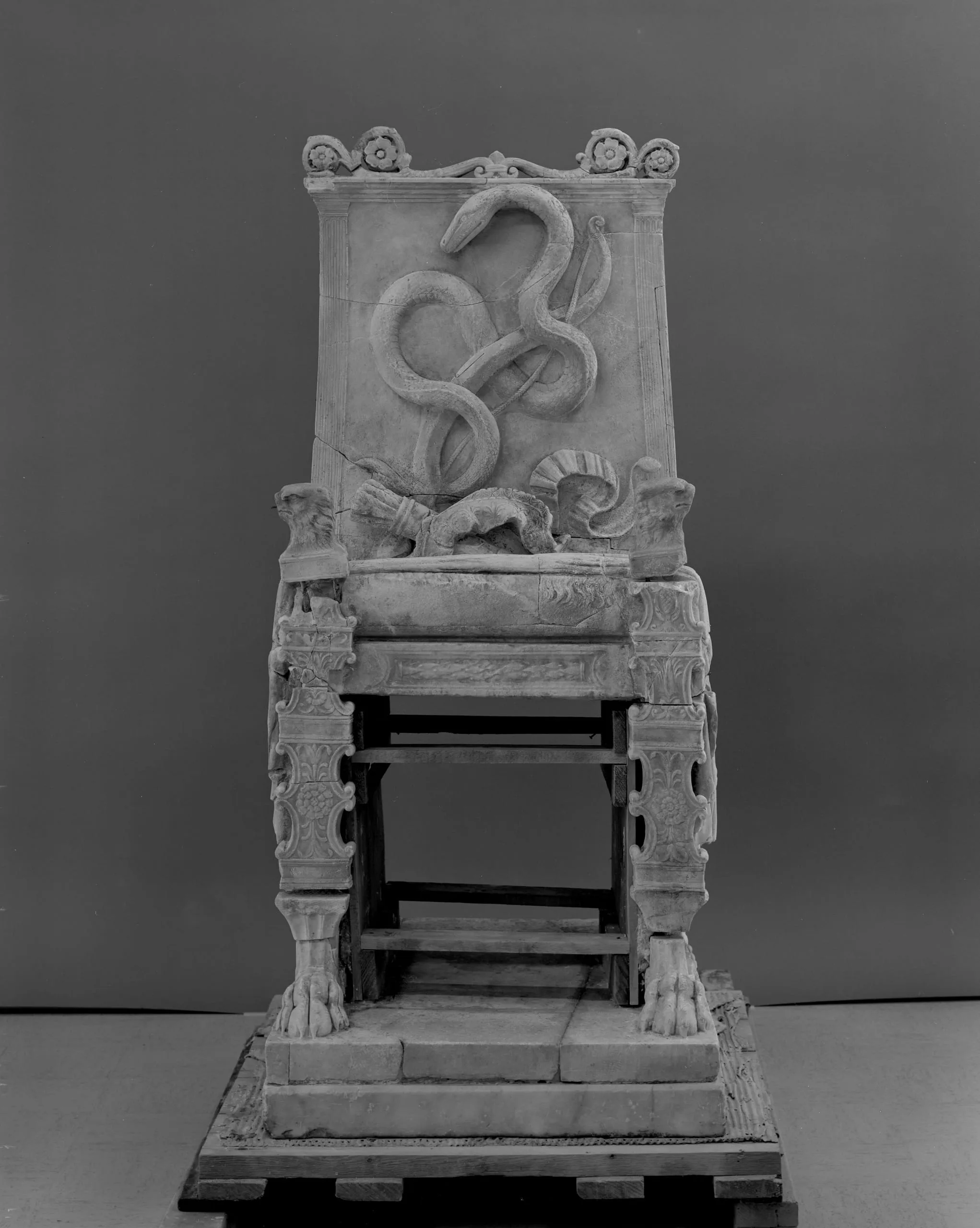
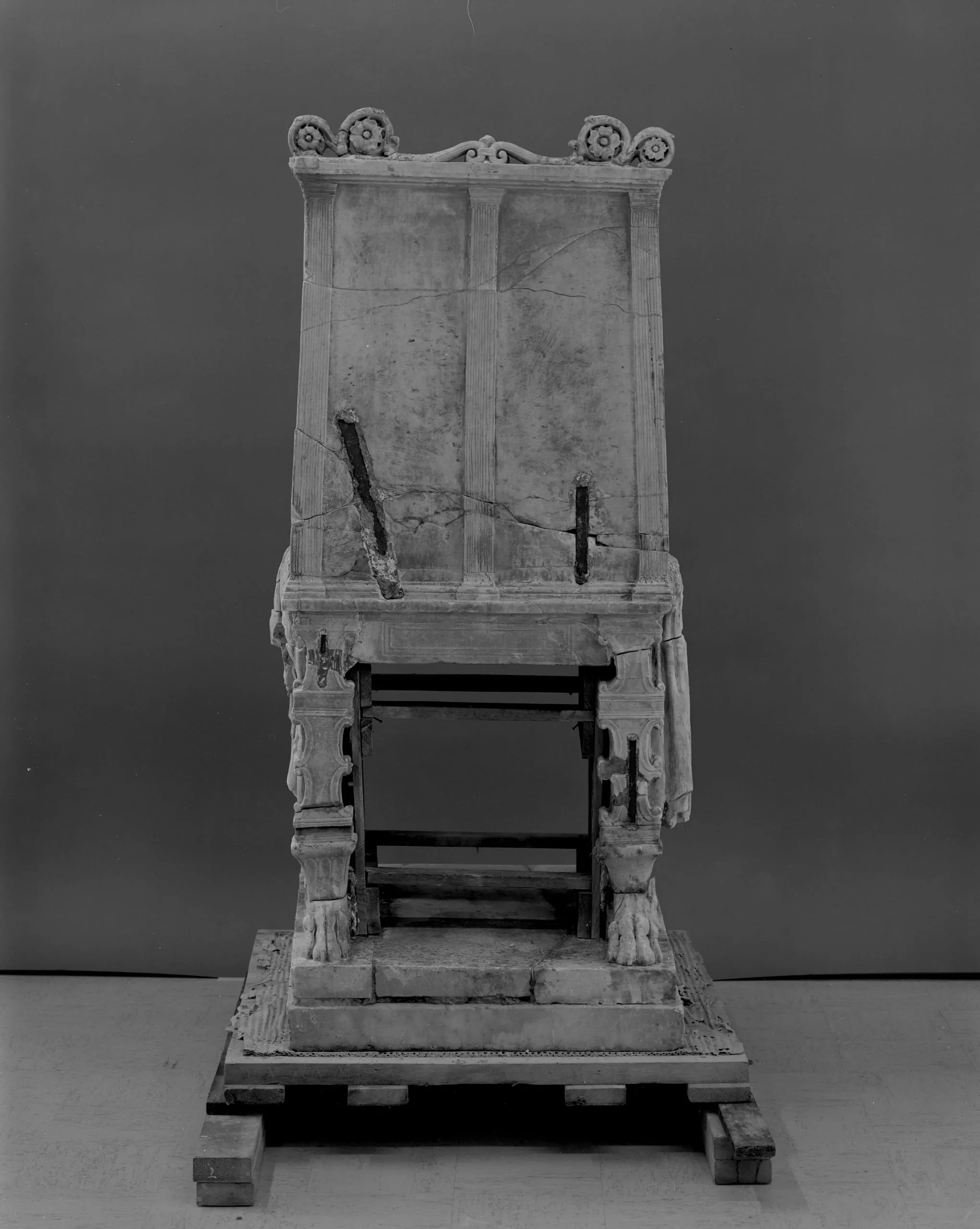
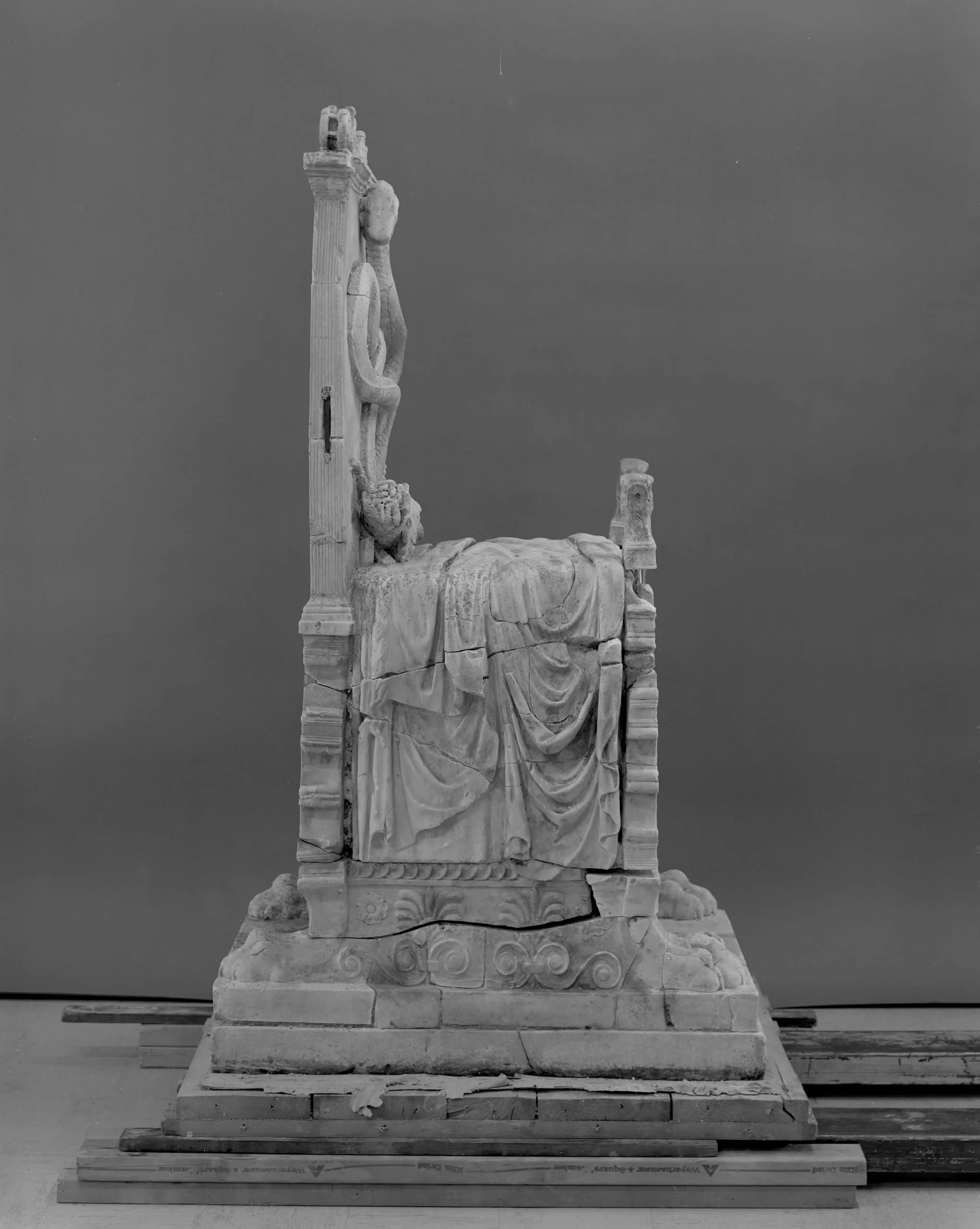
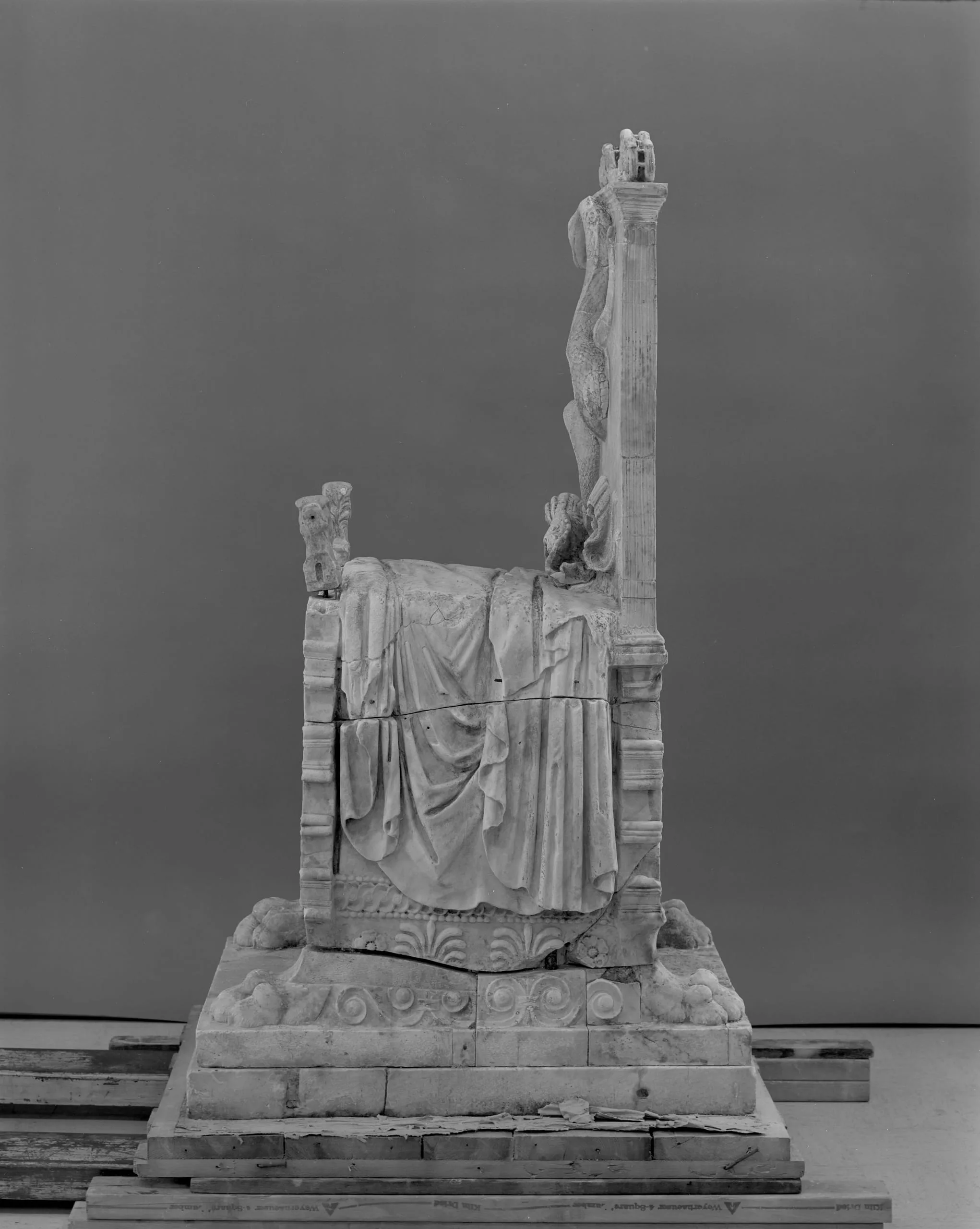
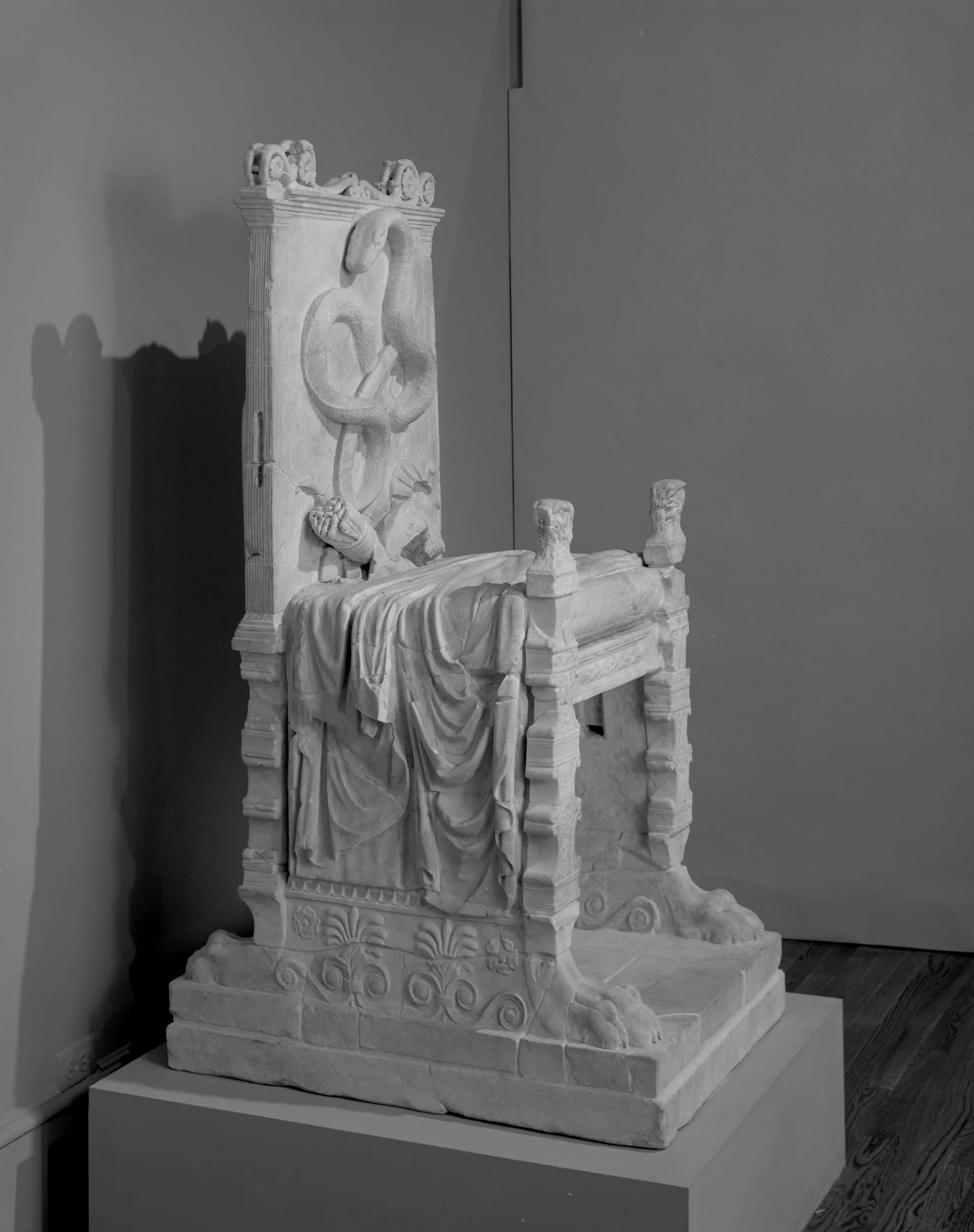
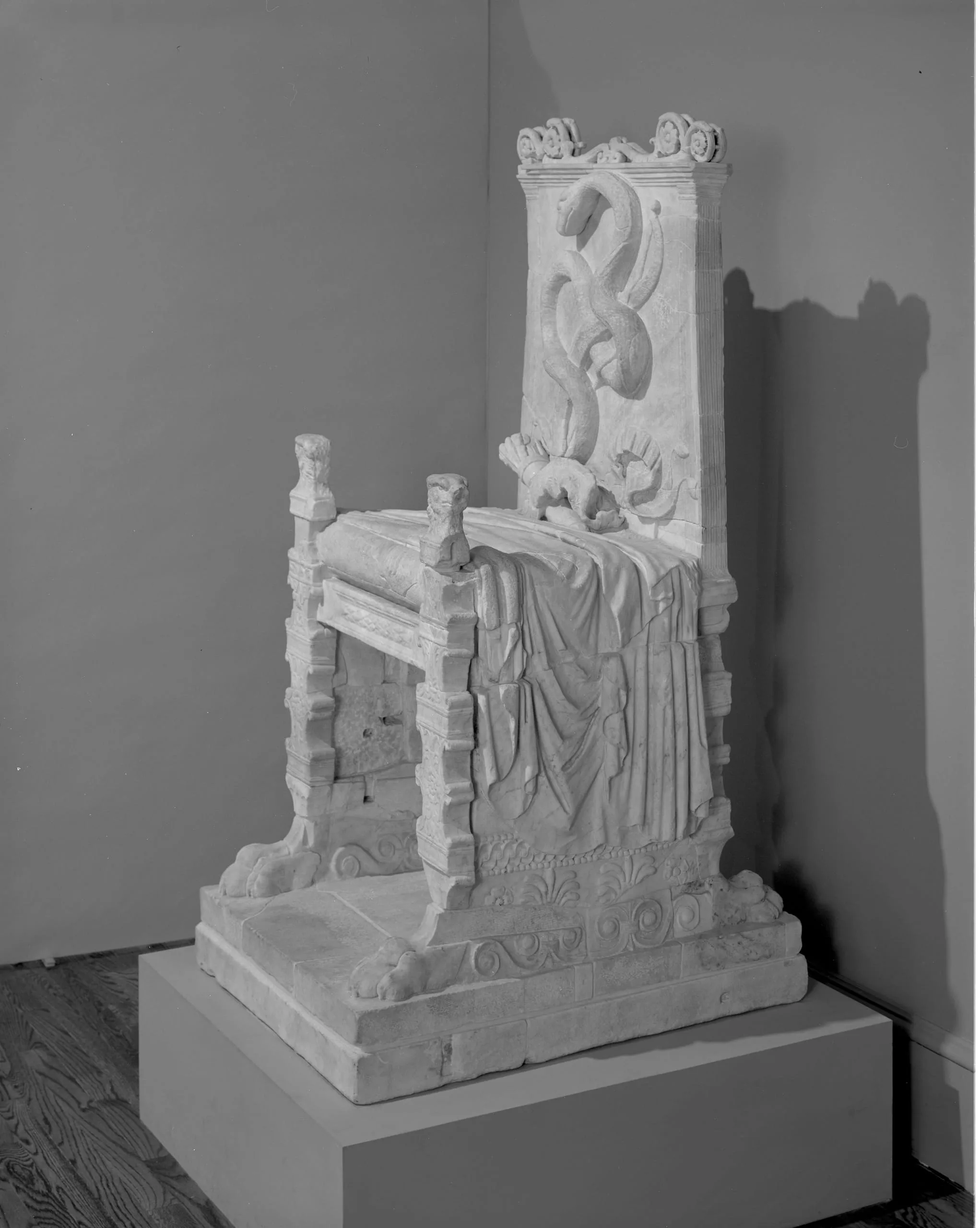
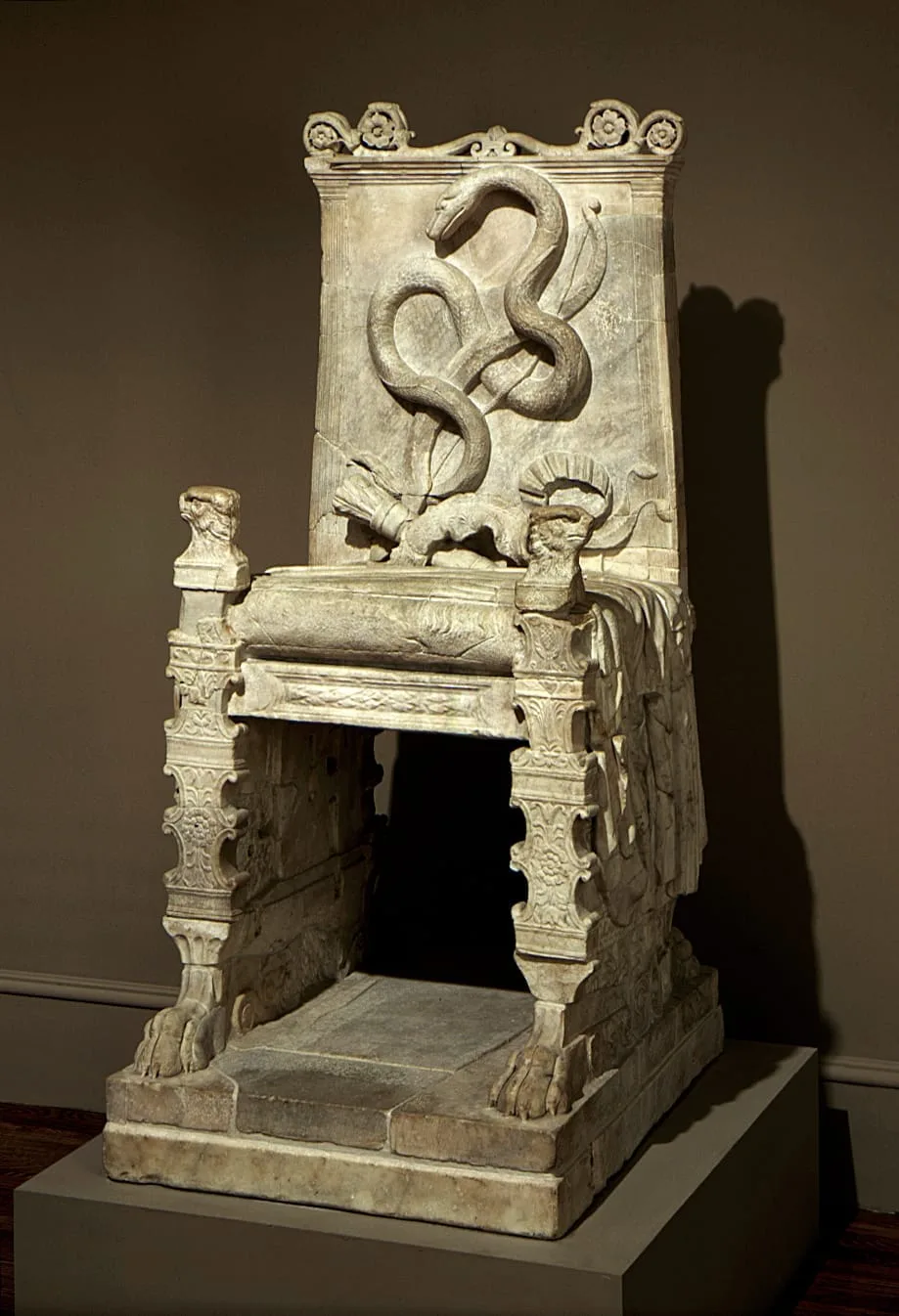
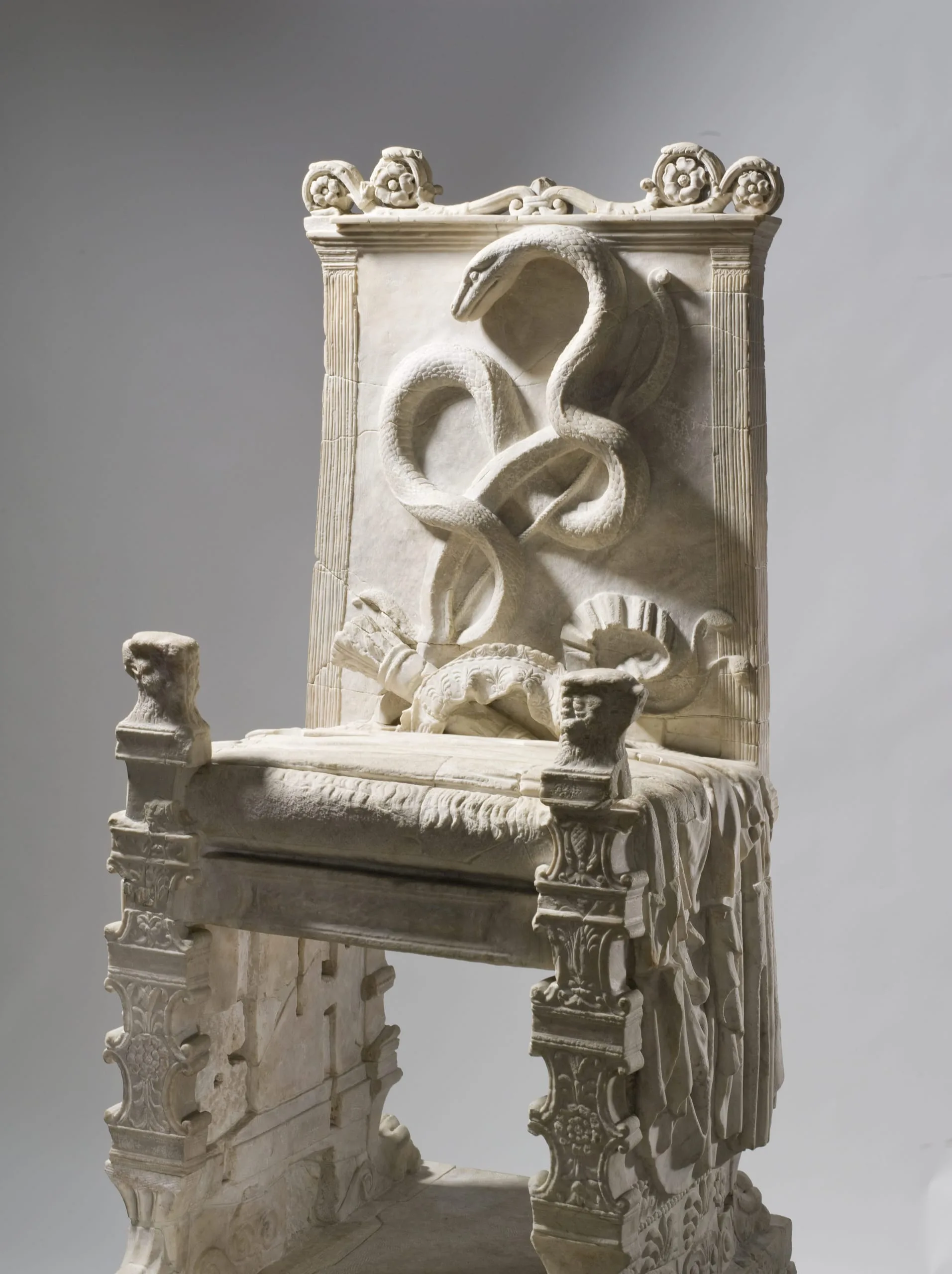
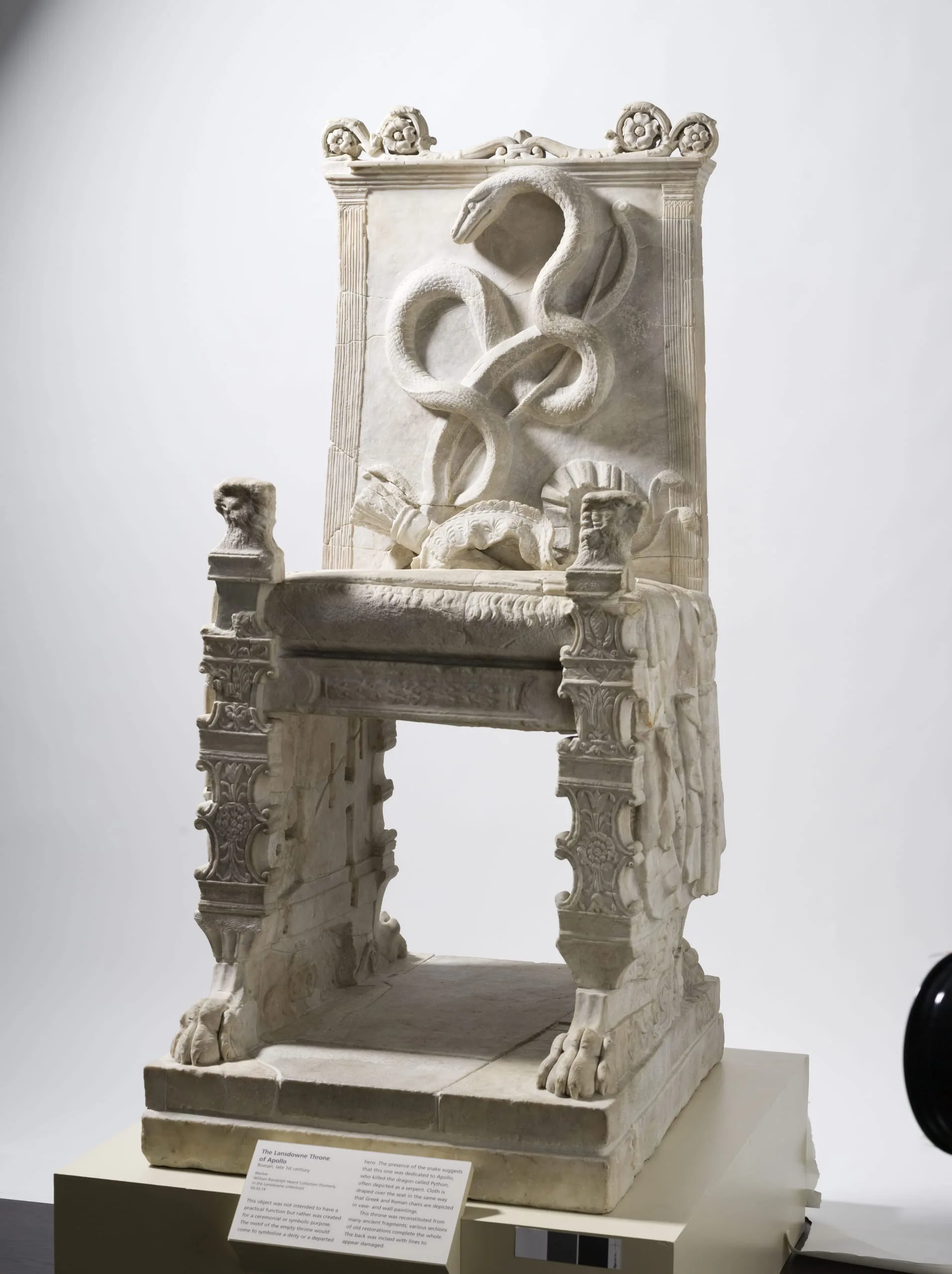
The Lansdowne Throne of Apollolate 1st century

Not on view
Marble or plaster throne chair with carved coiling serpents on the back panel, ornate column legs ending in lion's paw feet, displayed on a stepped rectangular base
Gelatin silver print of a sculptural model of a throne or ceremonial seat; the high back features a large relief-carved serpent in coils, flanked by pilasters with rosette finials; the seat area displays additional animal figures; the legs terminate in carved lion's paw feet; overall neoclassical decorative vocabulary with finely detailed carved ornament throughout.
Gelatin silver print of a sculptural model or maquette for an architectural throne or ceremonial seat, frontal view, featuring a tall paneled back with classical cornice, rosette and scroll ornaments at top, caryatid-like figural supports flanking an open lower section with stepped platform, surface showing cracks and repairs, displayed on a wooden pallet.
Gelatin silver print of a marble or plaster sculptural group: a seated, draped figure on an ornate throne with a tall columnar back, small figural attachments at the sides, and acanthus leaf molding at the base, shown in three-quarter view against a neutral gray background.
Gelatin silver print of an ancient marble throne sculpture, heavily fragmented, with draped fabric carved in relief across the seat, flanked by carved animal-head armrests, a tall columnar support at right bearing a partial figure, and a stepped base with acanthus scroll decoration.
Plaster sculpture of an ornate throne-like chair on a pedestal, with a high back panel in relief depicting a seated figure, draped fabric cascading over the seat, carved scrollwork along the base, and small figural finials at the corners.
Gelatin silver print of a plaster sculptural model of an ornate throne, displayed on a white pedestal; the high back bears a large intertwined serpent in relief, with draped fabric cascading down the seat and acanthus-leaf and scroll ornament along the base.
Marble throne with tall rectangular back relief-carved with two intertwined serpents above a crouching animal figure; armrests carved as animal heads, legs with acanthus scrollwork, and paw-shaped feet on a stepped base.
Marble throne chair with high relief carving on the backrest depicting two intertwined serpents and a reclining figure; armrests terminate in carved animal heads; legs and base decorated with acanthus scrollwork and floral rosettes along the crest rail.
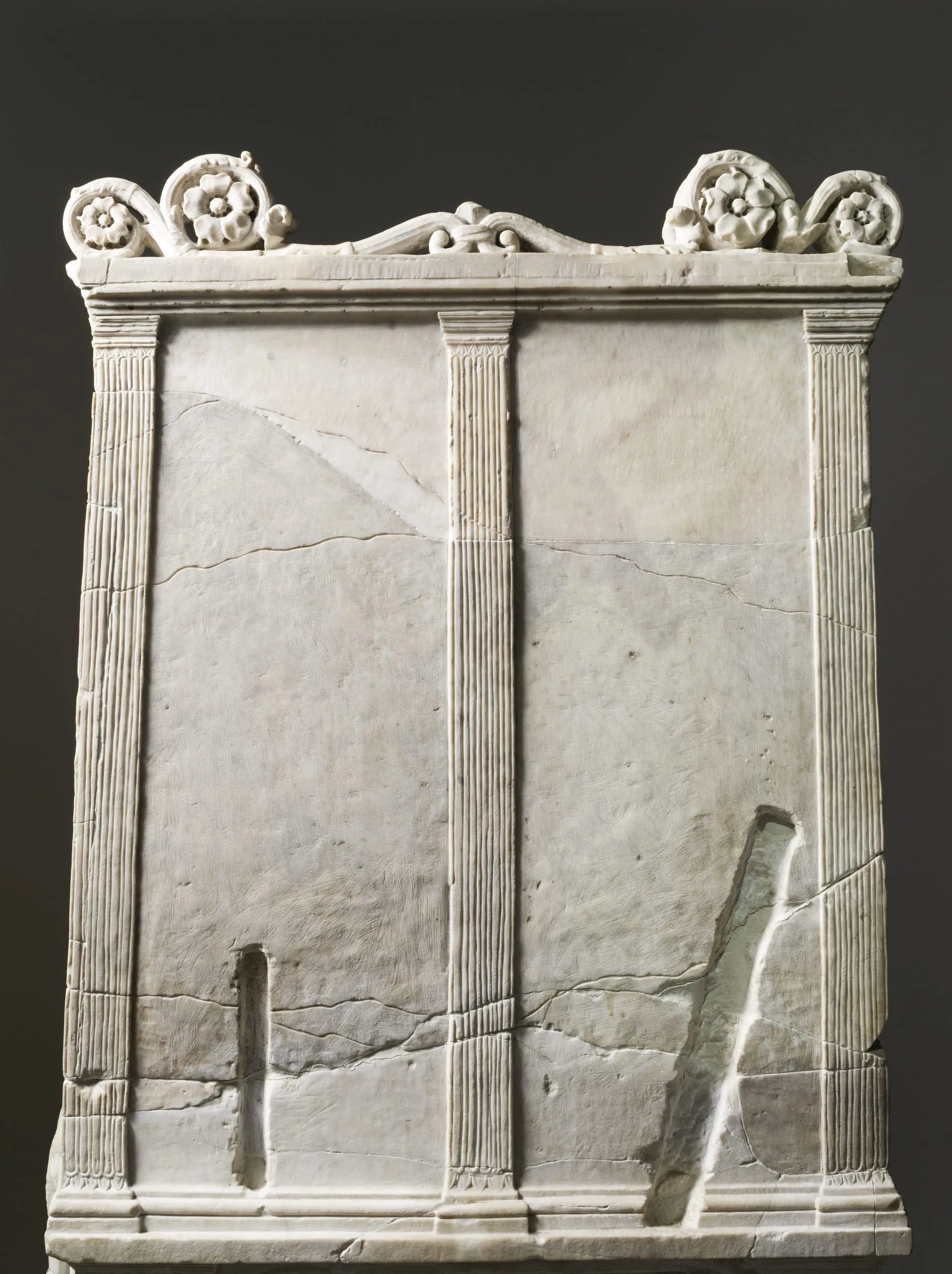
Marble funerary stele with two fluted pilasters framing a plain recessed panel, topped by a cornice with carved anthemion palmettes and volutes; visible cracks and ancient repairs across the surface.
Maker
Unknown
Title
The Lansdowne Throne of Apollo
Culture
Roman
Place Made
Unknown
Date Made
late 1st century
Medium
Marble
Dimensions
61 x 26 1/2 x 34 in. (154.94 x 67.31 x 86.36 cm)
Credit Line
William Randolph Hearst Collection
Accession Number
50.33.14
Classification
Sculpture
Collecting Area
European Painting and Sculpture: Greek and Roman
Curatorial Notes
This high-backed marble throne is perhaps the most remarkable work of Roman sculpture in LACMA's collection. Despite its elaborate decoration, the artfully decorated legs terminating in lion's paw feet, and the front pair topped by eagle heads - it could hardly have been sat upon. Cloth and animal skin realistically drape the cushion on the seat, but they are all carved in marble. Furthermore, the back of the chair is adorned with figures in high relief. A sinuous snake weaves its way in and out of an archer's bow, below which is a quiver full of arrows.
The throne was purchased at a sale in 1798 by William Petty Fitzmaurice, second Earl of Shelburne and first Marquess of Lansdowne (1737-1805). His collection of ancient sculptures was among the most celebrated of its time, and many statues were acquired from Italy with the help of the Scottish artist and dealer, Gavin Hamilton (1723-1798). The find-spot of the throne is unknown, which means that we can not be certain as to its original purpose. However, since thrones were generally associated with figures of high status, such as gods and heroes, it is reasonable to think of it in some sort of ritual or religious setting. The objects in high relief provide further clues. The bow and quiver are regularly associated with the god Apollo, and the snake might refer to the fearful serpent Python, guardian of the oracle at Delphi, which Apollo slew in his youth.
The throne was given to LACMA by William Randolph Hearst, who had acquired it at the sale of the Lansdowne Collection in 1930.
Selected Bibliography
  • Angelicoussis, Elizabeth. Reconstructing the Lansdowne Collection of Classical Marbles. Munich: Hirmer, 2017.

  • Levkoff, Mary. "Hearst and the Antique." Apollo 168, no.558 (October 2008): 52-60.