LACMA

ShopMembershipMyLACMATickets
LACMA
Los Angeles County Museum of Art
5905 Wilshire Blvd.
Los Angeles, CA 90036
info@lacma.org
(323) 857-6000
Sign up to receive emails
Subscribe
© Museum Associates 2025

Museum Hours

Monday

11 am–6 pm

Tuesday

11 am–6 pm

Wednesday

Closed

Thursday

11 am–6 pm

Friday

11 am–8 pm

Saturday

10 am–7 pm

Sunday

10 am–7 pm


  • About LACMA
  • Jobs
  • Building LACMA
  • Host An Event
  • Unframed
  • Press
  • FAQs
  • Log in to MyLACMA
  • Privacy Policy
© Museum Associates 2025
Collections

Richard Tuttle
Untitledcirca 1967

Not on view
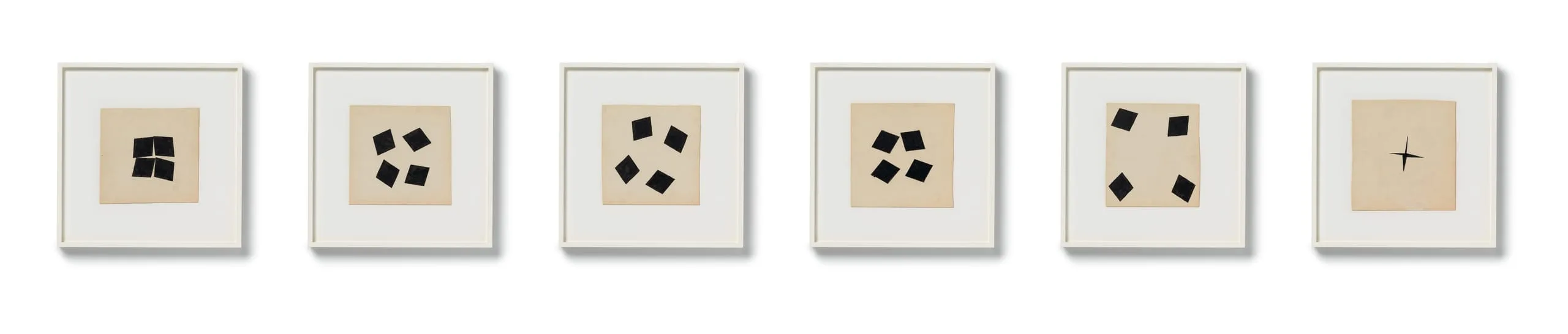
Series of six framed abstract prints, each with a sand-colored ground and small black geometric shapes arranged differently across the compositions
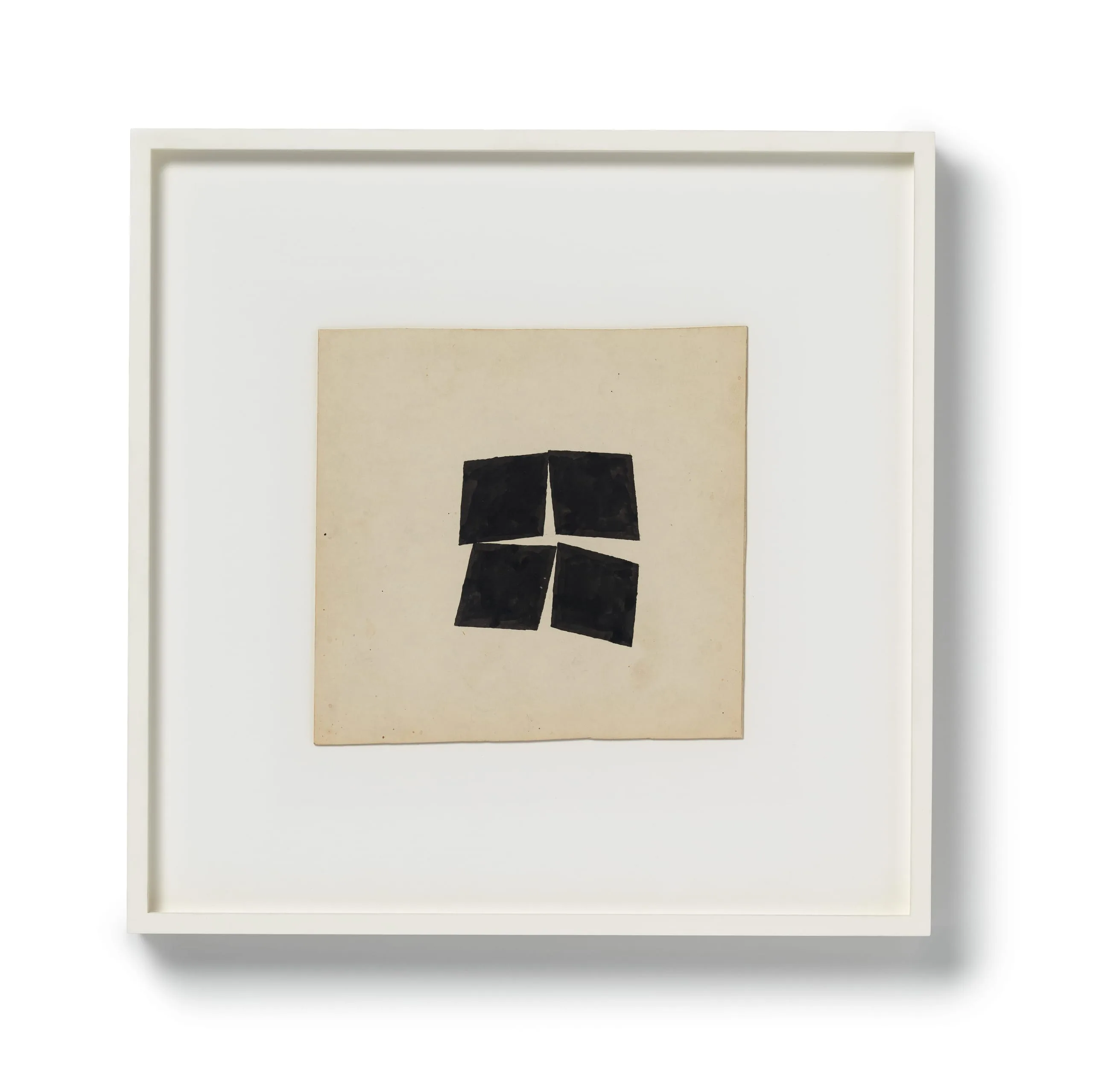
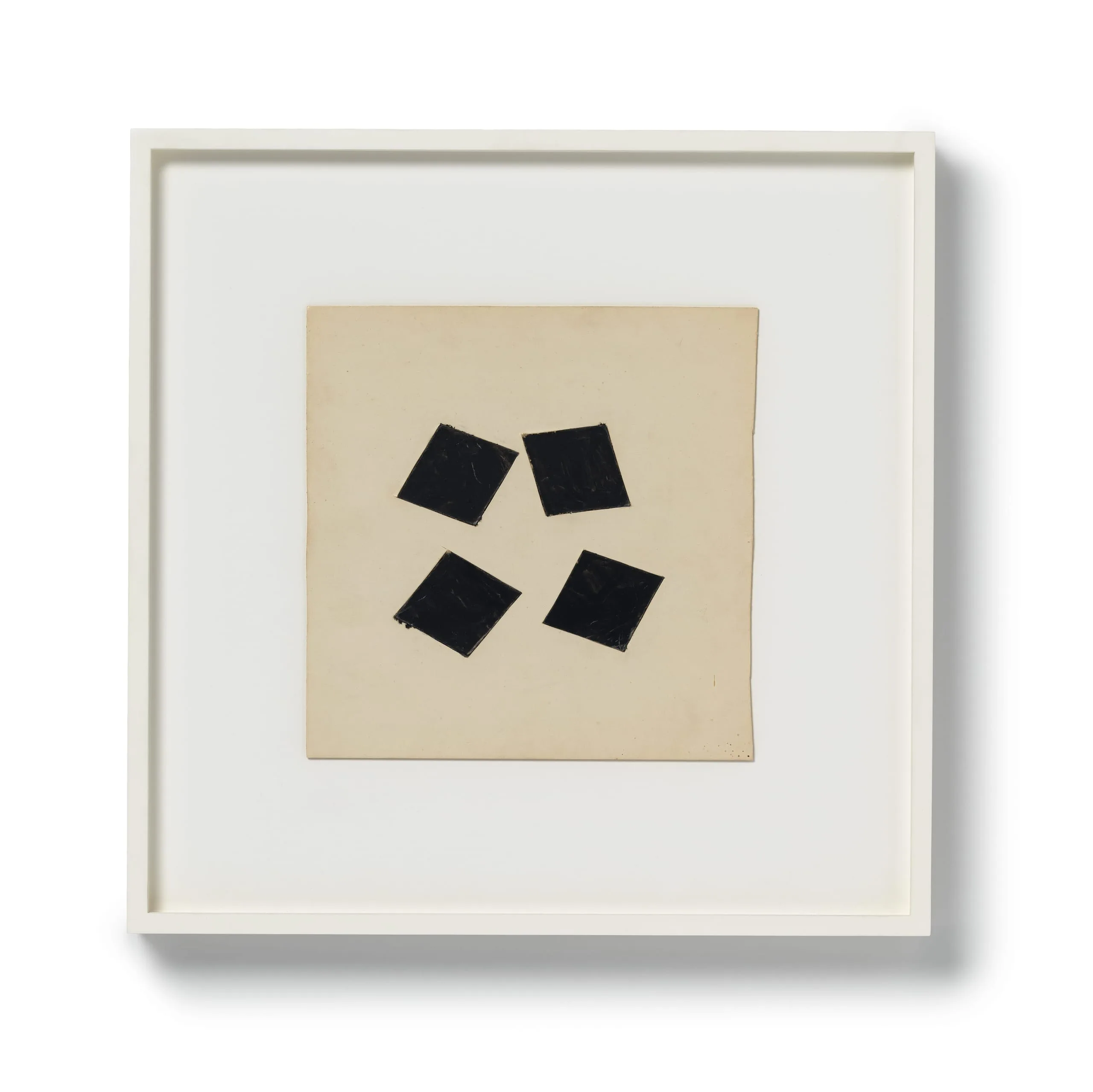
Small work on aged cream paper mounted in a white frame: four black squares arranged in a two-by-two grid, each slightly rotated, with narrow white gaps between them.
Abstract composition on cream paper, four black squares rotated at varying diagonal angles, loosely grouped in two rows against a plain ground, framed in white.
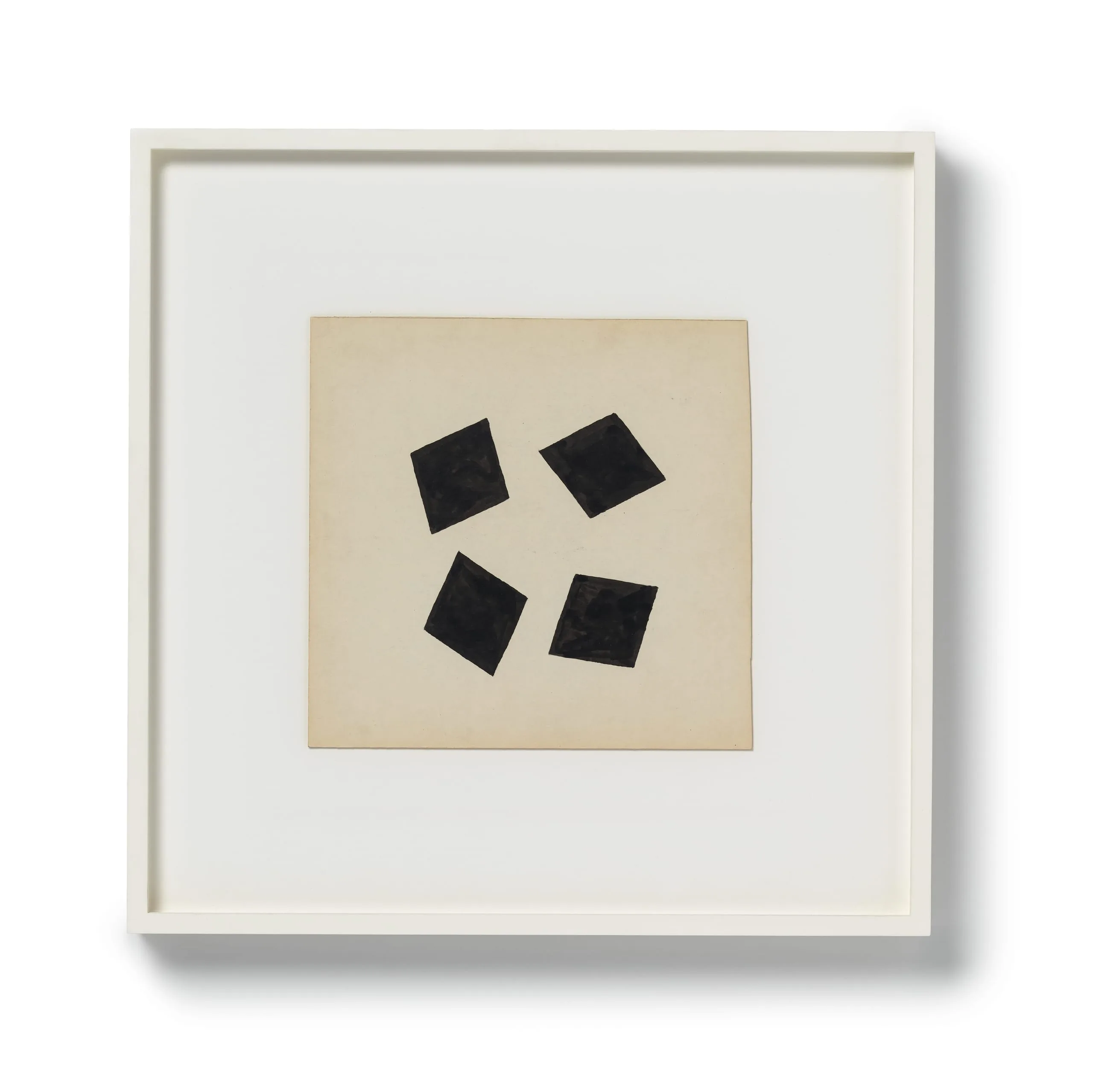
Works on paper, abstract composition of four black squares rotated at varying diagonal angles, scattered asymmetrically across a cream-colored ground, in a white frame.
Work on paper with four black squares arranged asymmetrically on a cream ground, each rotated slightly at varying angles
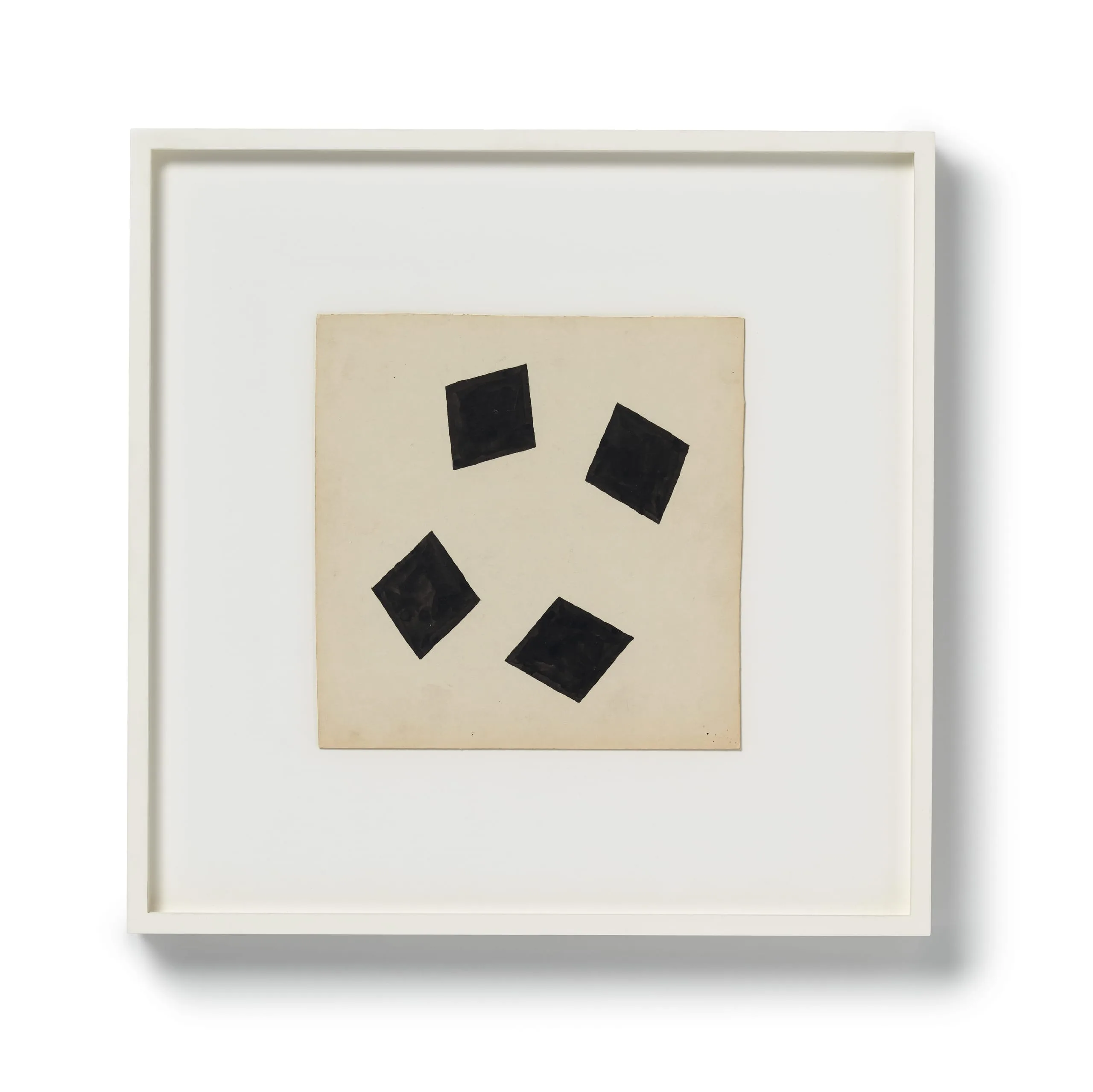
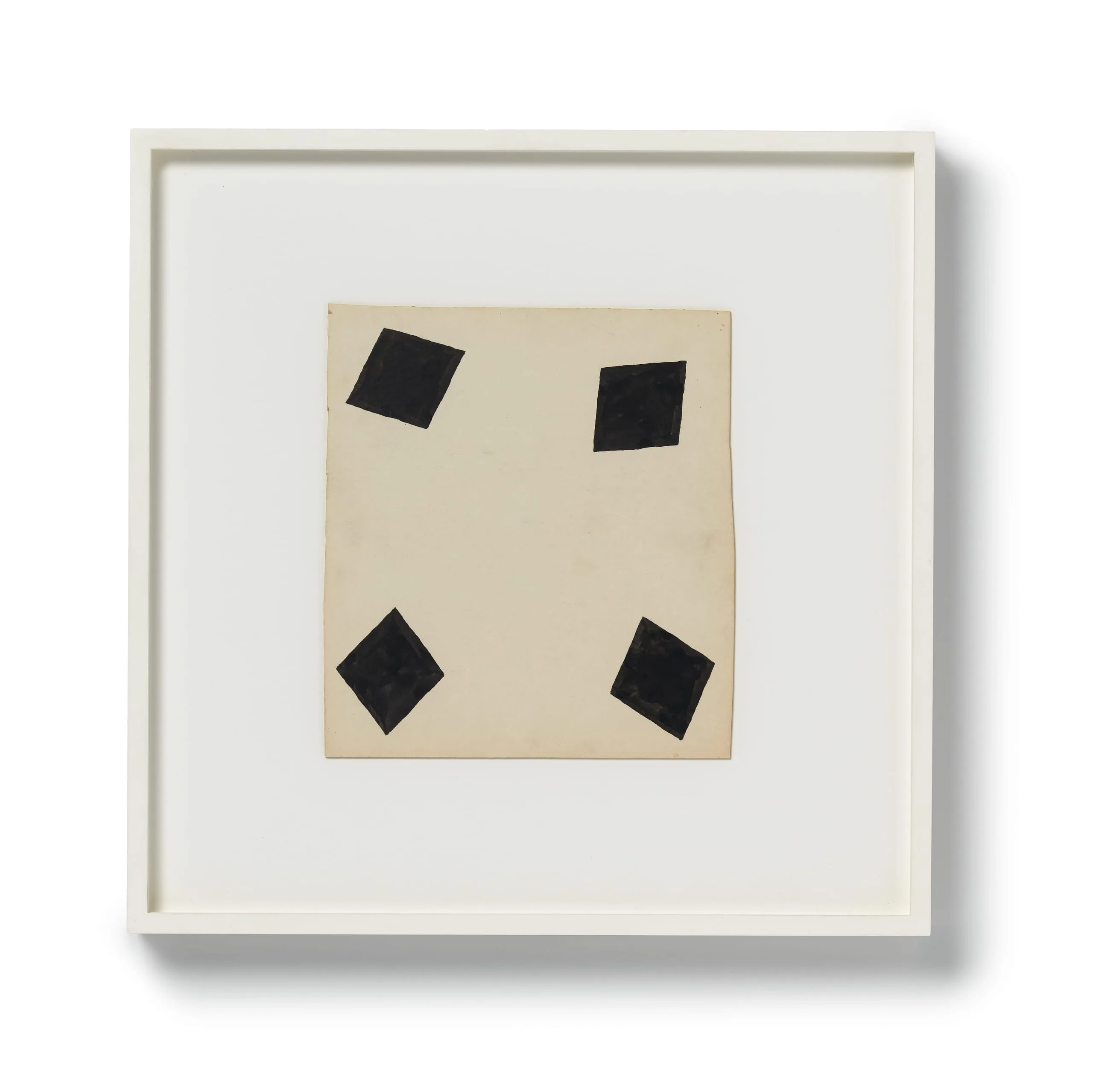
Work on paper with four solid black squares arranged near the corners of a cream-colored sheet, each rotated at slightly different angles, set against white matting in a white frame.
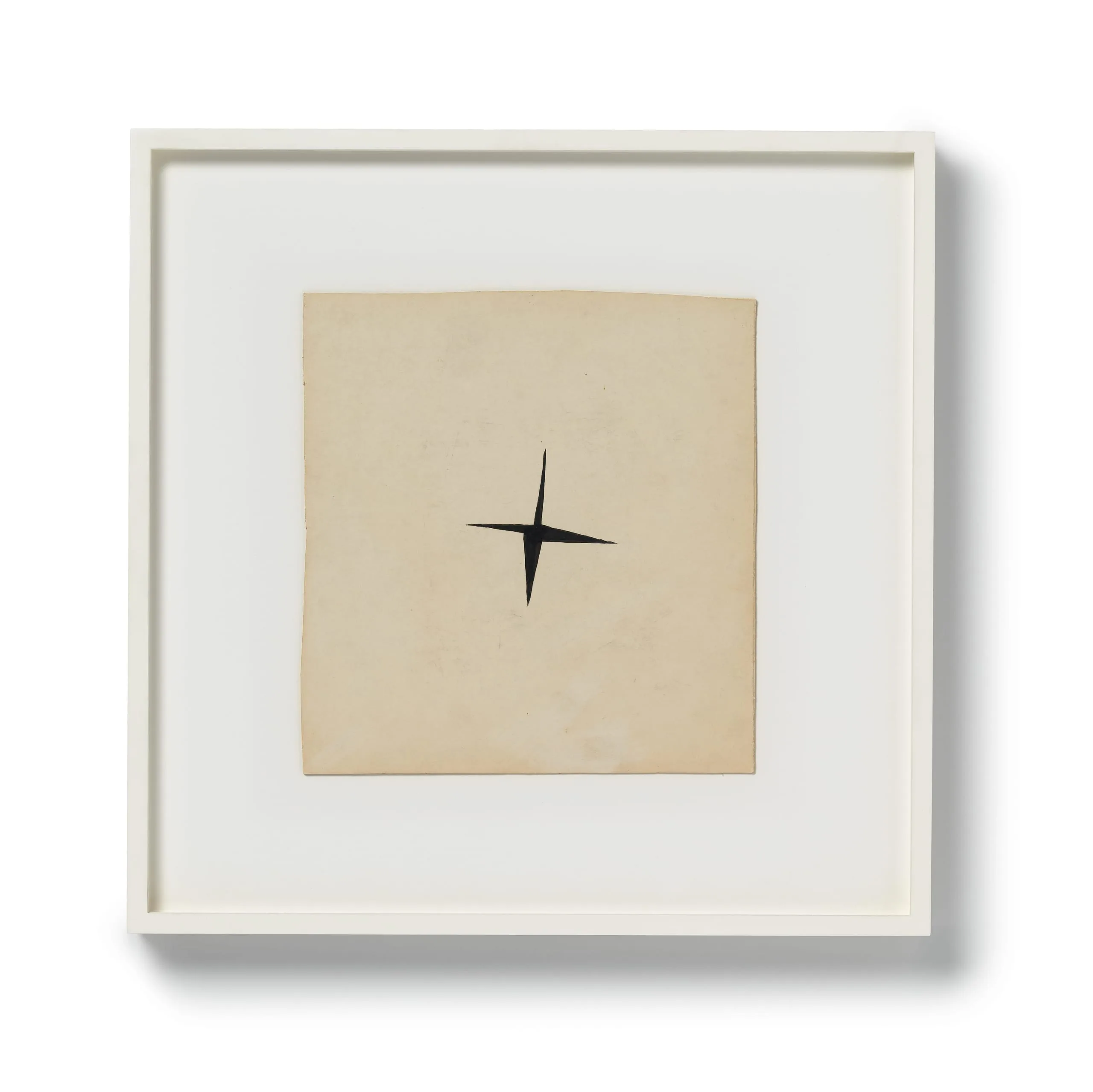
Work on paper, a single black four-pointed star form centered on a square sheet of aged cream paper, with elongated vertical points and shorter horizontal points, displayed in a white frame with wide mat.
Artist or Maker
Richard Tuttle
United States, born 1941
Title
Untitled
Date Made
circa 1967
Medium
Gouache on board
Dimensions
Sheet (each): 8 1/4 × 8 1/4 in. (20.96 × 20.96 cm) Image (each): 7 1/2 × 7 in. (19.05 × 17.78 cm) Frame (each): 14 3/4 × 14 3/4 × 1 1/8 in. (37.47 × 37.47 × 2.86 cm)
Credit Line
Gift of the 2009 Drawings Group with additional funds provided by Alice and Nahum Lainer, Suzanne Deal Booth and David G. Booth, Suzanne and Ric Kayne, Philippa Calnan, and Myron Laskin
Accession Number
M.2009.56.1-.6
Classification
Drawings
Collecting Area
Prints and Drawings
Curatorial Notes
Drawing has always been central to Richard Tuttle's practice as an artist. He has declared that "art is discipline... and discipline is drawing." This suite of six untitled drawings charts a gradually fragmenting quartet of black squares (painted in gouache) on white board, as if some invisible force is slowly pulling them apart. Beginning in relatively tight, though destabilized, formation, by the fifth drawing the squares have migrated outward to the four distant corners of the board, leaving an expanse of white at the drawing's center. The sixth drawing then suddenly jolts the squares forcefully back to center, but with such velocity that they seem to collapse into one another, emitting a final flash as they careen into oblivion, as if sucked into an invisible black hole.
The drawings also evince Tuttle's signature wit. A playful lightheartedness (coupled with rigor of thought) has always been a hallmark of his art, just as have a modesty of means (though not of meaning), an overt sense of the handmade, and a certain buoyancy, as if the work might disappear at any moment. Perhaps the best example of the evanescence that lies at the heart of Tuttle's enterprise is his Wire Piece drawings, whose cast shadows are the drawing. This radical concept is present in embryonic form in Tuttle's suite of six drawings, which also threaten to disappear either beyond the borders of their support or into its very fabric. By working serially, Tuttle activates the illusory space in which the drawings exist; they function, then, kinesthetically, as much (indeed more) about movement as about form or mark-making. This blurring of the acts of looking and moving is, ultimately, what much of Tuttle's work is about, and the suite of six untitled drawings may represent his earliest fully mature drawing. Tuttle's easy movement from two to three dimensions, his interest in sculpture and drawing, and their cross-play (the cubes are, after all, composed of paper, are of modest size, and are handmade) is typical of the artist's versatility and his rejection of restrictive categories.
Kevin Salatino, Curator of Prints and Drawings - April, 2009)