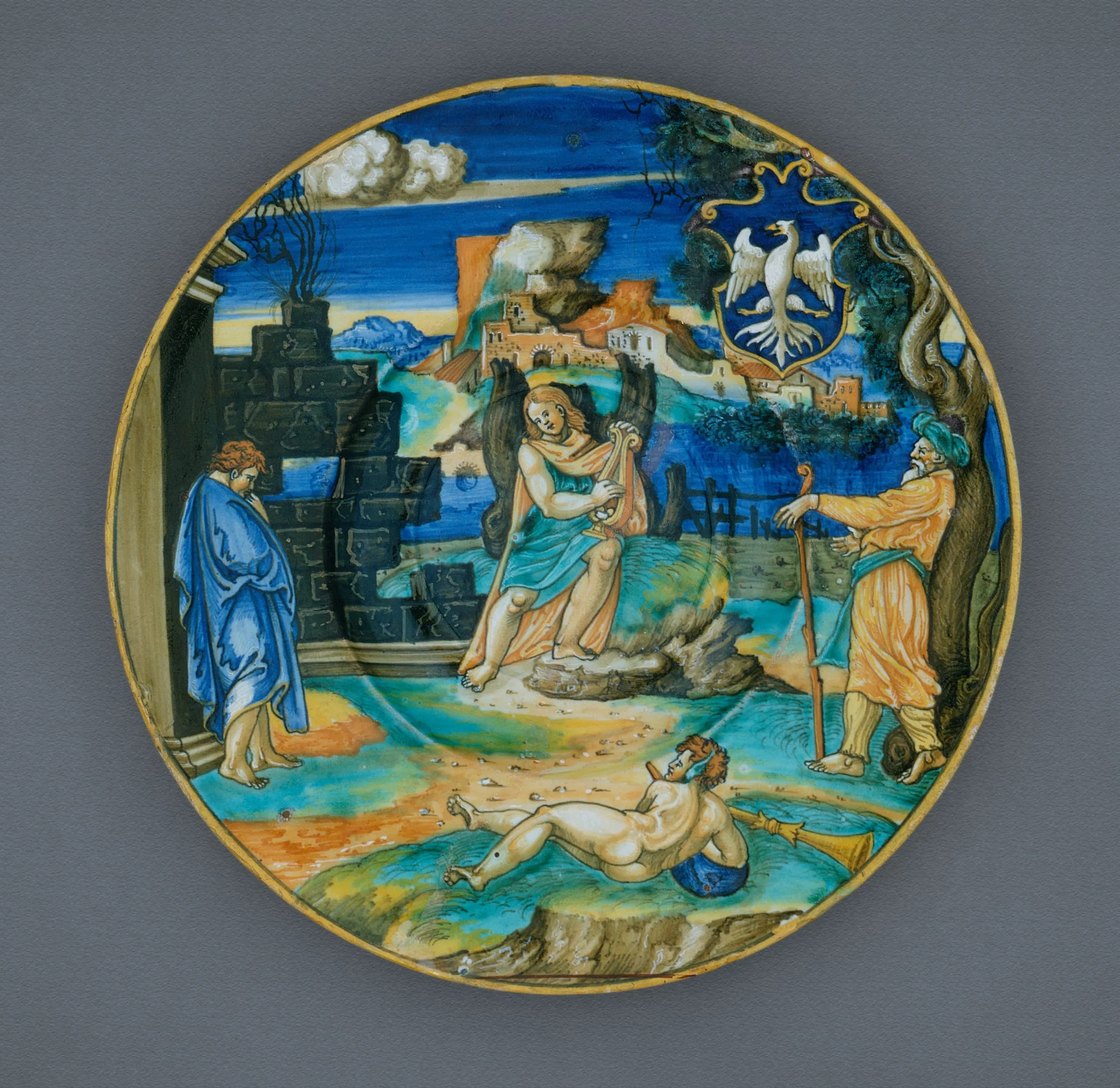
This impressive figural narrative (istoriato) plate is by Xanto, one of Urbino’s most distinctive and prolific maiolica painters. The subject is a scene from Ovid’s Metamorphoses in which the Greek god Pan, known for his musical talent with reed pipes, challenged Apollo to a contest to see who was the better musician. King Midas served as the judge. Favoring Pan, Midas triggered the wrath of Apollo, who gave the dimwitted king the large, floppy ears of a donkey. Afterward, Midas wore a turban to conceal his embarrassment.
On this plate, Apollo plays his lyre in the center of the composition, while a Pan-like figure, albeit with human rather than the more typical animal legs, reclines next to a large horn. The old man at the right who wears a turban is probably King Midas. According to Ovid, the scene took place against the steep mountain slopes of Mount Tmolus, suggested here by the hills and townscape behind Apollo. The prominent heraldic shield with a white eagle belongs to an unidentified family. Other known plates from this service have different mythological subjects that would have appealed to a well-educated patron familiar with classical art and literature.