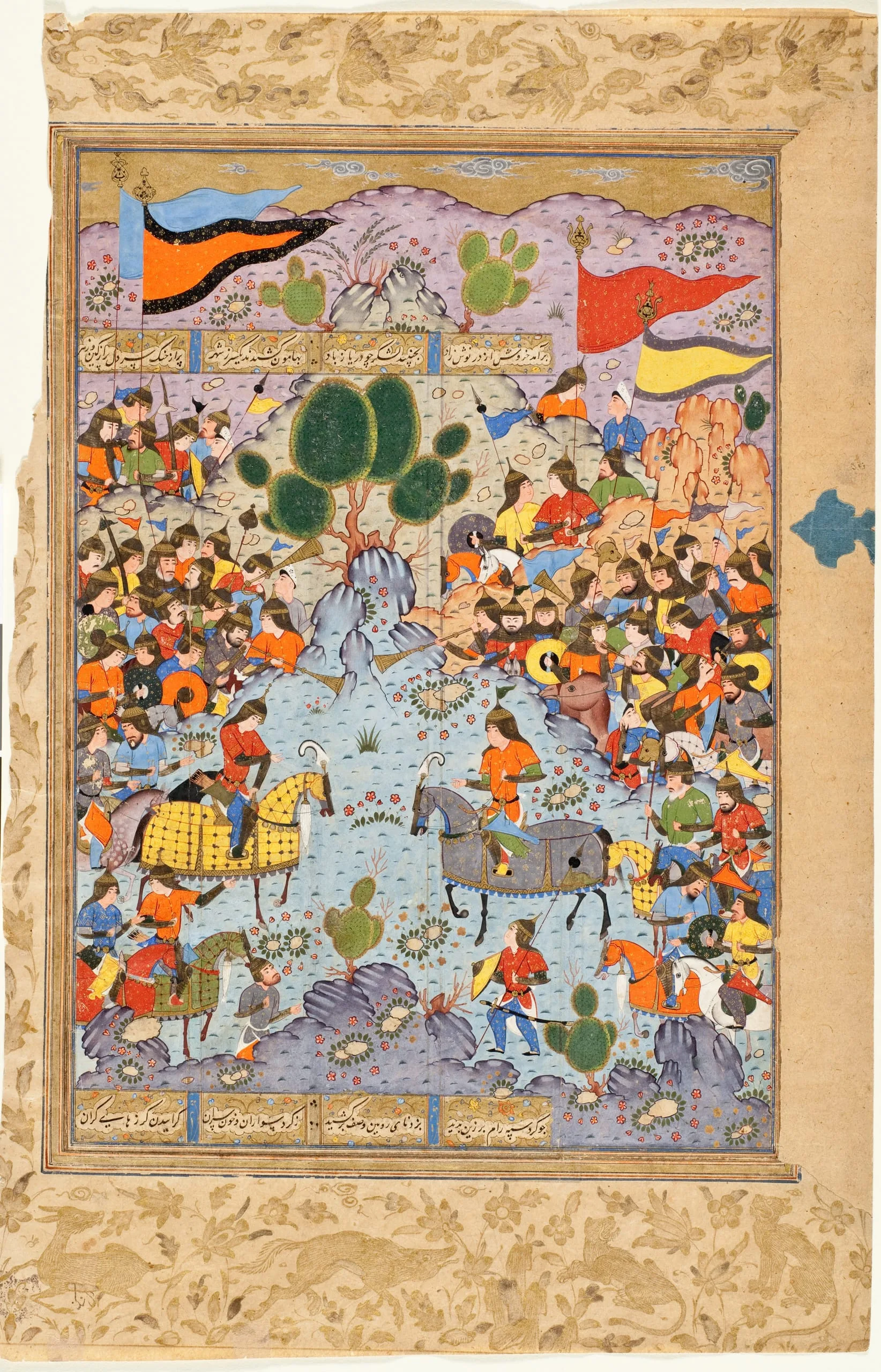
This remarkable painting and three additional examples (see M.2009.44.1, M.2009.44.3, and M.2009.44.4) once illustrated a manuscript of the Iranian national epic—the
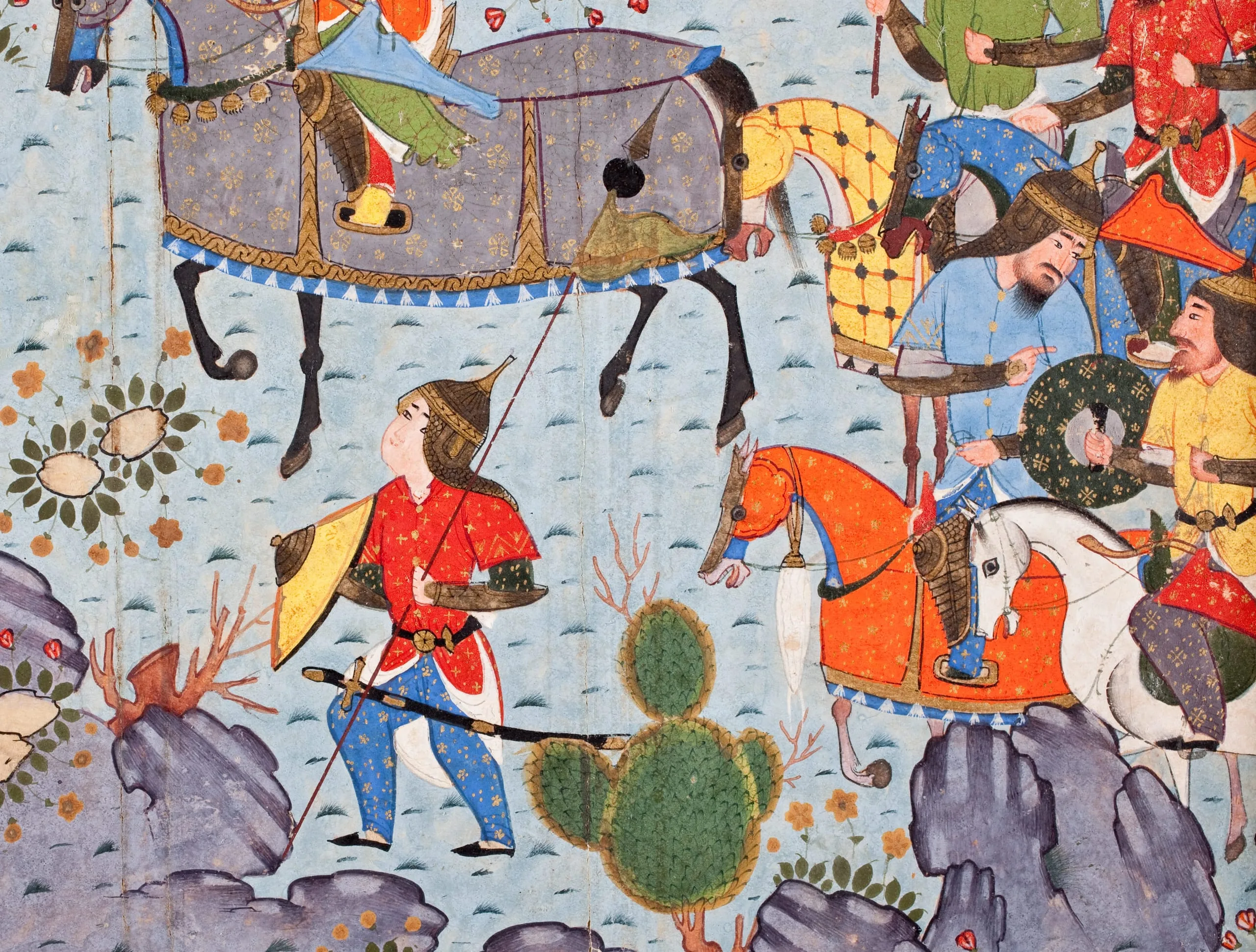
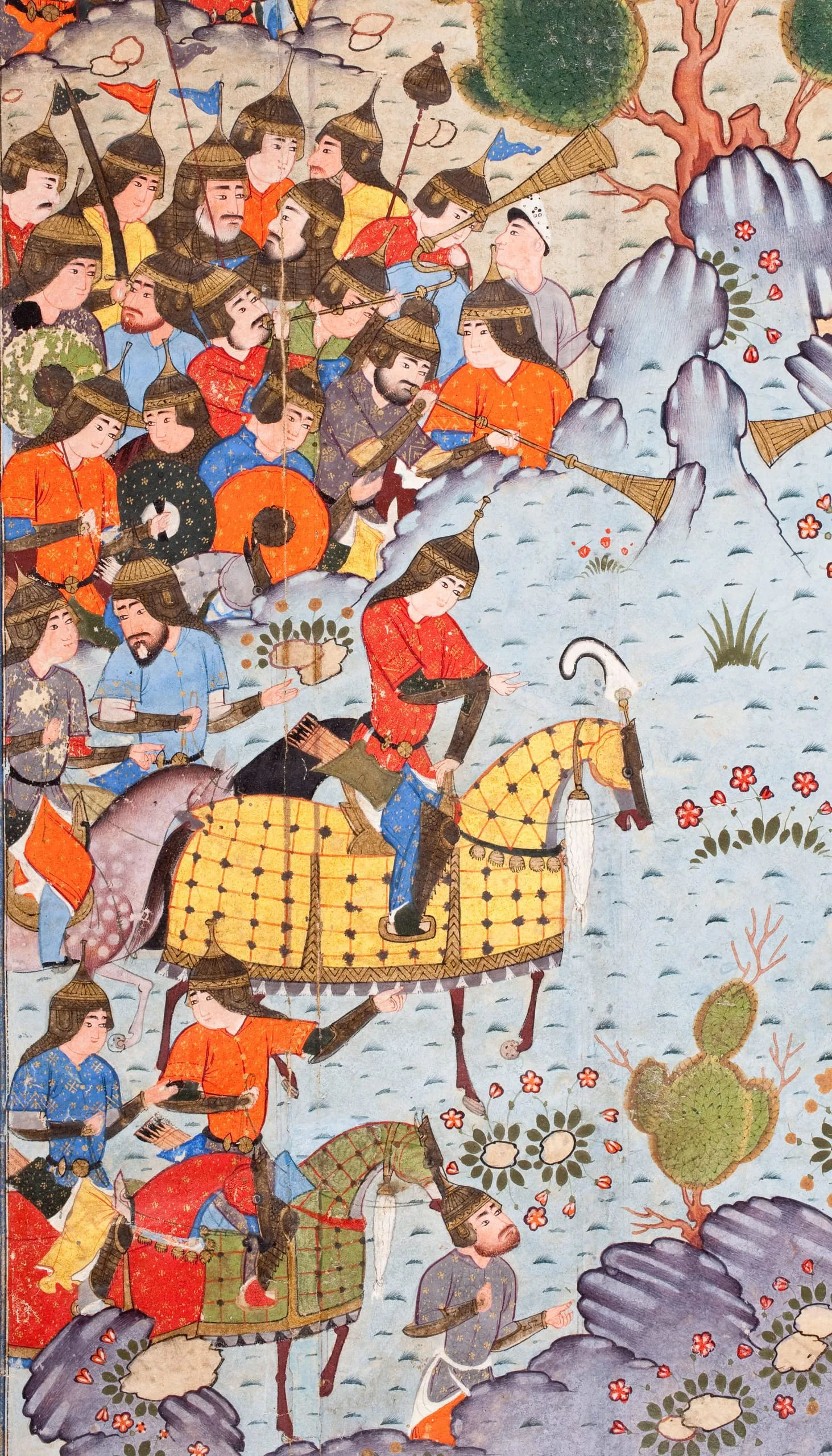
Shahnama, or Book of Kings—which tells of the pre-Islamic kings and heroes of Iran. As is typical of the best Persian miniatures, the paintings portray an idealized world, one that belies the impending violence at the heart of each composition. Here the richly burnished colors of the costumes, the complementary poses of the figures, and the carefully contrived landscapes, which include hues not found in nature, combine to create dramatic if unreal settings for combat. Scenes of epic proportions filled with minute detail, these pages demonstrate an essential characteristic of Persian miniature painting, in which the figural and landscape elements and other features can be repeated and recombined but with a new color scheme, to create each time a fresh composition.
The large size of the pages, with their elegant chinoiserie borders; the richness of the palette, including the lavish use of gold, silver, and lapis lazuli; and the specific style of painting suggest that these folios come from a manuscript produced around 1560 in Shiraz, a city renowned not only for its poets but also as an important center for the book arts. Like so many great Persian manuscripts, this one was likely broken up in modern times for the sake of its paintings.