- Title
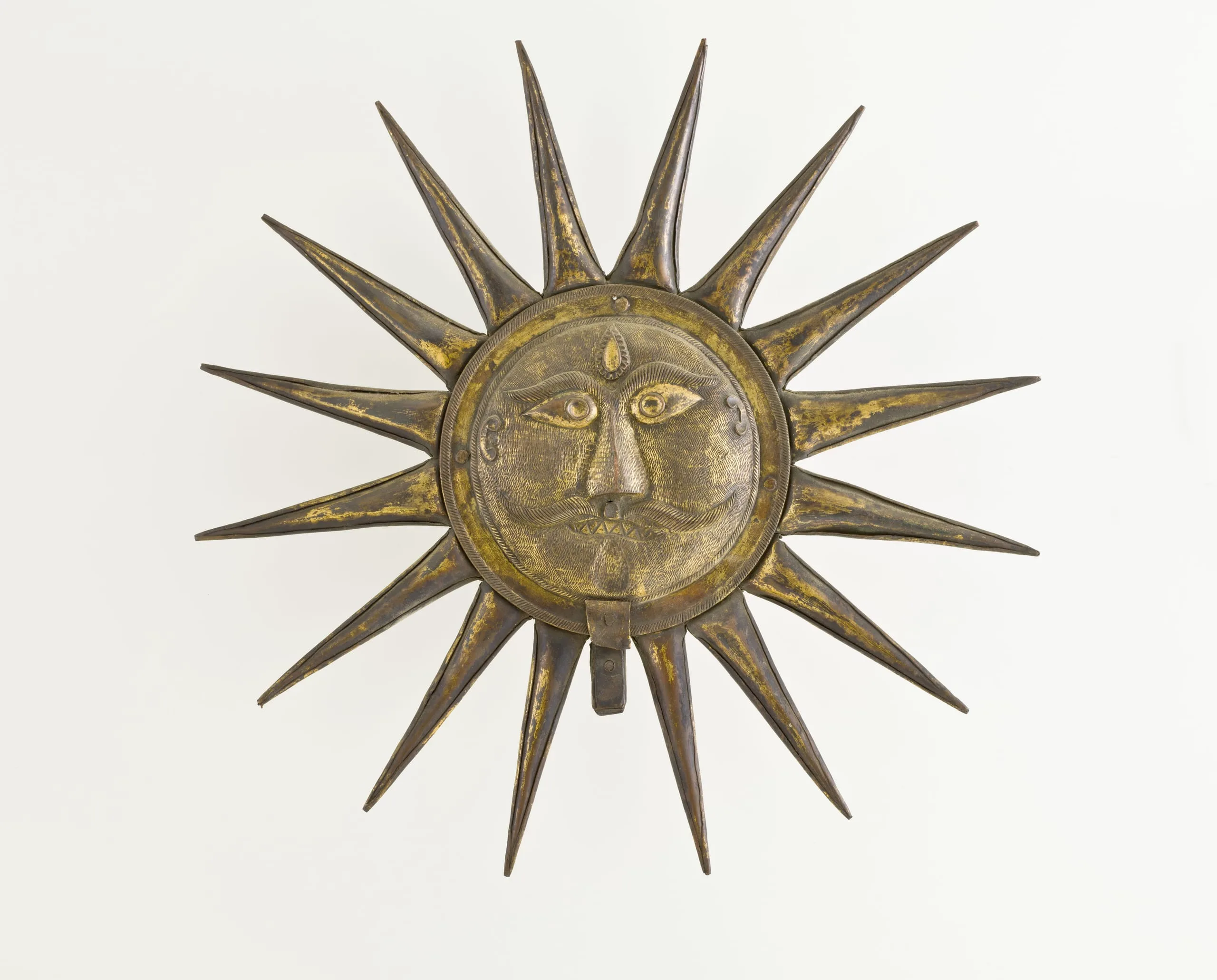
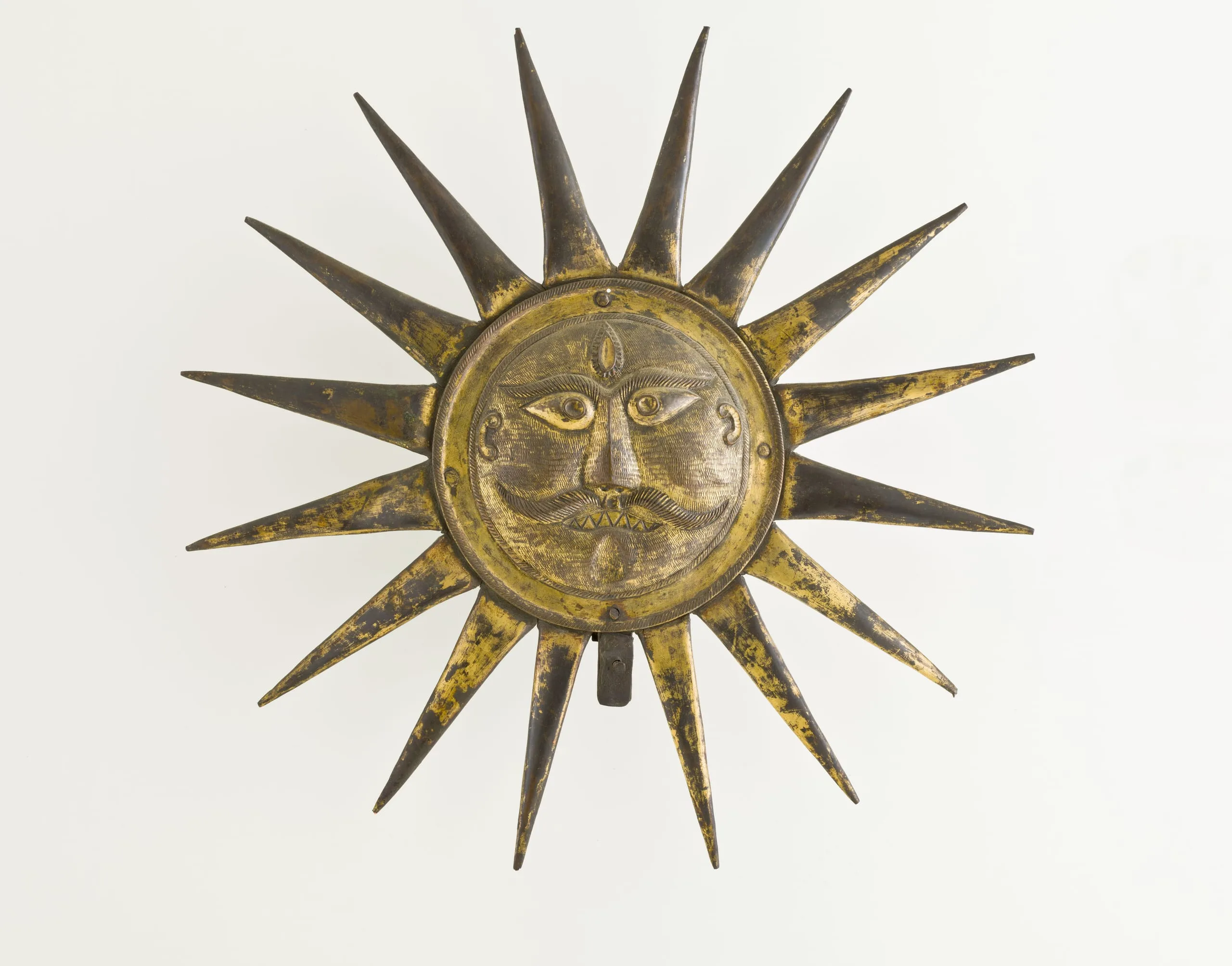
- Personified Sun Emblem
- Date Made
- circa 1900
- Medium
- Copper alloy repoussé with gilding
- Dimensions
- Height: 14 3/16 x 1 1/2 in. (36.04 x 3.81 cm); Diameter: 1 1/2 in. (3.81 cm)
- Accession Number
- M.2009.97
- Curatorial Notes
This personified sun emblem was originally used for honorific and ceremonial purposes in the former royal court of Mewar in Rajasthan. The Mewar dynasty traced its distinguished Rajput lineage back to a legendary descent from the Sun-God, Surya. Accordingly, their state emblem was a golden face of a personified sun, often encircled by its emanating rays. The Mewar solar face was typically round with elongated eyes, a prominent mustache, and sectarian markings on the forehead. It was used frequently to embellish palatial architecture and the trappings of royalty. Mewar paintings are replete with depictions of processional standards topped with culturally symbolic finials in the form of personified sun emblems, royal parasols, and additional stately emblems, called aftadam or alamat, which were held aloft by retainers over the heads of Mewar rulers to proclaim their exalted status. The most common solar finials depicted in Mewar painting are circular, with the personified face of the sun in the center surrounded by a pearl border and a broad black areola made of black ostrich feathers or black felt. Occasionally, the areola is white or red with floral motifs. Additional styles of processional finials were teardrop-shaped, sometimes with lobed borders, and embroidered with floral sprays.