- Title
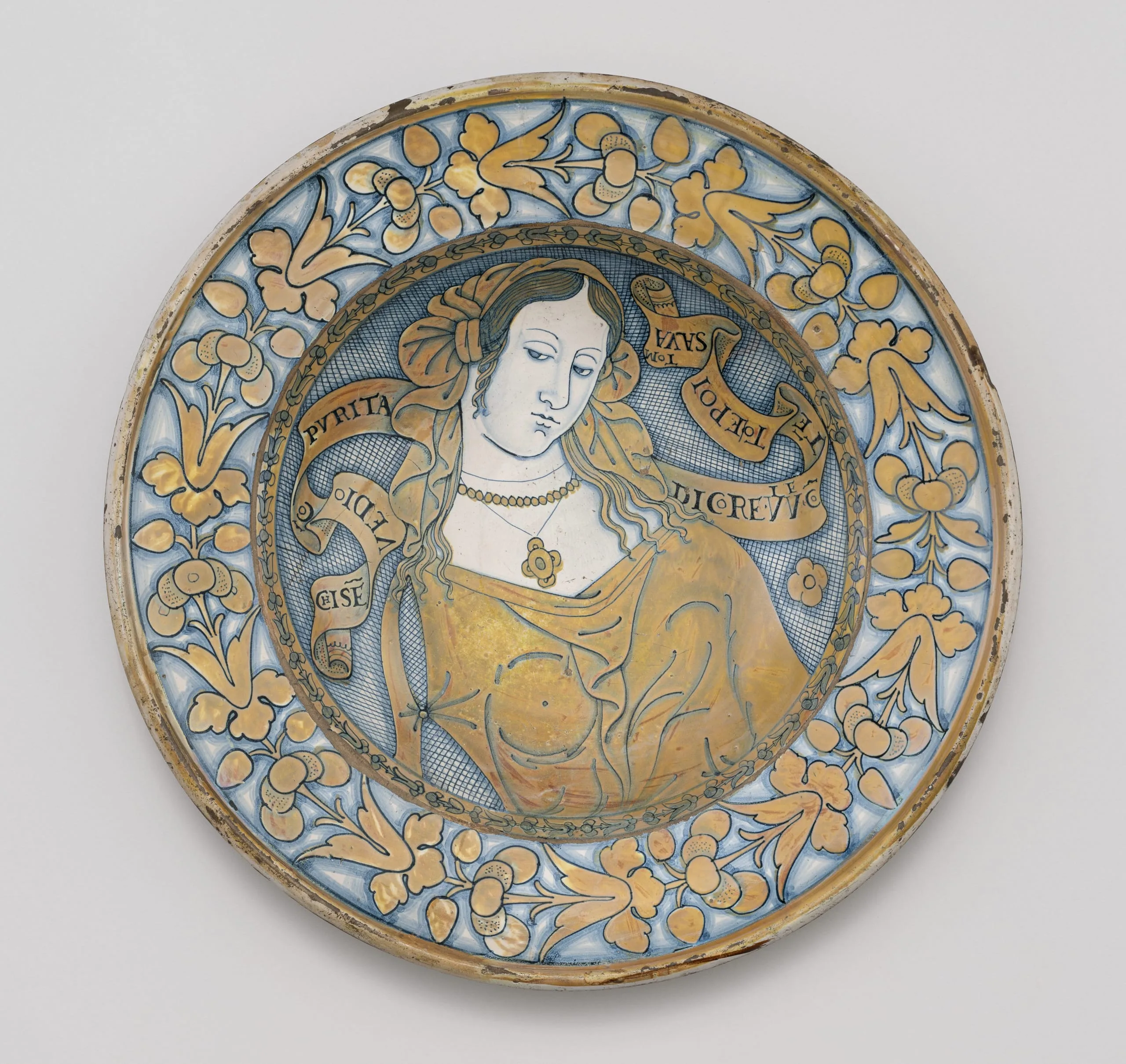
- Belle Donne Charger
- Date Made
- circa 1530-1550
- Medium
- Tin-glazed earthenware (maiolica)
- Dimensions
- Diameter: 17 1/8 in. (43.5 cm)
- Accession Number
- 50.9.11
- Curatorial Notes
Large display plates with idealized portraits of beautiful women (belle donne) were popular during the Renaissance and were produced by many factories in different regions of Italy. This plate with copper luster glaze was made in Deruta, a major center of ceramic production where potters perfected the technique of firing earthenware with metallic oxide glazes. Inscriptions on the plates, whether on a fluttering ribbon, as here, or around the border on others, typically describe the women as divine or pure. The result is not a portrait but rather a fantasy of female beauty and virtue. The fact that nearly identical designs appear on other plates with different borders and mottos indicates that Deruta artists were able to transfer designs that they customized by the addition of one motto or another. Individual women’s names often appear, but even without them, these plates are best understood as gifts from a suitor or spouse. Marriage was serious business in Renaissance Italy. It involved the union of families, fortunes, and reputations. Gifts were part of many marriage contracts, and a plate like this was a visual expression of love while also serving as a reminder of Renaissance society’s expectations of a young woman.