LACMA

ShopMembershipMyLACMATickets
LACMA
Los Angeles County Museum of Art
5905 Wilshire Blvd.
Los Angeles, CA 90036
info@lacma.org
(323) 857-6000
Sign up to receive emails
Subscribe
© Museum Associates 2026
  • About LACMA
  • Jobs
  • Building LACMA
  • Host An Event
  • Unframed
  • Press
  • FAQs
  • Log in to MyLACMA
  • Privacy Policy
© Museum Associates 2026
Collections

Unknown
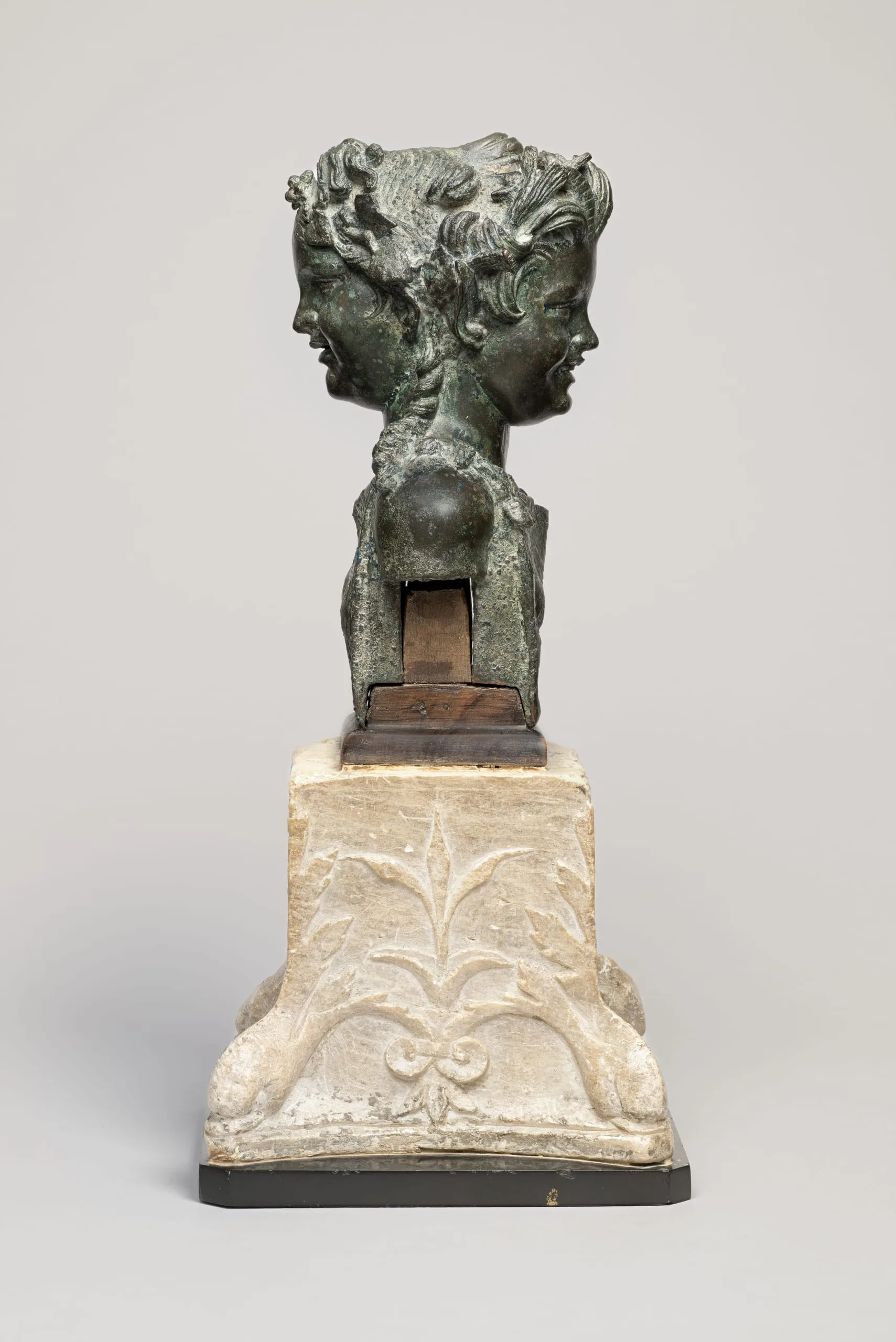
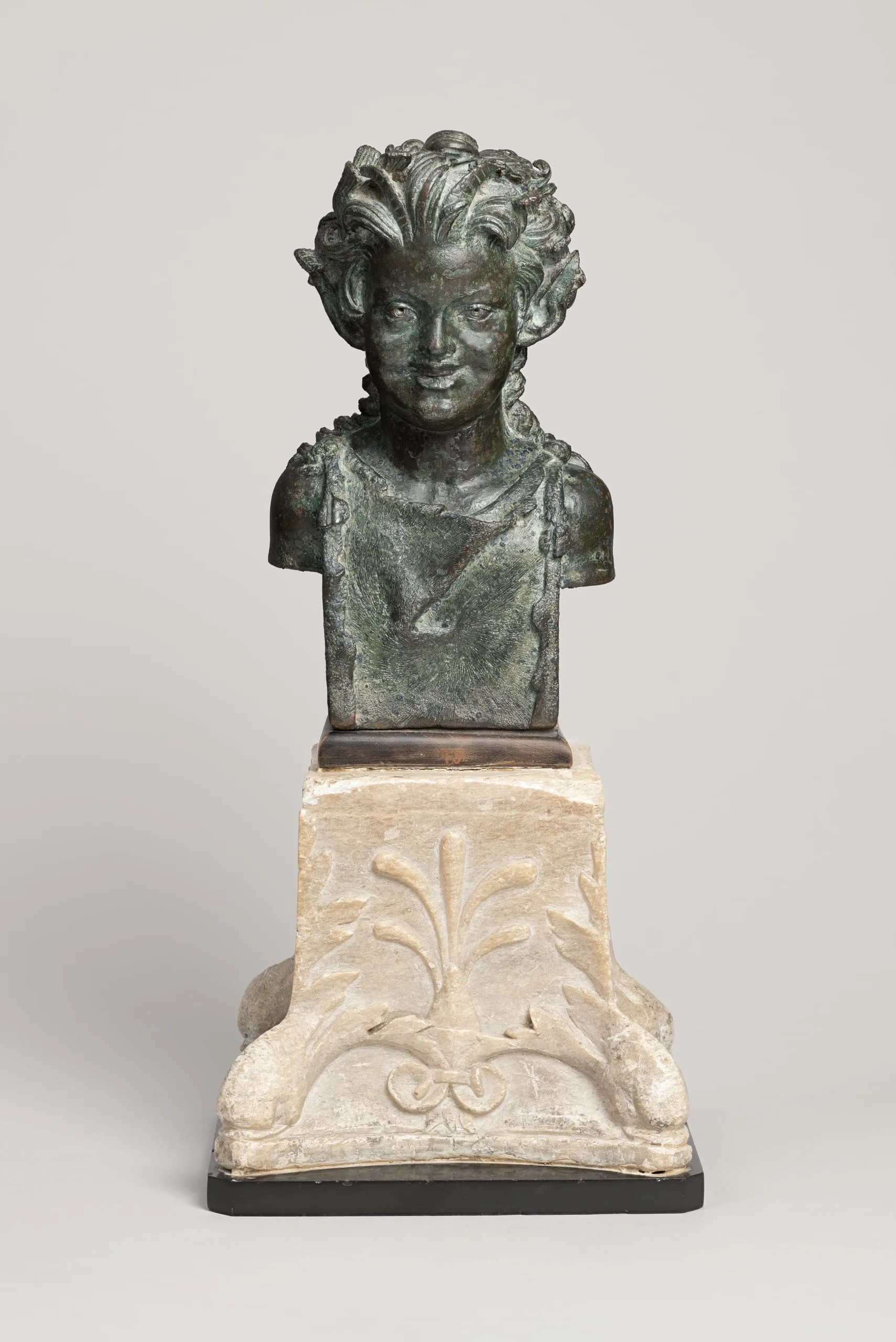
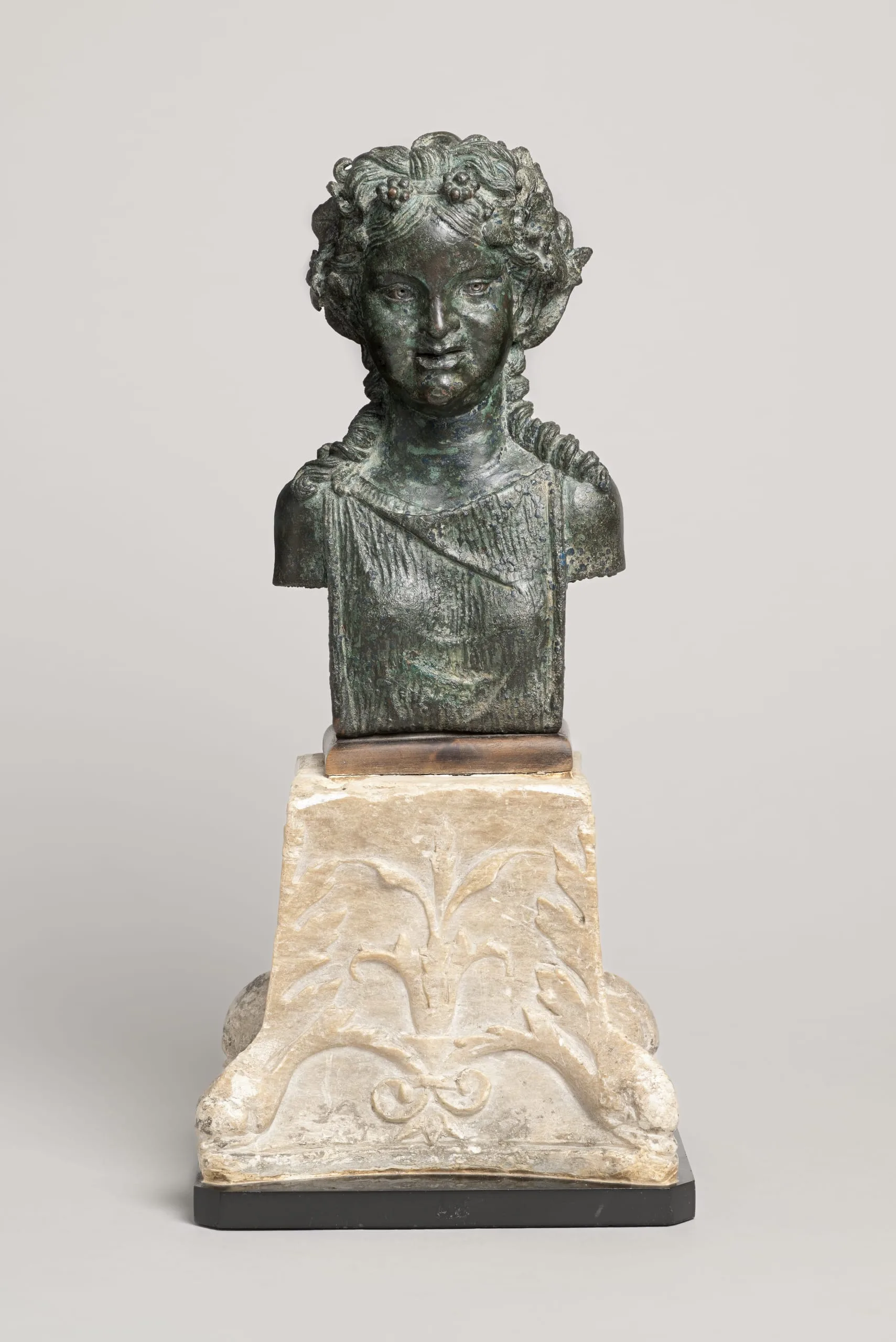
Janiform Herm with Young Male and Female Fauns1st century B.C. - 1st century A.D.

On view:
Geffen Galleries, floor 1
Bronze bust of a curly-haired youth with deep green patina, mounted on a carved stone pedestal with acanthus leaf relief decoration
Small bronze bust of a youthful figure with curly hair adorned with a floral wreath, draped garment across the chest, green patina, mounted on a carved stone pedestal with acanthus-leaf relief decoration.
Bronze triple-faced herm with green patina, three youthful faces sharing a single head with curly hair, mounted on a rectangular wooden block atop a carved stone pedestal with acanthus leaf relief decoration.

Unknown, Janiform Herm with Young Male and Female Fauns, 1st century B.C. - 1st century A.D., Los Angeles County Museum of Art, William Randolph Hearst Collection, photo © Museum Associates/LACMA

Artist or Maker
Unknown
Title
Janiform Herm with Young Male and Female Fauns
Culture
Roman
Date Made
1st century B.C. - 1st century A.D.
Medium
Bronze
Dimensions
Overall: 8 3/4 × 4 1/2 × 4 1/2 in. (22.23 × 11.43 × 11.43 cm)
Credit Line
William Randolph Hearst Collection
Accession Number
51.18.9a-b
Classification
Sculpture
Collecting Area
European Painting and Sculpture: Greek and Roman
Curatorial Notes

The term janiform derives from the Roman divinity Janus, god of doorways and openings, who is typically depicted with two faces back to back. The two faces of this herm, a square pillar with sculpted heads on top, are diminutive versions of the rustic god Pan, one male and one female. The smiling boy has pointed ears and goat horns peeking out of his tousled hair. He wears a goatskin with the knotted legs forming straps on his shoulders. The curly-haired girl also has pointed ears, and wears a wreath of ivy and berries. The eyes of both figures show traces of silver inlay, and likely would have been inlaid with precious stones as well. The bust is hollow, and its form suggests that it decorated a balustrade, likely in a luxurious villa.

This herm is one of ten nearly identical sculptures, reputed to have been excavated in 1883 at Torre del Greco, near Pompeii. Five of these sculptures are in Naples, while the others are in the Petit Palais, Museo Nazionale Roma, Victoria and Albert Museum, and SMB Antikensammlung. Bucolic elements, such as bronze sculptures of deer and goats, and mosaics and paintings of landscape idylls, are a feature of a number of Roman luxury villas. This reference to woodland creatures would have provided the villa with rustic charm while maintaining a sense of grandeur.
Selected Bibliography
  • Mitten, David Gordon and Suzannah F. Doeringer. Master Bronzes from the Classical World. Cambridge, MA: Fogg Art Museum, 1967.
  • Levkoff, Mary L., ed. Hearst the collector. Exh. Cat. New York: Abrams and Los Angeles: Los Angeles County Museum of Art, 2008.
  • Howard, Seymour. "A Dossenesque 'Double Herm' in California." California Studies in Classical Antiquity 4 (1971): 181-198.
  • Blondet, José Luis. Six Scripts for Not I: Throwing Voices (1500 BCE-2020 CE). Los Angeles: Los Angeles County Museum of Art, 2020.