LACMA

ShopMembershipMyLACMATickets
LACMA
Los Angeles County Museum of Art
5905 Wilshire Blvd.
Los Angeles, CA 90036
info@lacma.org
(323) 857-6000
Sign up to receive emails
Subscribe
© Museum Associates 2026
  • About LACMA
  • Jobs
  • Building LACMA
  • Host An Event
  • Unframed
  • Press
  • FAQs
  • Log in to MyLACMA
  • Privacy Policy
© Museum Associates 2026
Collections

Unknown
Virgin and Child Standing upon the Mooncirca 1480-1500

On view:
Geffen Galleries
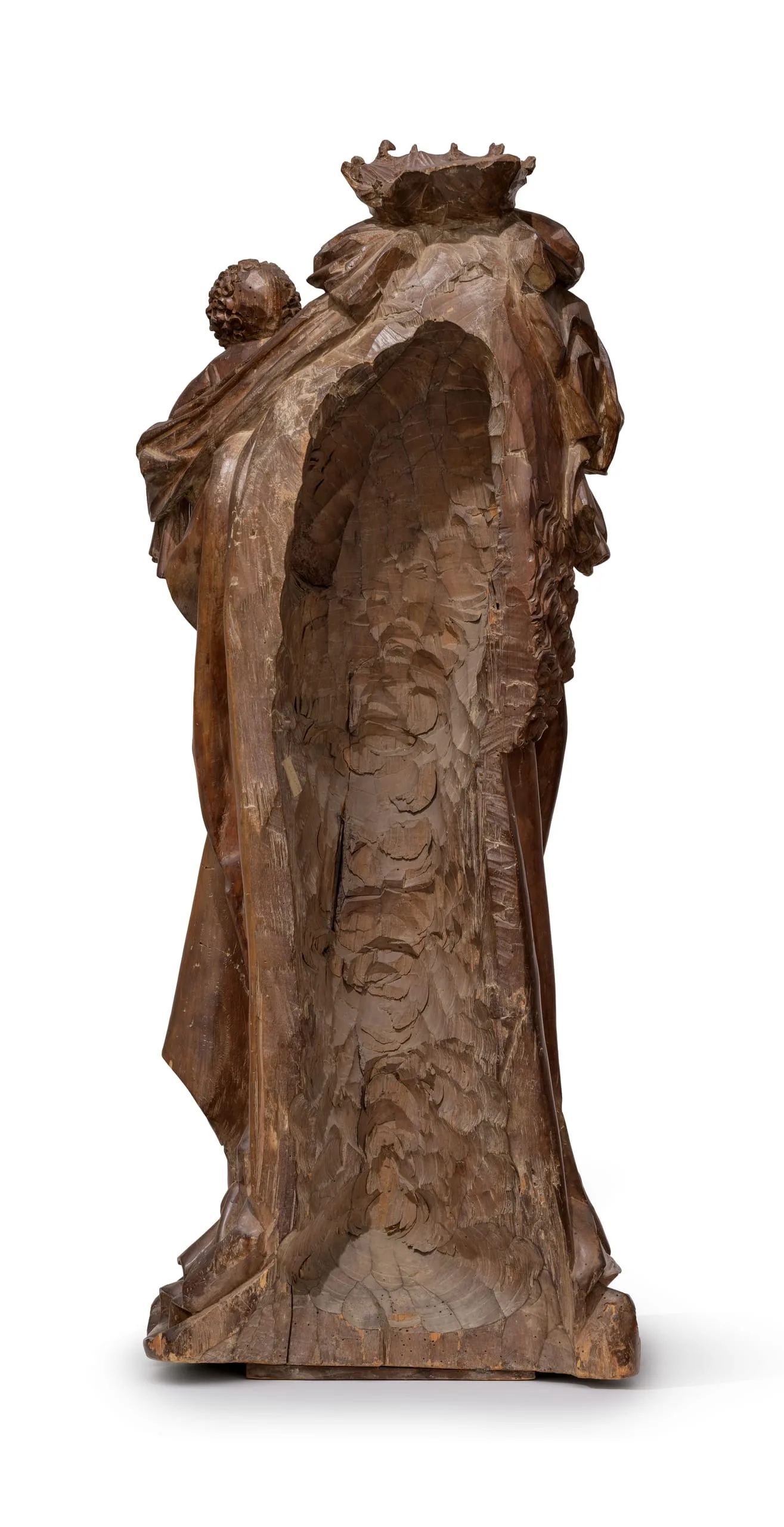
Wood sculpture of a crowned standing woman holding a child against her side, with deeply carved flowing robes and long wavy hair, in warm chestnut-brown wood
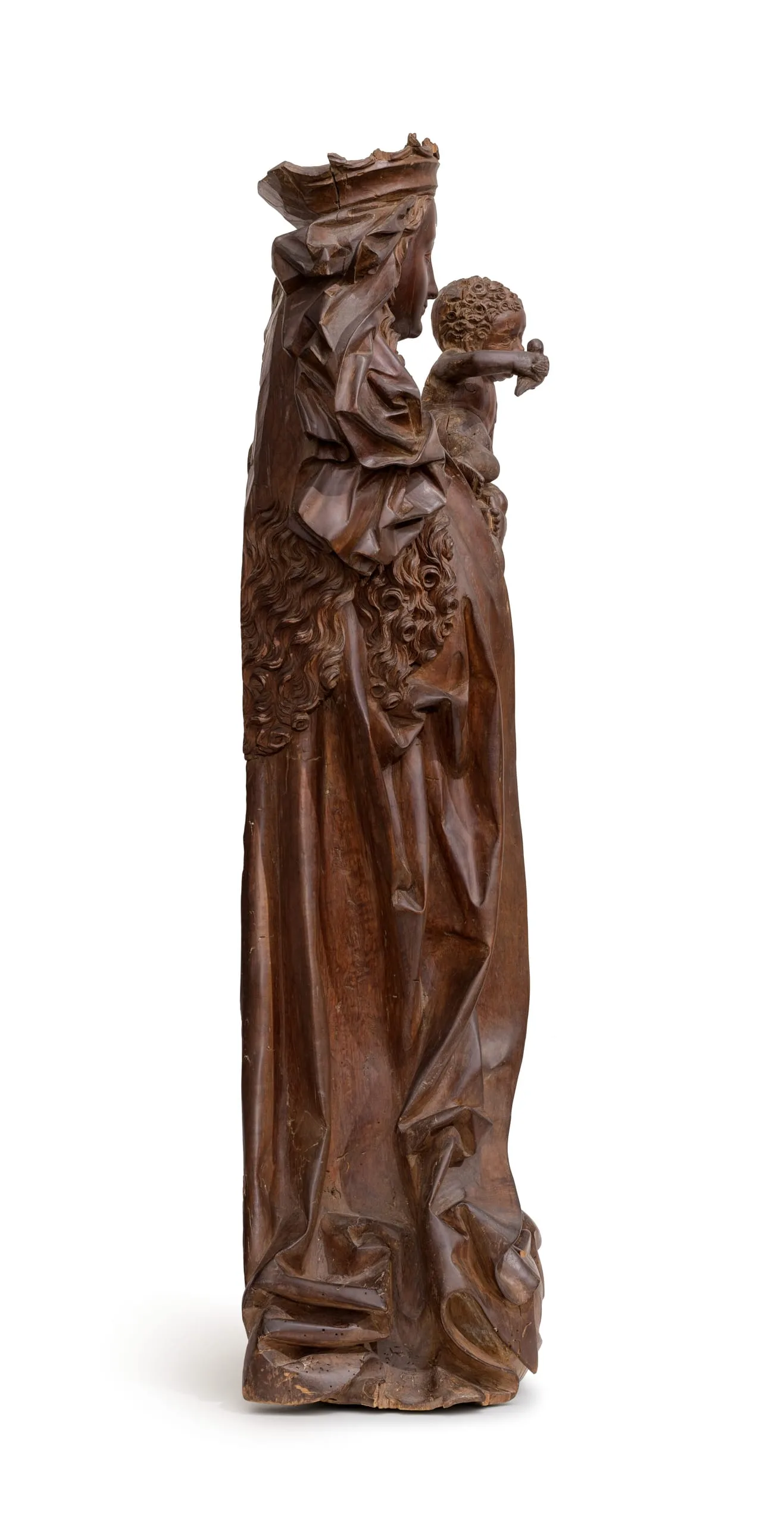
Carved wooden sculpture of a crowned standing figure holding a small child, shown in profile; warm brown patina with deeply carved drapery folds and Gothic-style crown.
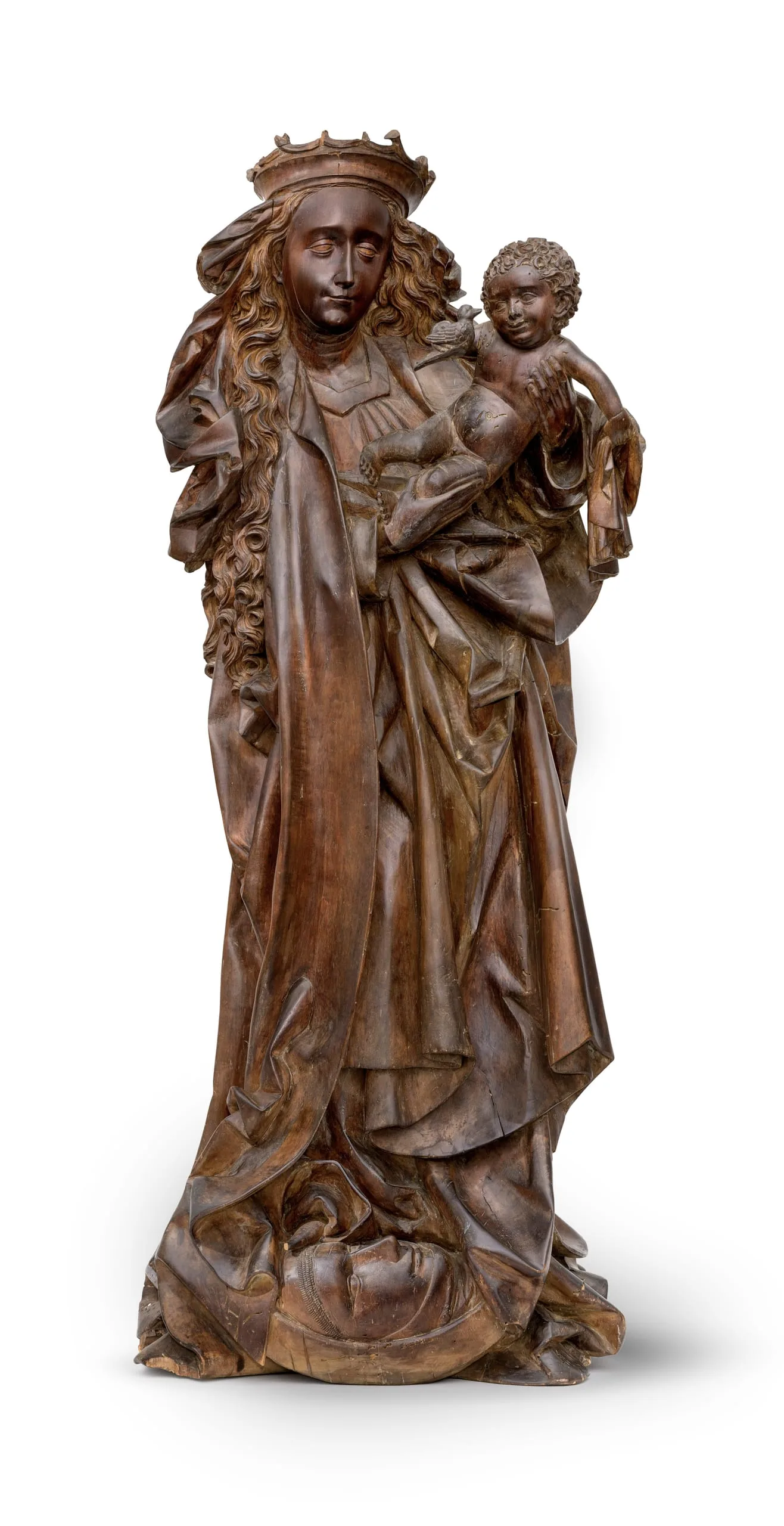
Carved wood sculpture of a crowned standing figure in flowing robes, viewed from the side and rear, with a smaller figure at the left shoulder; rough chisel marks visible on the hollow, unfinished back.
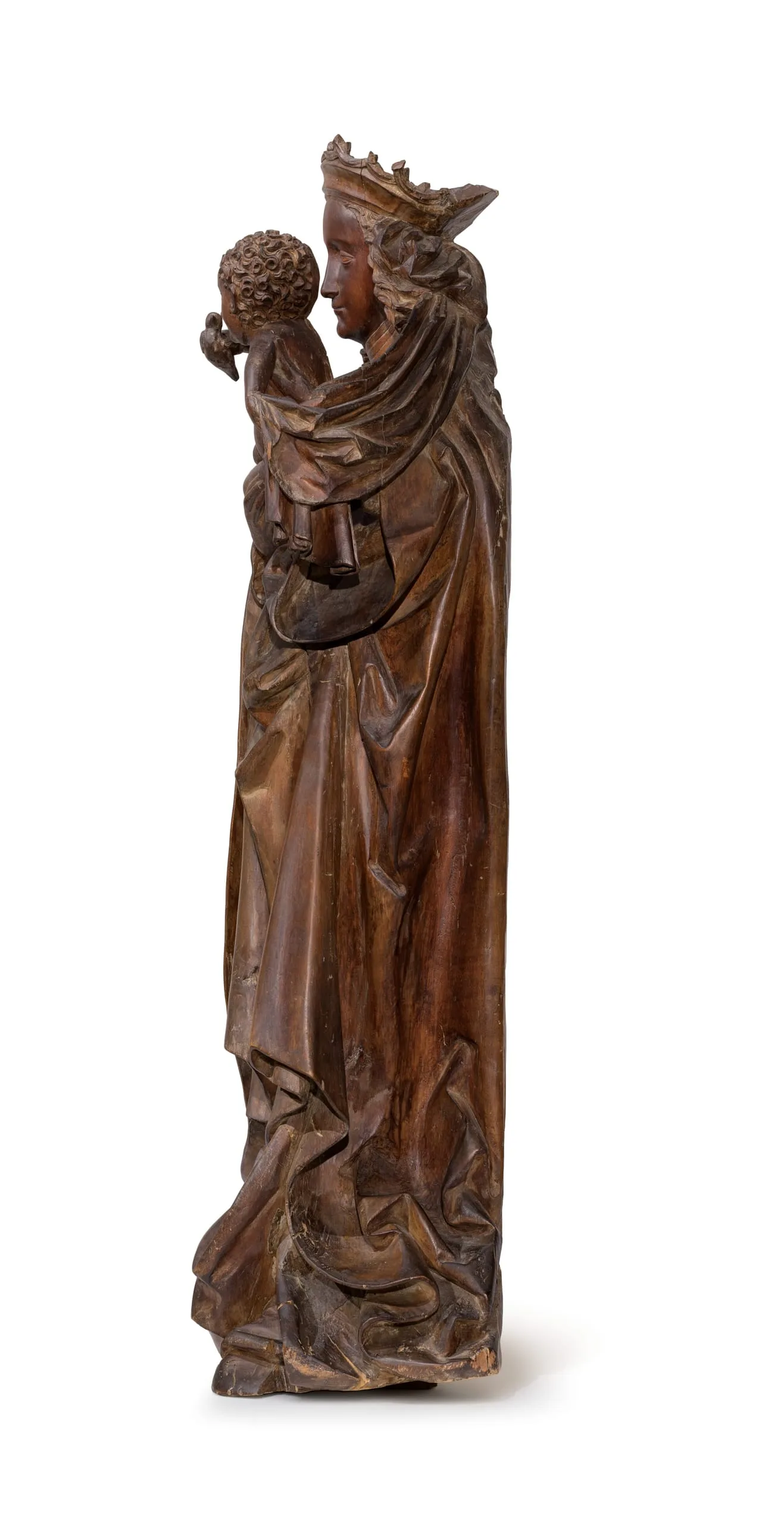
Carved wooden sculpture, full-length standing crowned figure holding a small child, viewed in profile; deeply undercut drapery folds and curling hair rendered in dark walnut-toned wood.

Unknown, Virgin and Child Standing upon the Moon, circa 1480-1500, Los Angeles County Museum of Art, Gift of Dr. W. R. Valentiner, photo © Museum Associates/LACMA

Artist or Maker
Unknown
Title
Virgin and Child Standing upon the Moon
Place Made
Germany, Upper Rhine
Date Made
circa 1480-1500
Medium
Linden wood
Dimensions
39 1/2 × 17 × 9 in. (100.33 × 43.18 × 22.86 cm)
Credit Line
Gift of Dr. W. R. Valentiner
Accession Number
51.24
Classification
Sculpture
Collecting Area
European Painting and Sculpture
Curatorial Notes

The Virgin Mary looks tenderly at the squirming Christ Child in her arms. A goldfinch, symbol of Christ’s Passion, is perched on his right hand. Mary’s figure is swathed in heavy drapery, and long tresses of curly hair cascade down her shoulders from beneath a veil that billows behind her. The crescent moon at her feet is rendered as a woman wearing a wimple, a type of veil that partially covers the face. It marks Mary as the woman of the Apocalypse from Saint John’s Revelations (Apocalypse 12:1) and as the Queen of Heaven, a common trope in late-medieval representations of the Virgin Mary.

Although the artist’s identity remains unknown, the carving has many of the stylistic hallmarks of Southern German sculpture, especially the exuberant drapery. The sculpture’s flattened and hollow back indicates that it was designed as part of a larger altarpiece. Placed above altars in churches and chapels, these complex objects could include carved standing figures, sculpted relief panels, and painted narrative panels enclosed by folding wings. The wings were also decorated with sculpted reliefs or paintings, and could be opened and closed at different times of the liturgical year. These artworks were ritual focal points of Christian devotion and therefore fell victim to iconoclasm during the Protestant Reformation, their panels and figures fragmented or destroyed.
Selected Bibliography
  • Valentiner, W.R. Gothic and Renaissance Sculptures: in the Collection of the Los Angeles County Museum. Los Angeles: Los Angeles County Museum, 1951.
  • Schaefer, Scott, and Peter Fusco. European Painting and Sculpture in the Los Angeles County Museum of Art: an Illustrated Summary Catalogue. Los Angeles: Los Angeles County Museum of Art, 1987.