- Title
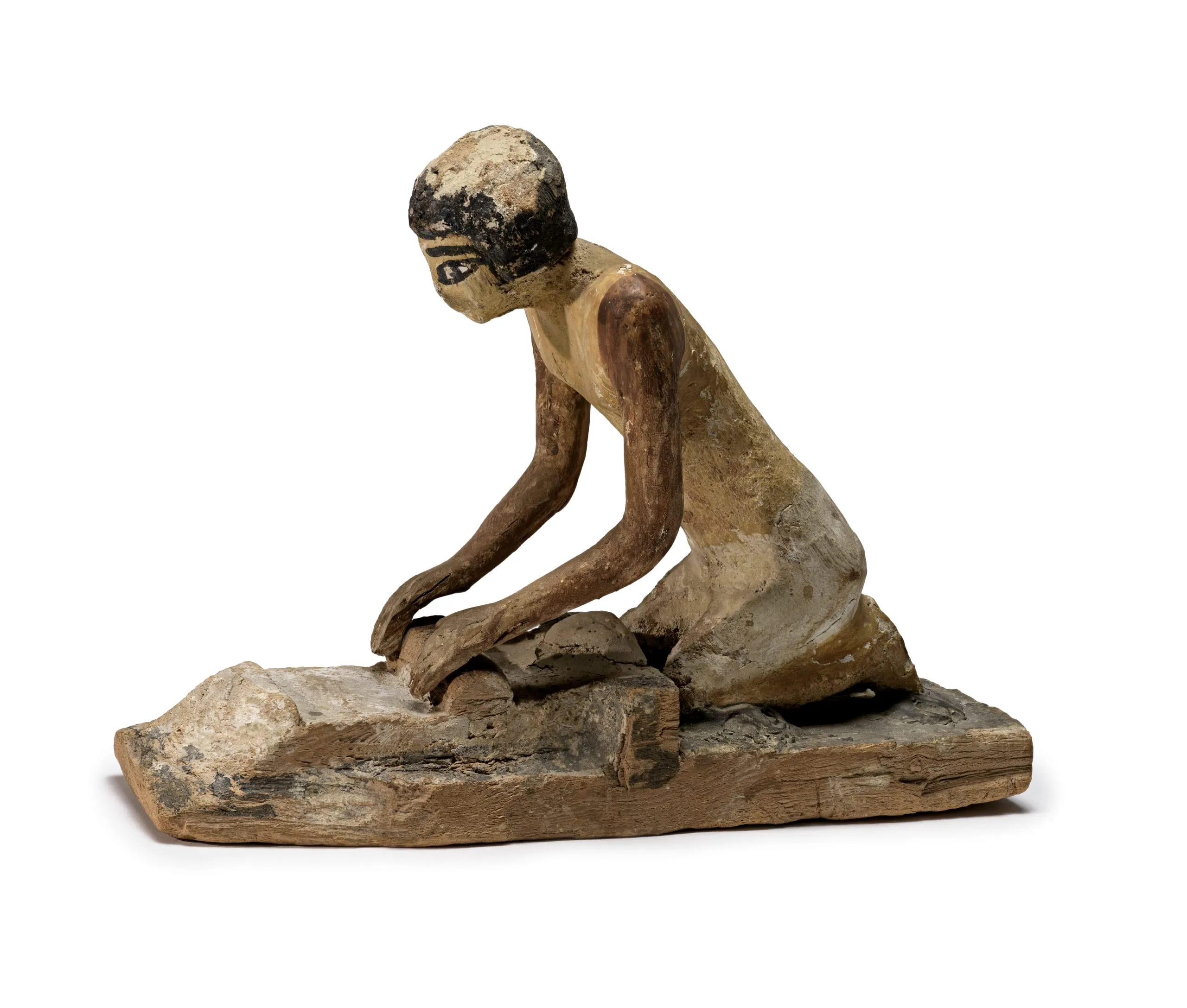
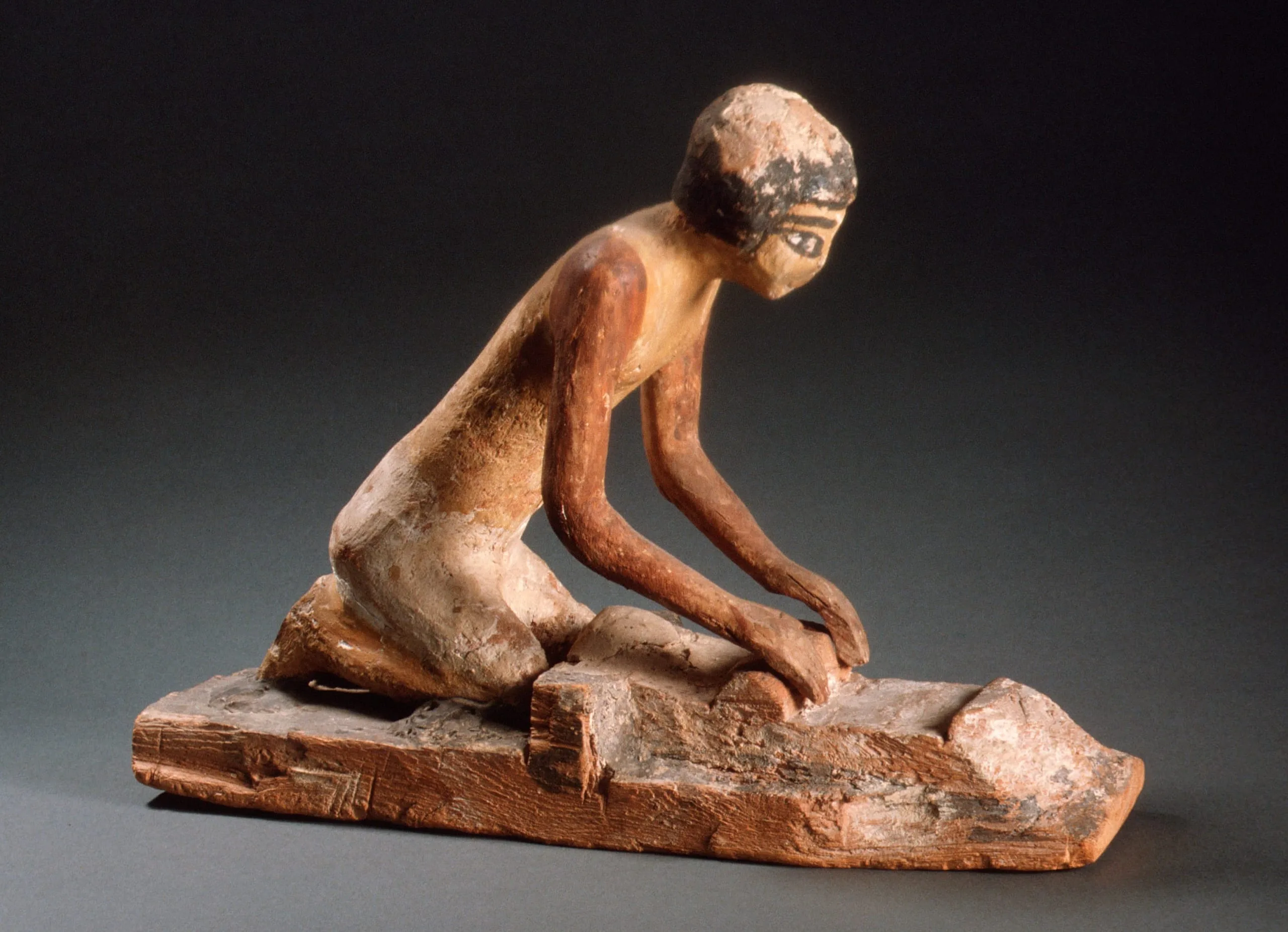
- Model of a Woman Grinding Grain
- Date Made
- Middle Kingdom, 11th or 12th Dynasty (2030-1802 BCE)
- Medium
- Wood, gesso and pigments
- Dimensions
- 7 1/4 × 3 × 9 in. (18.42 × 7.62 × 22.86 cm)
- Accession Number
- 51.15.10
- Curatorial Notes
During the First Intermediate Period (c. 2118−1980 BCE) and the Middle Kingdom (c. 1980−1760 BCE), wood models of food preparation and agricultural labor replaced the earlier Old Kingdom tomb reliefs and stone models of the same activities. Models were placed in tombs to enable the deceased to be magically sustained in the afterlife. Bread was a staple of the Egyptian diet, and coarse emmer wheat or barley grain required hand-grinding on a saddle quern with a smaller handstone to produce flour. The woman’s face, torso, and legs were painted yellow, the standard skin color for representations of women, and a short white skirt is shown from her waist to her knees. Her arms, however, were overpainted with reddish brown, perhaps an indication of sun exposure while wearing a sleeveless garment.