LACMA

ShopMembershipMyLACMATickets
LACMA
Los Angeles County Museum of Art
5905 Wilshire Blvd.
Los Angeles, CA 90036
info@lacma.org
(323) 857-6000
Sign up to receive emails
Subscribe
© Museum Associates 2025

Museum Hours

Monday

11 am–6 pm

Tuesday

11 am–6 pm

Wednesday

Closed

Thursday

11 am–6 pm

Friday

11 am–8 pm

Saturday

10 am–7 pm

Sunday

10 am–7 pm


  • About LACMA
  • Jobs
  • Building LACMA
  • Host An Event
  • Unframed
  • Press
  • FAQs
  • Log in to MyLACMA
  • Privacy Policy
© Museum Associates 2025
Collections

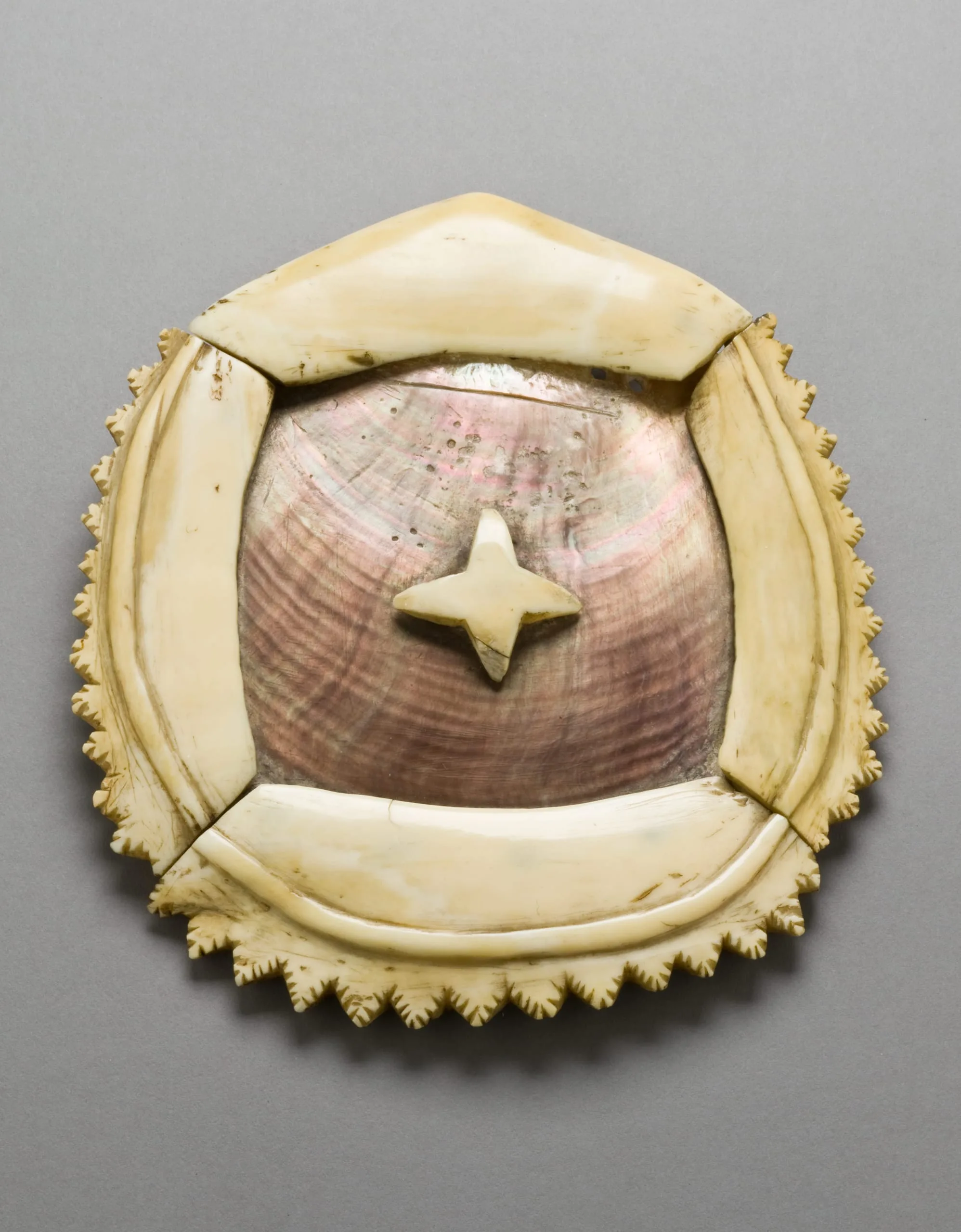
Breast Ornament (civa vonovono)circa 1850

Not on view
Circular decorative ornament combining carved ivory or bone with a central domed mother-of-pearl shell inset, featuring a serrated outer edge and a small four-pointed star at center
Title
Breast Ornament (civa vonovono)
Place Made
Republic of the Fiji Islands
Date Made
circa 1850
Medium
Whale ivory, pearl shell, and fiber
Dimensions
Height: 5 in. (12.7 cm); Diameter: 7 in. (17.78 cm)
Credit Line
Purchased with funds provided by the Eli and Edythe Broad Foundation with additional funding by Jane and Terry Semel, the David Bohnett Foundation, Camilla Chandler Frost, Gayle and Edward P. Roski, and The Ahmanson Foundation
Accession Number
M.2008.66.37
Classification
Jewelry and Adornments
Collecting Area
Art of the Pacific
Curatorial Notes

Gallery Label
This civavonovono is composed of whale tooth plates lashed tightly with fiber to fit flush with the attached pearl shell. The ornament’s decorative meaning is not specifically known, but it is a chiefly possession and a highly personal ornament. It probably was used in ceremonial dances and combat. It had attached fiber cords to hang around the neck and tie around the sides and back to keep it in place at the front of the body.

Ornaments such as this example were presented to a chief or other important person as a token of goodwill, loyalty, and reverence, as part of a birth, marriage, or death ceremony, or upon the departure or return from a long journey.

Fiji lies within the well-traveled areas of Polynesian waters, and as whaling and access to whale ivory increased during the eighteenth century, ivory objects like this ornament became more prolific. The complex treatment of the inlay here reflects the introduction of metal tools used in the carving process. This example is fit together with fiber, but as metal became more widely used, metal clasps replaced the traditional fiber. The fiber-lashing technique probably was adopted from neighboring Tongan canoe craftsmen.


Selected Bibliography
  • Wardwell, Allen. Island Ancestors: Oceanic Art from the Masco Collection. [Seattle]: University of Washington Press, 1994.