LACMA

ShopMembershipMyLACMATickets
LACMA
Los Angeles County Museum of Art
5905 Wilshire Blvd.
Los Angeles, CA 90036
info@lacma.org
(323) 857-6000
Sign up to receive emails
Subscribe
© Museum Associates 2025

Museum Hours

Monday

11 am–6 pm

Tuesday

11 am–6 pm

Wednesday

Closed

Thursday

11 am–6 pm

Friday

11 am–8 pm

Saturday

10 am–7 pm

Sunday

10 am–7 pm


  • About LACMA
  • Jobs
  • Building LACMA
  • Host An Event
  • Unframed
  • Press
  • FAQs
  • Log in to MyLACMA
  • Privacy Policy
© Museum Associates 2025
Collections

Food Plattercirca 1800

Not on view
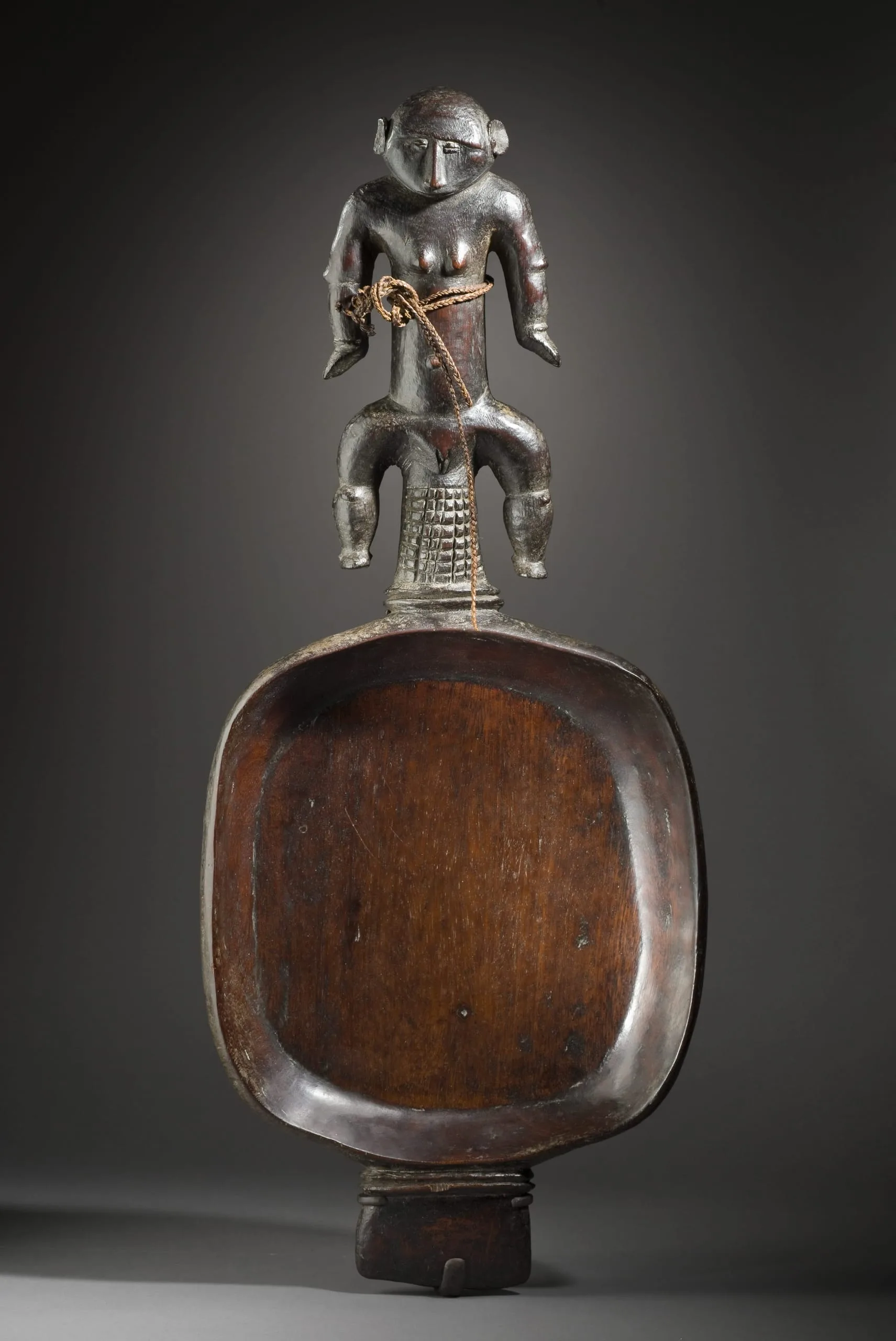
Carved wooden spoon or ladle with a large shallow bowl and a small human figure straddling the rim, with deep dark patina and a twisted cord around the figure's torso
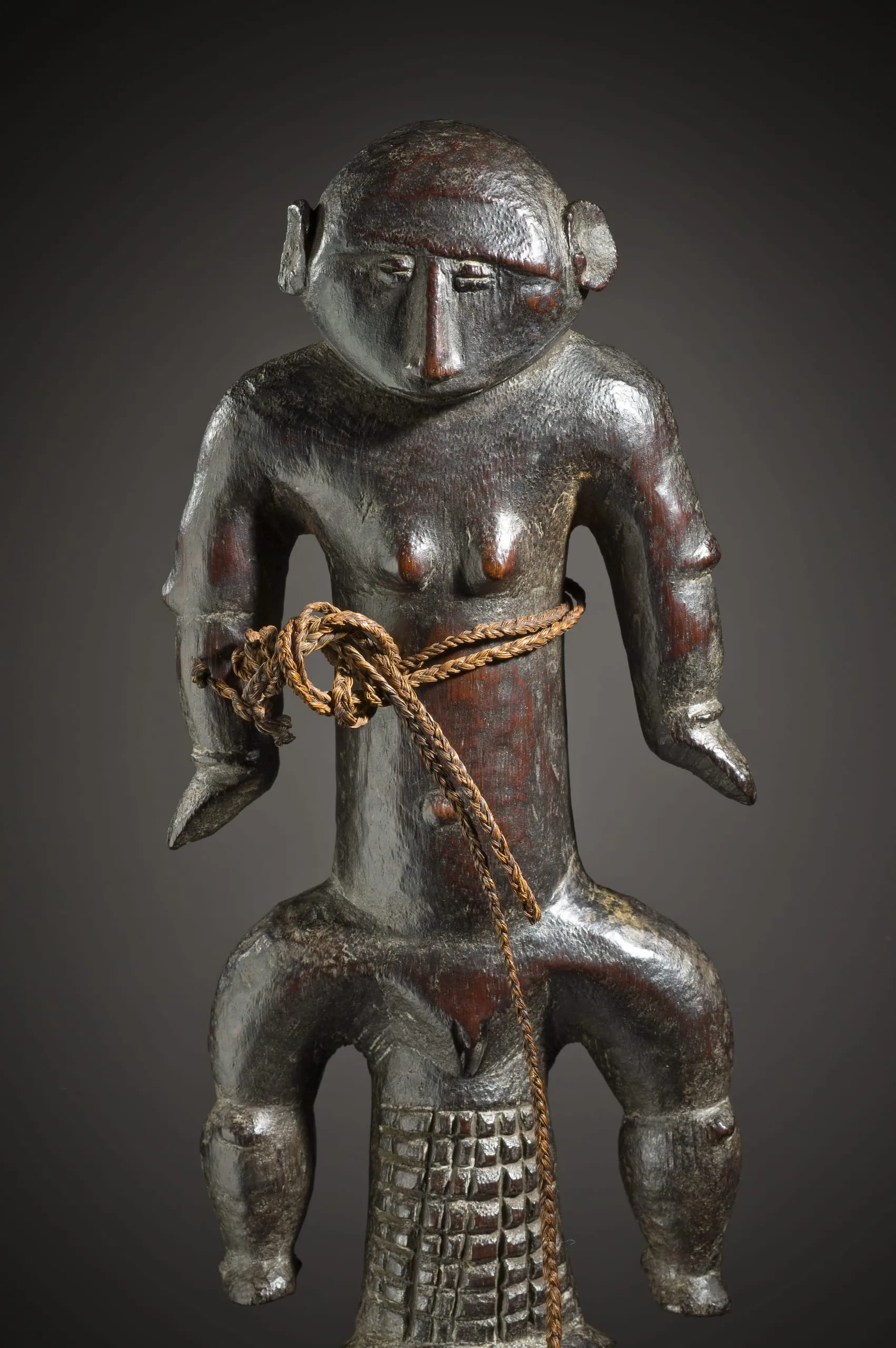
Wooden figure with dark, heavily patinated surface and red undertones, seated in a squatting posture with hands on knees. The figure has a rounded head with disc-shaped ear ornaments and simplified facial features. A braided fiber cord is knotted around the waist. The lower body features a grid-patterned skirt with incised geometric relief.
Title
Food Platter
Place Made
Republic of Vanuatu, Espíritu Santo
Date Made
circa 1800
Medium
Wood and fiber
Dimensions
31 x 13 x 4 1/2 in. (78.74 x 33.02 x 11.43 cm)
Credit Line
Purchased with funds provided by the Eli and Edythe Broad Foundation with additional funding by Jane and Terry Semel, the David Bohnett Foundation, Camilla Chandler Frost, Gayle and Edward P. Roski, and The Ahmanson Foundation
Accession Number
M.2008.66.23
Classification
Furnishings
Collecting Area
Art of the Pacific
Curatorial Notes

Gallery Label
This platter is one of two known examples with carved human figure handles. This example is female, the other, in the collection of the Musée Barbier-Müller, Geneva, is male. The carved figure most likely represents an ancestor or, possibly, a reference to the society’s earlier cannibalistic rituals, though use in social-ranking initiations was more likely.

The platter was used in ritual feasts to grind and serve traditional nalot pudding and other ceremonial vegetarian foods. Nalot is made from native taro root or breadfruit ground into a pudding for special occasions. Ritual feasts often coincided with initiation ceremonies associated with the hierarchy of social grades. Society in Vanuatu was based on different grades or ranks that were moved through with the appropriate displays of wealth. Each new grade required initiation, which included special objects and the learning of secret knowledge, both particular to each grade. The objects associated with these important festivities, which dictated the makeup of society in Vanuatu, were sacred and highly respected.

Some platters in Vanuatu were simple elongated troughs, others were made in the shape of turtles. This anthropomorphic form was found on the island of Espíritu Santo. The underside of platters also were decorated, as they were visible when the platter was hung for storage.


Selected Bibliography
  • Wardwell, Allen. Island Ancestors: Oceanic Art from the Masco Collection. [Seattle]: University of Washington Press, 1994.
  • Harding, Julian. "Pacific Treasures: the Masco Collection Goes to Los Angeles." Tribal Art no.50 (2008): 68-73.