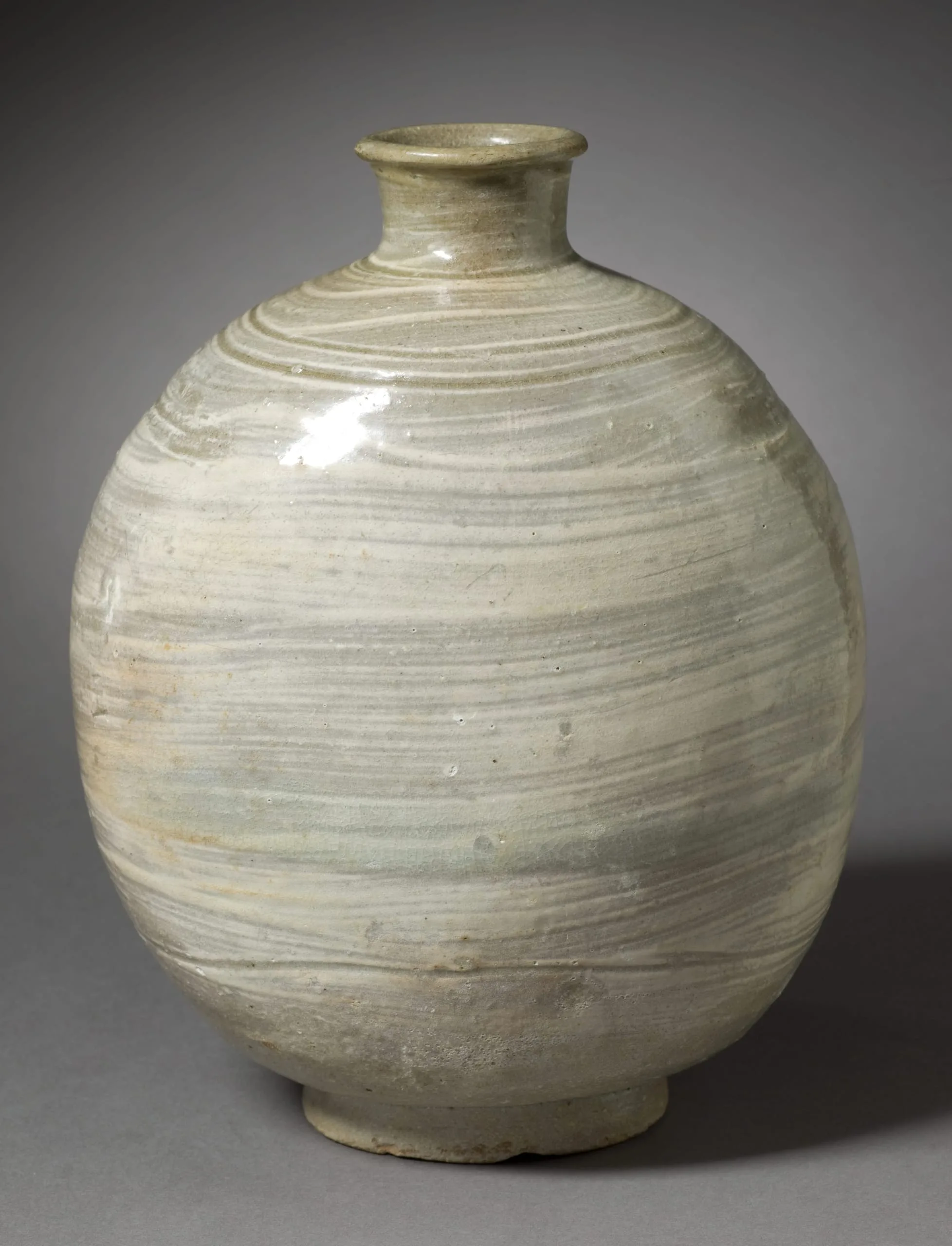
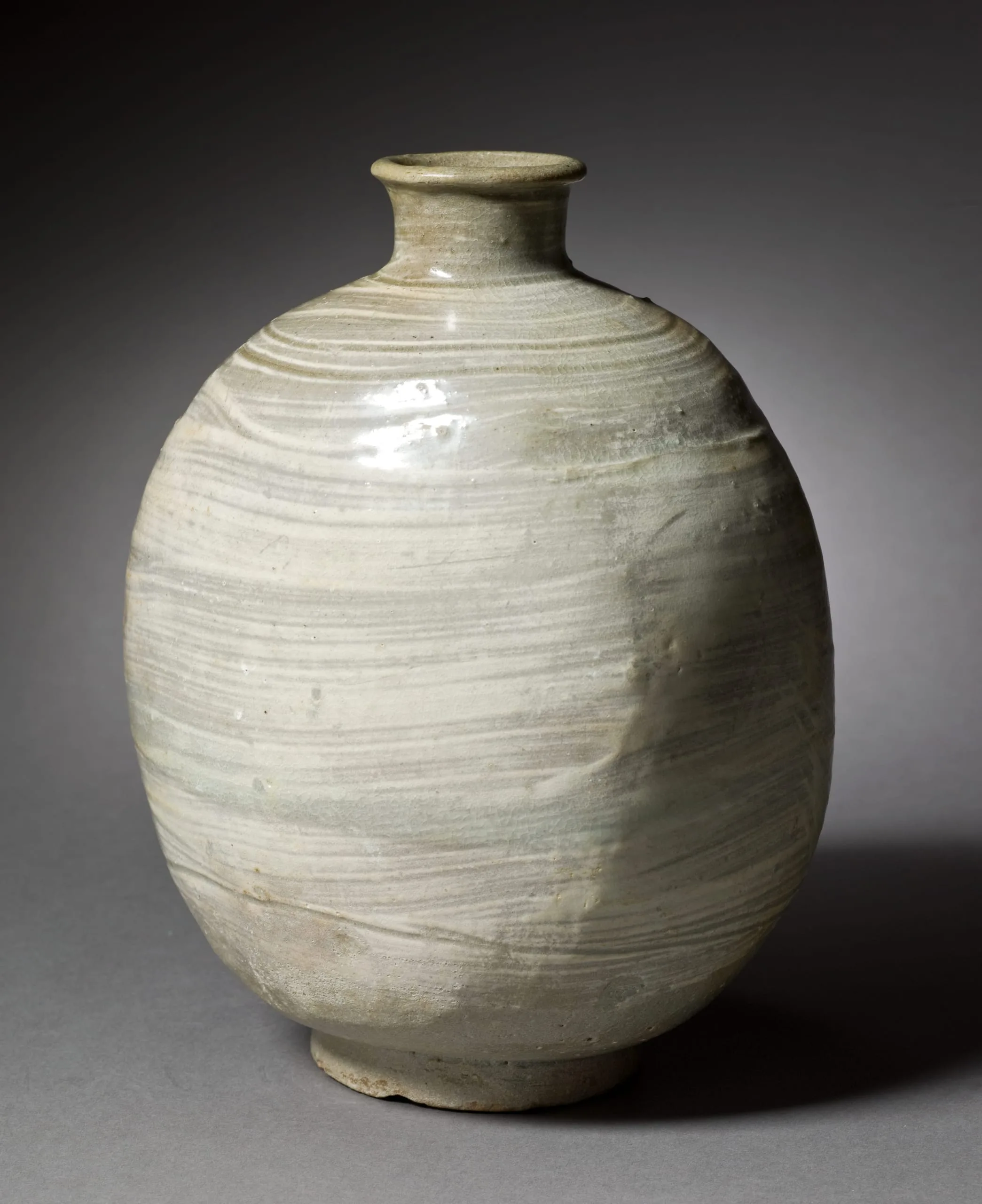
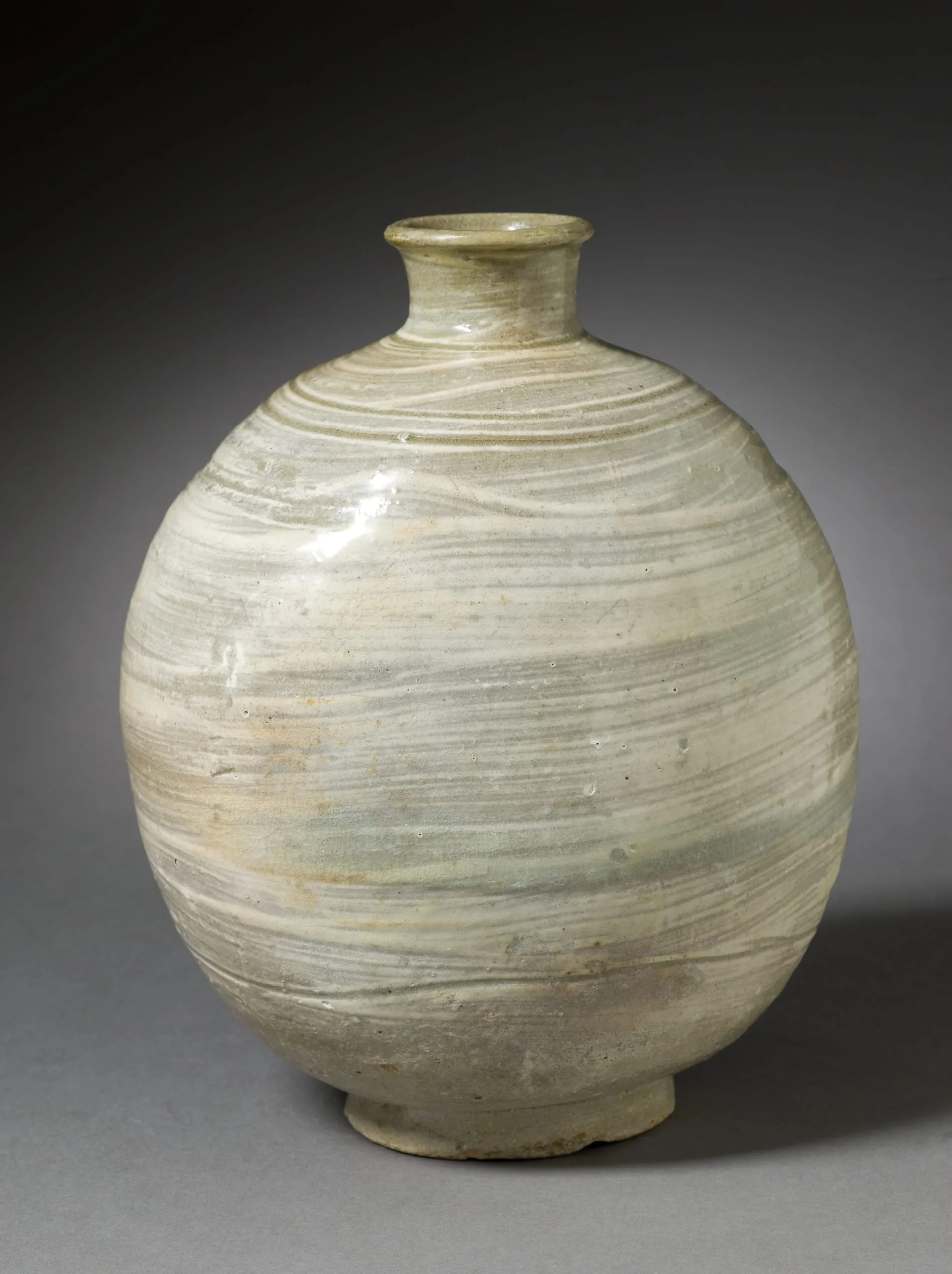
Buncheong (literally meaning "powdered blue and green") is a type of ceramic ware originally produced in Korea and became the motivation of ceramic development in Japan in the 16th century. The clay and glaze of buncheong ware related to the celadon wares of the Goryeo dynasty (918-1392). However, the decorative motifs and forms were notably different and reflect the styles and tastes of the later Joseon period (1392-1910). Buncheong ware represents an important bridge between the artistic styles, technologies, and aesthetic tastes of the two dynasties. Used and appreciated more widely, buncheong wares have diverse shapes and decoration. Among the seven different decorative techniques used in buncheong ware, the brushed design represented in this jar was popular in the middle fifteenth century, around the time stamped designs began to disappear.
After the round vessel was thrown on a wheel, the sides of the jar were flattened by beating it with a wooden mallet covered in cloth. A rough and fast brush movement was used to paint white slip around the clay body. The vibrant brushstroke produces a rhythmic design creating a remarkable decorative effect while, at the same time, preserving the vessel's natural aesthetics.
Hyonjeong Kim, Associate Curator, Chinese and Korean Art, (2009)