Gallery Label
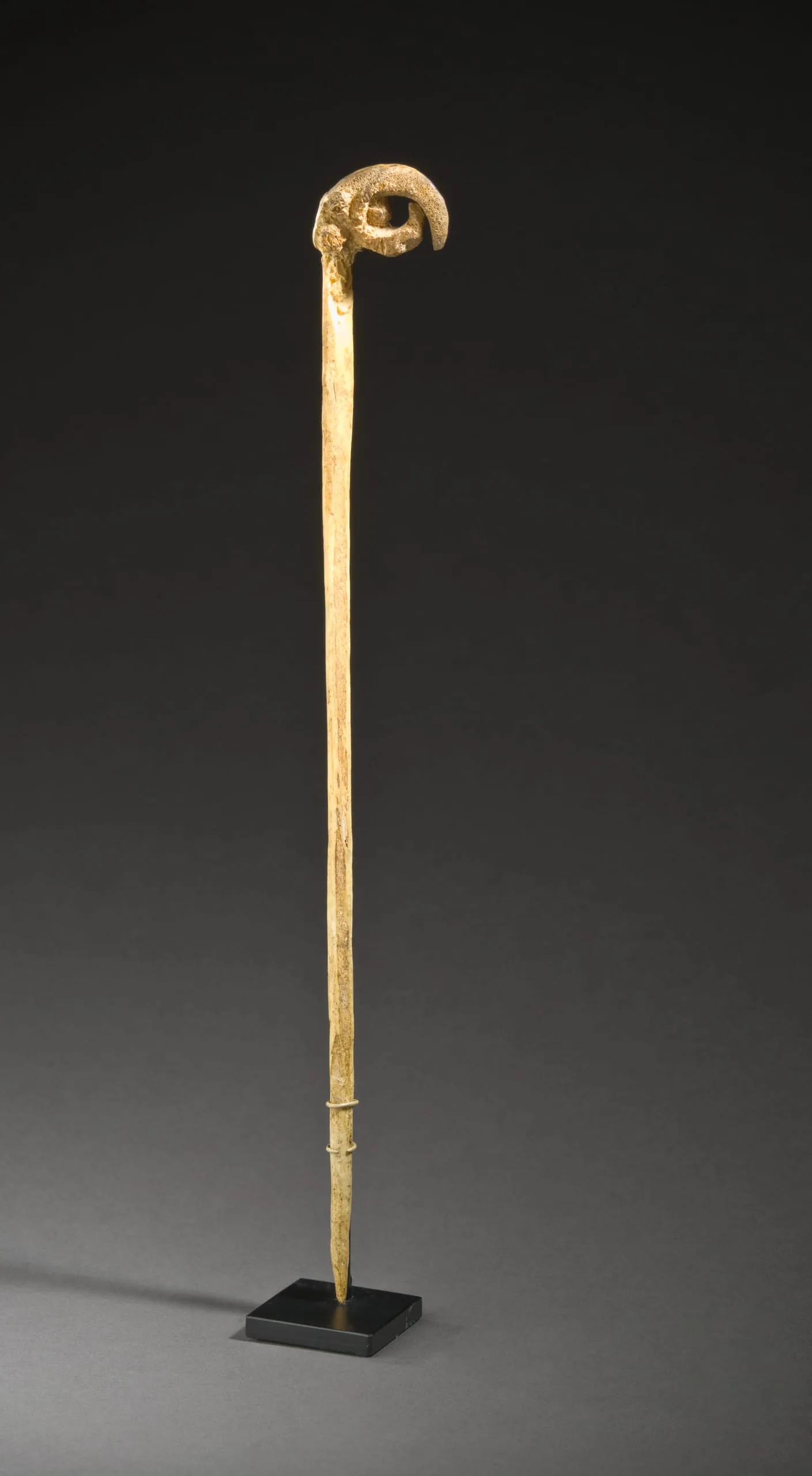
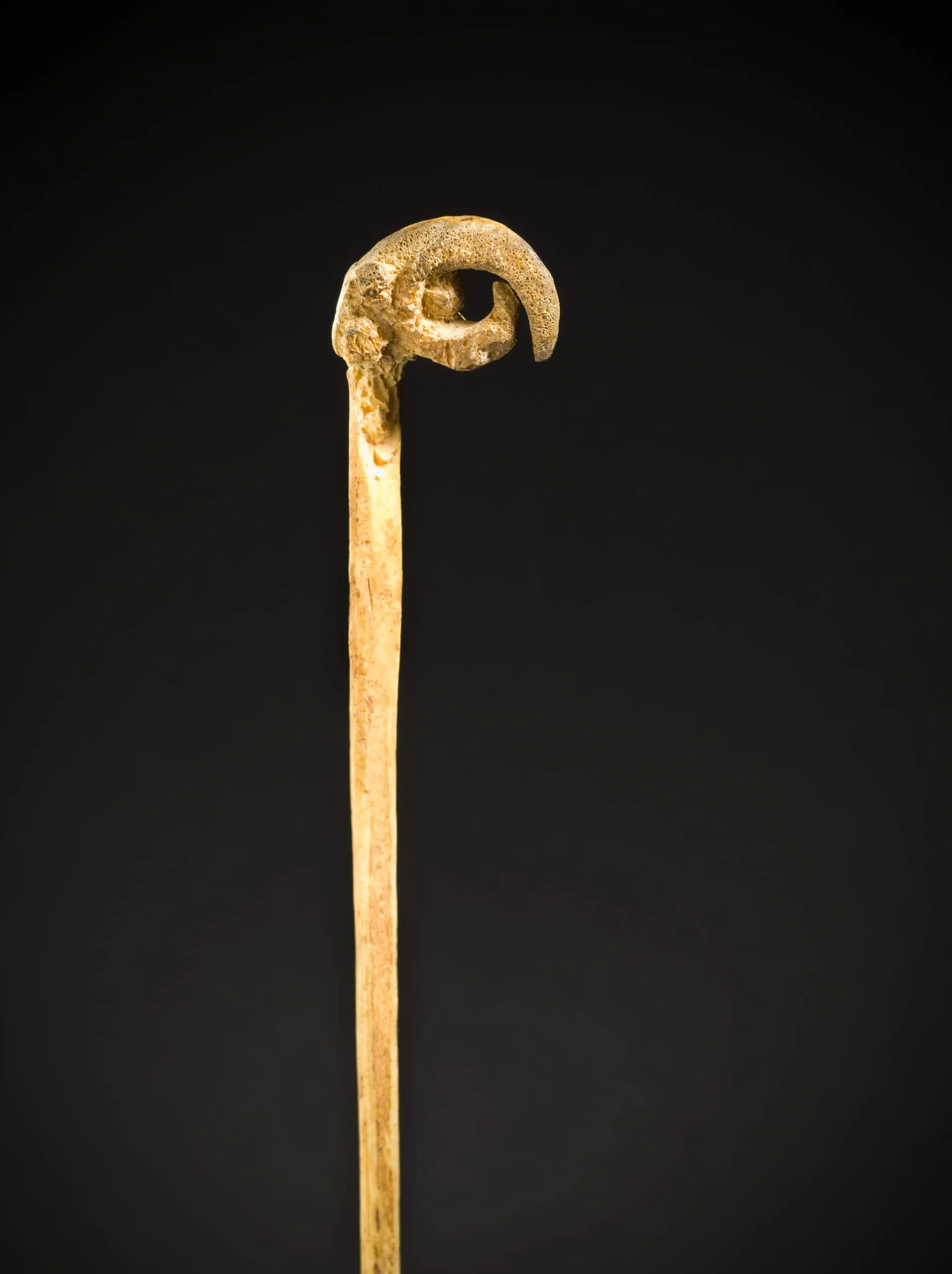
Lime spatulas were made for various purposes in Lake Sentani society. The finely carved handle of the wooden example reflected the prestige of its owner, as did the quality of the carving on the gourd in which it was kept. This example’s two human figures are carved with the long faces and deep eyes common to the region’s art. The decorations carved on the handles of such spatulas were specific to gender, with different designs for male and female owners. The other examples of lime spatulas in LACMA’s collection are simply carved cassowary bird bone.
The spatula and gourd pair were used to dispense lime kept in the gourd. The lime was removed from its container with the spatula and mixed with ground betel nut to be chewed. Betel nut, also known as areca palm seed, were ground with a mortar and when mixed and chewed, provided a mildly intoxicating effect. The betel was chewed at ceremonial events, for general pleasure, and as a rite of passage. The spatula also was rattled against the gourd as musical accompaniment during ceremonial occasions, which left visible notches. The purpose of this spatula is the same as those from other areas of New Guinea, though the Lake Sentani style of balanced and symmetrical carving is known solely in that region.
The use of lime containers continues today, but the traditional gourds and spatulas have been replaced by metal containers.