Gallery Label
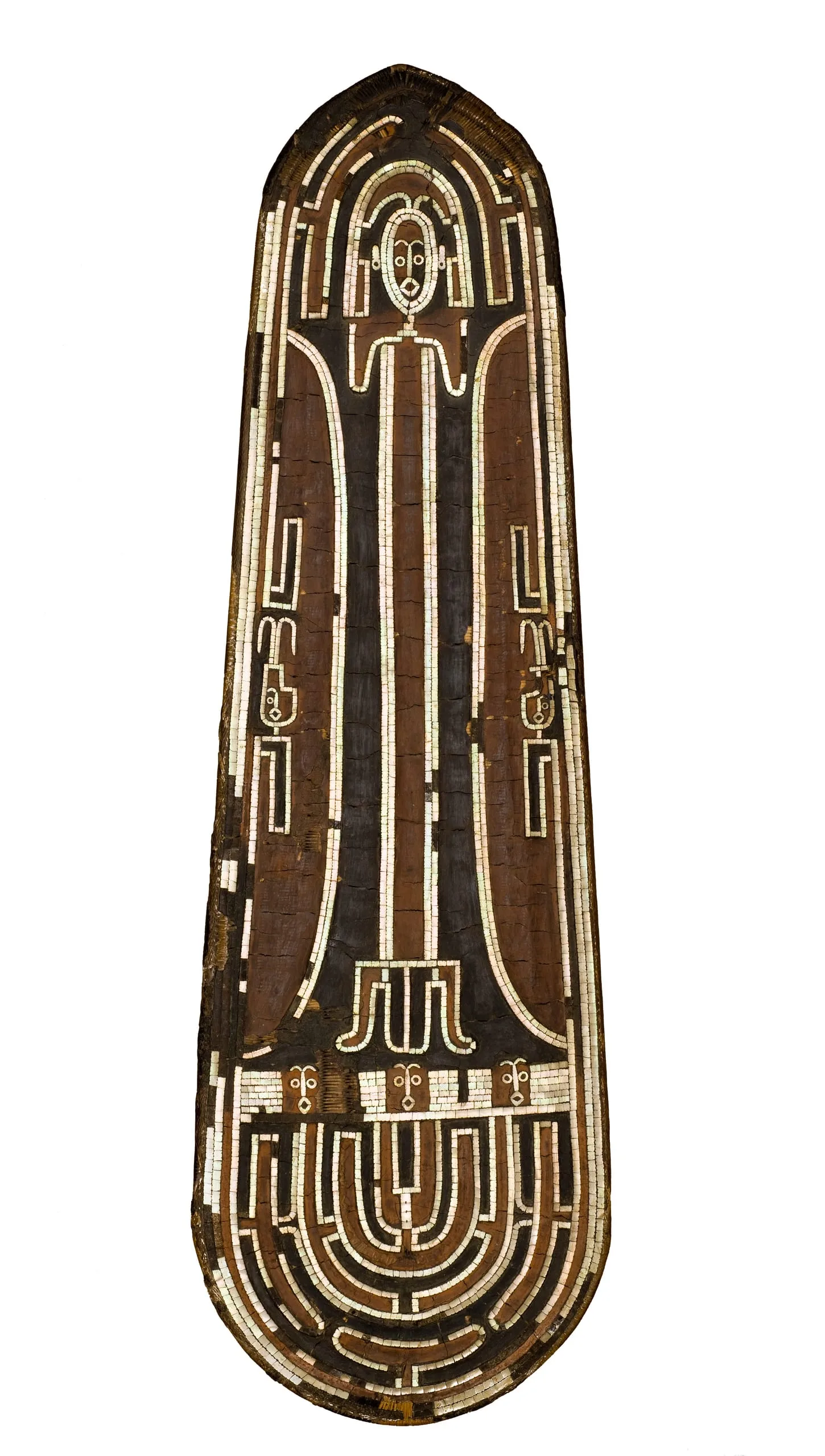
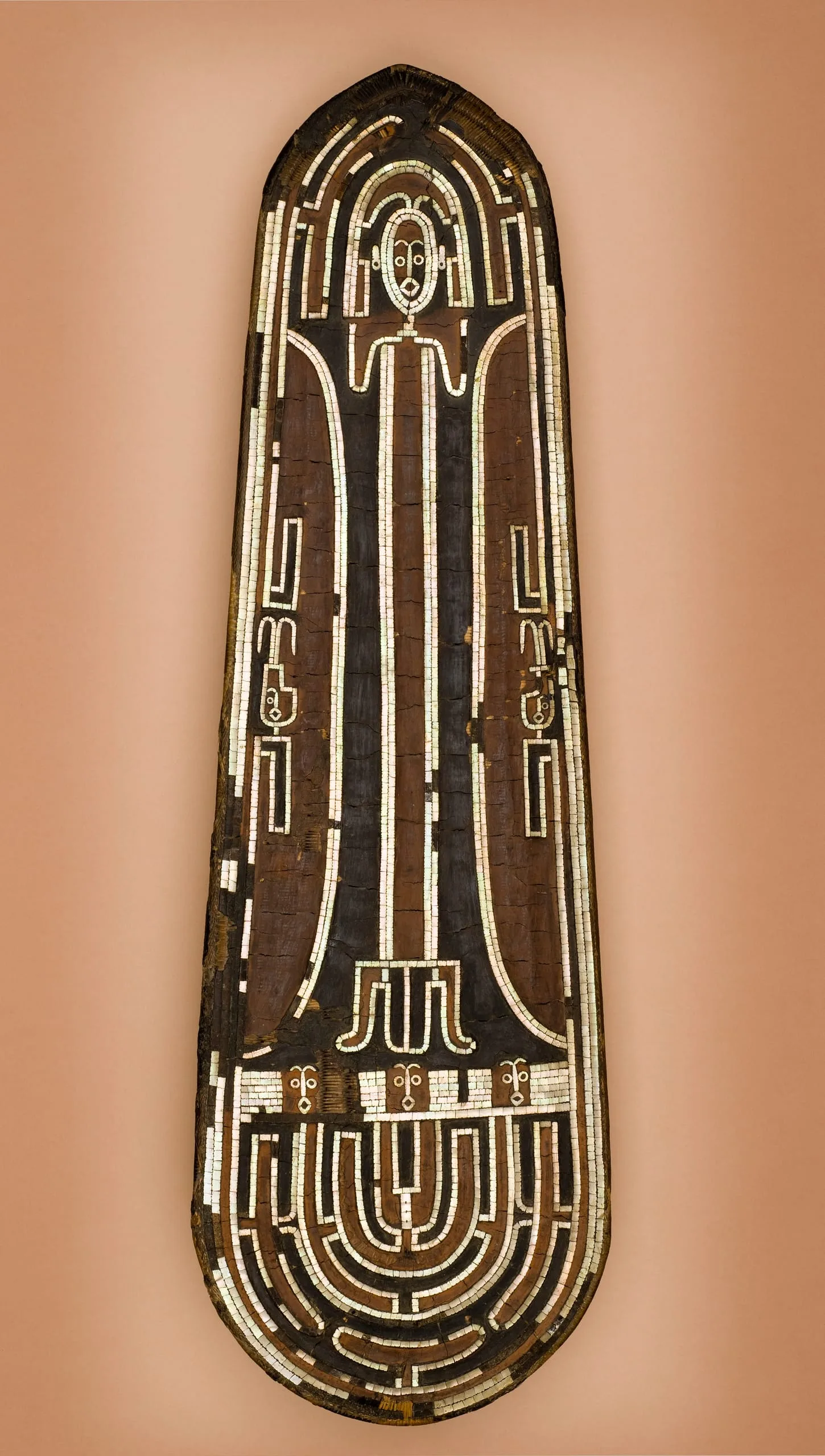
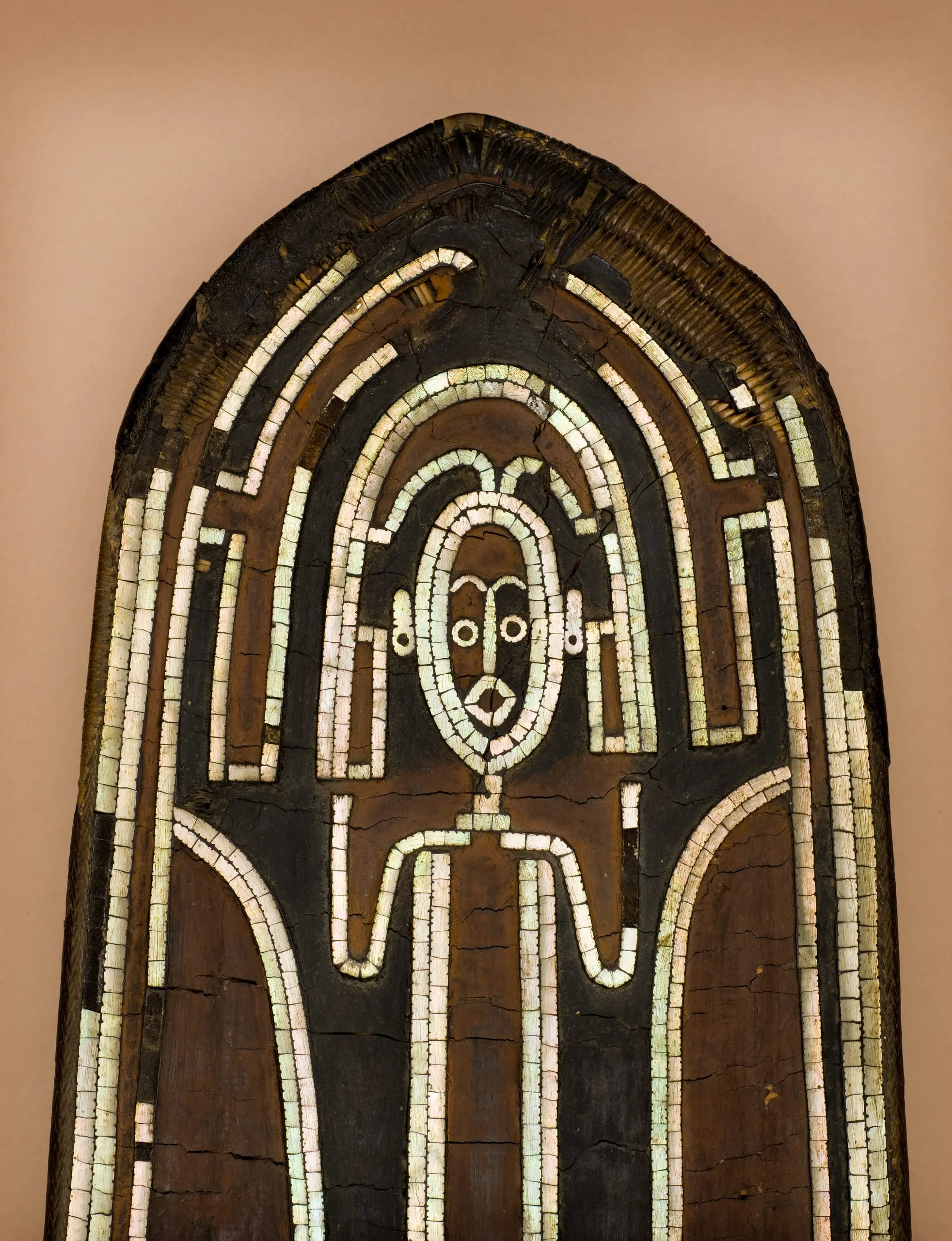
The designs, on a support of coiled fiber in an elongated oval shape, were executed in nautilus shell inlaid into parinarium nut paste. The central elongated standing figure is a rectangular shape, with upraised arms and hands placed near the face. Below this figure are three human heads—a possible reference to cannibalism—and a head in profile on each side of the main figure. The inlay continues with linear bands around the shield’s edge. The meaning of these designs and the use of these types of shields are not known.
This exquisite shield, one of twenty-one known was most likely a decorative shield for display, because its fragility negates a utilitarian use. The Solomon Islands were varied culturally, represented by 110 languages and dialects among the regions that traded goods, such as this shield and other ceremonial and utilitarian weaponry. The islands have a tradition of frequent warfare among their diverse groups, and utilitarian shields were used in combat, protecting the warrior as he crouched behind it. Both prestige and utilitarian shields were made on one island and traded among the others for additional design work, such as the delicate inlay seen here.
Exhibition Wall Label from: "Ernst Ludwig Kirchner, Kirchner's Non-Western Sources"
At the end of March 1910, Kirchner wrote to his Brücke colleagues Erich Heckel and Max Pechstein to express the “pleasure and regeneration” he felt upon visiting the recently reopened ethnographic museum in Dresden. At first only the African and Mexican collections were on view (inspiring sketches of a Beninese bronze and a Cameroonian sculpture in his letter), but by summer he was studying Oceanic works there. Objects such as this Solomon Islands ceremonial shield from the Dresden museum offered modern artists an alternative to what they held to be exhausted European traditions. Non-European sources were regarded as offering clues to a new beginning, both artistically and socially, that they yearned for.
(2008)