LACMA

ShopMembershipMyLACMATickets
LACMA
Los Angeles County Museum of Art
5905 Wilshire Blvd.
Los Angeles, CA 90036
info@lacma.org
(323) 857-6000
Sign up to receive emails
Subscribe
© Museum Associates 2025

Museum Hours

Monday

11 am–6 pm

Tuesday

11 am–6 pm

Wednesday

Closed

Thursday

11 am–6 pm

Friday

11 am–8 pm

Saturday

10 am–7 pm

Sunday

10 am–7 pm


  • About LACMA
  • Jobs
  • Building LACMA
  • Host An Event
  • Unframed
  • Press
  • FAQs
  • Log in to MyLACMA
  • Privacy Policy
© Museum Associates 2025
Collections

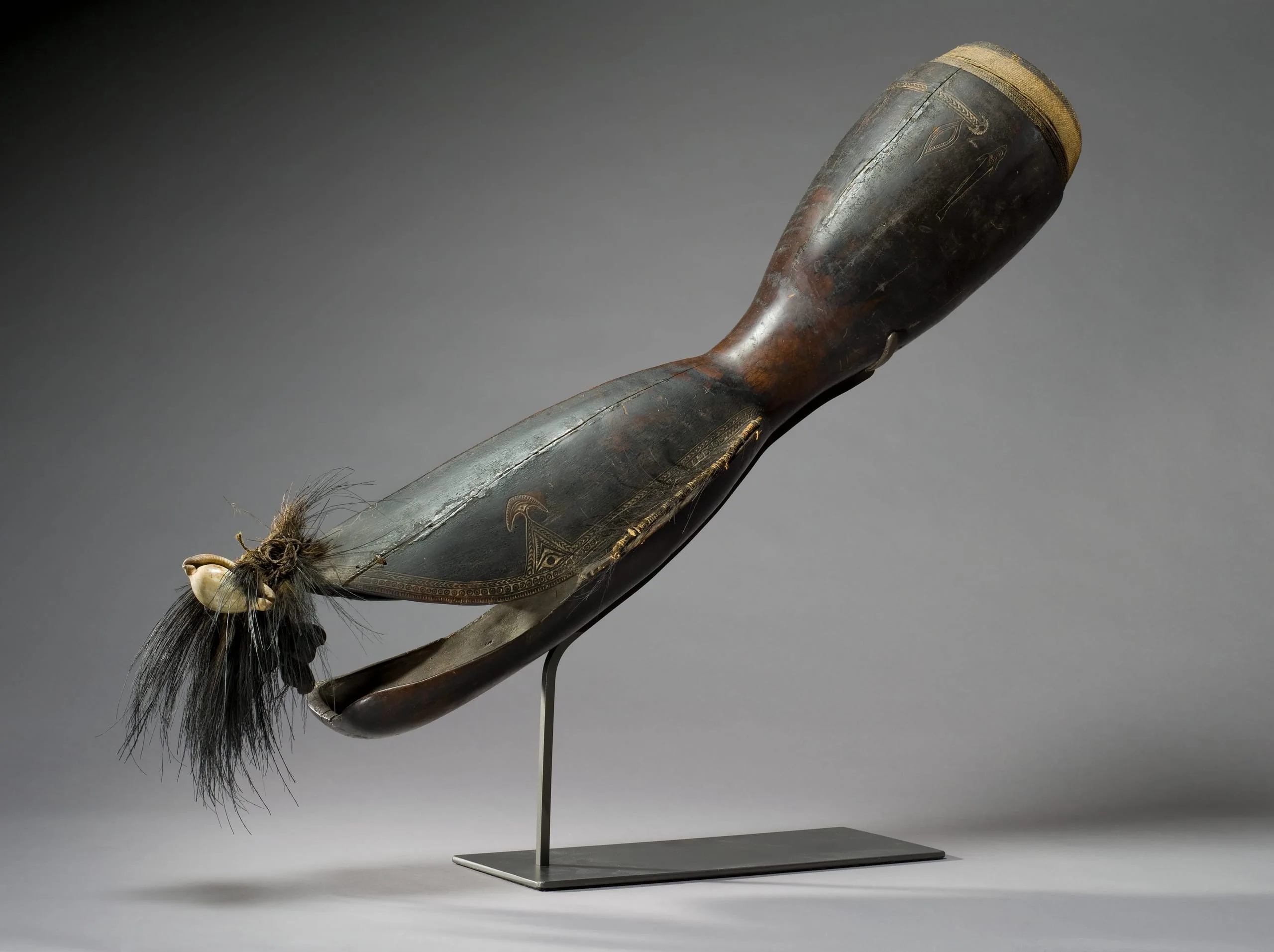
Hand Drum (warup)circa 1850

On view:
Geffen Galleries, Navigating Pacific Asia
Polished dark brown horn-shaped object with gold engraved decoration, forked lower end tied with black fiber tassels and white beads, mounted on a metal display stand
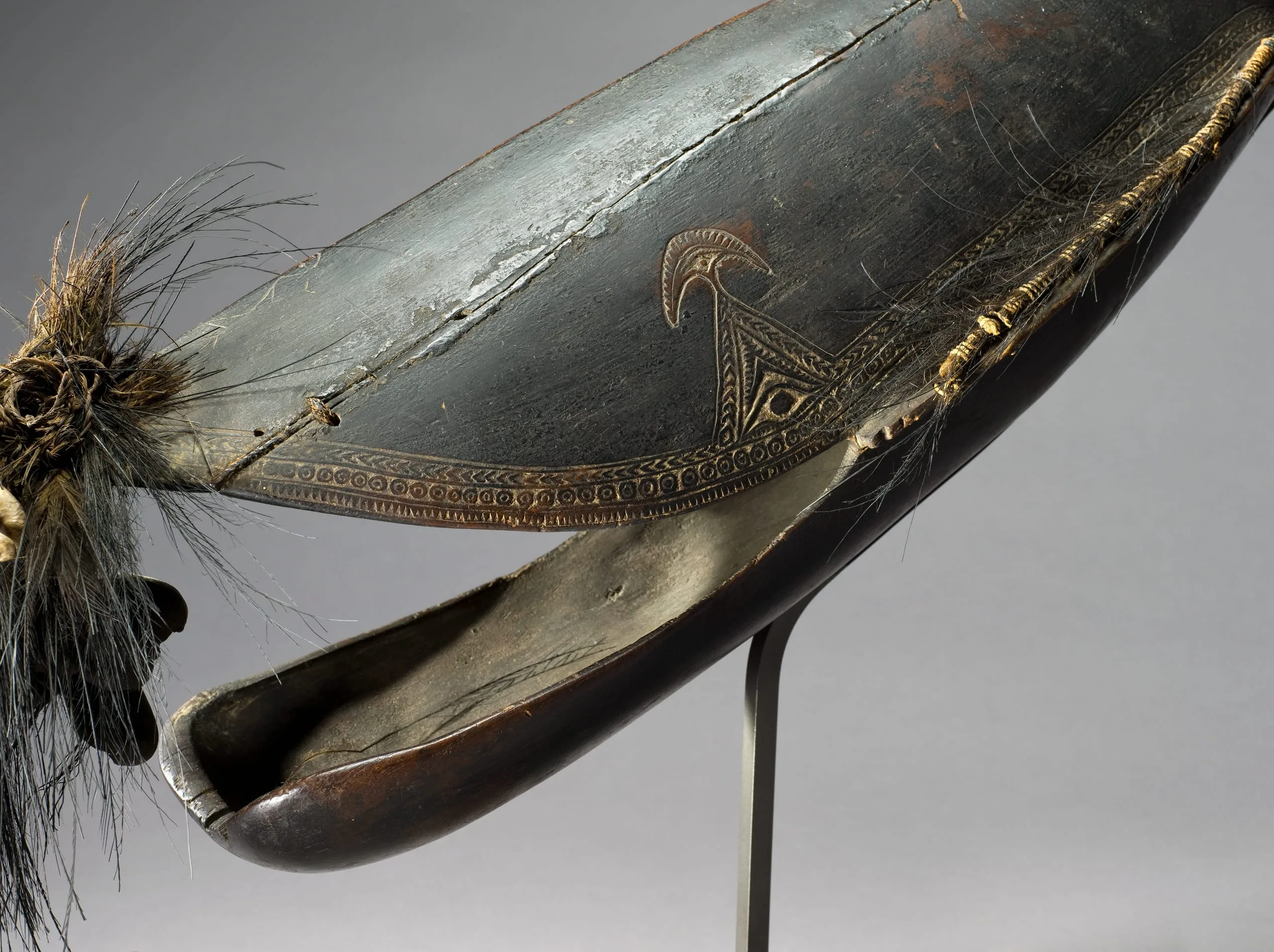
Carved wooden object with a curved, elongated form and dark polished surface, displayed on a metal mount. Fine incised geometric patterns including a band of dotwork and a hooked triangular motif decorate the upper face. Dark fiber and hair attachments are bound at the left end.
Title
Hand Drum (warup)
Place Made
Torres Strait Islands
Date Made
circa 1850
Medium
Wood, fiber, shell, and cassowary feathers
Dimensions
45 x 8 3/4 x 8 in. (114.3 x 22.23 x 20.32 cm)
Credit Line
Purchased with funds provided by the Eli and Edythe Broad Foundation with additional funding by Jane and Terry Semel, the David Bohnett Foundation, Camilla Chandler Frost, Gayle and Edward P. Roski, and The Ahmanson Foundation
Accession Number
M.2008.66.12
Classification
Tools and Equipment
Collecting Area
Art of the Pacific
Curatorial Notes

Gallery Label
The hourglass-shaped drums of the Torres Strait Islands were created from a single hollowed-out piece of wood imported from the New Guinea mainland. This drum is covered at one end, on which to play, while the other end is in the form of the open mouth of a stylized fish. There are simple relief designs on the surface of the drum in geometric, human, and animal designs, and additional shell, fiber, feather, and hair ornaments decorate the sides and around the figurative mouth.

Along with other abandoned cultural practices, drums of this type are no longer made in the Torres Strait. The formerly practiced arts adopted influences from Indonesia, Melanesian New Guinea, Australia, and the Polynesian culture that had circulated back to Melanesia. The language of the area also reflects this diversity, resulting from the Torres Strait Islands’ position between the northern tip of Australia and southern Papua New Guinea.

The drums were constructed in the Torres Strait after the roughly shaped wood was imported from nearby New Guinea through trade. This artfully crafted drum could be a representation of a fish in a seafaring culture in which totemic myths were important. The cultures were based on universal kinship, so ceremonies at which this drum was played were focused on honoring mythical figures. The drums also were occasionally traded back to the New Guinea mainland after decoration was added.


Selected Bibliography
  • Wardwell, Allen. Island Ancestors: Oceanic Art from the Masco Collection. [Seattle]: University of Washington Press, 1994.
  • Harding, Julian. "Pacific Treasures: the Masco Collection Goes to Los Angeles." Tribal Art no.50 (2008): 68-73.