LACMA

ShopMembershipMyLACMATickets
LACMA
Los Angeles County Museum of Art
5905 Wilshire Blvd.
Los Angeles, CA 90036
info@lacma.org
(323) 857-6000
Sign up to receive emails
Subscribe
© Museum Associates 2025

Museum Hours

Monday

11 am–6 pm

Tuesday

11 am–6 pm

Wednesday

Closed

Thursday

11 am–6 pm

Friday

11 am–8 pm

Saturday

10 am–7 pm

Sunday

10 am–7 pm


  • About LACMA
  • Jobs
  • Building LACMA
  • Host An Event
  • Unframed
  • Press
  • FAQs
  • Log in to MyLACMA
  • Privacy Policy
© Museum Associates 2025
Collections

Mask (tapuanu)circa 1885

Not on view
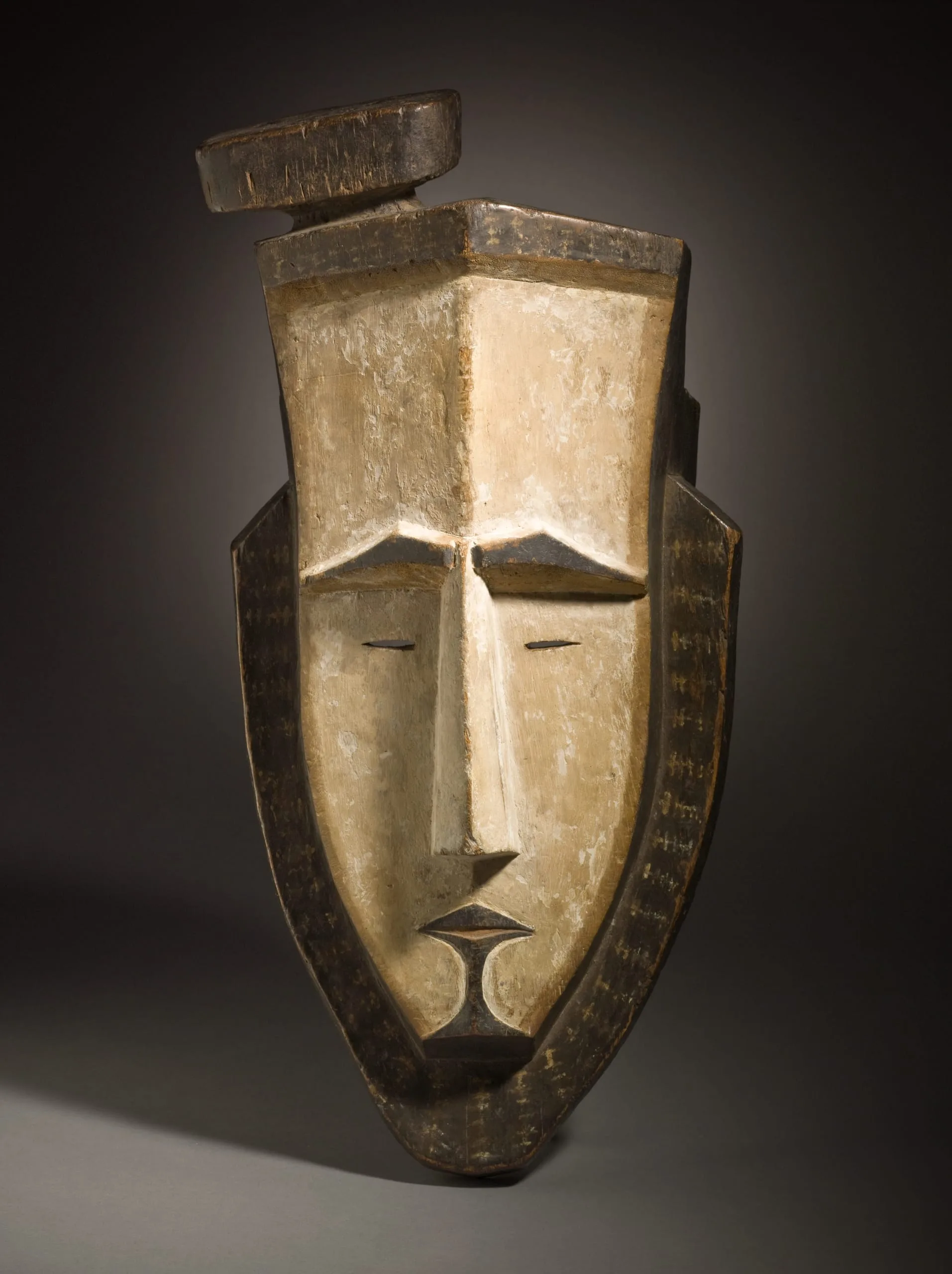
Carved wooden African mask with chalky white face, narrow slit eyes, geometric brow, cross-hatched dark border, and flat crest at top
Title
Mask (tapuanu)
Place Made
Caroline Islands, Nomoi Islands (Mortlock Islands), Satoan Atoll (Satawan Atoll)
Date Made
circa 1885
Medium
Wood and pigment
Dimensions
20 7/8 x 9 1/2 x 8 in. (53.02 x 24.13 x 20.32 cm)
Credit Line
Purchased with funds provided by the Eli and Edythe Broad Foundation with additional funding by Jane and Terry Semel, the David Bohnett Foundation, Camilla Chandler Frost, Gayle and Edward P. Roski, and The Ahmanson Foundation
Accession Number
M.2008.66.13
Classification
Jewelry and Adornments
Collecting Area
Art of the Pacific
Curatorial Notes

Gallery Label
Made by a secret society in charge of protecting ritual procedure, tapuanu, or spirit or ghost, masks have straight noses, thin slit eyes, pursed mouths, and curved eyebrows in a birdlike motif (which also is seen on canoes). The top-knot hairstyle to one side is the only break of symmetry on this mask. These wall masks probably were made to ward off dangerous typhoons and should not be confused with outdoor gable masks.

The Caroline Islands are made up of more than a thousand primarily low-lying islands and atolls with distinct architectural forms and art cultures. The Carolines lie at the crossroads of Polynesian and Melanesian cultures, and the different influences are seen among the many islands.

Micronesian art forms, often simple and minimal, can be viewed in the aesthetics of this mask from the Mortlock Island region, the only example of masks made in Micronesia. These black-and-white masks were used primarily to decorate interior support beams, though some were made small enough to wear in song-and-dance rituals performed in March or April to protect the breadfruit crop. This particular mask is too large to be worn, and therefore is more likely to have been used indoors.


Selected Bibliography
  • Wardwell, Allen. Island Ancestors: Oceanic Art from the Masco Collection. [Seattle]: University of Washington Press, 1994.