LACMA

ShopMembershipMyLACMATickets
LACMA
Los Angeles County Museum of Art
5905 Wilshire Blvd.
Los Angeles, CA 90036
info@lacma.org
(323) 857-6000
Sign up to receive emails
Subscribe
© Museum Associates 2025

Museum Hours

Monday

11 am–6 pm

Tuesday

11 am–6 pm

Wednesday

Closed

Thursday

11 am–6 pm

Friday

11 am–8 pm

Saturday

10 am–7 pm

Sunday

10 am–7 pm


  • About LACMA
  • Jobs
  • Building LACMA
  • Host An Event
  • Unframed
  • Press
  • FAQs
  • Log in to MyLACMA
  • Privacy Policy
© Museum Associates 2025
Collections

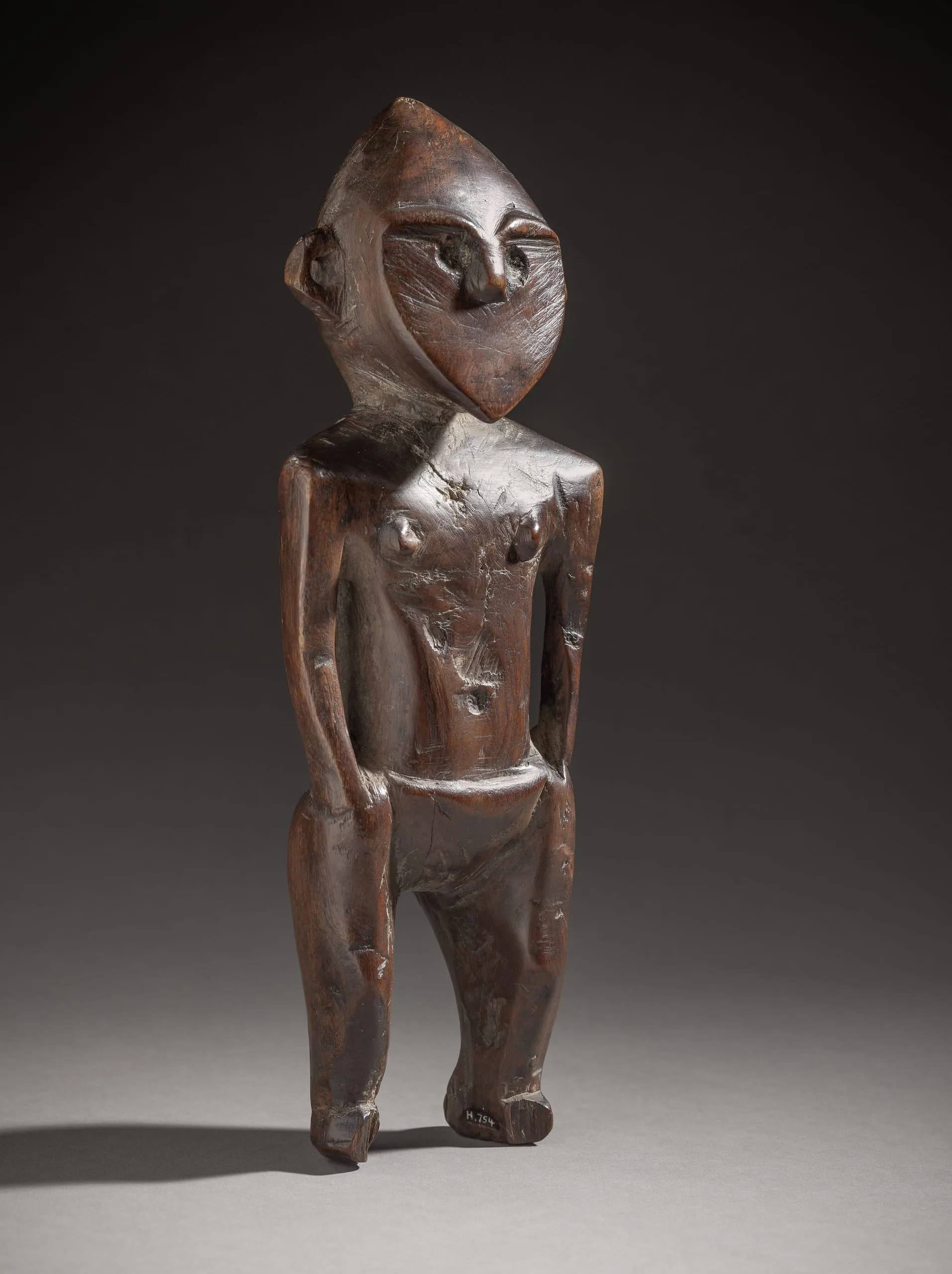
Female Figure (matakau)circa 1875

Not on view
Carved wood standing figure with large pointed head, simplified facial features, and long arms, in dark reddish-brown wood with worn surface
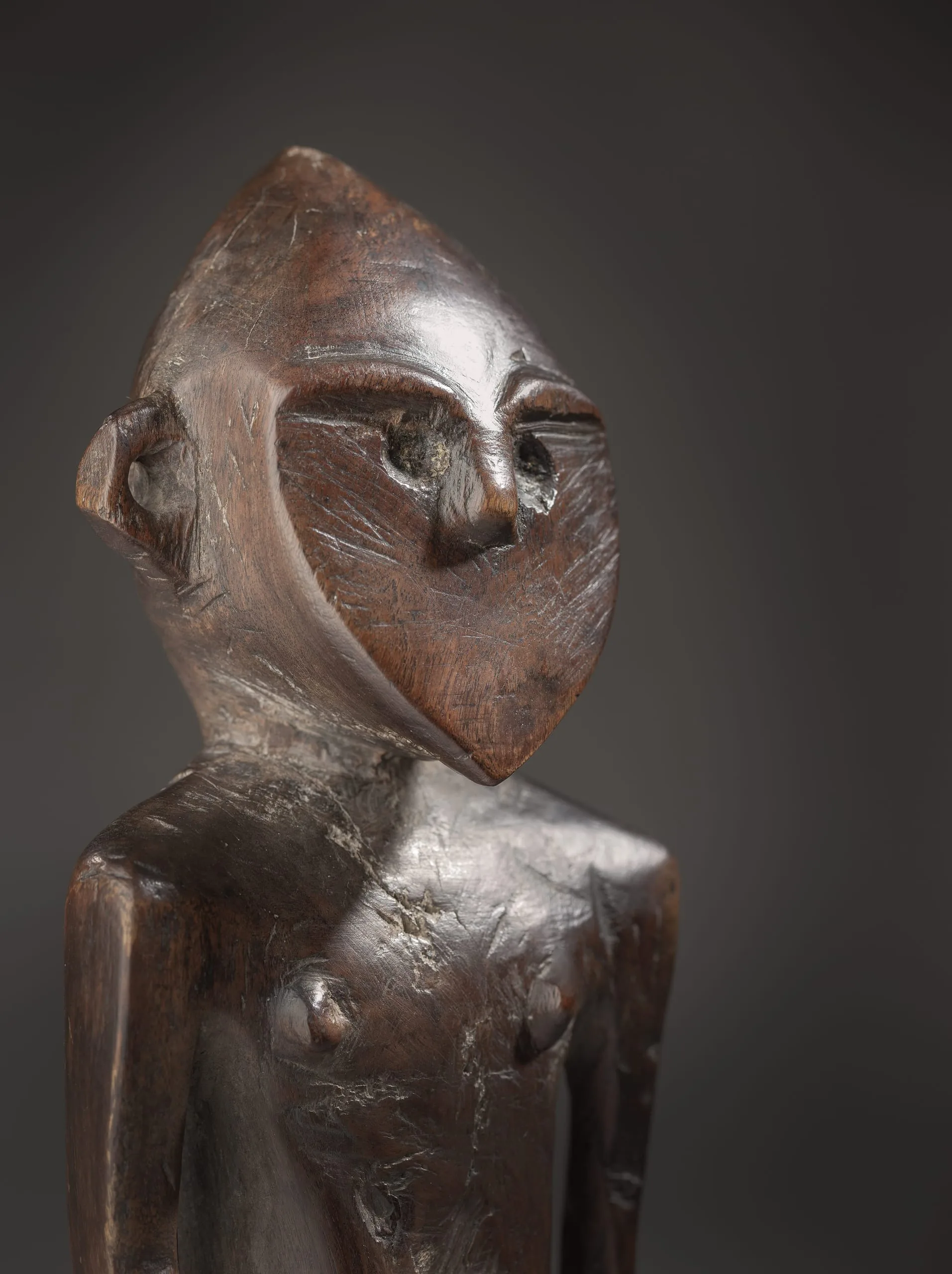
Carved wooden figure with a distinctively elongated, pointed head, schematic facial features, and simplified arms at the sides; dark brown patinated surface with visible tool marks throughout.
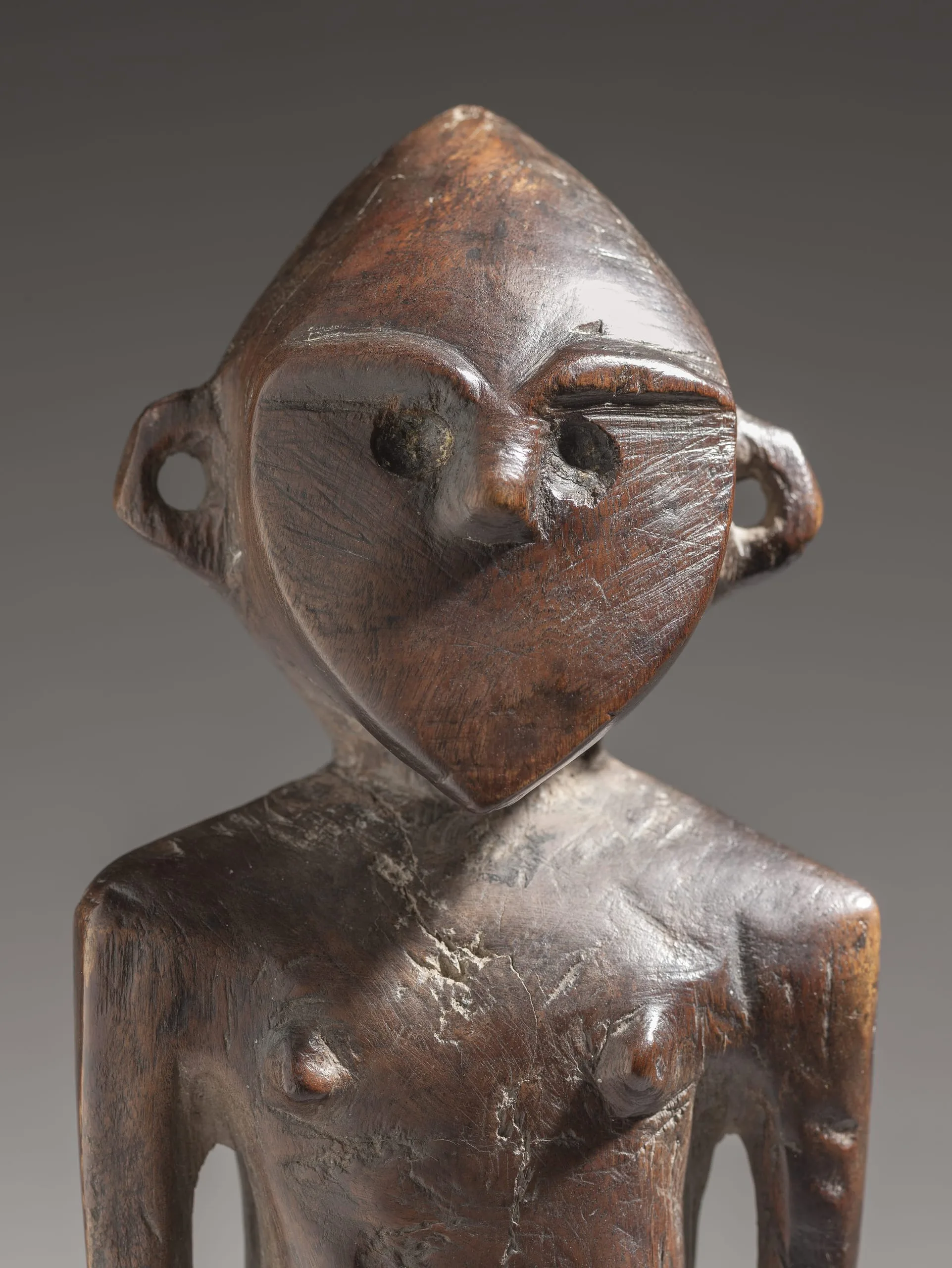
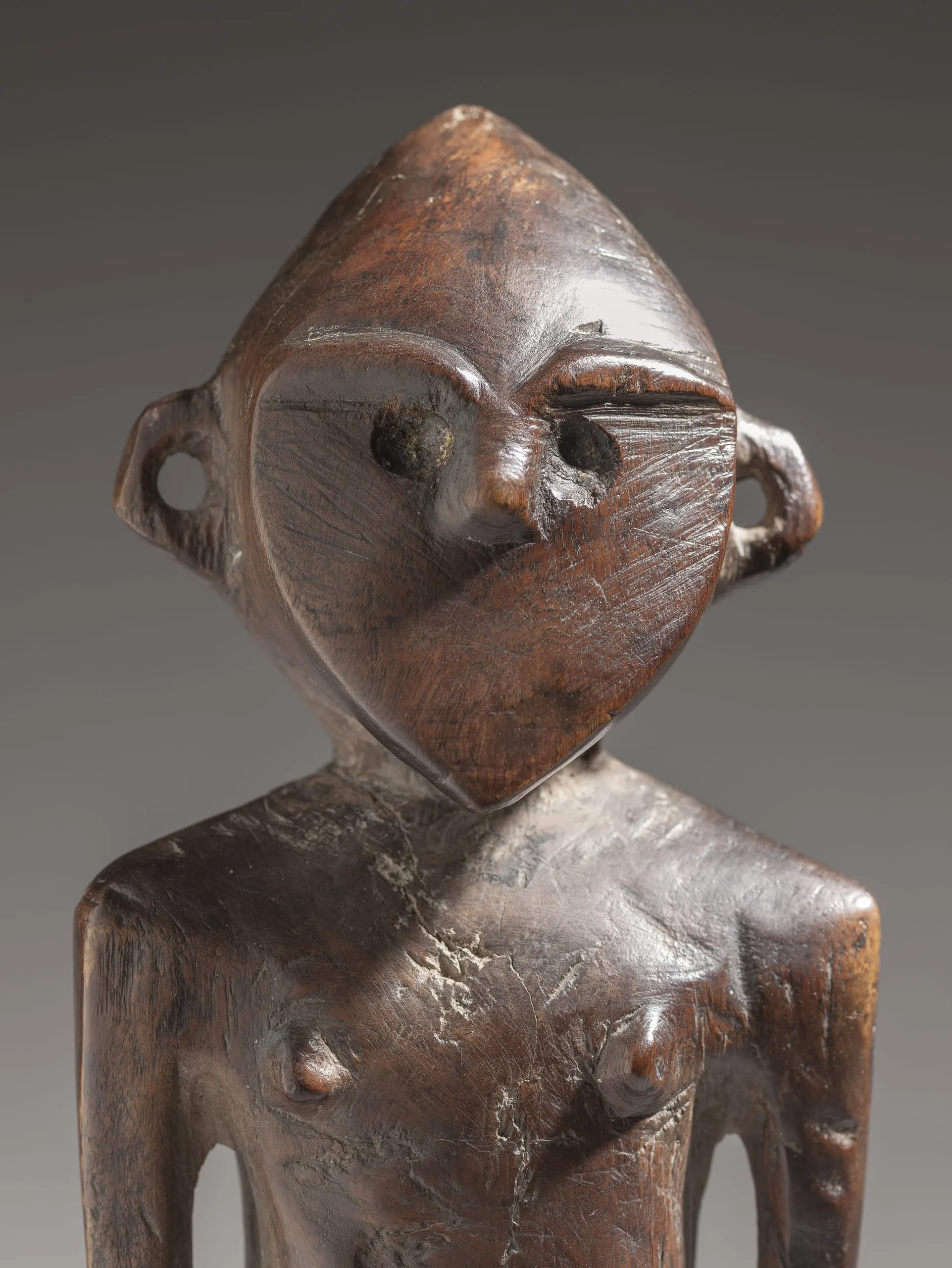
Carved wooden figure, close-up of upper torso and head; diamond-shaped face with incised features, circular ear openings, and dark patinated surface showing tool marks and wear.
Title
Female Figure (matakau)
Place Made
Republic of the Fiji Islands
Date Made
circa 1875
Medium
Wood
Dimensions
9 1/4 x 3 1/2 x 2 1/4 in. (23.5 x 8.89 x 5.72 cm)
Credit Line
Purchased with funds provided by the Eli and Edythe Broad Foundation with additional funding by Jane and Terry Semel, the David Bohnett Foundation, Camilla Chandler Frost, Gayle and Edward P. Roski, and The Ahmanson Foundation
Accession Number
M.2008.66.8
Classification
Sculpture
Collecting Area
Art of the Pacific
Curatorial Notes

Gallery Label
This figure is one of a dozen known examples of Fijian human figural sculpture. Figures of this type were named and placed on graves as material representations of dead ancestors, and venerated as important ceremonial objects. It was believed that the spirit of the ancestors would occasionally enter the figures. The spirits were consulted and worshipped in a bure kalou, or temple house, to which the spirits descended to the figure by means of special bark cloth.

Fijian culture is a hybrid of Melanesian and Polynesian cultural influences, and the material culture throughout the three hundred islands is an example of this. Very influential to Fiji were the precontact Tongan islands, whose society was typically broken down into chiefly groups joined in larger political federations with frequent warfare. Tongan craftsmen lived among the Fijian islands and influenced Fijian sculptural styles.

Figures such as this Fijian one made of wood are extremely similar stylistically to small ivory human figurines made in Tonga. Such examples are of the same size and general physical description as this wooden figure, with its erect posture, hands attached to its sides, raised triangular pubic area, flat face with deeply pointed chin, well-developed eyebrow ridges, circular drilled eyes, slit mouth, and large lug-shaped protruding ears.


Selected Bibliography
  • Wardwell, Allen. Island Ancestors: Oceanic Art from the Masco Collection. [Seattle]: University of Washington Press, 1994.