LACMA

ShopMembershipMyLACMATickets
LACMA
Los Angeles County Museum of Art
5905 Wilshire Blvd.
Los Angeles, CA 90036
info@lacma.org
(323) 857-6000
Sign up to receive emails
Subscribe
© Museum Associates 2025

Museum Hours

Monday

11 am–6 pm

Tuesday

11 am–6 pm

Wednesday

Closed

Thursday

11 am–6 pm

Friday

11 am–8 pm

Saturday

10 am–7 pm

Sunday

10 am–7 pm


  • About LACMA
  • Jobs
  • Building LACMA
  • Host An Event
  • Unframed
  • Press
  • FAQs
  • Log in to MyLACMA
  • Privacy Policy
© Museum Associates 2025
Collections

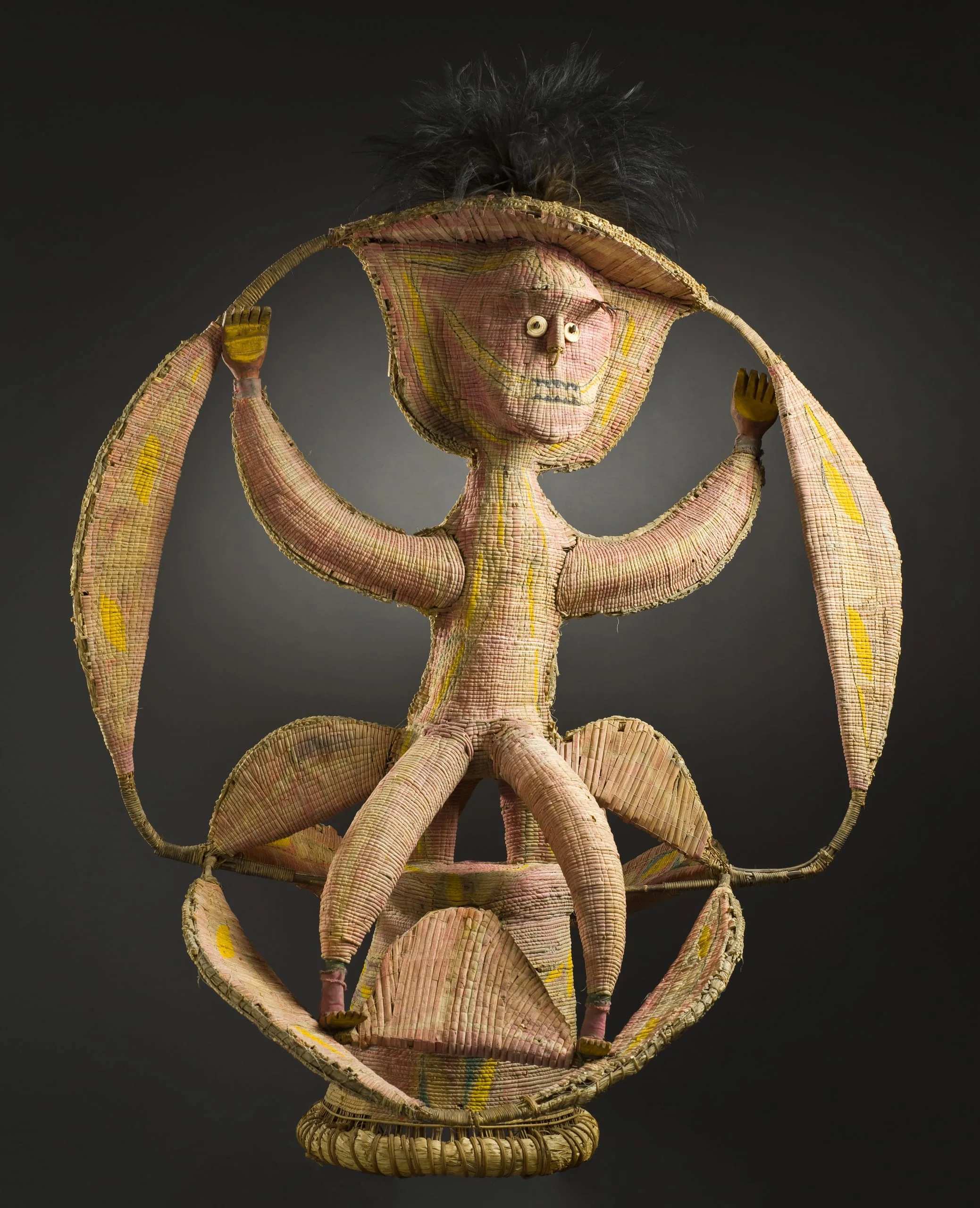
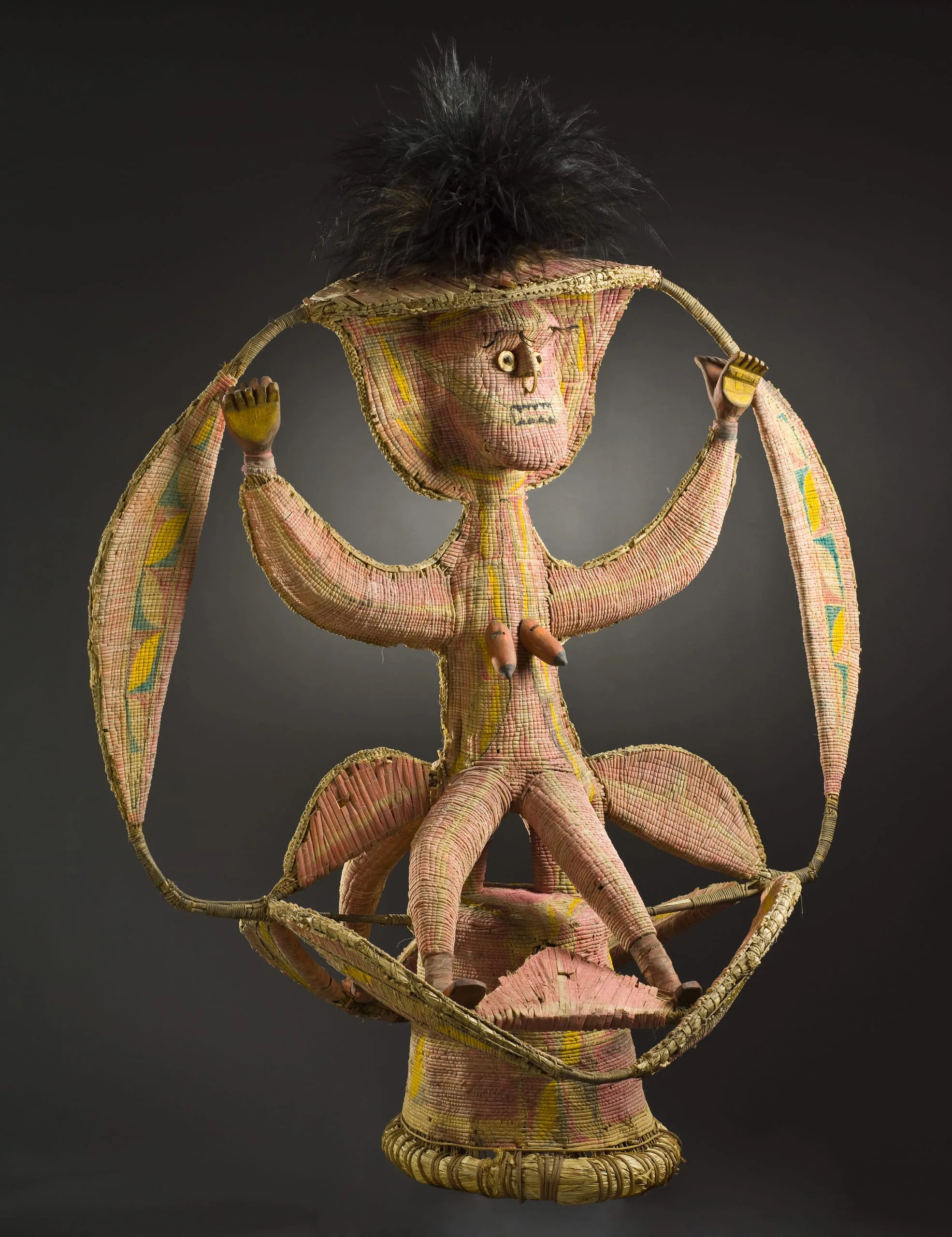
Dance Headdresscirca 1880

Not on view
Woven fiber sculpture of a seated humanoid figure with arms raised toward a wide circular brim, decorated with yellow and pink pigment and topped with black feathers
Woven figure with a humanoid form, constructed from coiled and wrapped plant fiber painted in pink, yellow, and teal. The figure stands with legs apart on a circular base, arms raised and spread wide, with large wing-like extensions framing the body. Facial features are modeled with shell or bead eyes and open mouth. Black feathers crown the head.
Title
Dance Headdress
Culture
Sulka People
Place Made
Papua New Guinea, New Britain
Date Made
circa 1880
Medium
Wood, fiber, bark strips, shell, cassowary feathers, and pigment
Dimensions
62 x 46 x 35 in. (157.48 x 116.84 x 88.9 cm)
Credit Line
Purchased with funds provided by the Eli and Edythe Broad Foundation with additional funding by Jane and Terry Semel, the David Bohnett Foundation, Camilla Chandler Frost, Gayle and Edward P. Roski, and The Ahmanson Foundation
Accession Number
M.2008.66.5
Classification
Sculpture
Collecting Area
Art of the Pacific
Curatorial Notes

Gallery Label
This dancing figure is another form of the traditionally cone-shaped Sulka dance headdress. The double-sided headdress is made of bark strips and pithy fiber wrapped over a wood frame, with attached hands, feet, and breasts, all made of wood.

The headdress, originally more vibrant, has faded to its current pink color. Unique to Oceanic indigenous plants and minerals, particularly in this region of New Britain, the blues, greens, pinks, and yellows make Sulka art vibrant and more colorful than that of other Pacific cultures.

This headdress was made to accompany an equally colorful cloak costume and was intended for disposal after its use in ceremonial dances. These commemorations marked important social-passage celebrations, such as births, initiations, marriages, and the deaths of important members of society. Taking as long as six months to produce one, these headdresses were left out in the elements to decay after their one-time use. They were believed to bring dignity and ancestral spirit power to the wearer, because the figure was seen as a temporary resting place for spirits.
Selected Bibliography
  • Wardwell, Allen. Island Ancestors: Oceanic Art from the Masco Collection. [Seattle]: University of Washington Press, 1994.