LACMA

ShopMembershipMyLACMATickets
LACMA
Los Angeles County Museum of Art
5905 Wilshire Blvd.
Los Angeles, CA 90036
info@lacma.org
(323) 857-6000
Sign up to receive emails
Subscribe
© Museum Associates 2026
  • About LACMA
  • Jobs
  • Building LACMA
  • Host An Event
  • Unframed
  • Press
  • FAQs
  • Log in to MyLACMA
  • Privacy Policy
© Museum Associates 2026
Collections

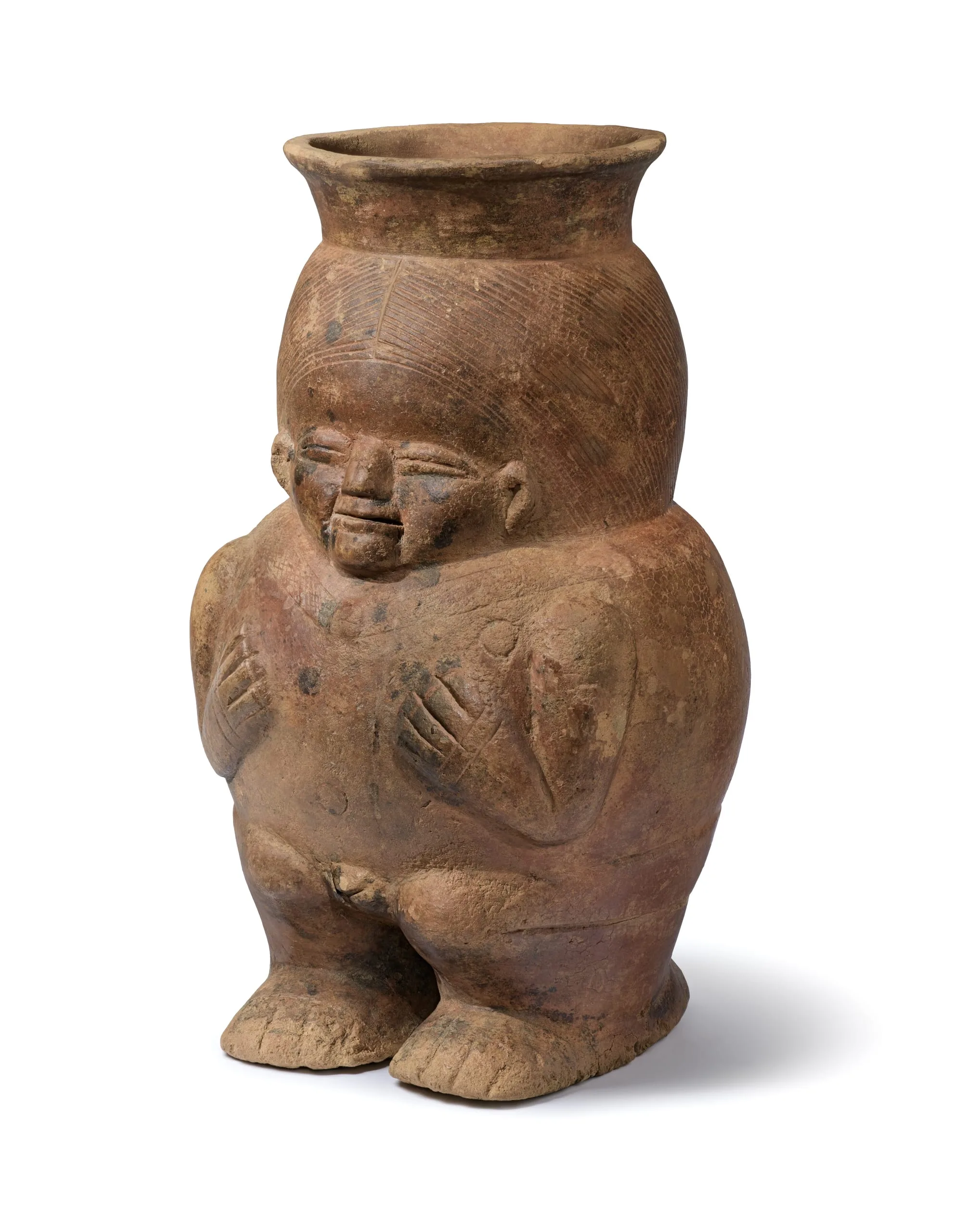
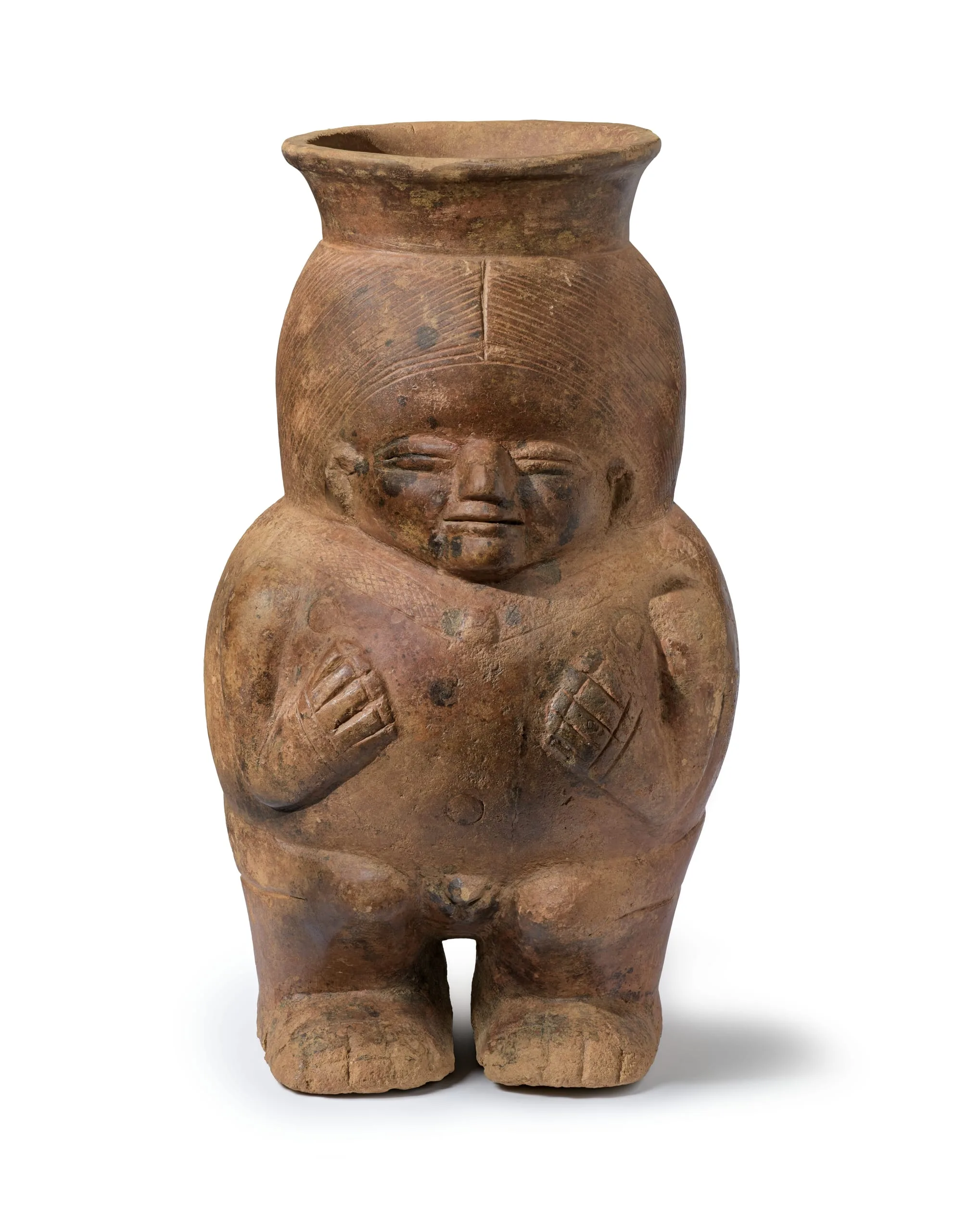
Standing Figure Vessel1500 BCE–100 CE

On view:
Geffen Galleries
Terracotta figural vessel in the form of a standing human with arms raised, incised facial features, and an open flared mouth at the top
Ceramic effigy vessel in unglazed terracotta, combining a wide-mouthed jar with a squat human figure; modeled face with applied features on the body, hands raised to the chest with incised detailing, and stubby legs forming the base.
Title
Standing Figure Vessel
Culture
Calima Ilama
Place Made
Colombia, Calima Region (Ilama Period)
Date Made
1500 BCE–100 CE
Medium
Slip-painted earthenware
Dimensions
10 13/16 × 6 3/8 × 6 1/2 in. (27.5 × 16.2 × 16.5 cm)
Credit Line
The Muñoz Kramer Collection, gift of Camilla Chandler Frost and Stephen and Claudia Muñoz-Kramer
Accession Number
M.2007.146.354
Classification
Ceramics
Collecting Area
Art of the Ancient Americas
Curatorial Notes

This figural vessel is a masterwork of the Calima Ilama tradition. The beautifully crafted face is wide and serene, with squinting eyes set above fleshy cheeks flanked by realistically modeled ears. As is true for all Calima Ilama human depictions—whether as jars, canasteros, or alcarrazas—the subject is depicted in the nude. The genitalia are sketchily rendered, but the figure’s anatomy as well as the standing (as opposed to kneeling) position suggest it is a man.

It is worth reminding ourselves that shame associated with nudity is a Western concept. Many Amerindian groups had little interest in clothing for the purpose of covering up. Rather, particular accessories—necklaces, belts, even bodypaint—functioned as markers of social identity and personhood or as protective devices and needed to be worn permanently. This certainly seems to apply to the people of the Calima region in the first millennium BCE, as nearly all Ilama-style depictions of people or anthropomorphic beings are shown wearing only a necklace, like here. Its crosshatched bands resemble snakeskin or cloth, and on the chest hangs a large oval pendant.

The extremely large feet undoubtedly help this figure jar to stand upright. However, exaggerated or voluptuous limbs are also a hallmark of the style in which artists of the Calima Ilama period depicted their subjects (see also M.2007.146.8, .328, .363, and .369).

Julia Burtenshaw

2025
Selected Bibliography
  • Burtenshaw, Julia, Héctor García Botero, Diana Magaloni, and María Alicia Uribe Villegas. The Portable Universe = El Universo en tus Manos: Thought and Splendor of Indigenous Colombia. Los Angeles: Los Angeles County Museum of Art, 2022.