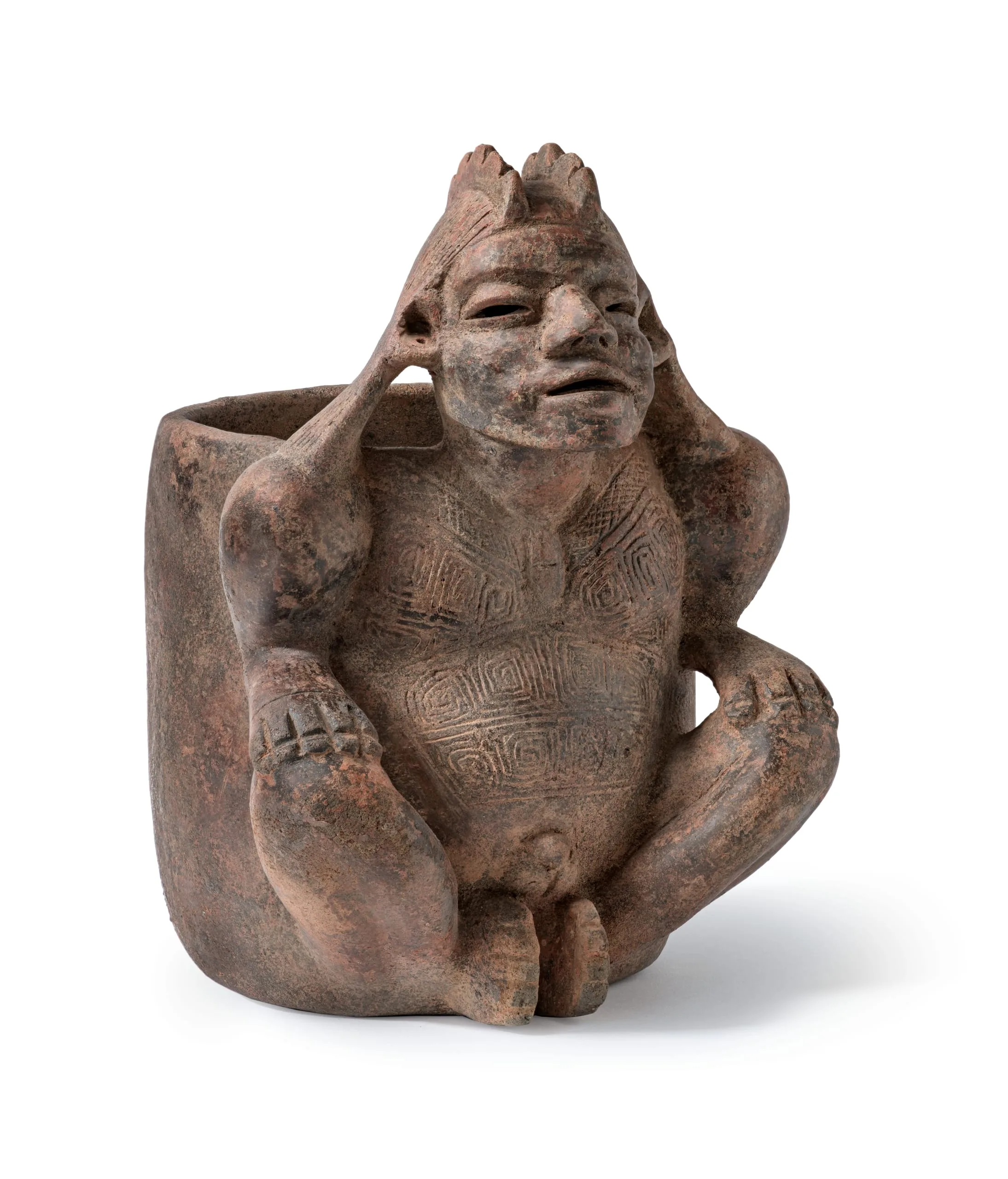
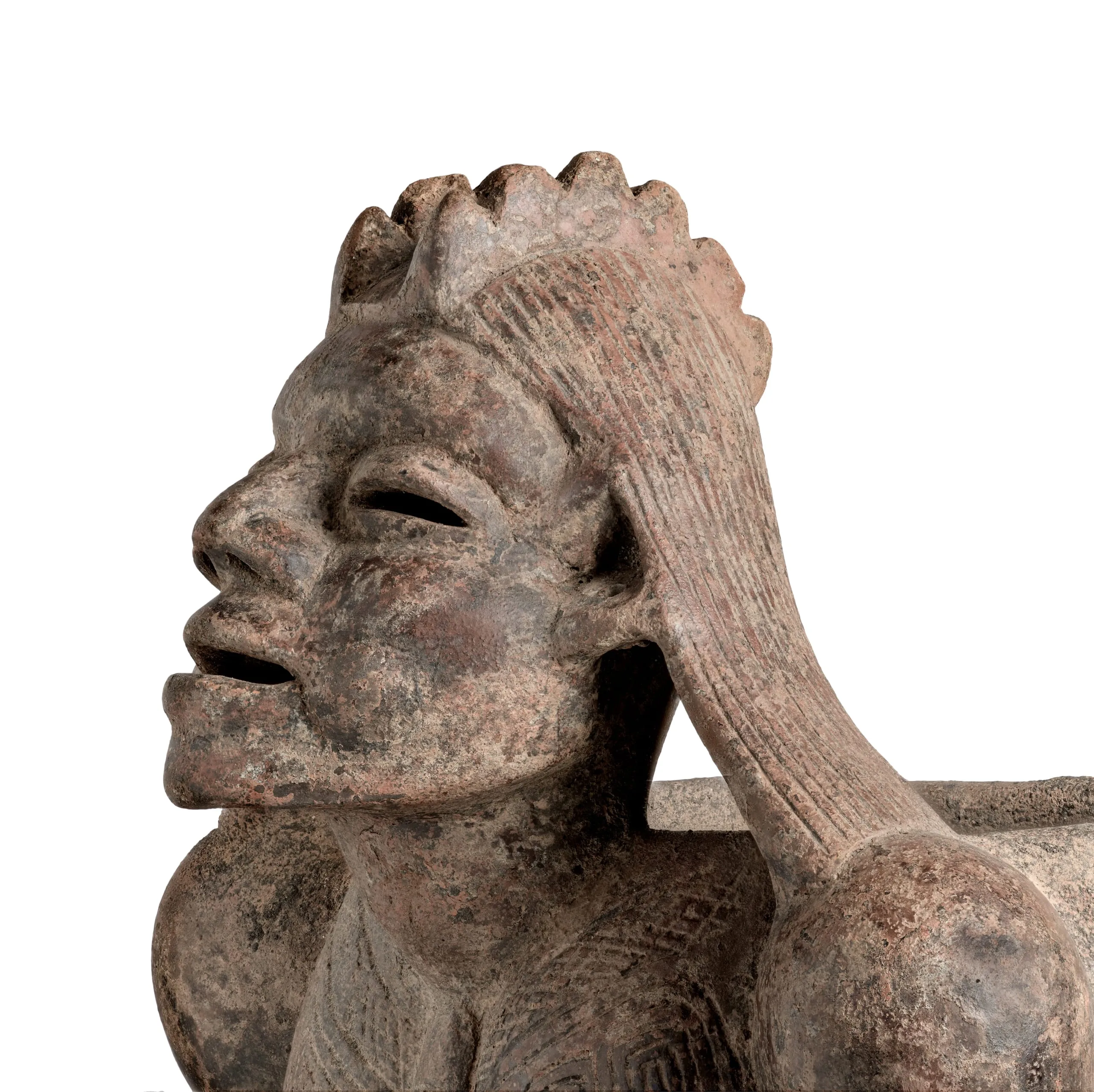
With his naturalistically modeled face and serene expression, this large canastero is one of the best examples of Calima Ilama pottery to survive the millennia. The double crest and long hair are typical of these figures, as are the angular spirals incised on the torso in a dizzying pattern. Canasteros are almost always explicitly male, as is the case here. He wears only a necklace with a crosshatched strap and oval pendant that is clearly of cultural consequence, as nearly all Ilama ceramic sculptures, male and female, are shown wearing one like it (see M.2007.146.328, .345, and .354). The patterning suggests that the necklace could be a snake or snakeskin, as is explicit on another canastero in the collection (M.2007.146.8), but the meanings of all these clearly prescribed traits elude us.
The term canastero means basket-carrier and suggests that the transport of goods was an important aspect of the livelihoods of Ilama-period peoples. Archaeological evidence reveals that they had developed a substantial trade network along stone-paved paths by the first millennium BCE. People were practicing agriculture but also relied on fishing, hunting, and gathering and seem to have lived a seminomadic lifestyle, moving with the seasons and resources or when the soil became depleted. Nonetheless, these figures are clearly not mere depictions of traders or carriers of goods. Many canasteros have supernatural aspects such as fangs or serpent arms (see M.2007.146.8), and the markings incised on this figure’s body likely had a similarly symbolic significance.