LACMA

ShopMembershipMyLACMATickets
LACMA
Los Angeles County Museum of Art
5905 Wilshire Blvd.
Los Angeles, CA 90036
info@lacma.org
(323) 857-6000
Sign up to receive emails
Subscribe
© Museum Associates 2026
  • About LACMA
  • Jobs
  • Building LACMA
  • Host An Event
  • Unframed
  • Press
  • FAQs
  • Log in to MyLACMA
  • Privacy Policy
© Museum Associates 2026
Collections

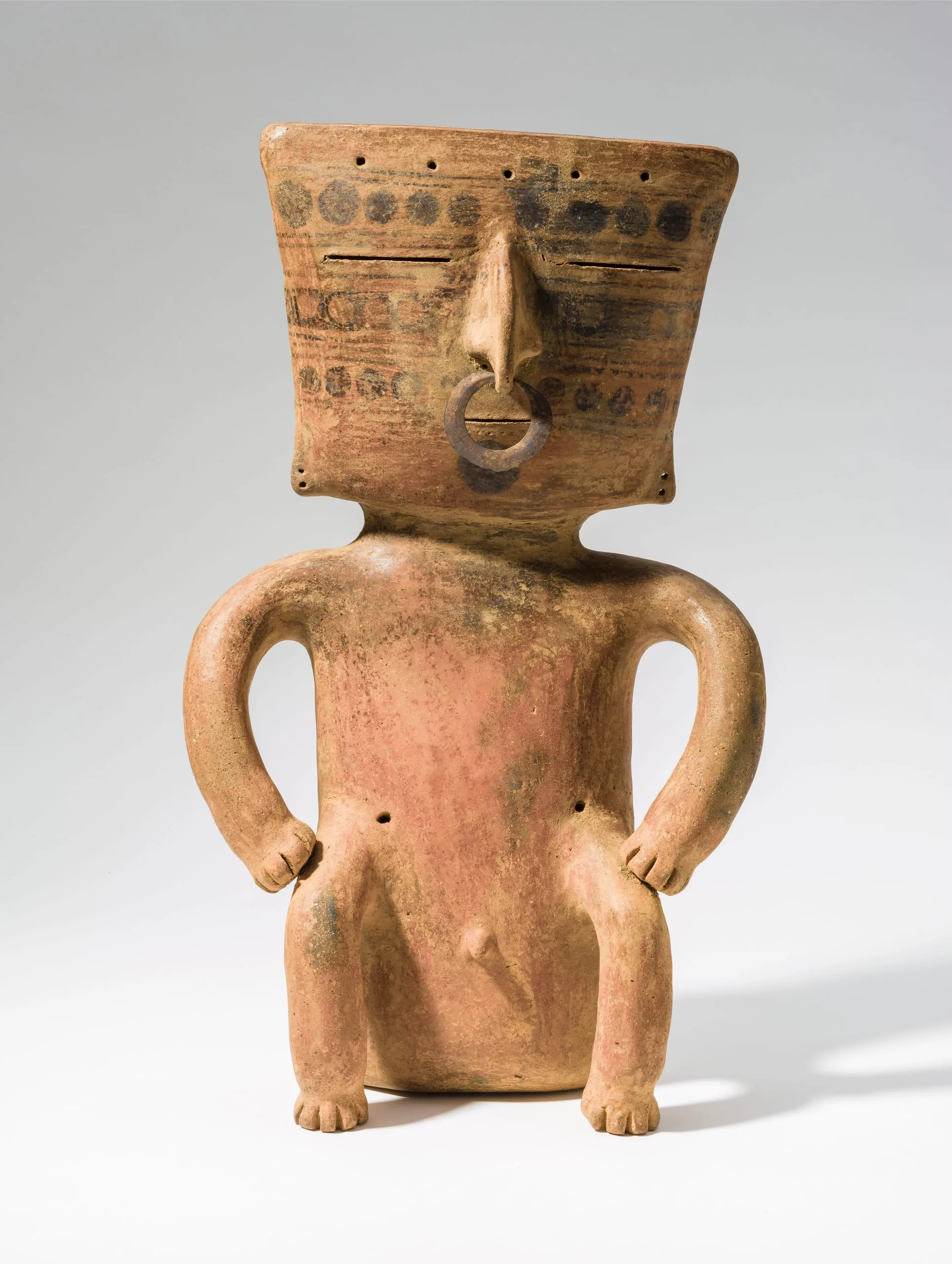
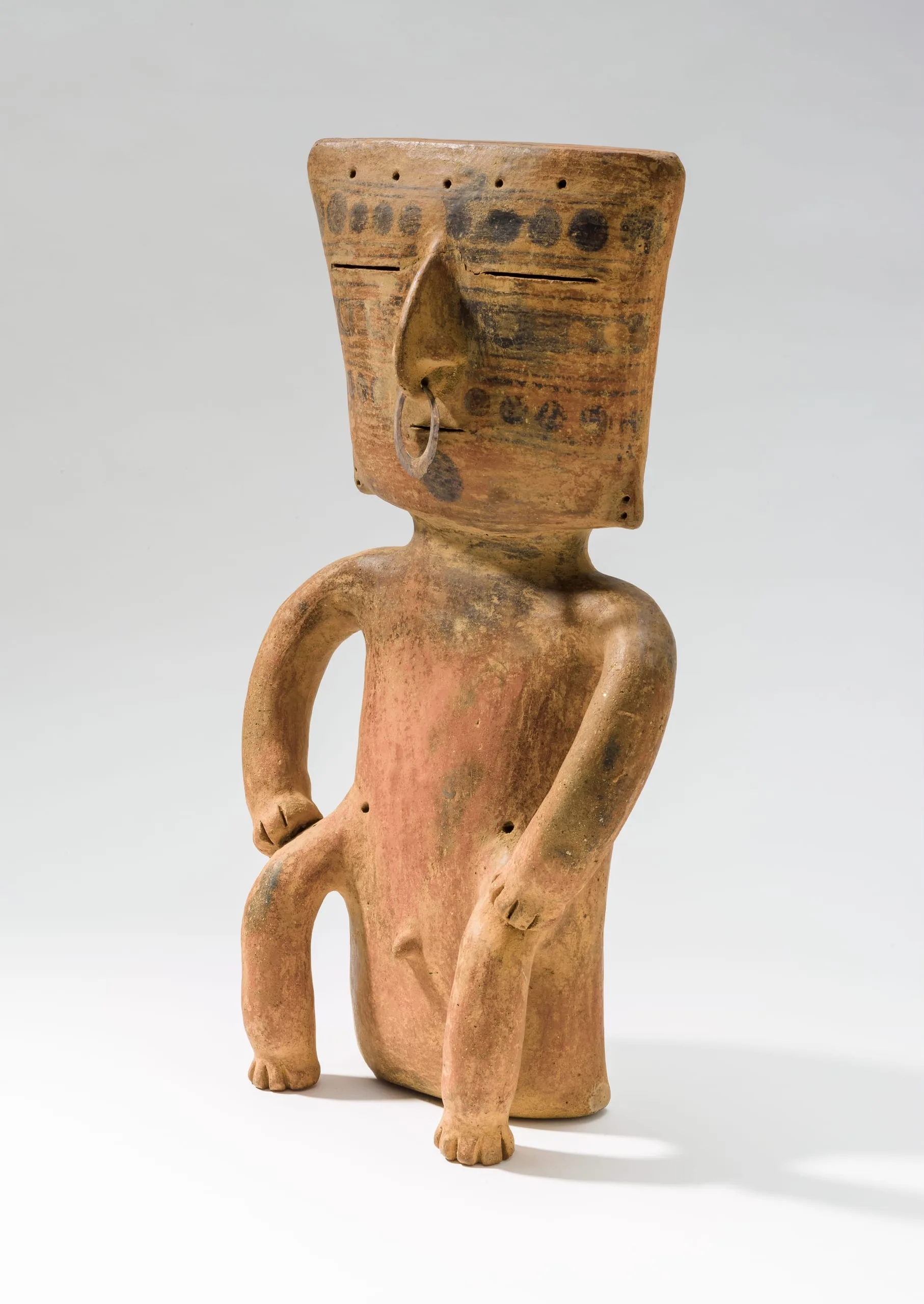
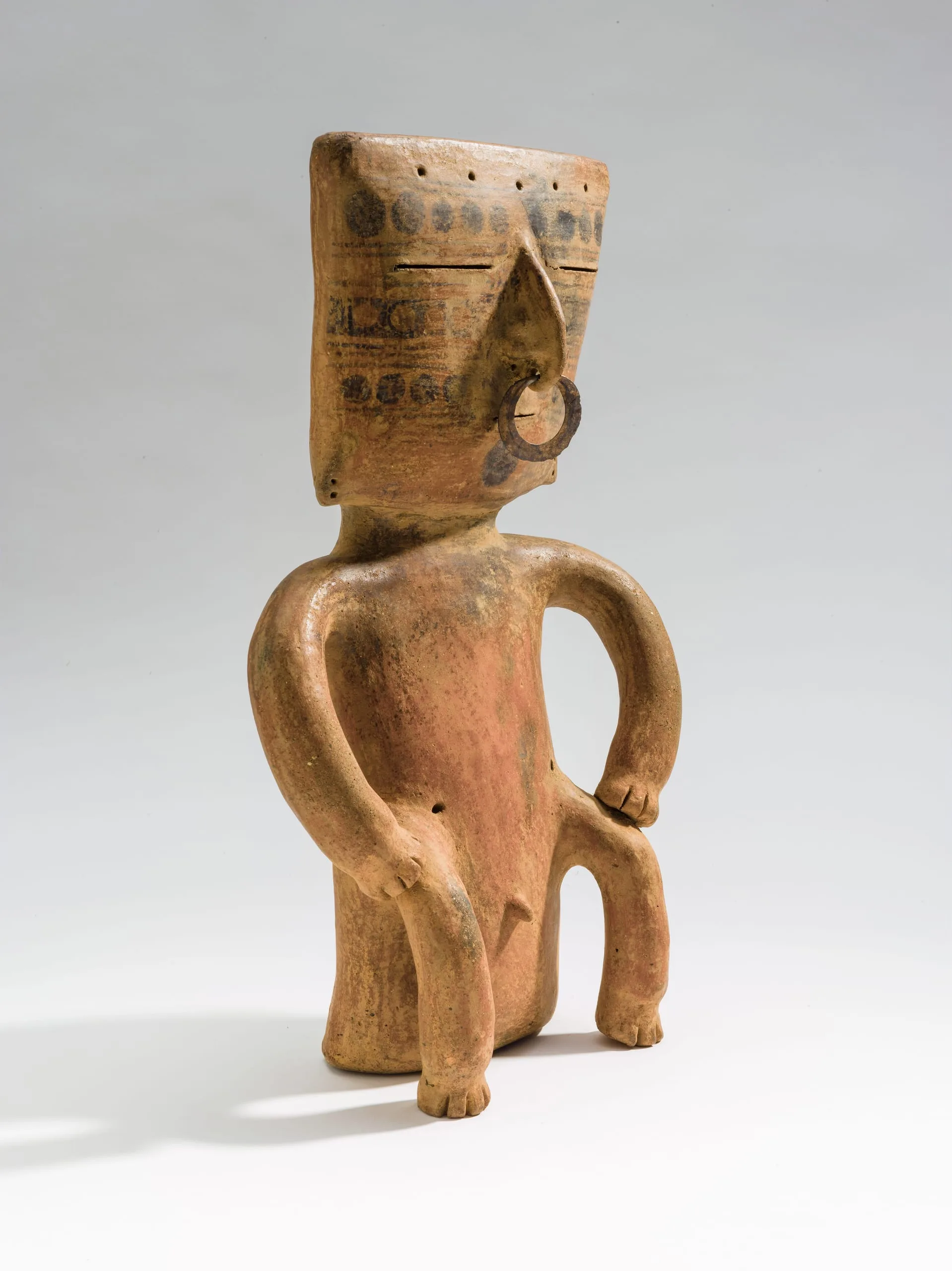
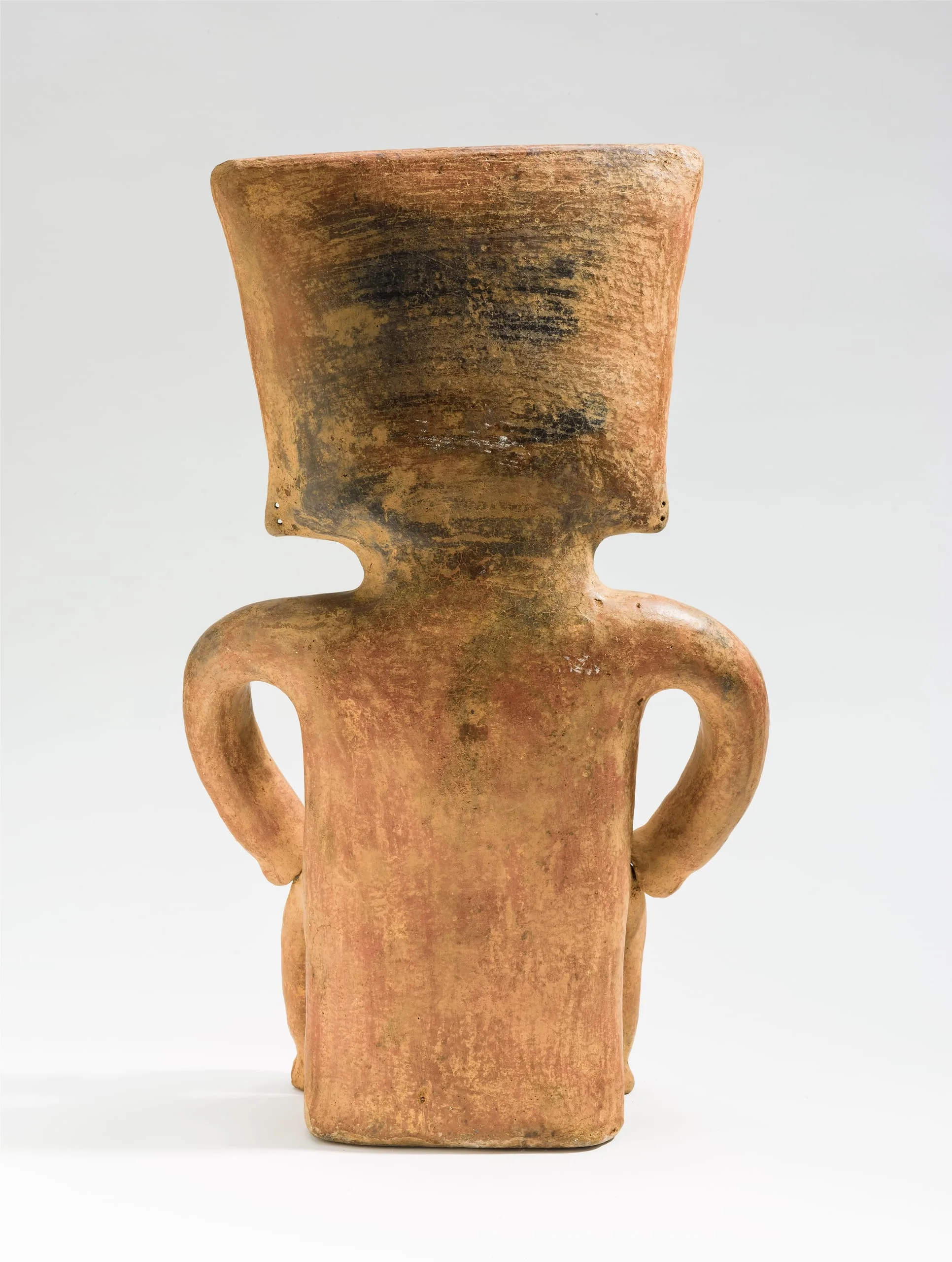
Seated Male with Copper Nose Ring700–1600 CE

Not on view
Ceramic standing figure with oversized flat-topped rectangular head, terracotta-red slip, painted dot patterns, nose ring ornament, and simplified arms and legs
Ceramic standing figure with a large rectangular head decorated with dark painted dot patterns and horizontal bands; smoothed terracotta surface with a ring ornament at the nose, arms bent at the sides, and small hands and feet.
Ceramic standing figure with a large rectangular head featuring painted geometric patterns in dark pigment and small perforations along the top edge. The buff-orange earthenware body has rounded, simplified limbs and a circular ear ornament. Traces of painted decoration remain on the face and head.
Terracotta ceramic figure with a wide, flat-topped head, two loop handles at the sides suggesting arms, and a rectangular body; warm reddish-brown clay with dark charring or painted markings on the upper portion.
Title
Seated Male with Copper Nose Ring
Culture
Middle Cauca
Place Made
Colombia, Middle Cauca, Caldas
Date Made
700–1600 CE
Medium
Black-on-red resist-painted ceramic
Dimensions
18 × 10 × 4 1/2 in. (45.72 × 25.4 × 11.43 cm)
Credit Line
The Muñoz Kramer Collection, gift of Jorge G. and Nelly de Muñoz and Camilla Chandler Frost
Accession Number
M.2007.146.276
Classification
Ceramics
Collecting Area
Art of the Ancient Americas
Curatorial Notes

Seated serenely, with eyes closed and hands resting on knees, this male figure gives an impression of inward contemplation or trance. Statues such as this have been found in shaft tombs surrounding the bodies of the dead, as if keeping watch. Indeed, these so-called slab figures from the Middle Cauca Valley likely represent ritual specialists undergoing spiritual transformation (see also M.2007.146.5 and .268). Many cultures of the Cauca region believe that such individuals are able to cross the cosmological divide between the living and the dead. Upon death, souls are thought to wander, causing harm to their living family members. Ritual specialists—or in this case, a ceramic substitute—negotiate that interaction, protecting the family and ushering the soul beyond the grave.

Unusually, this figure retains a nose ring, although it may not be the original one. As these works make their way into museum collections from looters via middlemen and private collectors, dealers, and the art market, it is not unusual for the far more valuable and easily transported gold jewelry to be removed from the less profitable and more cumbersome ceramic sculptures. However, this nose ring’s shape and coppery tone are consistent with an early dating. Feathers may once have been tucked into the row of holes along the figure’s forehead.