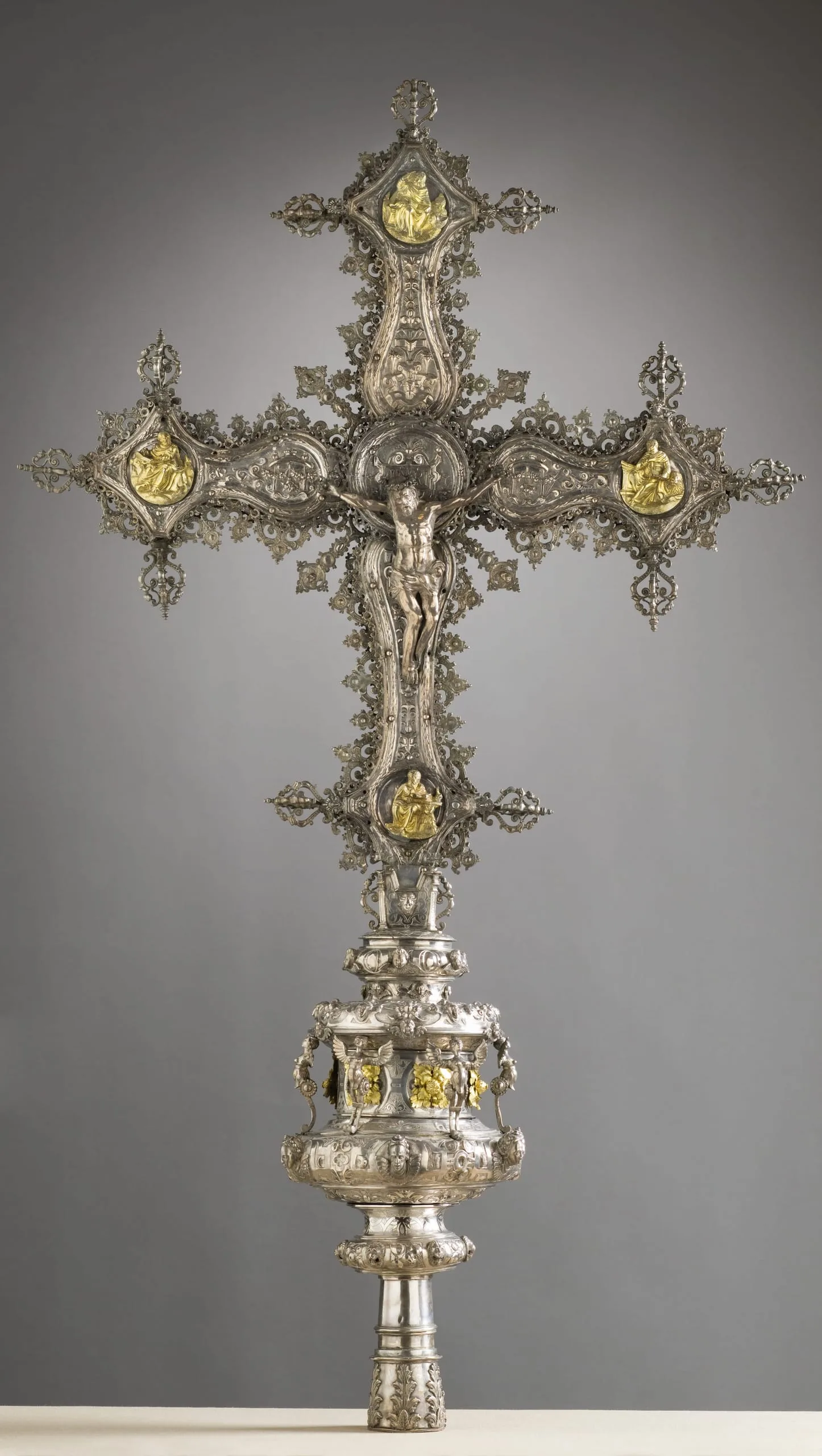
- Title
- Processional Cross
- Date Made
- circa 1550
- Medium
- Silver over wood core
- Dimensions
- Overall: 42 × 25 × 8 in. (106.68 × 63.5 × 20.32 cm)
Base (total, including base): 58 1/2 in. (148.59 cm)
Base (base): 16 in. (40.64 cm)
- Accession Number
- 49.19.2a-b
- Curatorial Notes
Large, elaborate crosses made of silver and gold were a specialty of Spanish silversmiths in the sixteenth and seventeenth centuries. This cross was made in Burgos, a city in northern Spain that lies on the pilgrimage route to Santiago and is famous for its magnificent cathedral. Monumental crosses were intended to be highly visible as clergy carried them at the head of religious processions that passed through the streets of a town or city on religious holidays. Altar crosses, by comparison, are generally much smaller. The crucified body of Christ is mounted at the center of this cross, and silver-gilt plaques with figures of saints and evangelists enrich the arms. The dazzling silhouette of the cast and pierced ornament outlining the arms and stem is in the style known as gotico florido (flowering gothic), a late expression of the Gothic style that had prevailed in Europe for hundreds of years. Each surface would have caught the light and created an aura of splendor that transcended the ordinary objects of daily life.
- Selected Bibliography
- Levkoff, Mary L., ed. Hearst the collector. Exh. Cat. New York: Abrams and Los Angeles: Los Angeles County Museum of Art, 2008.