- Title
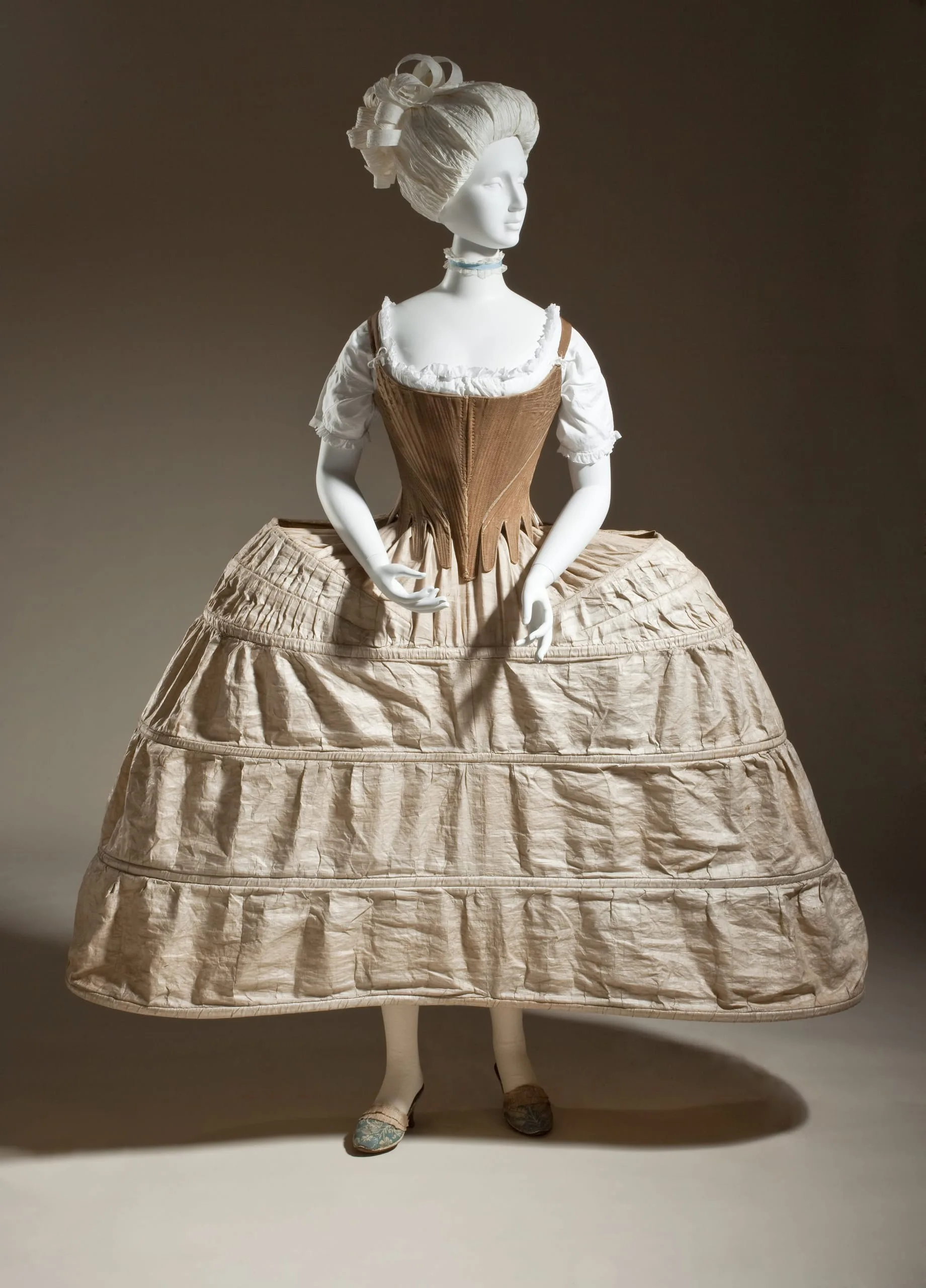
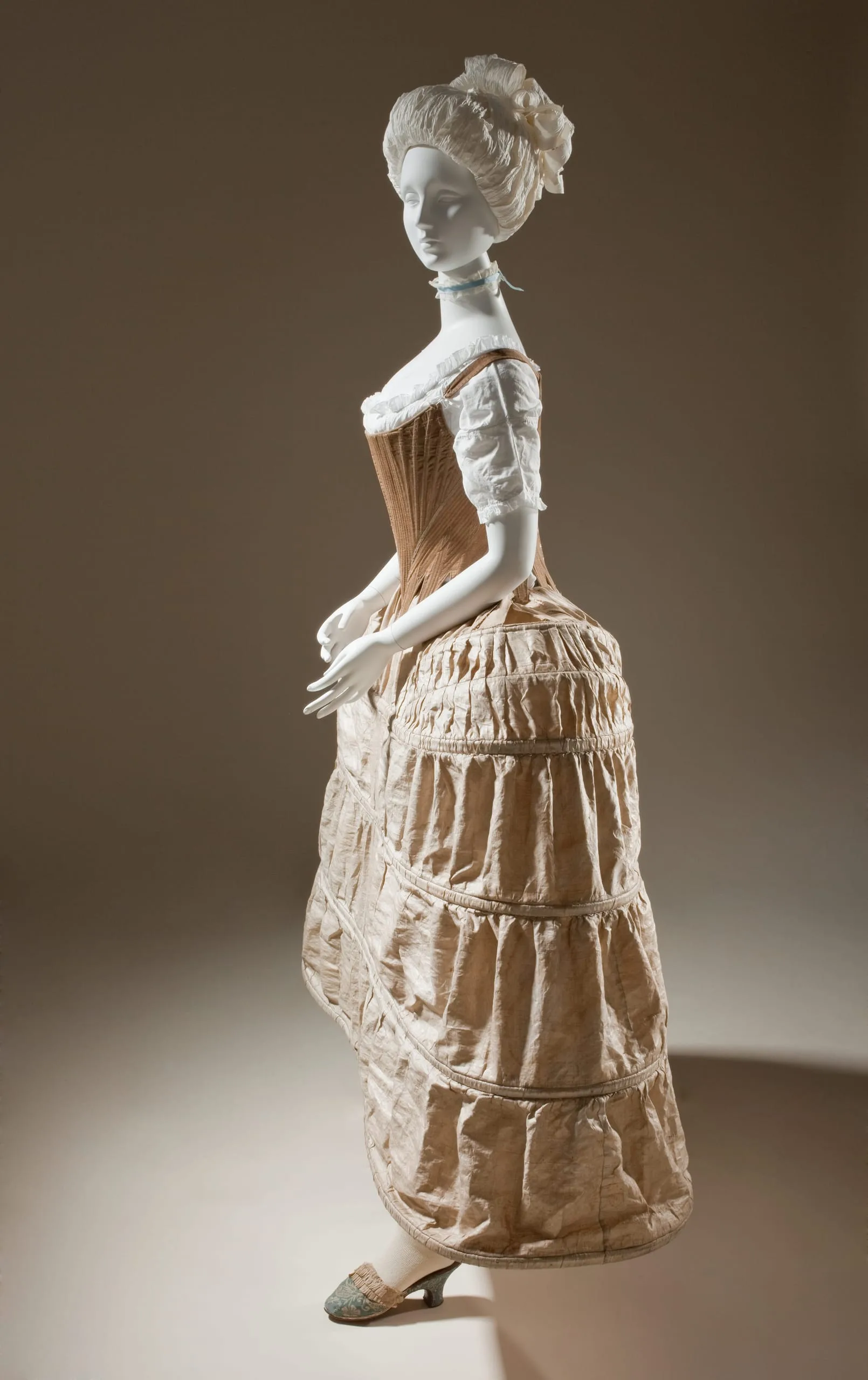
- Woman's Hoop Petticoat (Pannier)
- Date Made
- 1750-1780
- Medium
- Linen plain weave and cane
- Dimensions
- 31 1/4 × 54 × 18 1/2 in. (79.38 × 137.16 × 46.99 cm)
- Accession Number
- M.2007.211.981
- Curatorial Notes
The hoop petticoat, or pannier (French for basket), worn in Europe in the early eighteenth century, measured up to six feet in width by midcentury. Strips of cane or baleen formed an expanded oval, with extra hoops on the sides to maintain the garment’s amplitude. The exaggerated breadth of the pannier was meant to enhance the artificially long and slender corseted bodice, and to support and display wide skirts made of expensive textiles.
- Selected Bibliography
- Takeda, Sharon Sadako and Kaye Durland Spilker. Fashioning Fashion: Deux Siècles de Mode Européenne, 1700-1915. Paris: Arts Décoratifs; Los Angeles: Los Angeles County Museum of Art; Munich; New York: Delmonico Books-Prestel, 2013.
- Takeda, Sharon Sadako and Kaye Durland Spilker. Fashioning Fashion: European Dress in Detail, 1700-1915. Los Angeles: Los Angeles County Museum of Art; Munich; New York: Delmonico Books/Prestel, 2010.
- Takeda, Sharon Sadako and Kaye Durland Spilker. Fashioning Fashion: Europäische Moden, 1700-1915. Los Angeles: Los Angeles County Museum of Art; Munich; New York: Prestel, 2012.
- Blanco F., José and Mary D. Doering, eds. Clothing and Fashion: American Fashion from Head to Toe, vol. 1, Pre-Colonial Times Through the American Revolution. Santa Barbara: ABC-CLIO, 2016.
- Arnold, Janet, Jenny Tiramani, and Luca Costigliolo. Patterns of Fashion: The Content, Cut, Construction and Context of Bodies, Stays, Hoops and Rumps c. 1595-1795. London: The School of Historical Dress, 2018.
- Rauser, Amelia F. The Age of Undress: Art, Fashion, and the Classical Ideal in the 1790s. New Haven: Yale University Press, 2020.