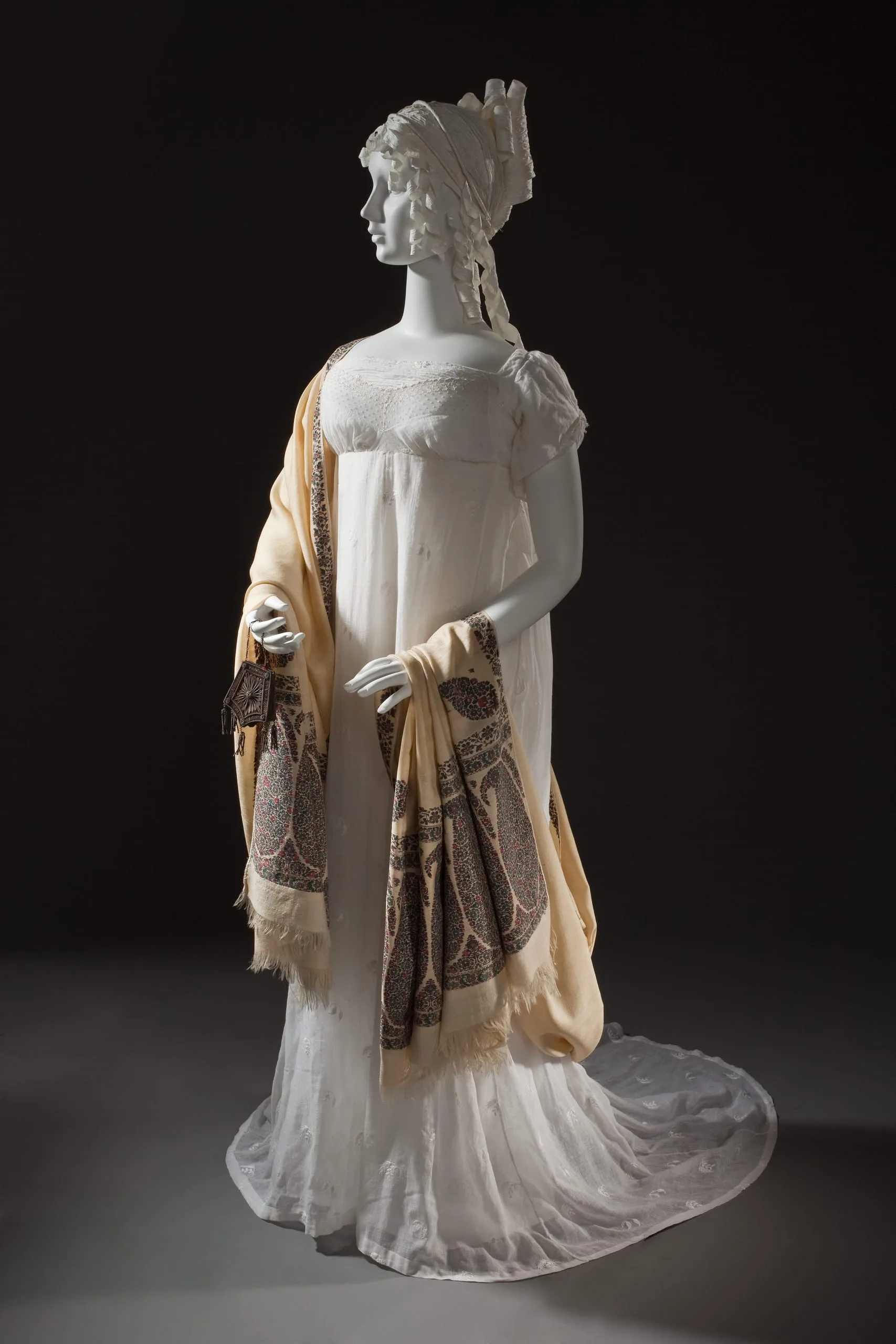
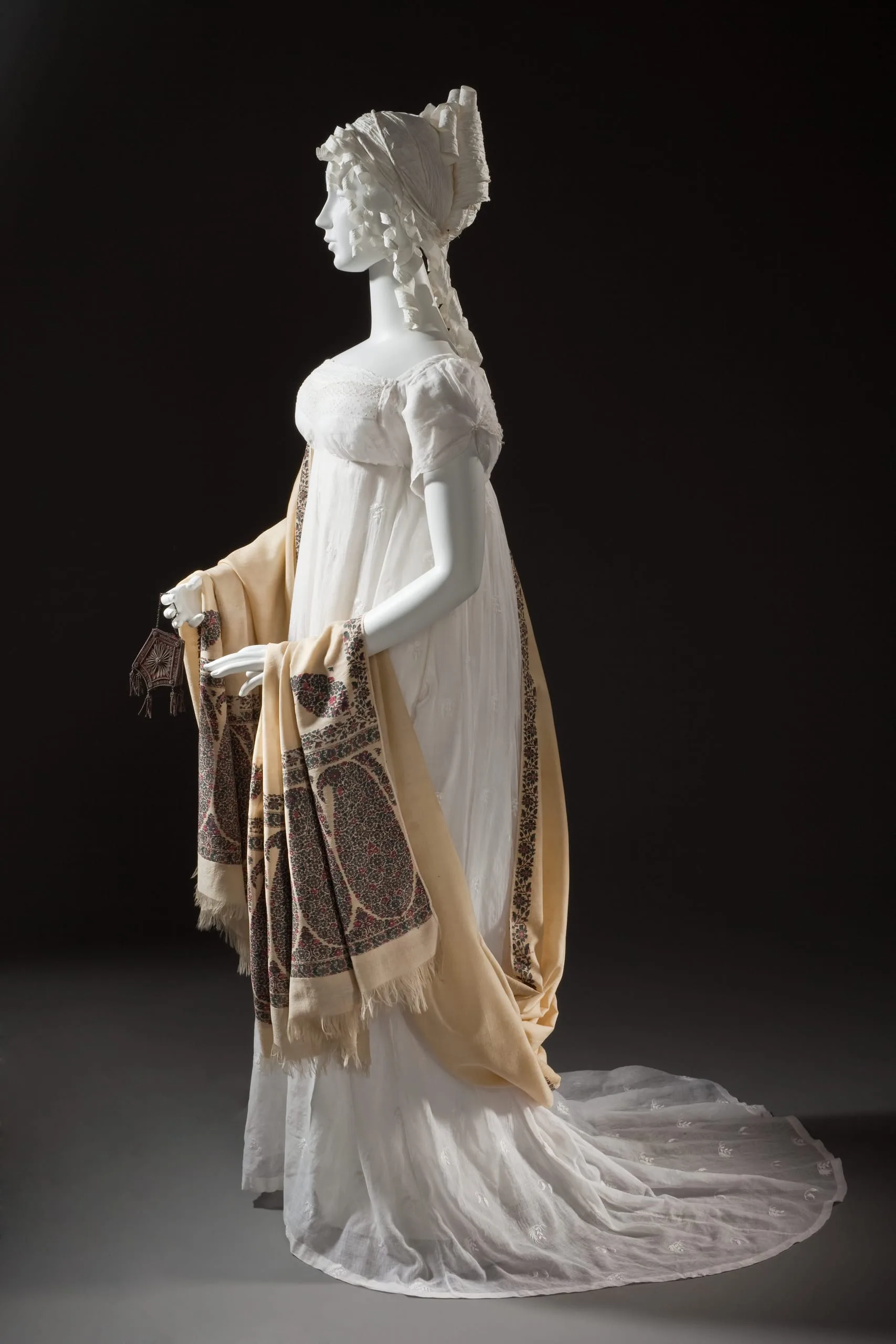
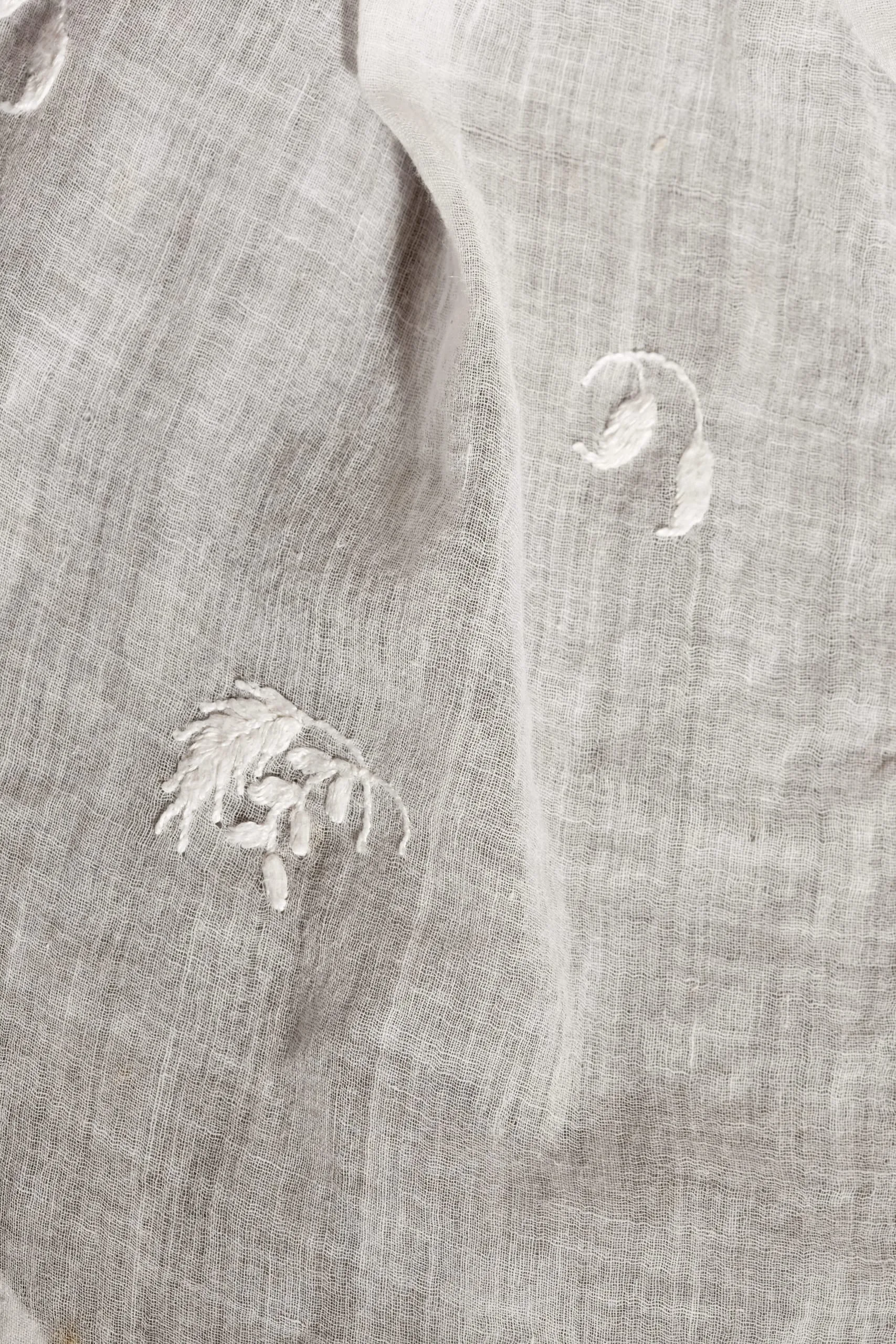
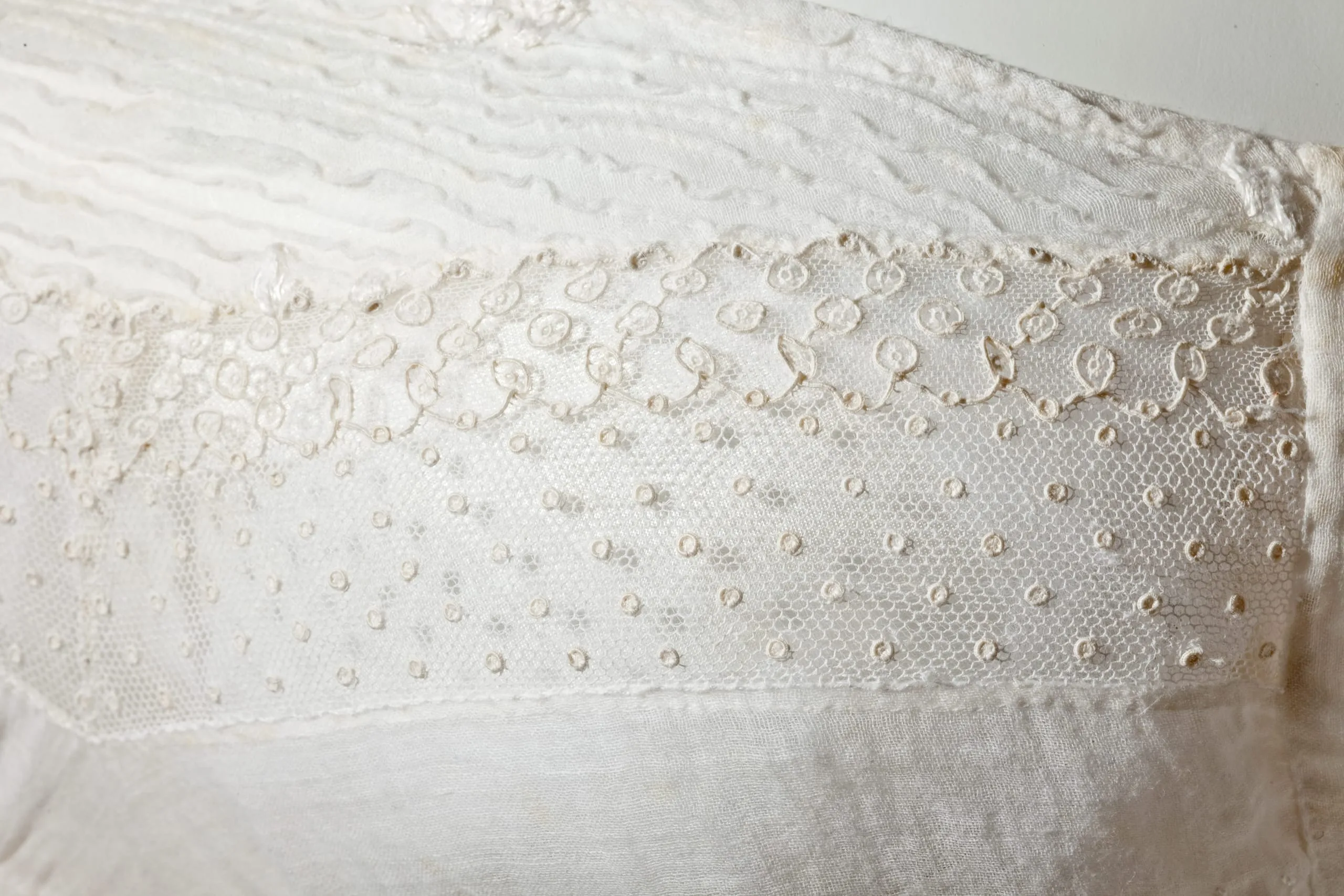
Toward the end of the eighteenth century, a revival of interest in classical antiquity in Europe led to women’s fashions that reinterpreted the draped garments and hairstyles depicted in ancient Greek and Roman statuary. The so-called “neoclassical” look reflected a broader cultural interest in the democratic politics and philosophies of those civilizations. Thin white muslin sheath dresses like this one, which features a low neckline, short sleeves, a high waistline, and a skirt that trains at back, outlined a woman’s silhouette more intimately than the silk fashions of before. This example of fine, sheer cotton muslin with delicate cotton embroidery was likely made in India for export to Europe, where it was constructed into a gown by a wearer’s dressmaker (then called a mantua maker). Shawls from Kashmir, located in the northwestern Indian subcontinent, provided warmth and visual interest, while echoing the flowing drapery of ancient statues.
Clarissa M. Esguerra
2024