LACMA

ShopMembershipMyLACMATickets
LACMA
Los Angeles County Museum of Art
5905 Wilshire Blvd.
Los Angeles, CA 90036
info@lacma.org
(323) 857-6000
Sign up to receive emails
Subscribe
© Museum Associates 2026
  • About LACMA
  • Jobs
  • Building LACMA
  • Host An Event
  • Unframed
  • Press
  • FAQs
  • Log in to MyLACMA
  • Privacy Policy
© Museum Associates 2026
Collections

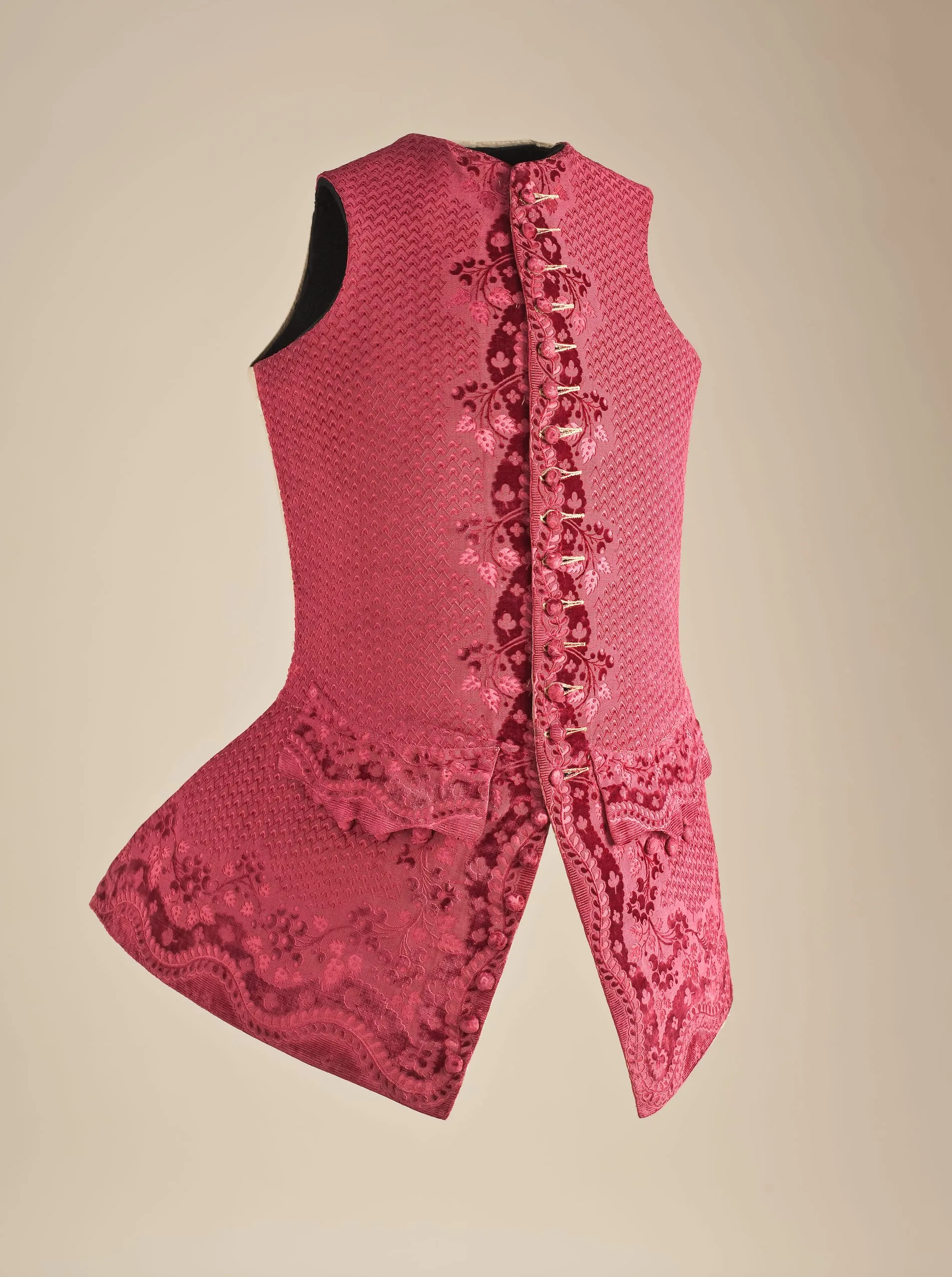
Man's Waistcoatcirca 1750

Not on view
Raspberry-pink silk waistcoat displayed from the back, with allover diamond-weave texture, damask floral border along center back and hem, and metal hook-and-bar closures
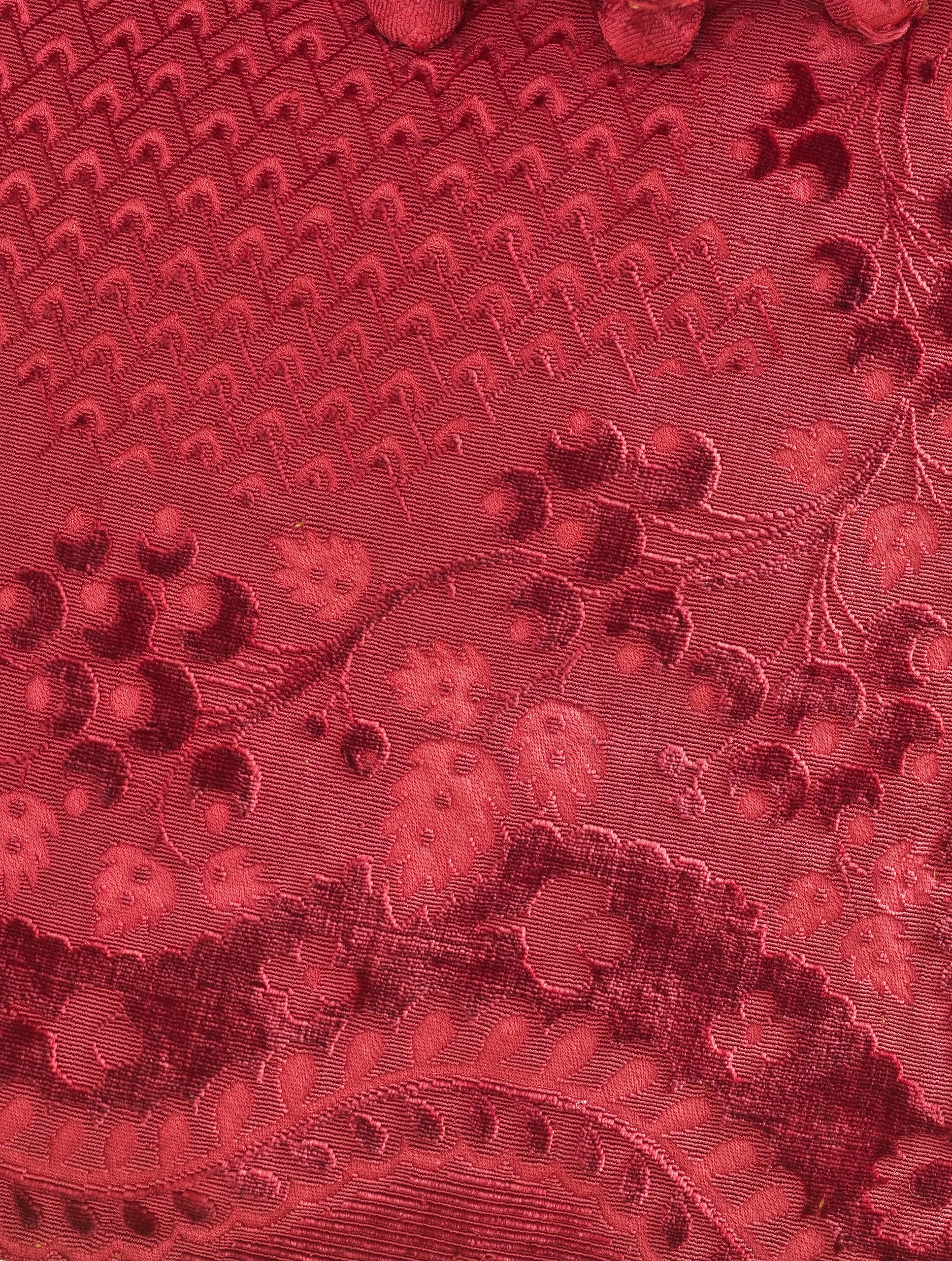
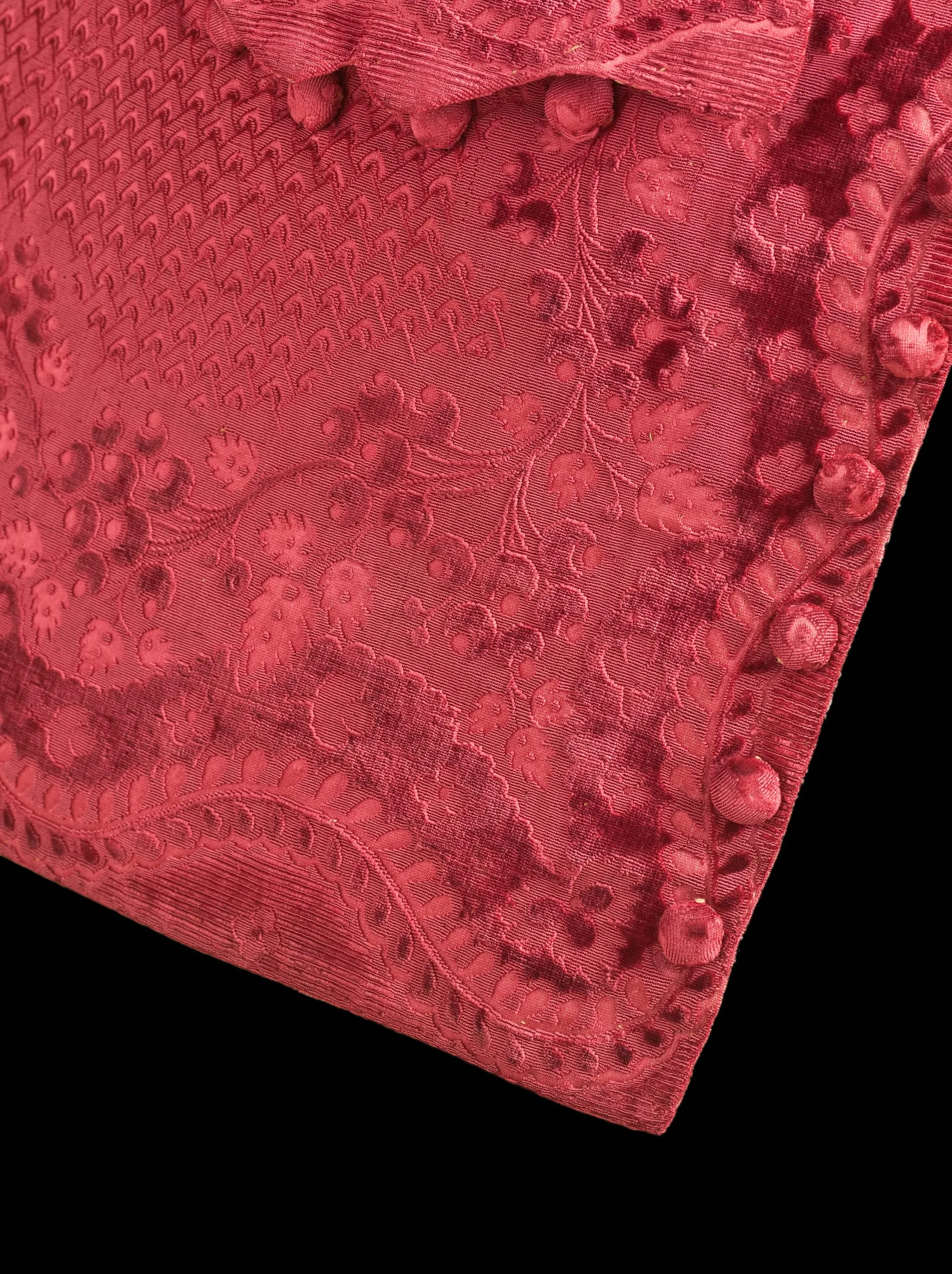
Close-up of a crimson silk textile, showing a corner with woven geometric ground, embroidered floral and scrolling vine border, and a trimmed edge of small raised fabric bobbles.
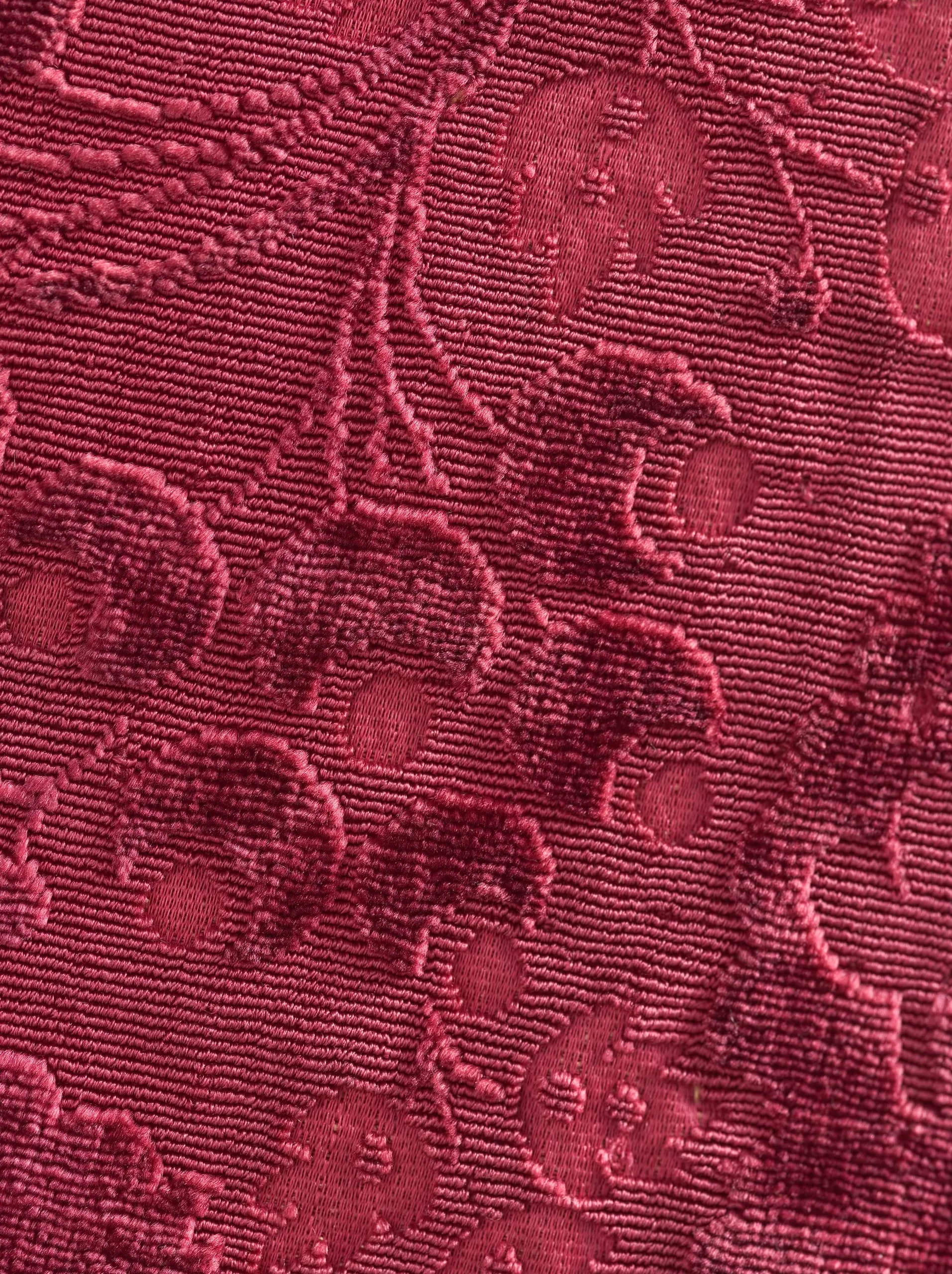
Close-up of red silk damask fabric with woven figural and floral motifs, showing raised pattern of rounded cloud or rock forms and geometric diagonal ground weave in matching crimson tones.
Close-up of crimson silk damask textile with woven floral and foliate pattern, the raised design visible against a horizontally ribbed ground in a monochromatic deep red.
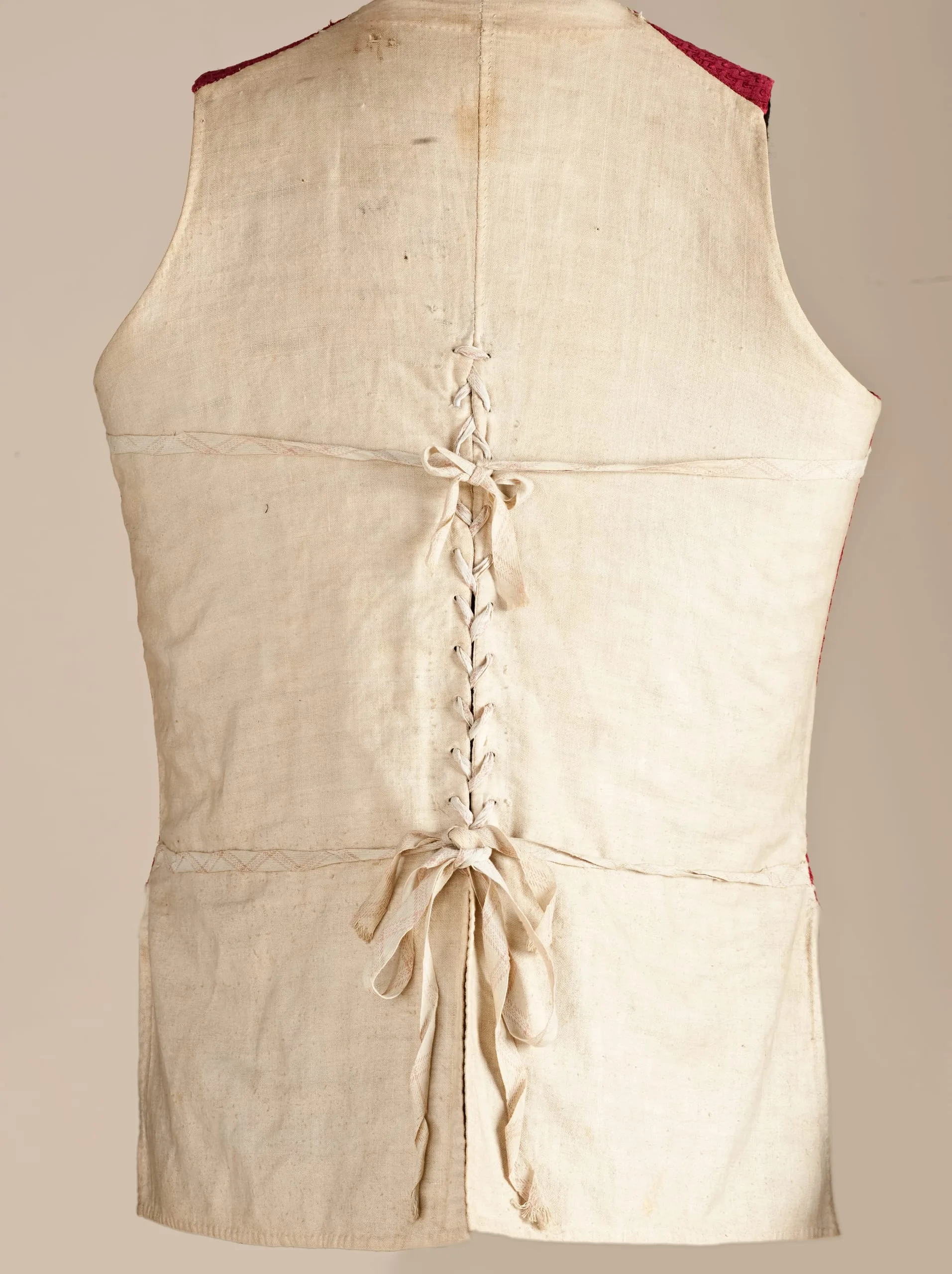
Historic sleeveless waistcoat displayed from the back, cream linen lining with a central lace-up closure running the full length, tied in bows at waist and hem; red embroidered fabric visible at shoulders.
Title
Man's Waistcoat
Place Made
France
Date Made
circa 1750
Medium
Silk cut, uncut, and voided velvet (ciselé) on satin foundation
Dimensions
Center back length: 27 1/2 in. (69.85 cm)
Credit Line
Purchased with funds provided by Suzanne A. Saperstein and Michael and Ellen Michelson, with additional funding from the Costume Council, the Edgerton Foundation, Gail and Gerald Oppenheimer, Maureen H. Shapiro, Grace Tsao, and Lenore and Richard Wayne
Accession Number
M.2007.211.812
Classification
Costumes
Collecting Area
Costume and Textiles
Curatorial Notes

Velvet is a textile with cut or uncut pile woven on either a plain weave, twill, or satin foundation. During the weaving process, metal rods are inserted in order to raise the warp (vertical elements) into loops. Secured in place with wefts (horizontal elements), the rods can then be removed to reveal a looped pile, or, prior to removal of the rods, the raised warps can be sliced to create a cut pile. By weaving areas of cut and uncut velvet combined with areas void of any pile, a multilayered patterned velvet known as ciselé is created. The complex yet subdued monochromatic ciselé velvet woven for this waistcoat was produced by weavers in Lyon, France, where the concept of weaving a pattern to fit the final shape of a garment (à disposition) originated. The meandering ribbon and acorn pattern follows the edges of the center front and hem.

Selected Bibliography
  • Takeda, Sharon Sadako and Kaye Durland Spilker. Fashioning Fashion: Deux Siècles de Mode Européenne, 1700-1915. Paris: Arts Décoratifs; Los Angeles: Los Angeles County Museum of Art; Munich; New York: Delmonico Books-Prestel, 2013.
  • Takeda, Sharon Sadako and Kaye Durland Spilker. Fashioning Fashion: European Dress in Detail, 1700-1915. Los Angeles: Los Angeles County Museum of Art; Munich; New York: Delmonico Books/Prestel, 2010.
  • Takeda, Sharon Sadako and Kaye Durland Spilker. Fashioning Fashion: Europäische Moden, 1700-1915. Los Angeles: Los Angeles County Museum of Art; Munich; New York: Prestel, 2012.
Related Unframed

Related Unframed

LACMA Exhibitions On the Road: Spring 2018 Edition
  • April 2, 2018
  • Editors
Fashion Your Own Fashion
  • January 11, 2011
A Major Acquisition in European Fashion
  • January 6, 2009