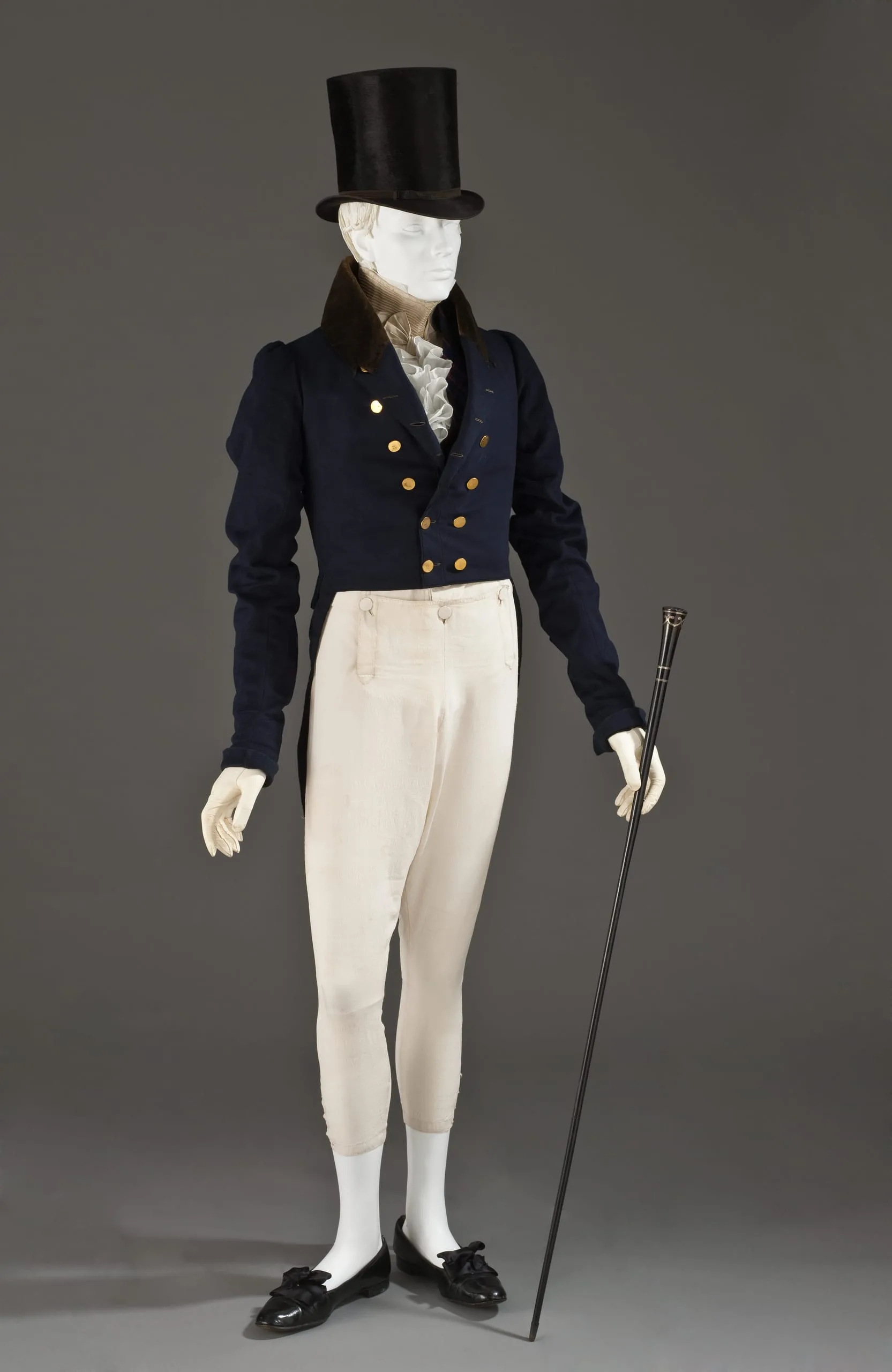
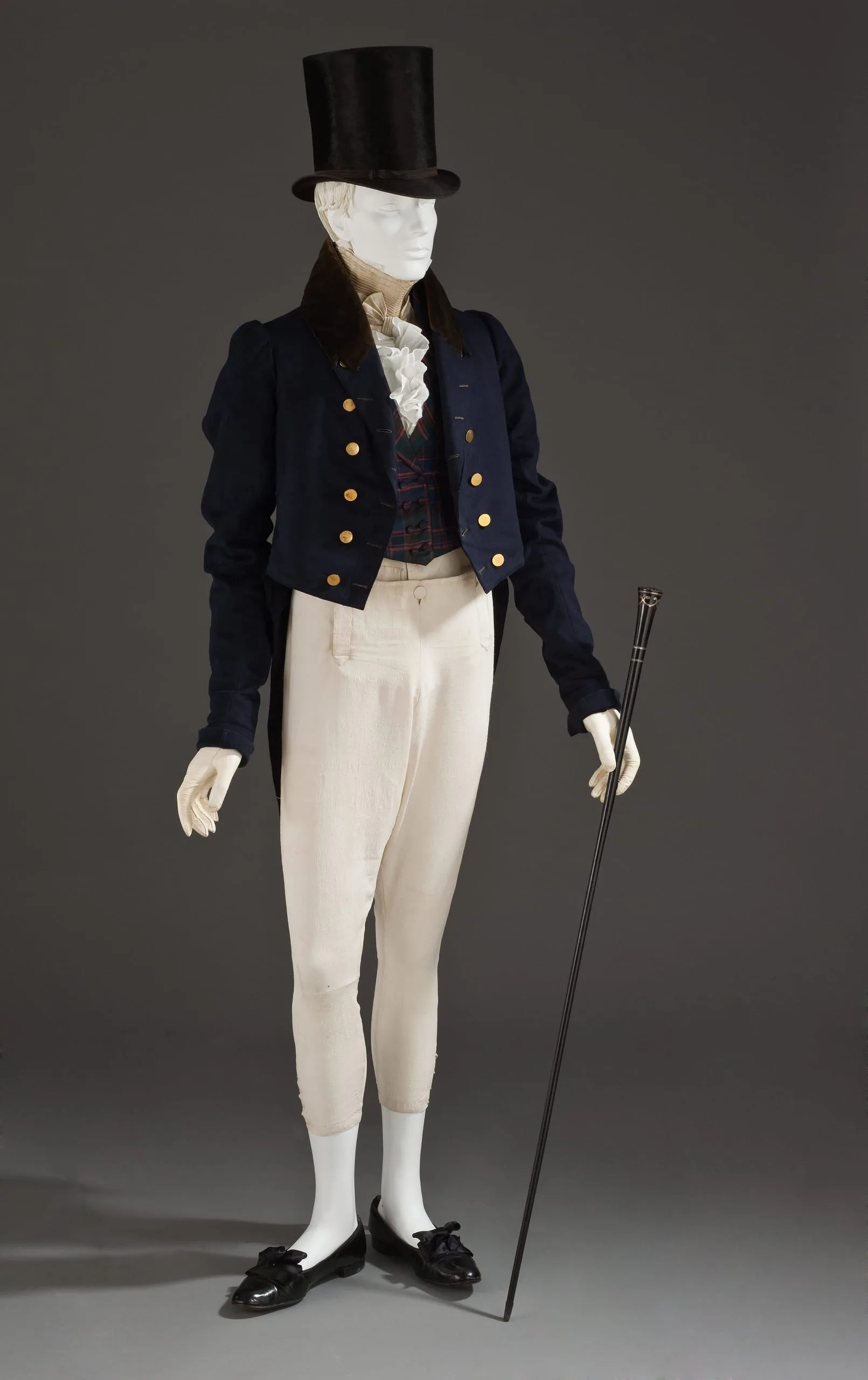
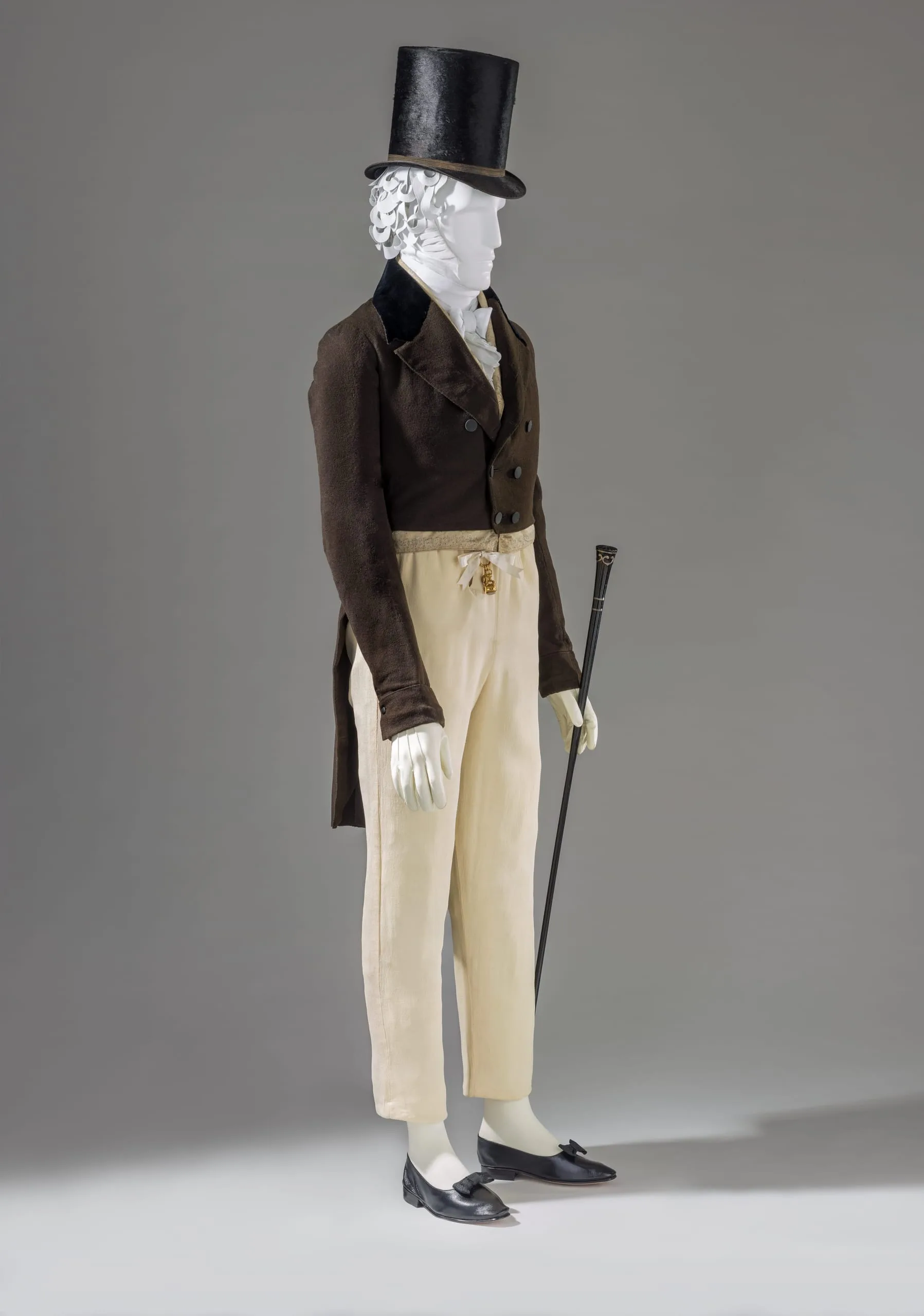
The tall, flat-crowned, broad-brimmed top hat was a popular accessory to complete a European man’s ensemble from the late eighteenth through the early twentieth century. At the time this black example was made, around 1815, silk plush—a type of silk pile fabric—had been widely adopted for top hats, supplanting the previously en vogue beaver fur whose look and feel it mimicked. Manufactured in Paris by Duvet, the hat was acquired by LACMA along with the cardboard box in which it had been stored for more than 200 years; as a result, the hat had retained its original shape, and minimal conservation was required.
Initially an accessory for country leisure wear, the top hat was considered appropriate for daily dress in urban areas by the early nineteenth century. It would have been worn with a tailcoat ensemble, which included a shirt, vest, trousers, and cravat or stock at the neck. Eventually, by the end of the nineteenth and into the twentieth century, the top hat style would be reserved for formal occasions, along with the tailcoat ensembles of yesteryear.
Clarissa M. Esguerra
2024