LACMA

ShopMembershipMyLACMATickets
LACMA
Los Angeles County Museum of Art
5905 Wilshire Blvd.
Los Angeles, CA 90036
info@lacma.org
(323) 857-6000
Sign up to receive emails
Subscribe
© Museum Associates 2026
  • About LACMA
  • Jobs
  • Building LACMA
  • Host An Event
  • Unframed
  • Press
  • FAQs
  • Log in to MyLACMA
  • Privacy Policy
© Museum Associates 2026
Collections

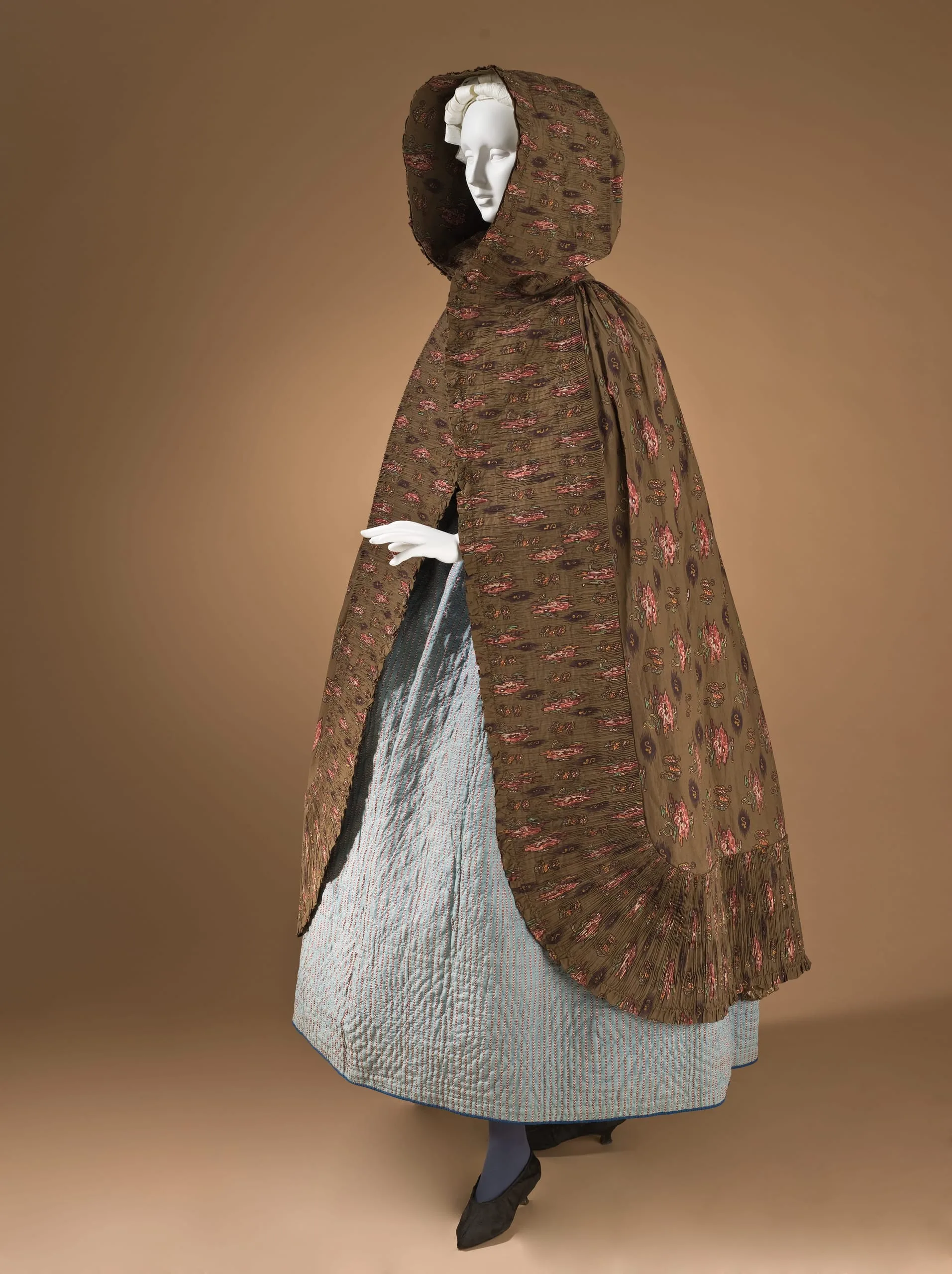
Woman's Cape1785-1820

Not on view
Olive-brown printed cape with large hood and allover floral motifs in dusty rose, displayed on a mannequin over a pale blue quilted petticoat
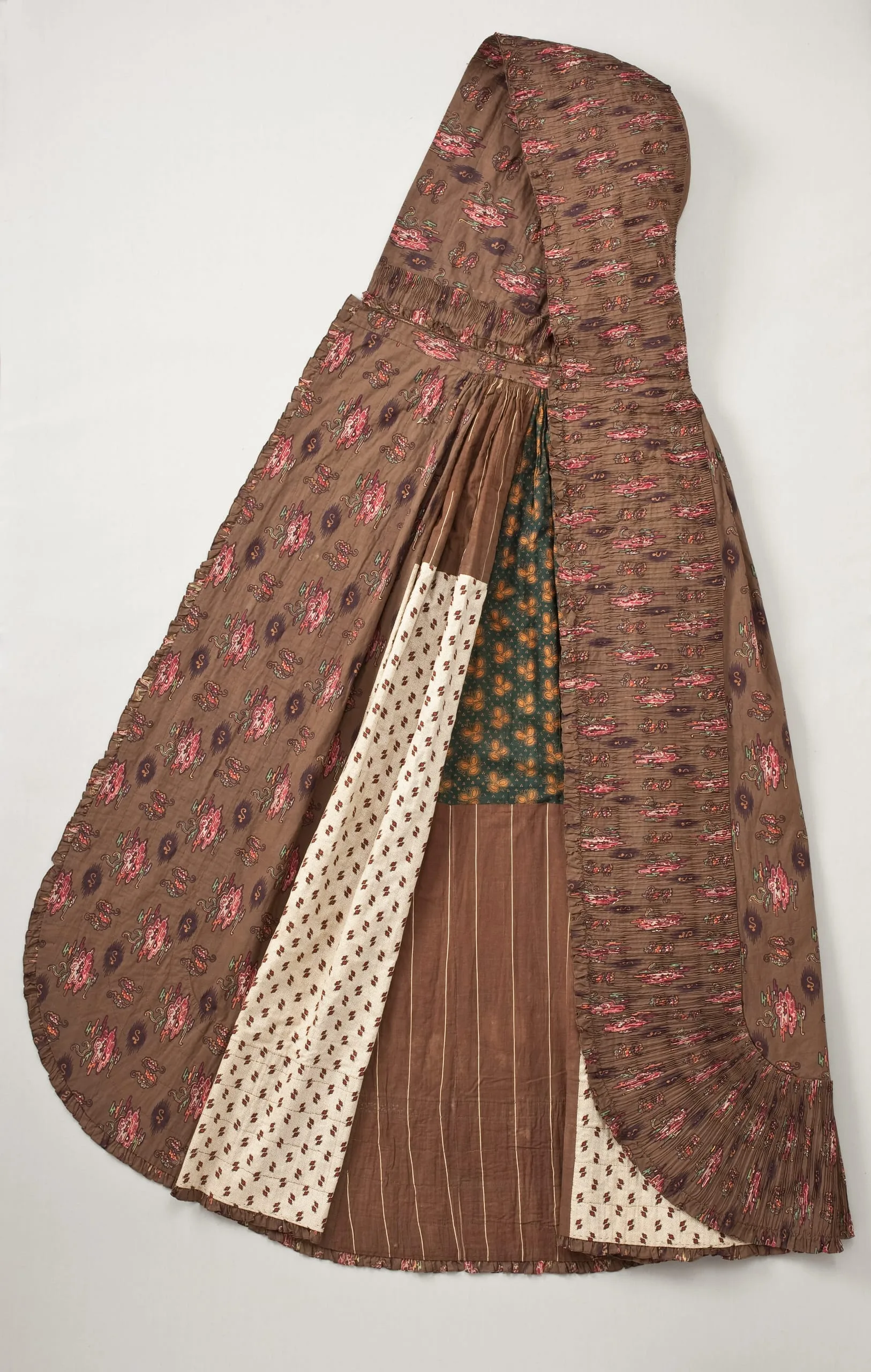
Textile garment, likely a 19th-century women's dress or robe, laid flat and opened to reveal multiple layers of printed cotton fabric. Exterior in brown with small pink floral and oval motifs; interior layers include cream with small dark prints, brown striped cotton, and green fabric with orange floral pattern. Gathered waistline and full skirt visible.
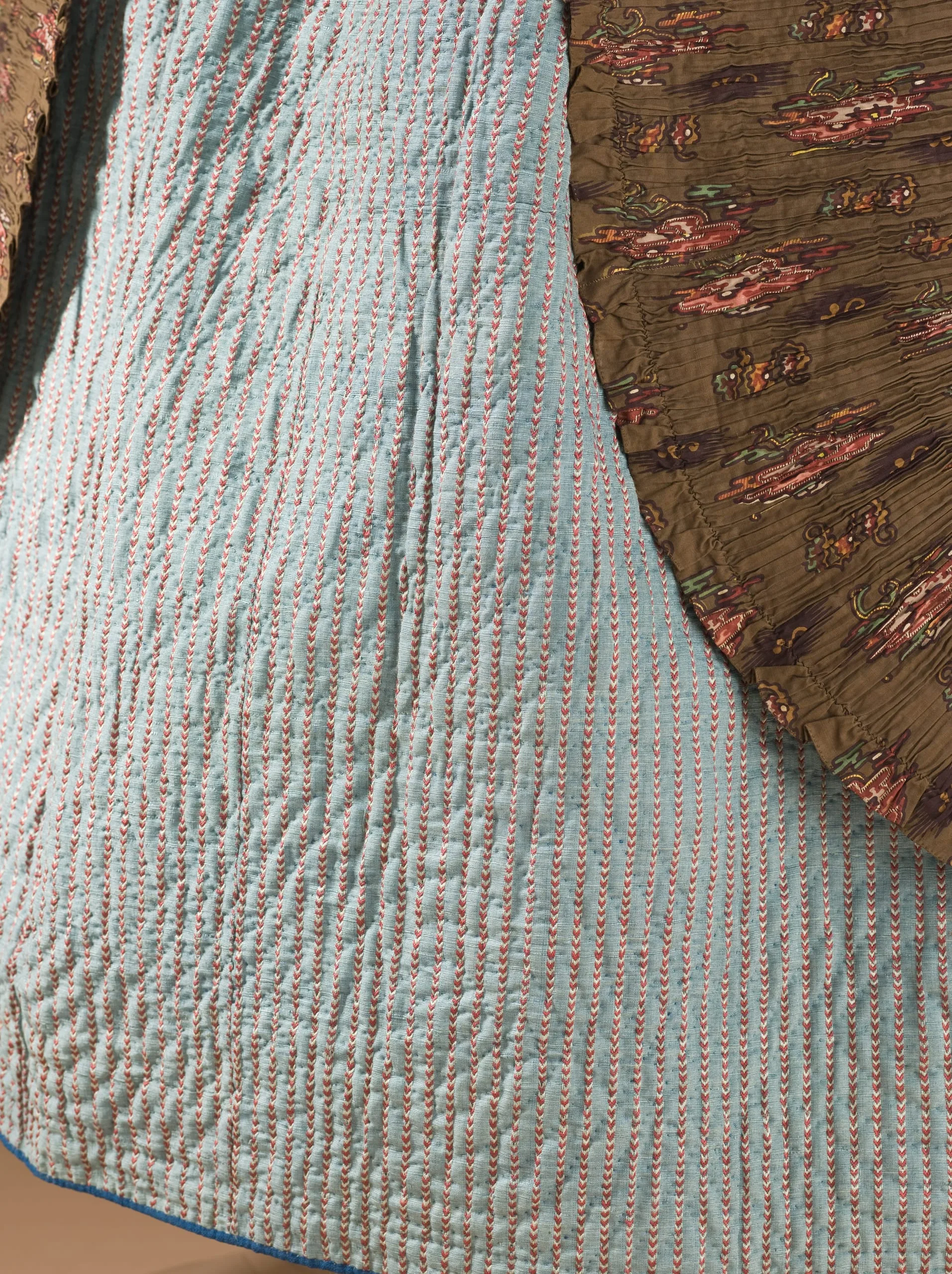
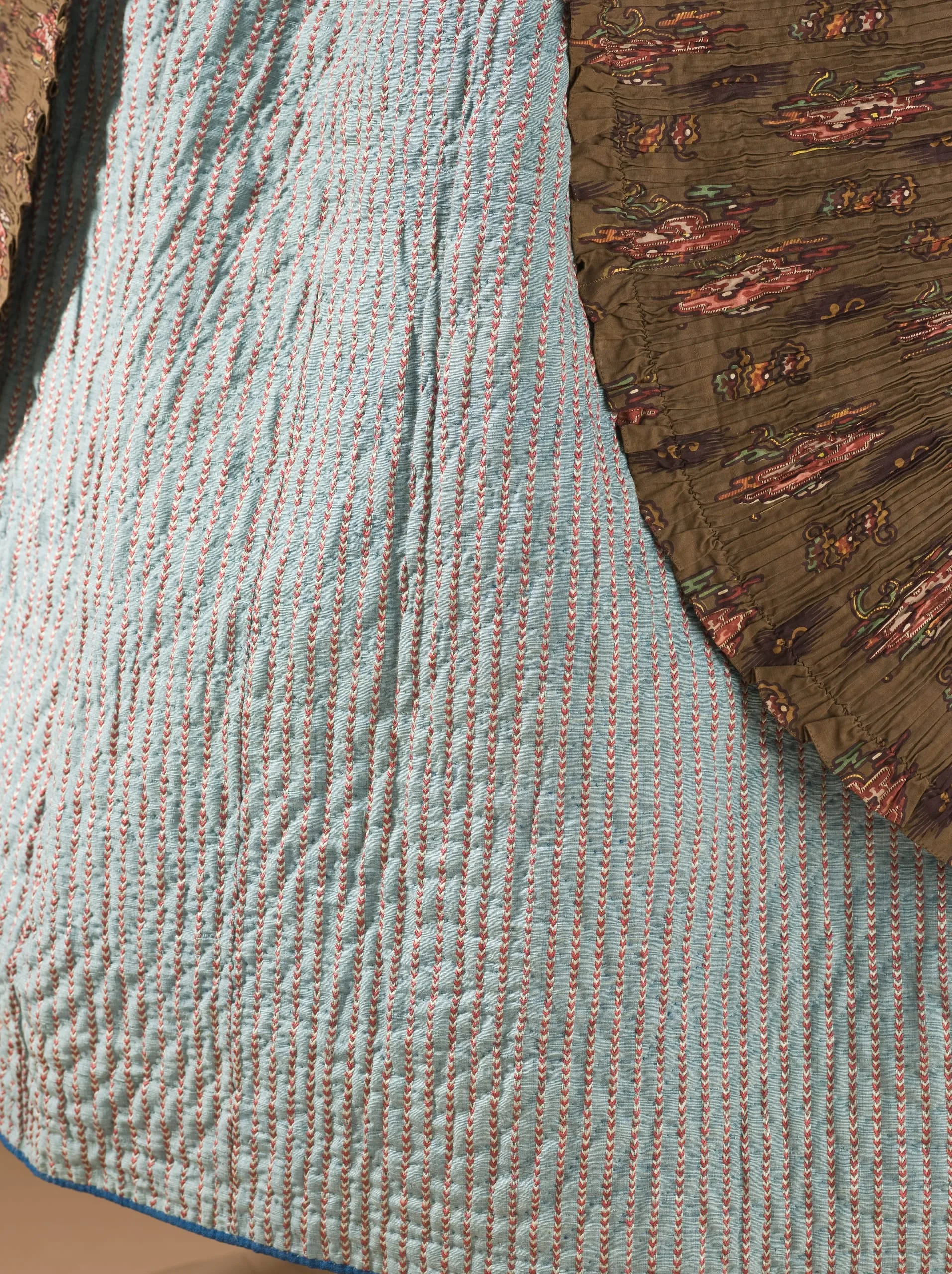
Textile with pale blue ground covered in dense rows of small red running-stitch kantha embroidery, partially overlaid by a dark olive-brown fabric printed with pink and multicolored floral and cloud motifs.
Textile detail showing a kantha-style quilted cloth in pale blue with dense rows of small running stitches in red and white, folded back to reveal a dark olive-brown printed lining with pink and multicolored floral and cloud motifs.
Title
Woman's Cape
Place Made
France, Provence
Date Made
1785-1820
Medium
Cotton plain weave, copperplate- and roller-printed
Dimensions
Center back length (excluding hood): 46 1/4 in. (117.48 cm)
Credit Line
Purchased with funds provided by Suzanne A. Saperstein and Michael and Ellen Michelson, with additional funding from the Costume Council, the Edgerton Foundation, Gail and Gerald Oppenheimer, Maureen H. Shapiro, Grace Tsao, and Lenore and Richard Wayne
Accession Number
M.2007.211.669
Classification
Costumes
Collecting Area
Costume and Textiles
Curatorial Notes

A cape with a wide hood and bordered with a band of extremely fine pleats was worn by women of Provence from about 1770 to 1830. Somber ramoneur (chimney sweep) prints were based on Indian calicos of abstracted floral motifs or tiny naturalistic flowers scattered on a dark ground. Capes were lined in wool or with one to three different cottons printed with miniature floral or geometric patterns called mignonettes after the flower of that name.

Selected Bibliography
  • Takeda, Sharon Sadako and Kaye Durland Spilker. Fashioning Fashion: Deux Siècles de Mode Européenne, 1700-1915. Paris: Arts Décoratifs; Los Angeles: Los Angeles County Museum of Art; Munich; New York: Delmonico Books-Prestel, 2013.
  • Takeda, Sharon Sadako and Kaye Durland Spilker. Fashioning Fashion: European Dress in Detail, 1700-1915. Los Angeles: Los Angeles County Museum of Art; Munich; New York: Delmonico Books/Prestel, 2010.
  • Takeda, Sharon Sadako and Kaye Durland Spilker. Fashioning Fashion: Europäische Moden, 1700-1915. Los Angeles: Los Angeles County Museum of Art; Munich; New York: Prestel, 2012.
Related Unframed

Tracing the History of Italian Lace
  • August 20, 2018
  • Clara Puton
Hawaiian Featherwork: A Glossary
  • June 30, 2016