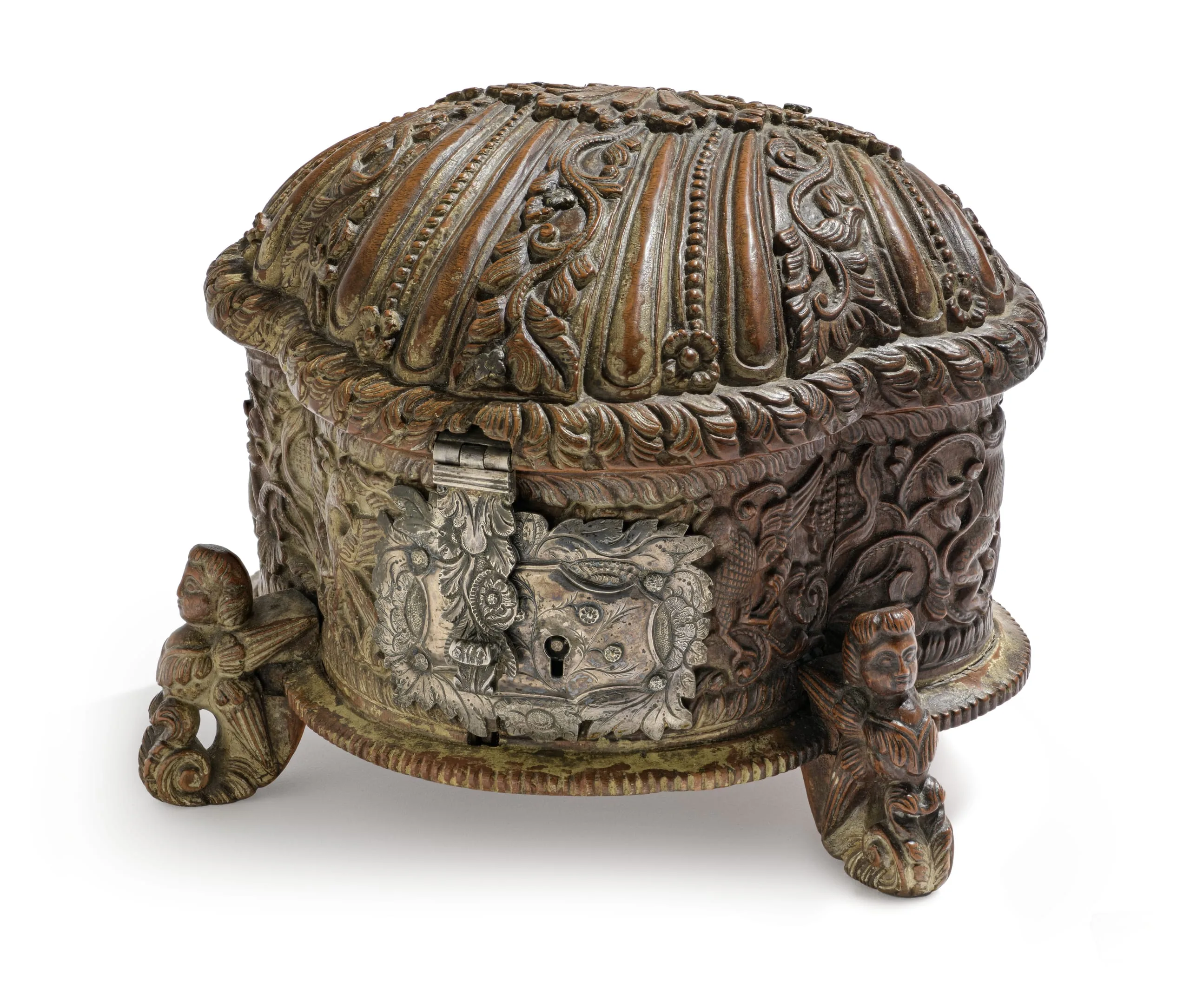
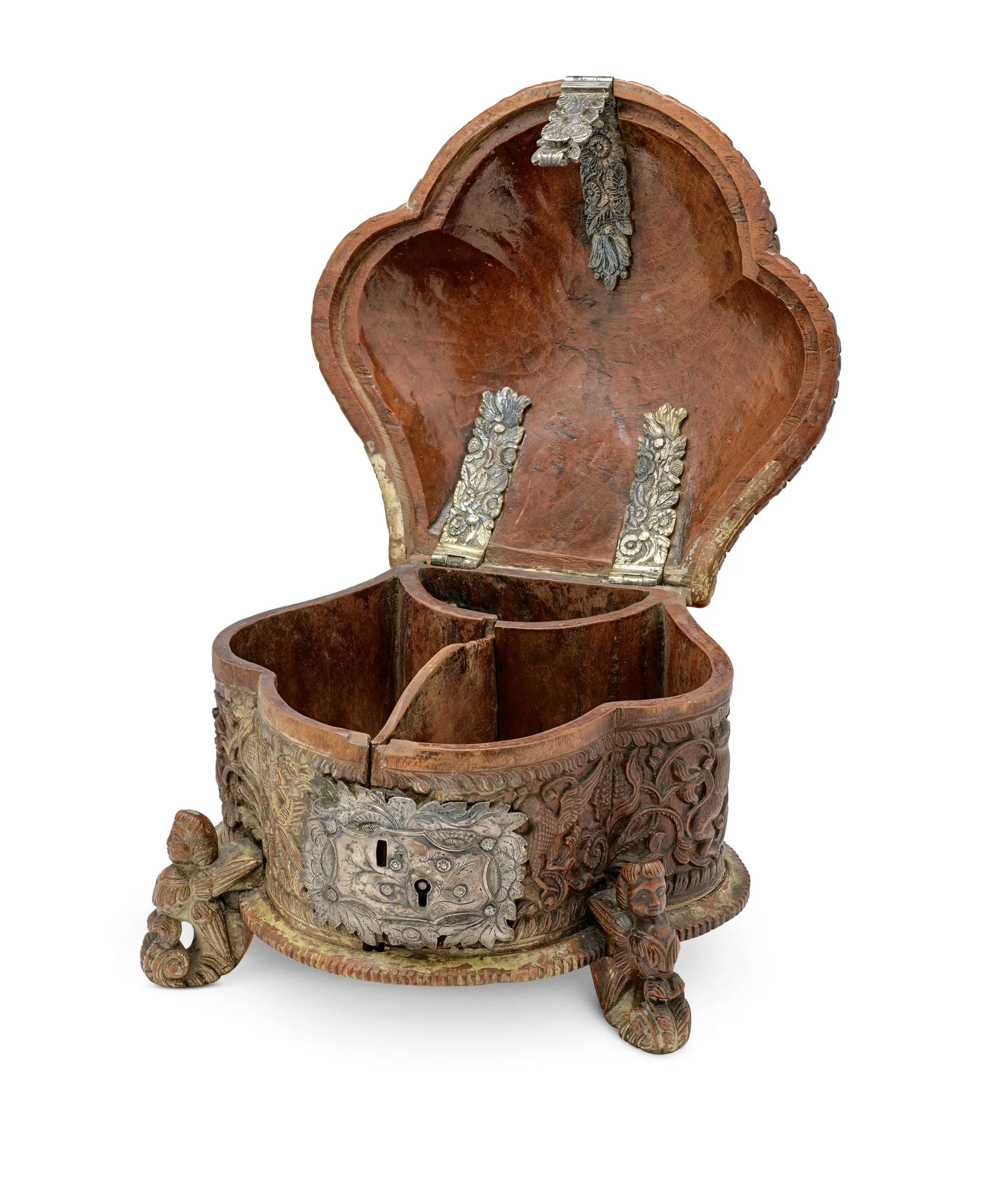
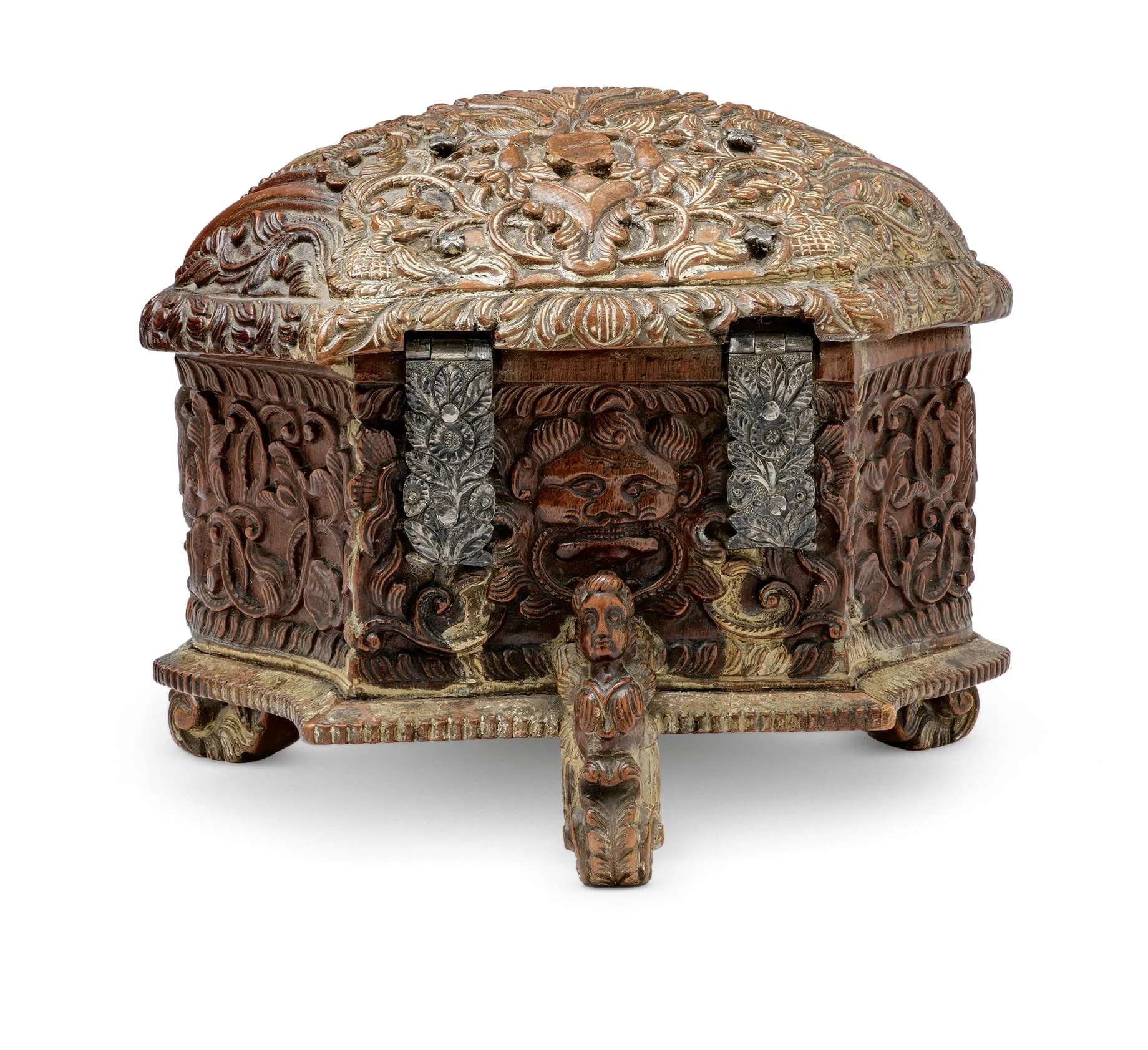
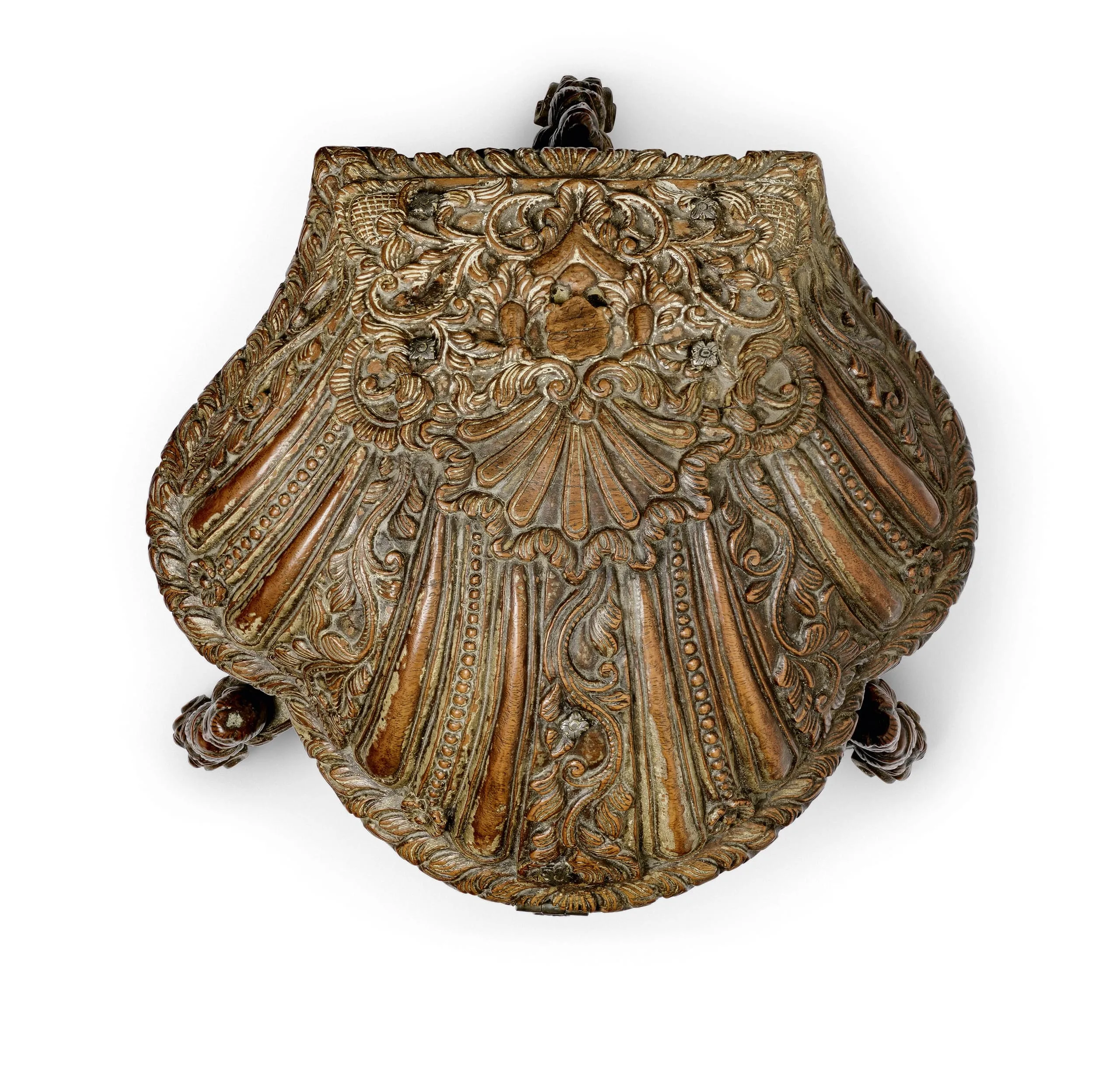
Known today as yerberas (herb boxes) or coqueras (coca boxes), shell-shaped containers such as this were part of elite households in the southern Andes and highland Peru. The densely ornamented boxes were designed to store yerba maté leaves to brew tea, and perhaps also coca leaves and other substances. Here, a band of openwork relief covers the exterior with a profusion of foliage, birds, and a bold mascaron in the back; the supporting feet are carved in the form of whimsical cherubs with coiled, foliated bodies. Such containers were created by Indigenous carvers of the Jesuit missions of Moxos and Chiquitos, in present-day Bolivia. Valued for the beauty and dexterity with which the Indigenous makers carved the hard tropical woods, mission carpentry was highly coveted and made for prized gifts.
Located in the Amazon basin, on the fringes of the viceroyalty, Moxos and Chiquitos had become the stuff of myth. The Spaniards believed that the region was a kind of El Dorado and, beginning in the sixteenth century, made several failed forays in search of its fabled gold. The region was inhabited by different Indigenous tribes, each with their own language and traditions, whose subsistence depended on agriculture, hunting, and trade. The Jesuits first arrived in the area in 1667 as auxiliaries of Spanish colonizers based in the city of Santa Cruz de la Sierra, and over the next century established a complex network of largely self-sustaining missions, where different Indigenous groups were relocated for the purpose of evangelization and work in different types of trades.
Ilona Katzew
2024