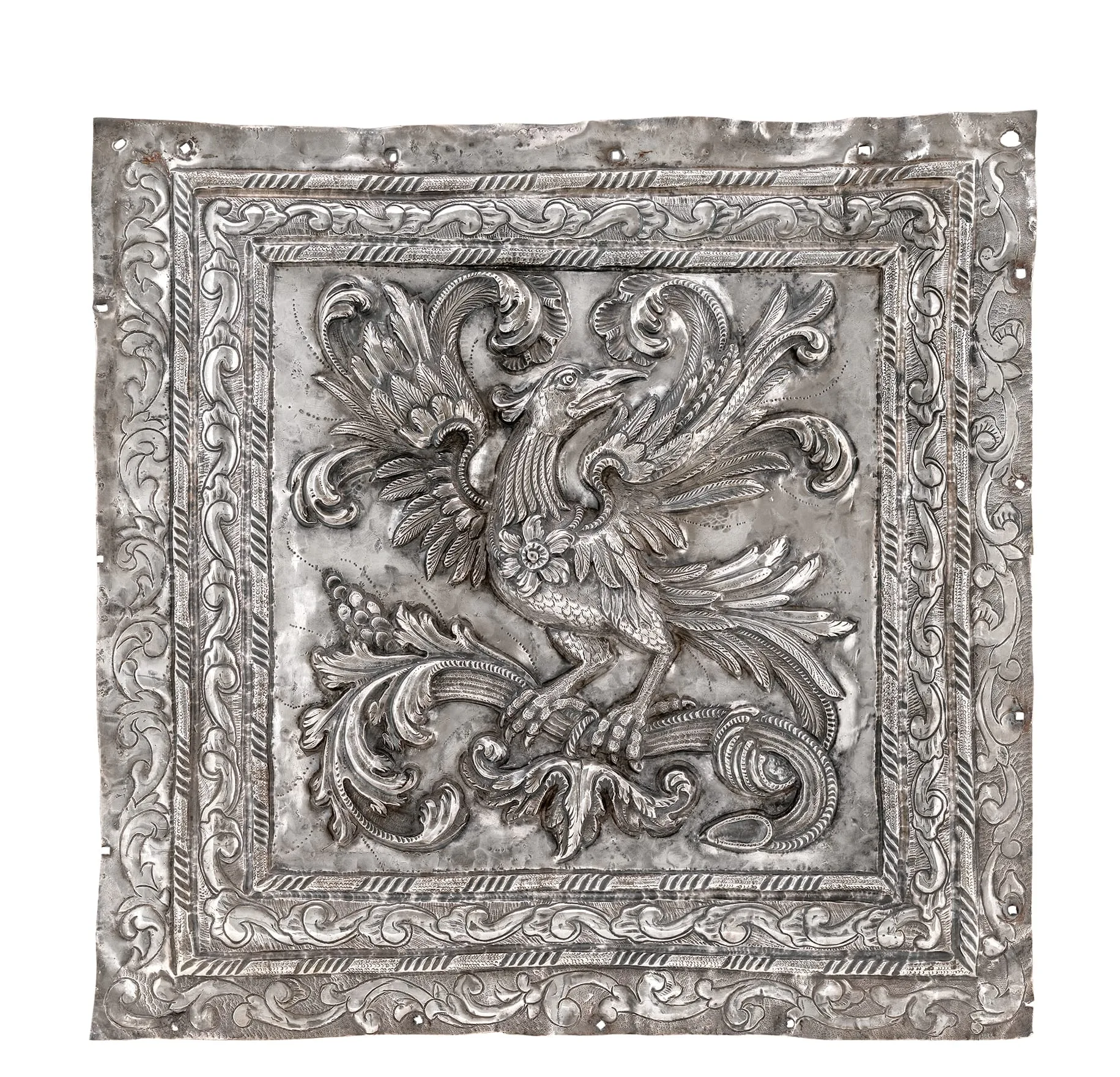
Elaborately decorated silver plaques adorned church altars across the Viceroyalty of Peru and were shipped around the world, including to Jerusalem. This fragment was originally nailed to a wood armature as part of a larger ensemble (note the holes around the perimeter and a pendant plaque, M.2007.29.4). The finely rendered bird, likely a heron, demonstrates the artist’s knowledge of local fauna. Perched on an ornate vine with small clusters of grapes, the majestic bird references the wine of the Eucharist and, by extension, the blood of Christ. A common motif in ecclesiastical objects, birds were also popular in Andean silver, woodwork, and textiles before the arrival of the Spaniards. Although the profusion of birds concerned colonial authorities, their presence in Christian objects persisted, demonstrating the importance of this motif for Andean peoples, which along with the silver material itself held deep ancestral associations with the sacred.
While silver plaques offered a more durable altar covering than traditional textiles (see, e.g., M.66.71), their prized material made them susceptible to repurposing and plunder. Today, this finely wrought plaque stands as an isolated vestige removed from its original setting.
Rachel Kaplan
2024