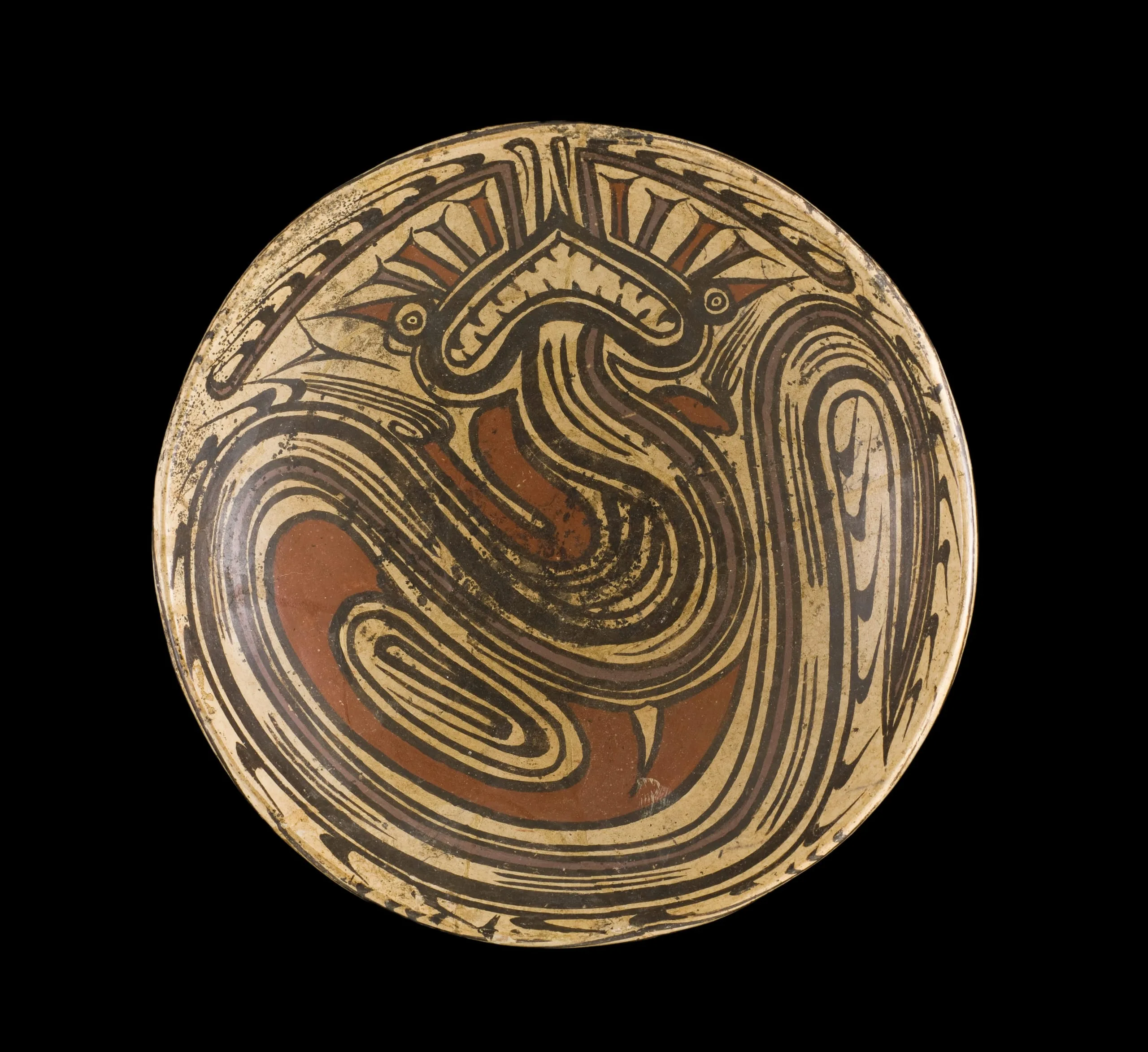
This creature has been described by different scholars as a hammerhead shark, a catfish, and a saurian (lizard). Although the image may contain elements of all three, no real creature has a wide, toothy mouth flanked by broad-set eyes, a twisting, snakelike body, and front legs with claws. The artist’s goal was not to depict an existing animal but to represent a concept, which is encoded in the different elements combined in the figure. This concept was probably clear at the time but now largely eludes us.
Panamanian pedestal plates with their tall, slim stems were produced by ancient artists in the thousands for burial alongside what we assume were elites of their society. Some scholars relate this vessel form to that of the hallucinogenic mushroom, seeing parallels in the long stems and flaring tops. This would lend support to interpretations of the complex imagery often found on them as being representations of shamanic visions and the result of ritual practices involving hallucinogenic substances.
Julia Burtenshaw
2018
Selected Bibliography
Helms, Mary W. Creations of the Rainbow Serpent: Polychrome Ceramic Designs from Ancient Panama. Albuquerque: University of New Mexico Press, 1995.