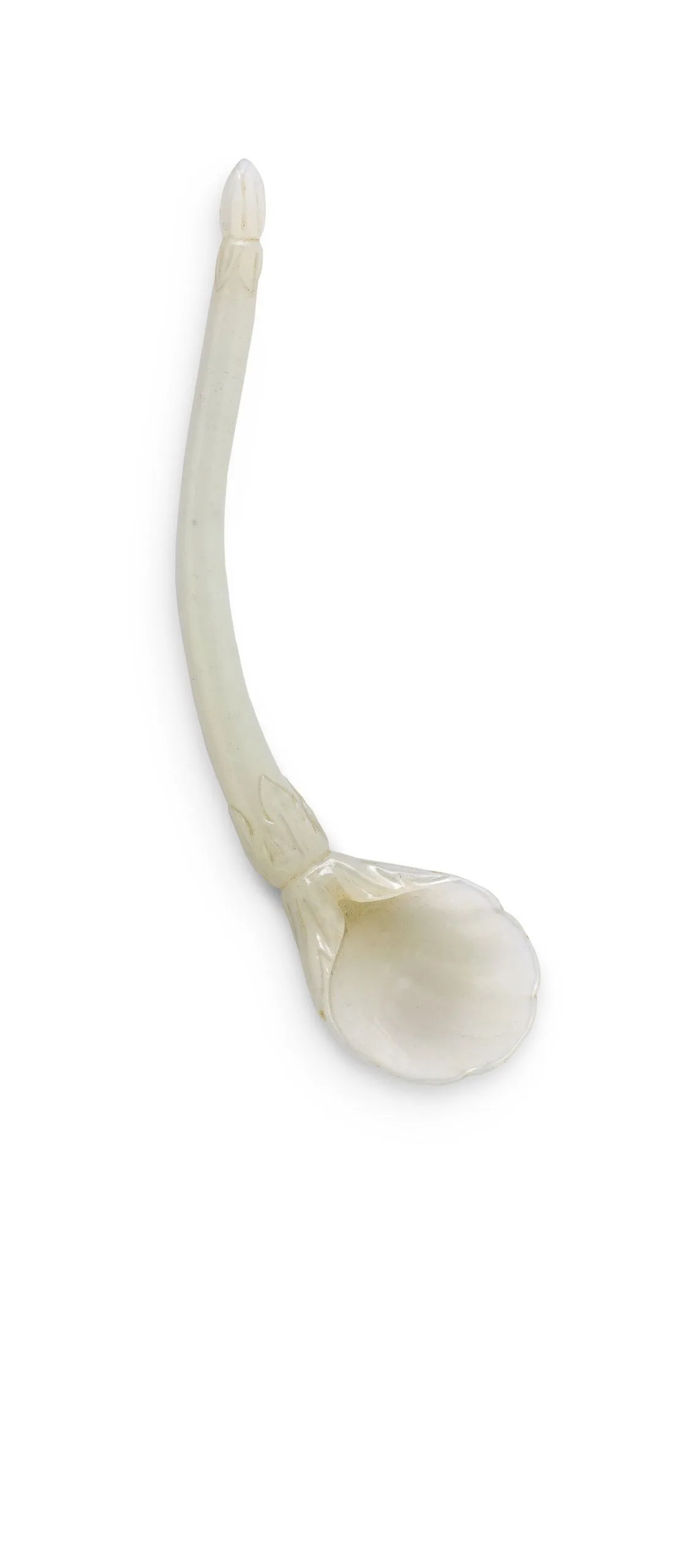
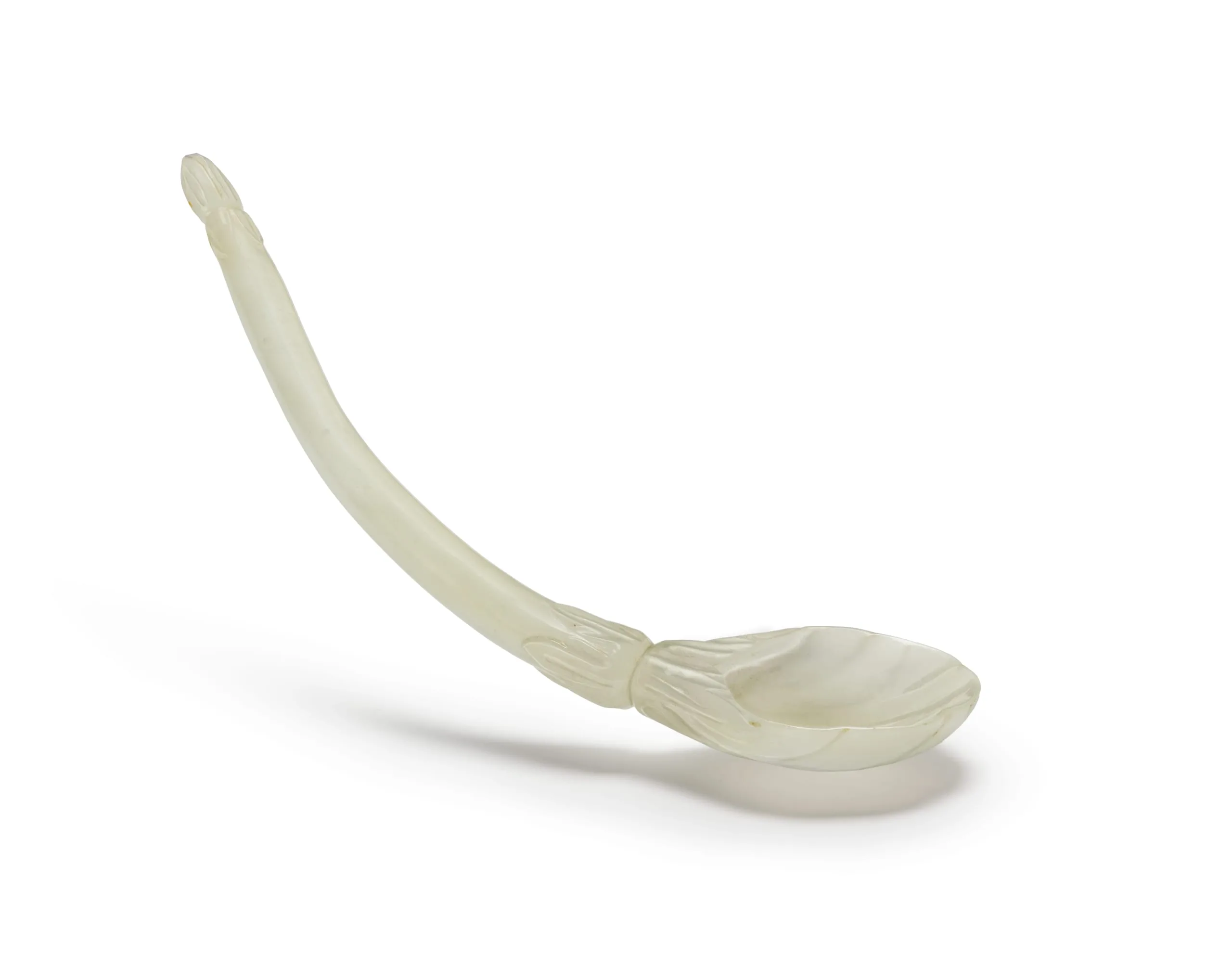
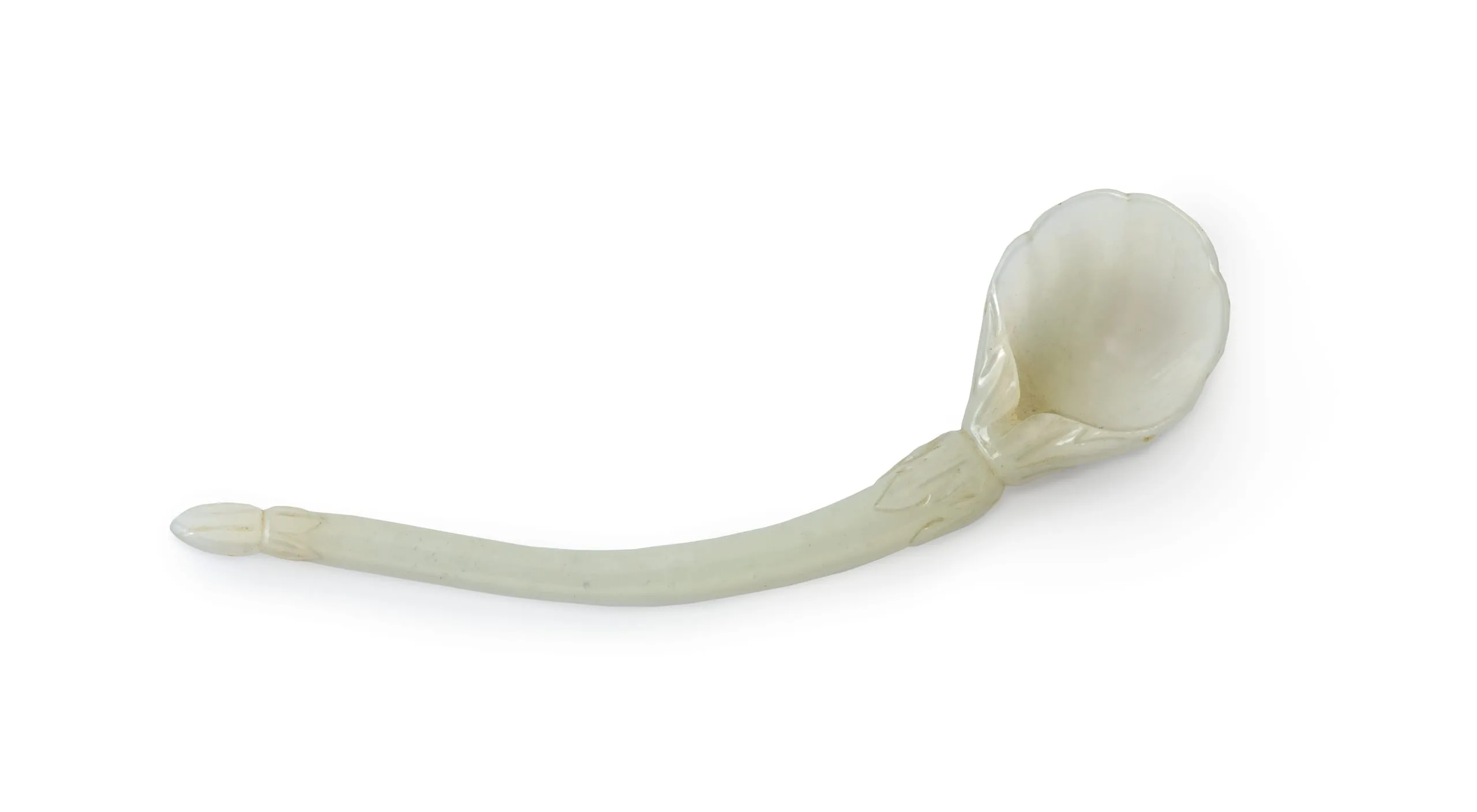
This delicate small spoon has a wide shallow bowl like a miniature ladle. The bowl is fashioned in the form of a lobed leaf with the tapered sections on the bottom converging into an acanthus leaf flanked by split acanthus leaves used as a border motif. The bowl connects in a faux joint to a curvilinear handle in the form of a leaf stem adorned with a collar of acanthus leaves. A smaller acanthus leaf collar and a tiny flower bud terminal complete the decoration at the end of the handle.
The intended social function of the spoon is uncertain, and there are no known examples of spoons of this type depicted in Mughal paintings that could provide clues to its original cultural context. Although the repertoire of extant Mughal palatial tableware and utensils includes ovoid serving spoons made of jade and precious metals and jade ladles made in a lobed form, these are all considerably larger than the LACMA spoon. Judging from its small size and tiny bowl in the form of a shallow circular scoop, both of which render it impractical for serving or eating a typical portion of food or liquid, the spoon may have been used originally to consume a paste of opium resin mixed with syrup or thickened juices to make it more palatable. Opium spoons used in this manner were described in the late 19th century as a Turkish method of consumption, but on the basis of the LACMA spoon it seems likely that the practice may have also been current in South Asia.
See Stephen Markel, "Mughal Jades: A Technical and Sculptural Perspective." Asianart.com (July 2008), figs. 19-21. http://www.asianart.com/articles/markel2/index.html#2