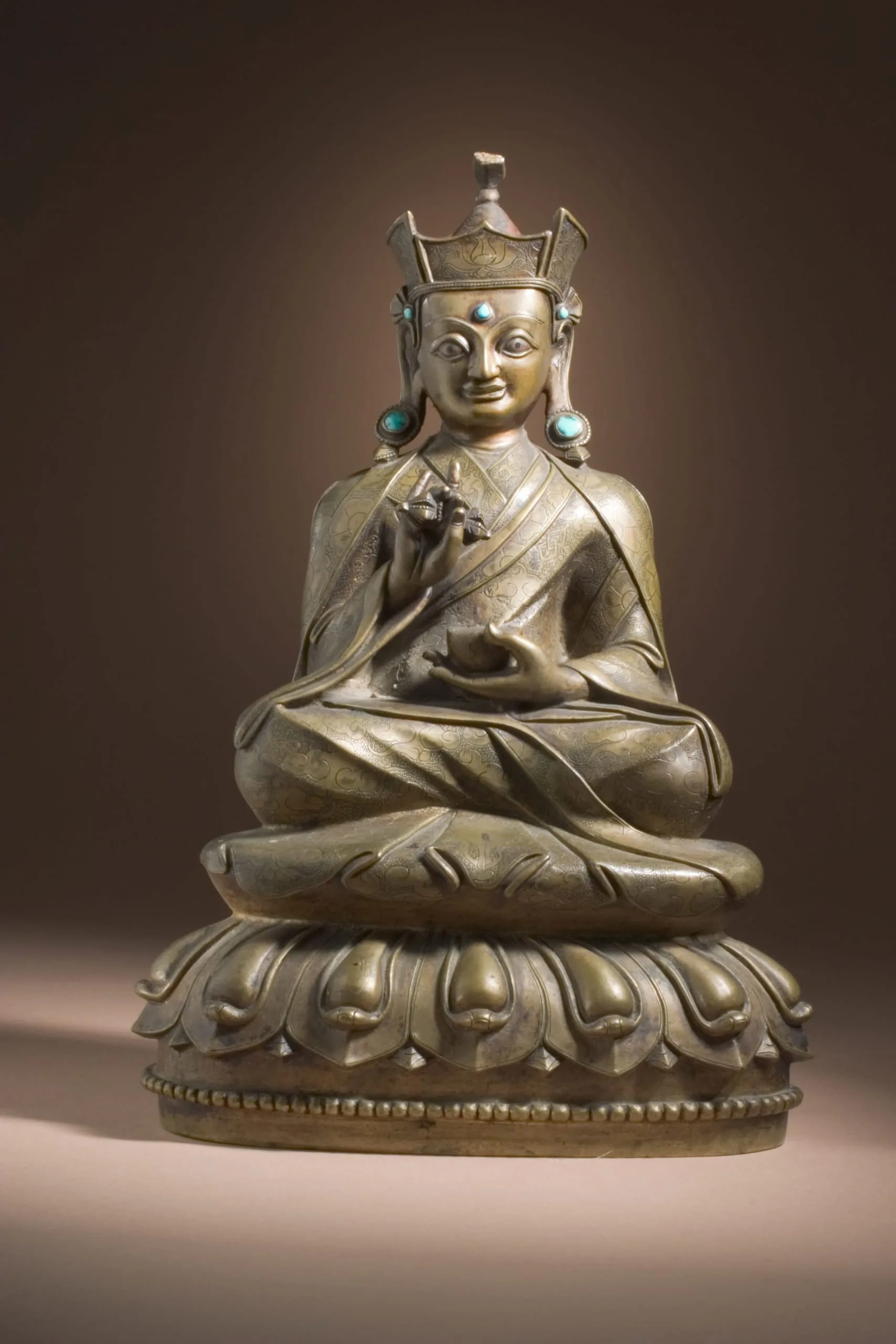
Padmasambhava (also known as Guru Rinpoche [Precious Teacher]) was a Buddhist master from Uddayana (modern Udiana) in the Swat Valley of Pakistan. He founded Tibet’s first monastery, the Samye Monastery near Lhasa, which was built between 787 and 791. According to the Blue Annals (completed in 1476), he was summoned to Samye to quell local spirits who were thwarting the new faith. Through awesome demonstrations of his powers, he subdued these gods and drew them into the service of Buddhism.
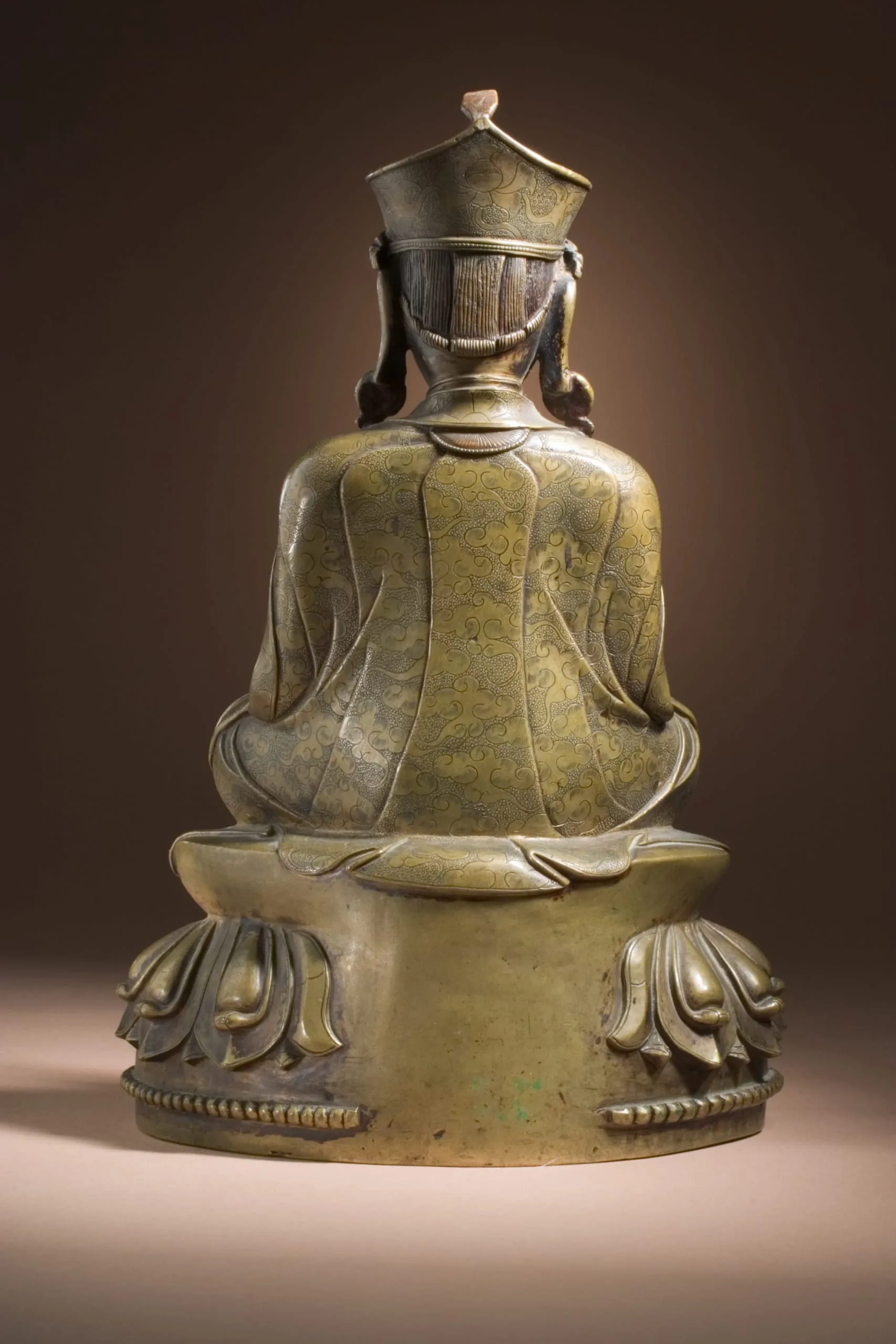
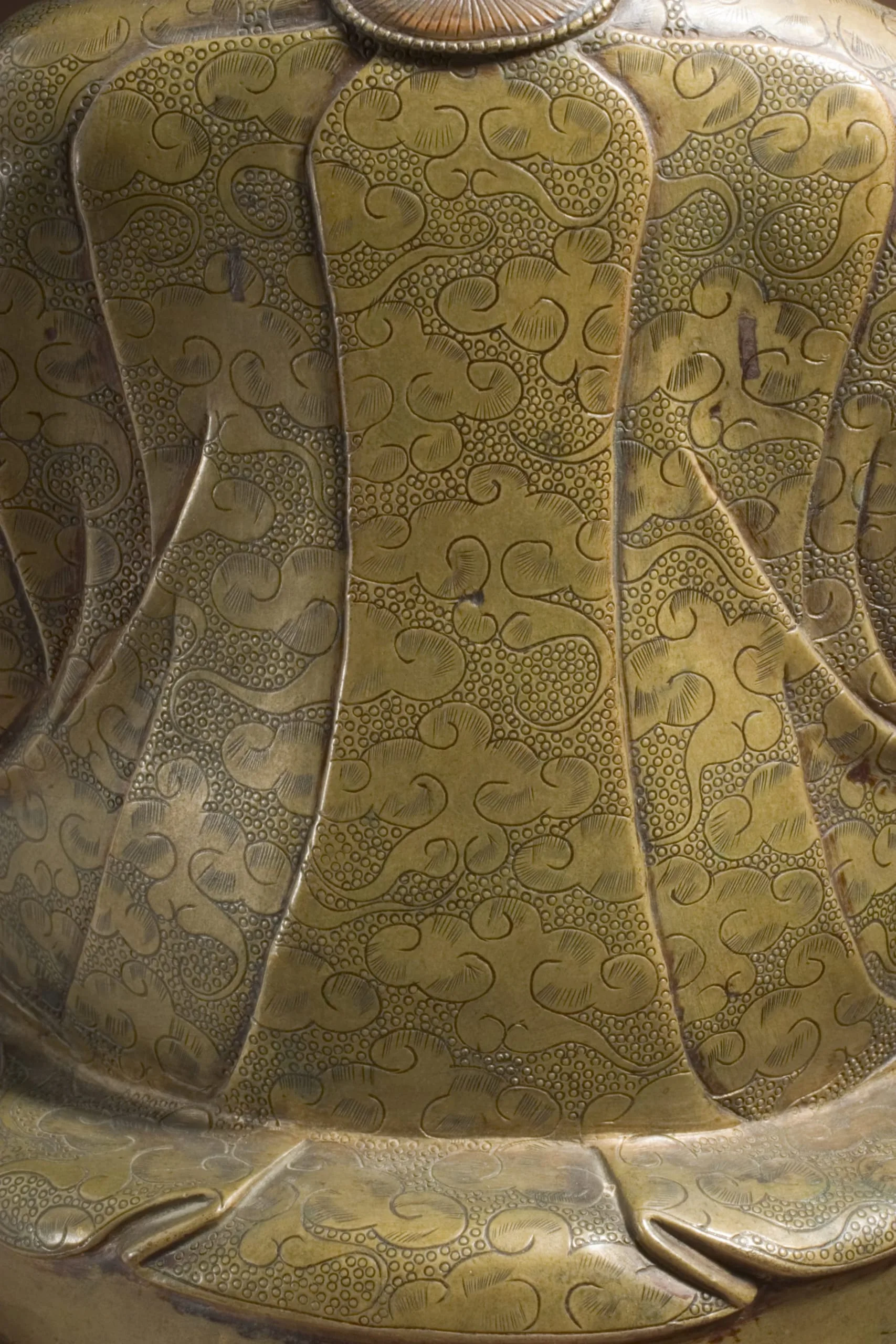
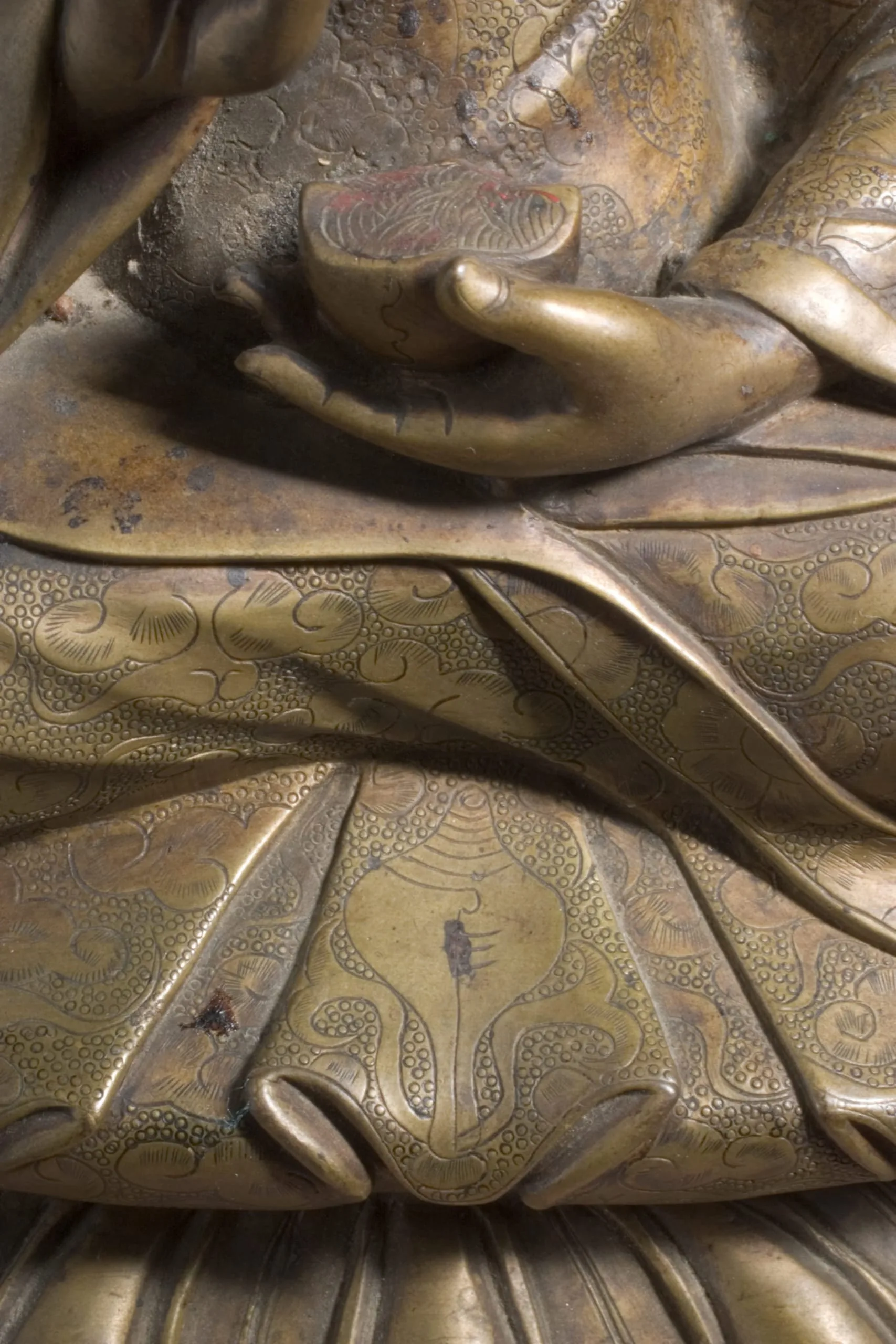
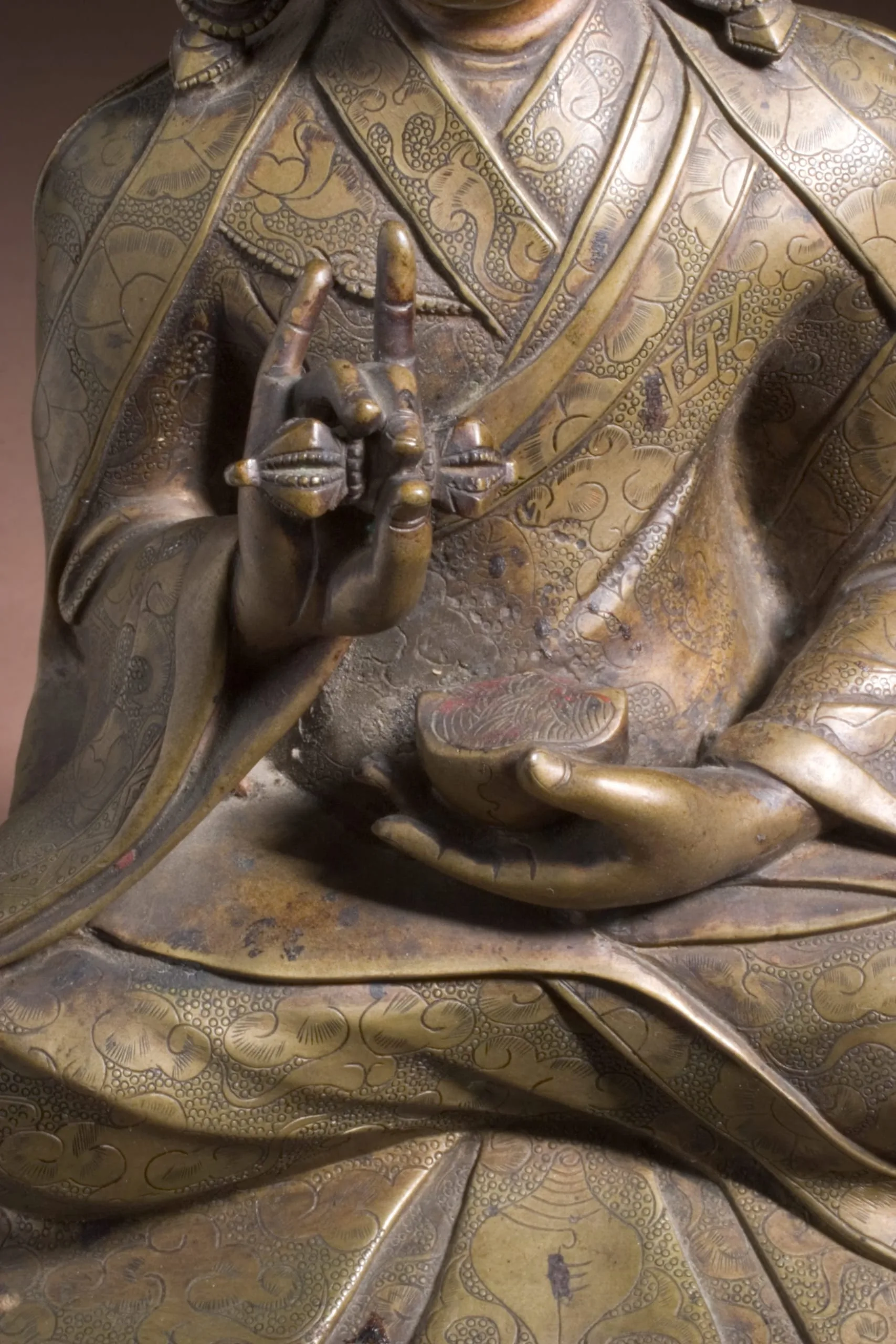
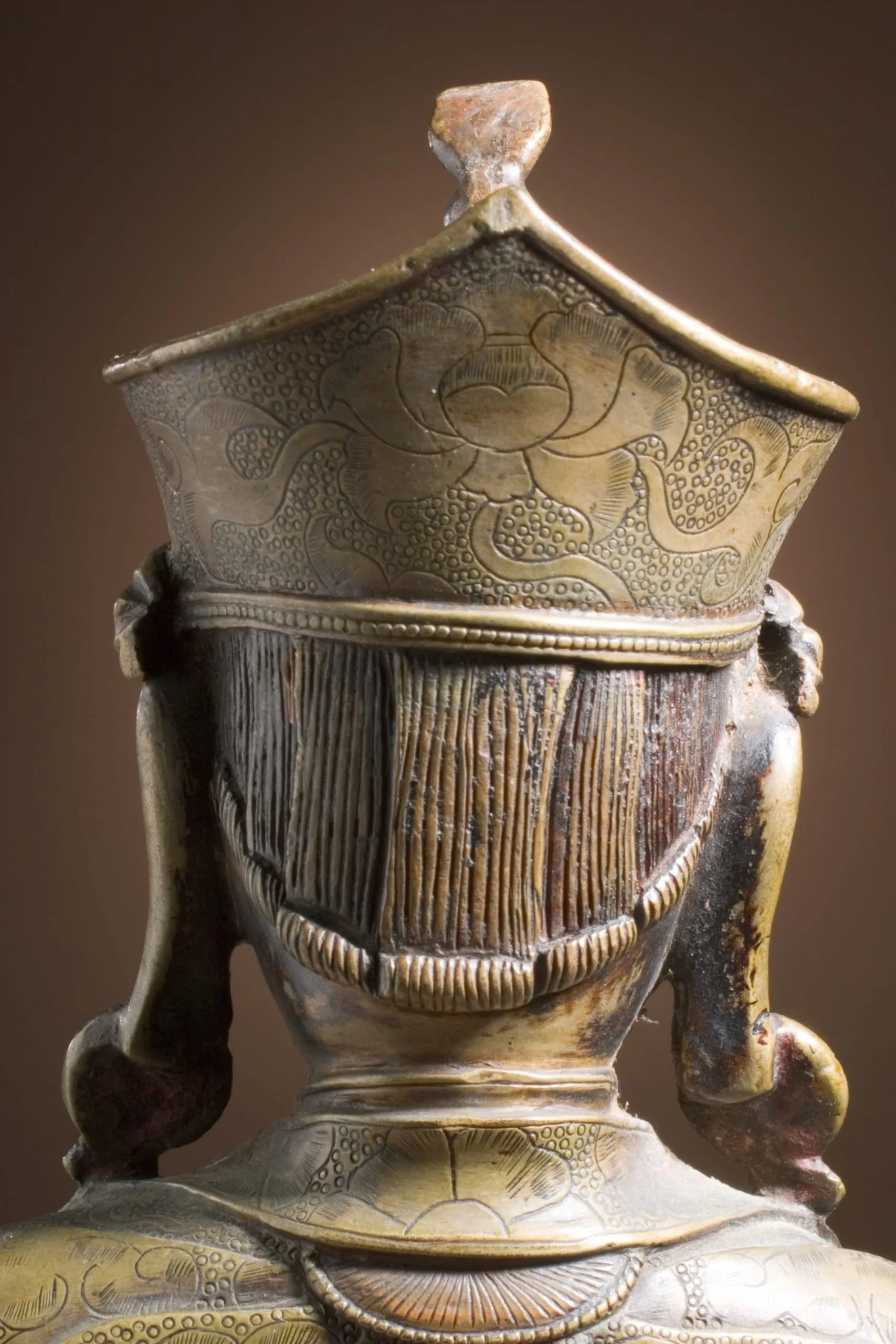
Padmasambhava is typically depicted with a distinctive peaked lotus hat, reflective of Gandharan origins, and wearing a monk’s robe. He holds a thunderbolt (vajra) and a ritual skull cup (kapala). He sits in the meditation posture (padma asana) on a lotus base. Here, his robe and hat are adorned with elegantly incised clouds, lotus blossoms, and Buddhist symbols.
See also M.81.183.1, M.83.218.3, M.86.281, M.86.338.1, AC1994.117.2, and AC1997.244.1.