LACMA

ShopMembershipMyLACMATickets
LACMA
Los Angeles County Museum of Art
5905 Wilshire Blvd.
Los Angeles, CA 90036
info@lacma.org
(323) 857-6000
Sign up to receive emails
Subscribe
© Museum Associates 2026
  • About LACMA
  • Jobs
  • Building LACMA
  • Host An Event
  • Unframed
  • Press
  • FAQs
  • Log in to MyLACMA
  • Privacy Policy
© Museum Associates 2026
Collections

Gerrit Berckheyde
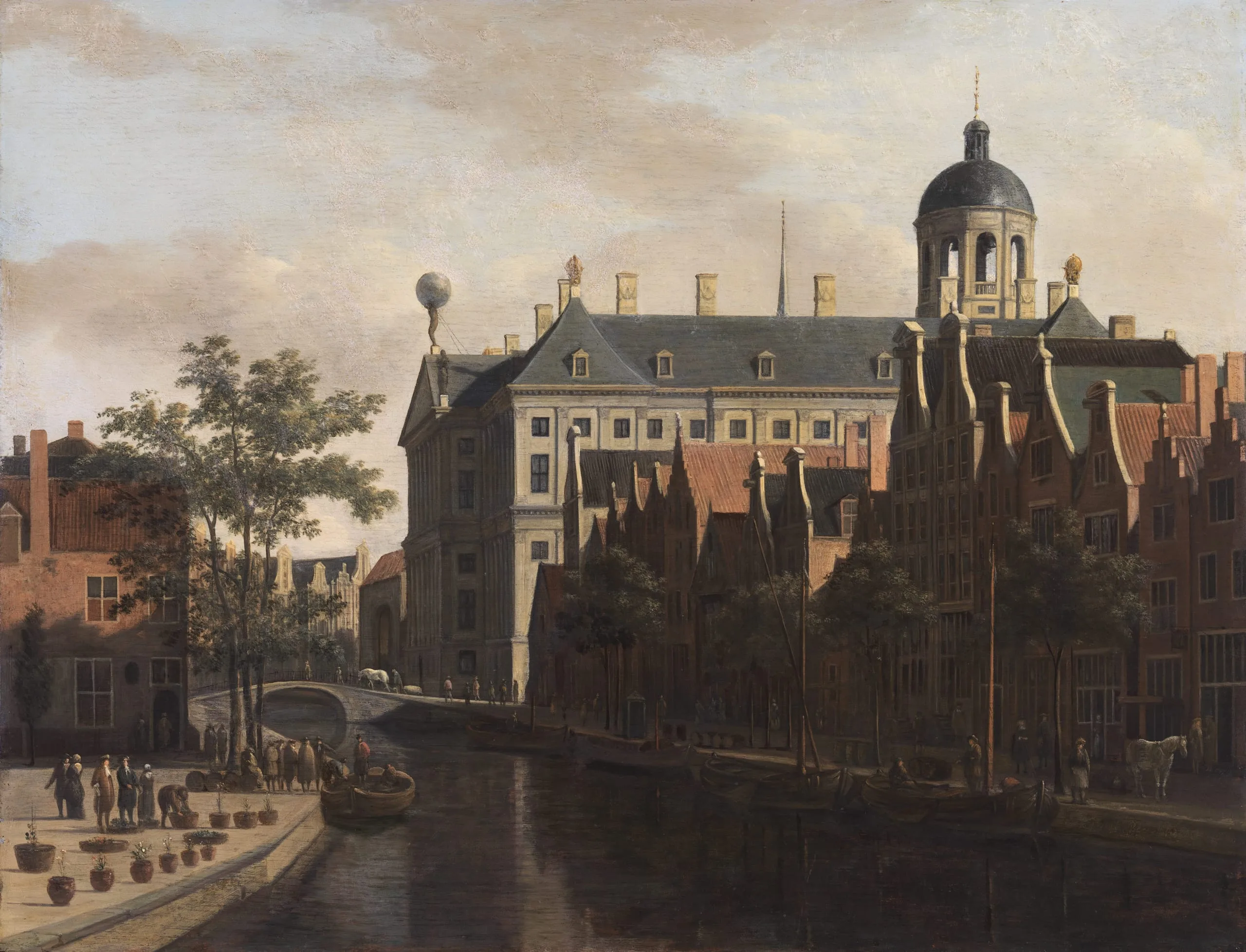
The Nieuwezijds Voorburgwal with the Flower and Tree Market in Amsterdamcirca 1675

On view:
Geffen Galleries
Oil painting of a Dutch city canal scene with figures on a quayside, a stone bridge, red-brick townhouses, and a large pale stone building with a domed tower
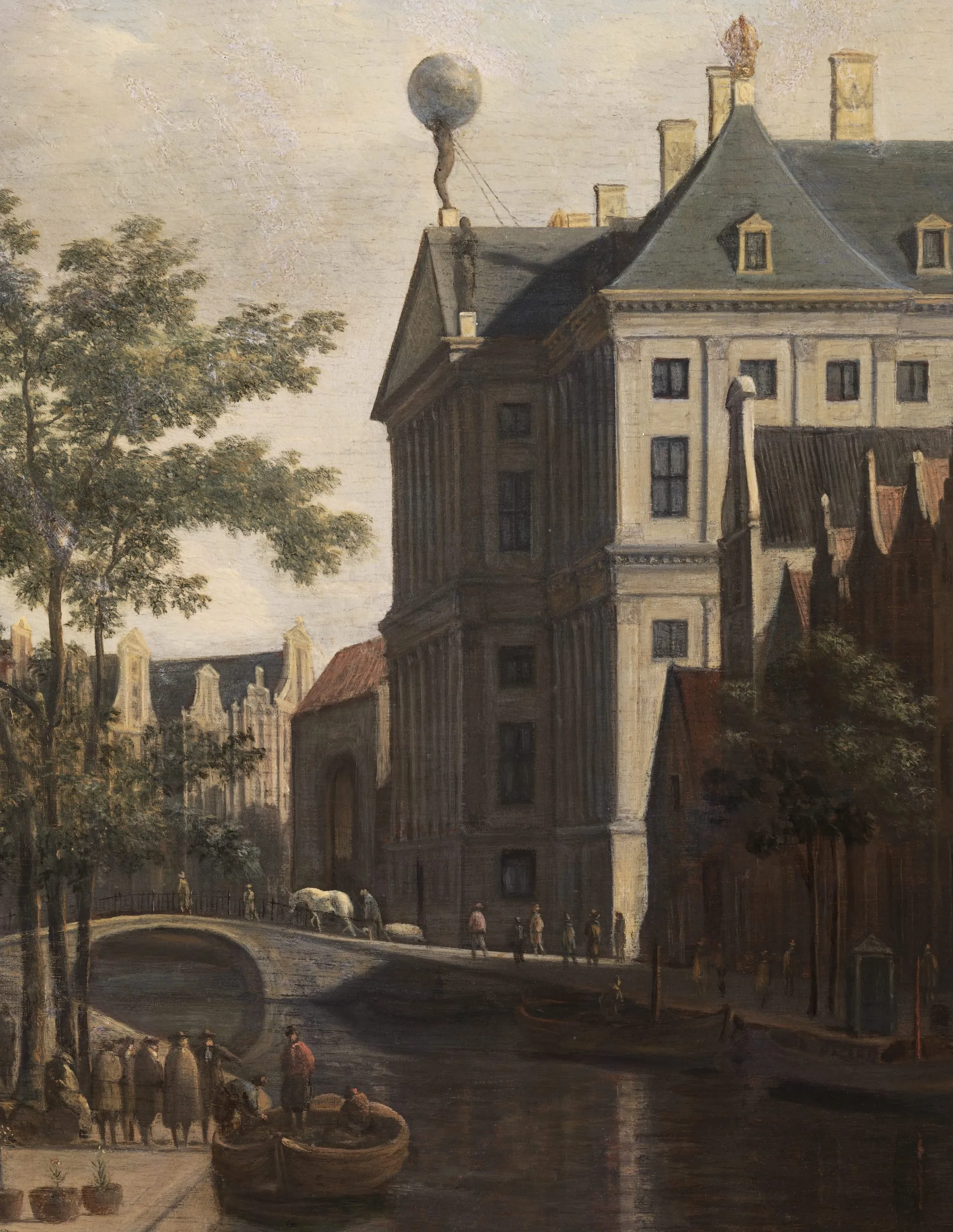
Oil painting of a Dutch city canal scene with a large classical building topped by a gilded globe finial; small figures on the quayside and in a boat at lower foreground, a stone bridge and tree-lined street receding into the background.
Artist or Maker
Gerrit Berckheyde
Northern Netherlands, 1638-1698
Title
The Nieuwezijds Voorburgwal with the Flower and Tree Market in Amsterdam
Date Made
circa 1675
Medium
Oil on wood panel
Dimensions
Panel: 14 1/2 × 18 3/4 in. (36.83 × 47.63 cm) Framed: 23 3/4 × 27 × 3 1/2 in. (60.33 × 68.58 × 8.89 cm)
Credit Line
Gift of Mr. and Mrs. Edward William Carter
Accession Number
M.2009.106.1
Classification
Paintings
Collecting Area
European Painting and Sculpture
Curatorial Notes

In this tranquil cityscape, Gerrit Berckheyde positions the viewer behind the Town Hall of Amsterdam, gazing at the monumental edifice from the Nieuwezijds Voorburgwal, a major canal running through the city center. Berckheyde’s painting celebrates the Town Hall, which symbolized the city’s status as an imperial power. When the building, designed by Dutch architect Jacob van Campen, opened in 1655, its classical architecture and elaborate program of interior and exterior sculpture asserted Amsterdam’s newly crafted republican identity as the heir to the Roman Empire. Atop the structure’s rear pediment is a marble sculpture of Atlas holding the earth, representing the city’s claim to global dominance.

Following an increase in immigration to Amsterdam in the early seventeenth century, the city built a ring of concentric canals that were expanded outward into new suburbs as the population grew. Dutch cityscapes began to emerge as a popular painting subject in this period, and Berckheyde, an artist who specialized in the genre, most often represented parts of the city built in the 1657−63 expansion.

The wealth generated from the Dutch Republic’s global trade network—including the enormously lucrative trade in enslaved people—funded a surge in urban building projects in Amsterdam, like the canals and rowhouses Berckheyde here renders flooded in morning light. The Town Hall of Amsterdam itself provided space for the administration of the slave trade: from 1683 onward, it housed the Society of Suriname, a corporation that perpetrated the plantation slavery that sustained the Dutch colonial occupation of Suriname. The preponderance of painted cityscapes glorifying Amsterdam erased the realities of Dutch colonialism, which often provided the financial means that made the city’s ongoing expansion possible.

2024

Provenance

H. Becker,(1) Dortmund. Mrs. E. F. Dunn (sale, London, Sotheby’s, 6 Apr. 1949, lot 72). [Minken, London]. [P. de Boer, Amsterdam, by 1952 until at least 1959].(2) J. van Duyvendijk, Scheveningen. [Thos. Agnew and Sons, London]. [Newhouse Galleries, New York, sold 1973 to]; Edward William Carter, Los Angeles, resold 1974 to; [Newhouse Galleries, New York]. [Robert Noortman, London, sold 1976 to]; Mr. and Mrs. Edward William Carter, given 2009 to; LACMA.

Footnotes

(1) Hans Becker was the son of Johan Heinrich Becker, Amsterdam (b. 1878), director of Tabakkantoor Stokhuizen en Brom, Amsterdam.

(2) Labels formerly on the back of the panel indicate that the painting was included in De Boer’s winter exhibition of 1957–58 and summer exhibition of 1959.
Selected Bibliography
  • van Suchtelen, Ariane, and Arthur K. Wheelock, Jr. Dutch Cityscapes of the Golden Age. Zwolle: Waanders Publishers, 2008.
  • Walsh, Jr., John., and Cynthis P. Schneider. A Mirror of Nature: Dutch Paintings from the Collection of Mr. and Mrs. Edward William Carter (Second Edition). Los Angeles: Los Angeles County Museum of Art, 1992.

  • Luijten, Ger, Peter Schatborn, and Arthur K. Wheelock, Jr. Drawings for Paintings in the Age of Rembrandt. Washington: National Gallery of Art, 2016.
  • Walsh, Amy L. The Mr. and Mrs. Edward Carter Collection of Dutch Paintings. Los Angeles: Los Angeles County Museum of Art, 2019. https://archive.org/details/Carter_Collection_Dutch_Paintings (accessed May 23, 2022).
  • Zumaya, Diva. The World Made Wondrous: the Dutch Collector's Cabinet and the Politics of Possession. Los Angeles: Los Angeles County Museum of Art, 2023.

Related Unframed

This Weekend at LACMA
  • February 5, 2016
  • Katie Antonsson