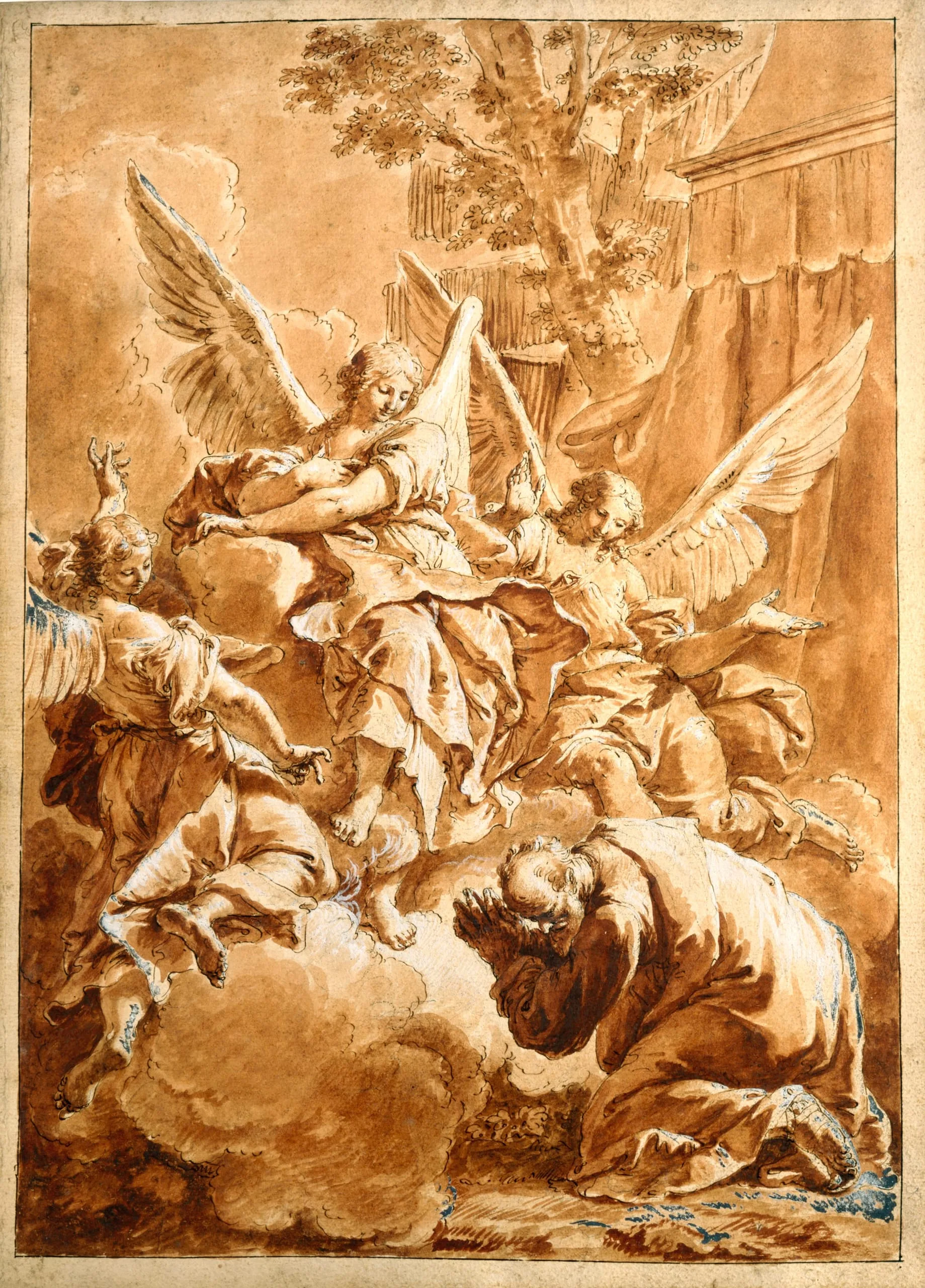
Francesco Fontebasso, one of the finest painter-draftsmen of eighteenth-century Venice, produced sparkling, delicate work in the best tradition of the Italian rococo. He was the most celebrated follower of Sebastiano Ricci, with whom he trained, and his work was influenced by both Ricci and Giambattista Tiepolo. In his youth, Fontebasso studied in Rome and Bologna, and his contact with these two schools of painting endowed his style with a seriousness and sobriety that much Venetian art of the period lacked. A popular and productive frescoist, Fontebasso painted the ceilings of churches and palaces in Venice and environs, and, having achieved international renown, was summoned to St. Petersburg by Empress Catherine II of Russia, who commissioned him to decorate the Winter Palace. Upon his return to Venice, he was elected president of the Venetian Academy.
Fontebasso's most famous and sought-after drawings are those he produced for three distinct series around the middle of the century, representing scenes from the Old and New Testaments and ancient history. Large, ambitious in composition, and highly finished, these drawings were intended for collectors and connoisseurs as independent works of art. Their originality, in conception and idea, cannot be exaggerated.
The beautiful and dramatic Abraham and the Three Angels depicts one of the most significant events in the Old Testament book of Genesis: "And the Lord appeared to [Abraham] by the oaks of Mamre as he sat at the door of his tent in the heat of the day. He lifted up his eyes and looked, and behold, three men stood in front of him. When he saw them, he ran from the tent door to meet them, and bowed himself to the earth, and said, 'My lord, if I have found favor in your sight, do not pass by your servant.'"