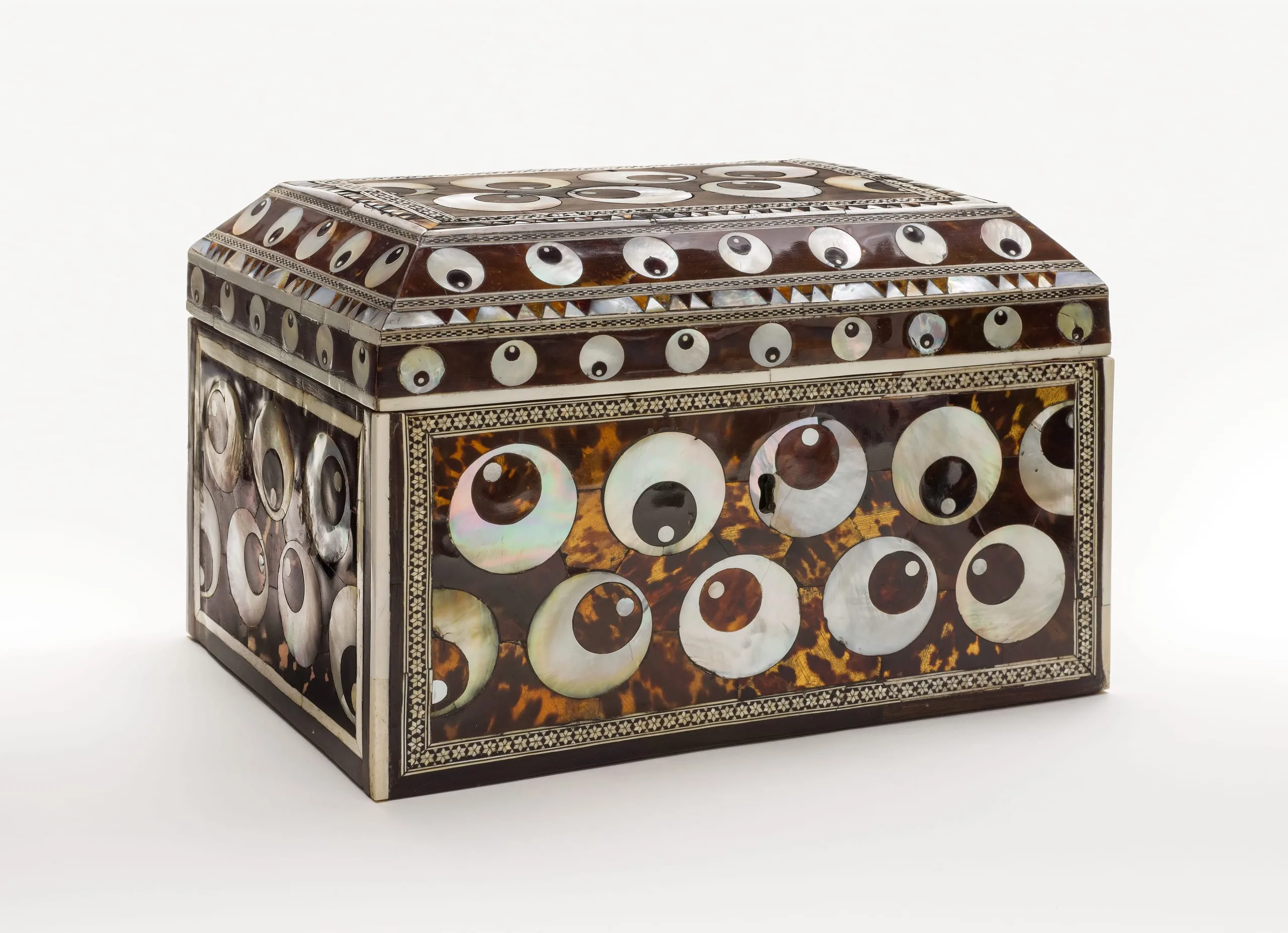
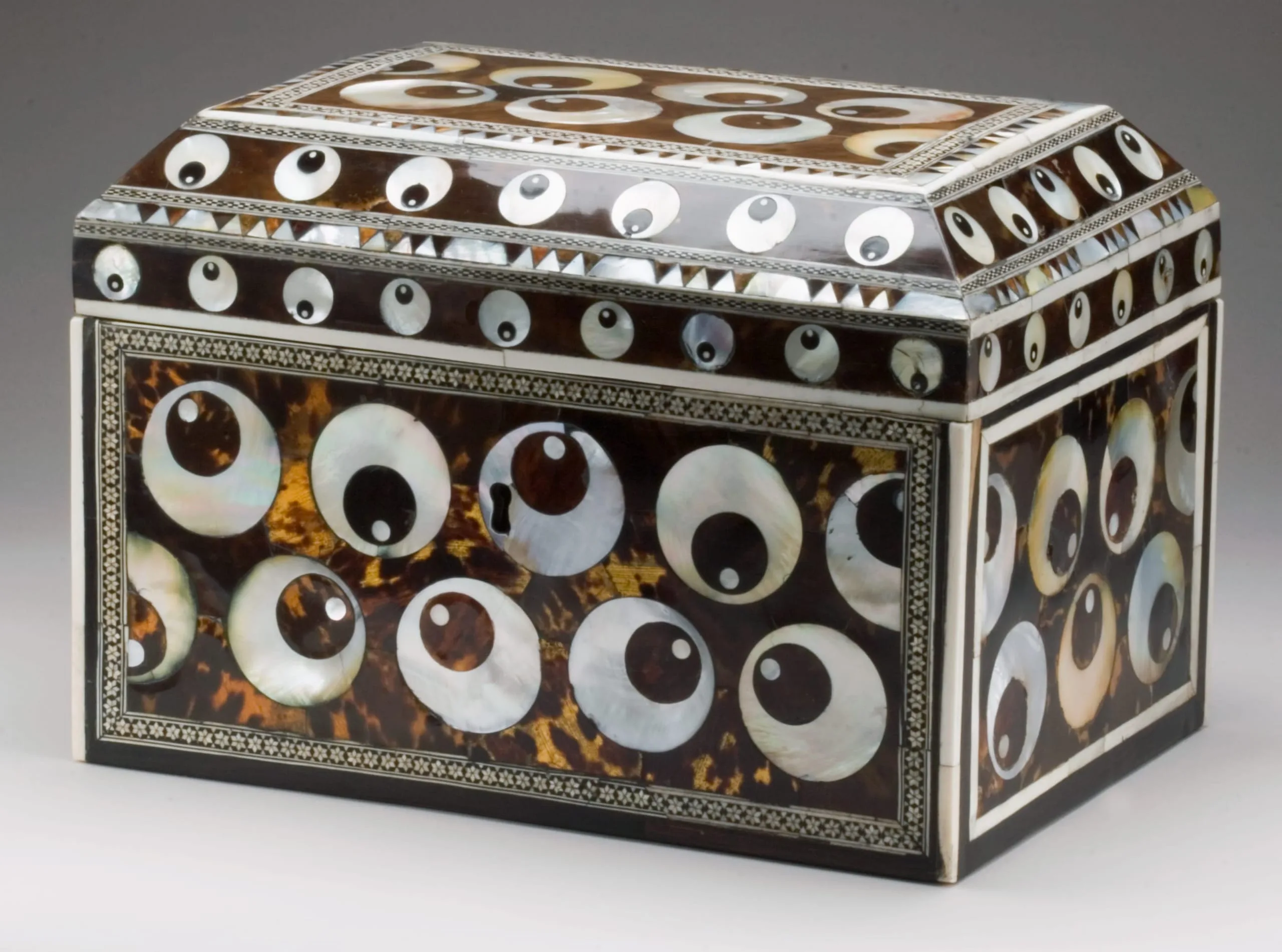
This box, which was likely used to store a prized manuscript, is boldly decorated with tortoiseshell and mother-of-pearl. These technically difficult-to-work materials began to be employed by Ottoman woodworkers around the mid-sixteenth century, often to spectacular results, as here. The tortoiseshell was generally laid over metal foil to give it a lustrous quality, and the mother-of-pearl plaques were frequently inlaid with black mastic to further emphasize their luminosity. The main decoration is of a type associated with court art in which three circles (sometimes accompanied by a double wavy line; see M.2002.1.8) are arranged to form an endless repeat pattern. Similar designs, likewise rendered in tortoiseshell and mother-of-pearl, were used to decorate doors, window shutters, and cupboards in areas of the Topkapı Palace, Istanbul, such as the Revan Pavilion, built circa 1636. Alongside architectural fittings, portable objects such as this deluxe box, which reflects the high aesthetic standards of the imperial workshops, demonstrate why such items were coveted and collected beyond the Ottoman Empire, often serving as inspiration to European artists. The keyhole, for a lock, and the twin drill holes on each short side, for silver handles (now removed), demonstrate that the box had found its way to the West.