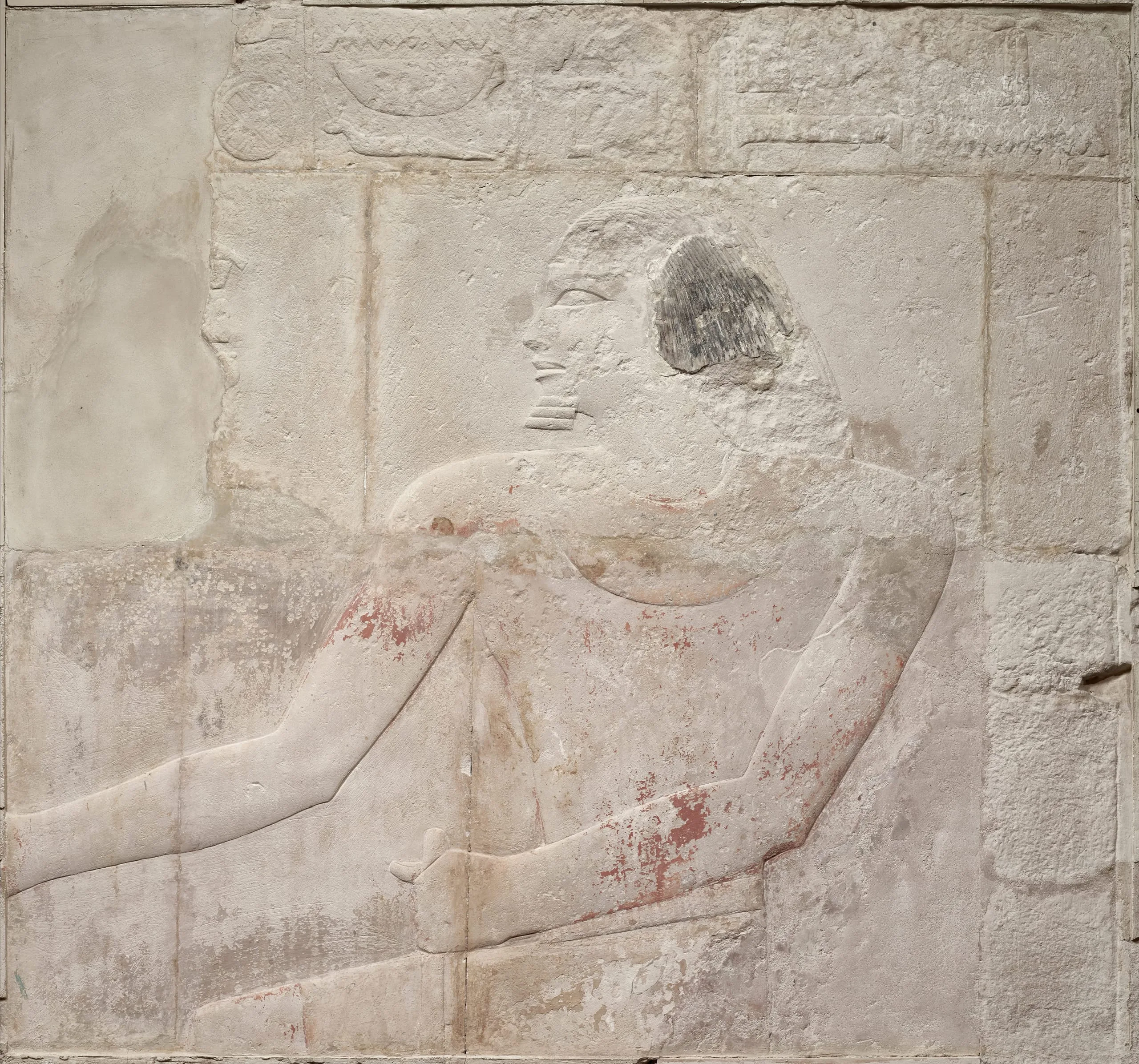
During the early dynasties (4−6), members of the Egyptian elite were buried near the royal pyramids in bunkerlike tombs (mastabas) consisting of a superstructure and underground rooms. The primary site for the funerary rituals was a tomb chapel built within the superstructure. Chapels of this period contained a “false door” from which the spirit of the deceased could emerge to receive funerary offerings. This “door” was often decorated with seated portraits of the tomb owner receiving these gifts as well as scenes of processions of offering bearers providing a variety of foodstuffs and activities related to agriculture, fishing, or animal husbandry. The large mastaba of Ni’ankhnesut was probably discovered during excavations in this area of Saqqara in 1917; after many decades of plundering, the tomb was rediscovered by the Saqqara inspectors of the Egyptian Supreme Council of Antiquities in 2000. The original tomb contained five rooms and a long corridor. The tomb chapel had been disassembled, likely in the 1920s by tomb robbers, and dispersed to more than sixty museums and additional private collectors internationally.
LACMA’s section of the chapel depicts the seated official, identified by the partial hieroglyphic inscription of his name above his head. His priestly titles appear on other tomb walls: “chief lector priest, sem priest, overseer of the secrets of heaven, and greatest of seers of Heliopolis.” He may also have been active in the court of the pharaoh, and bore the title “confidant of the king in his every place,” although the identification of the exact king is unclear. Here, Ni’ankhnesut appears in profile, with his torso turned frontally, the traditional Egyptian portrayal of individuals. His clearly defined features include an angular tiered beard and striated hairdo, retaining its original color. He wears a broad collar and kilt and holds a folded cloth in his left hand. A second block from this chapel, displaying offering bearers, is also in LACMA’s collection (47.8.5).