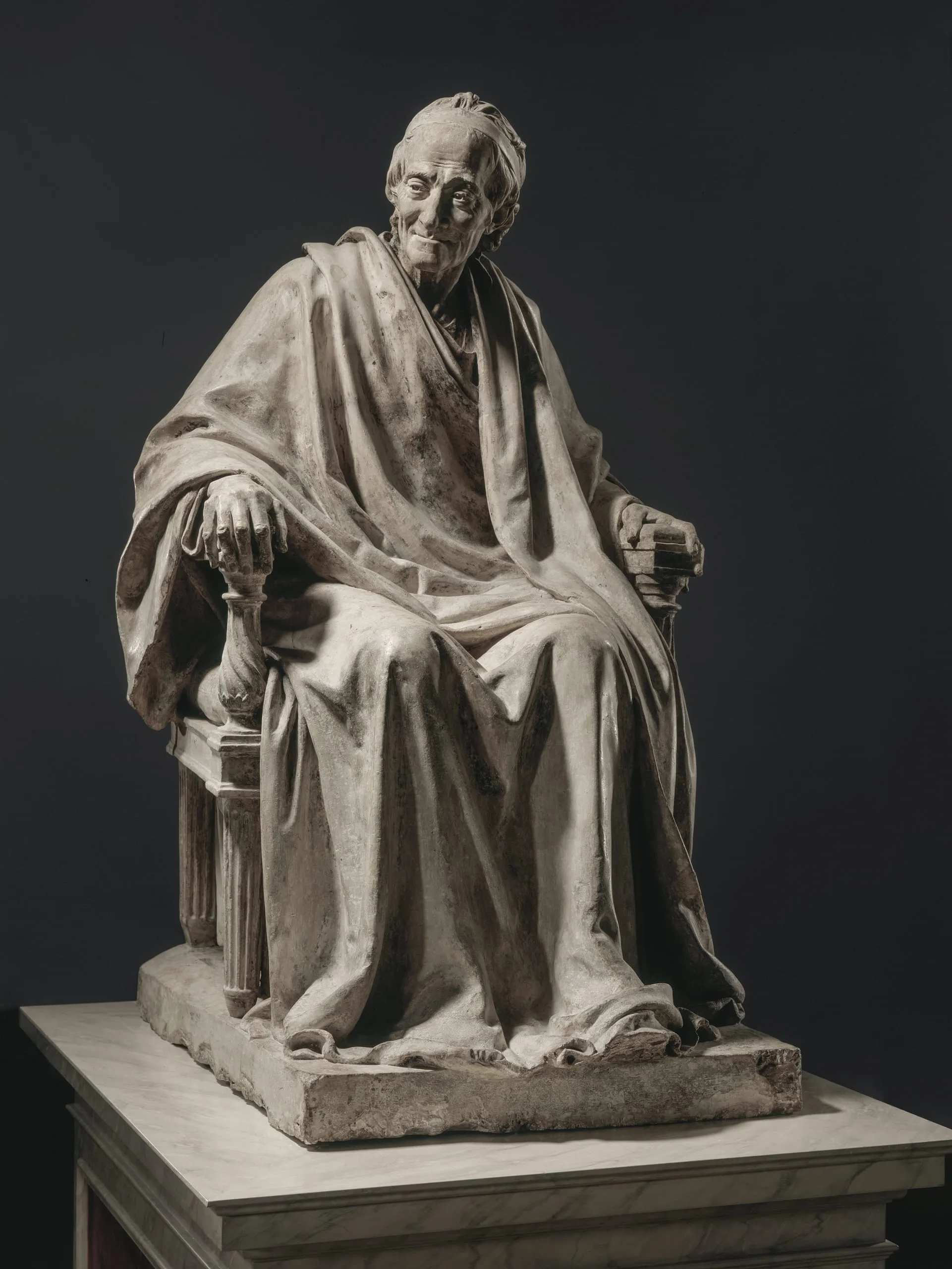
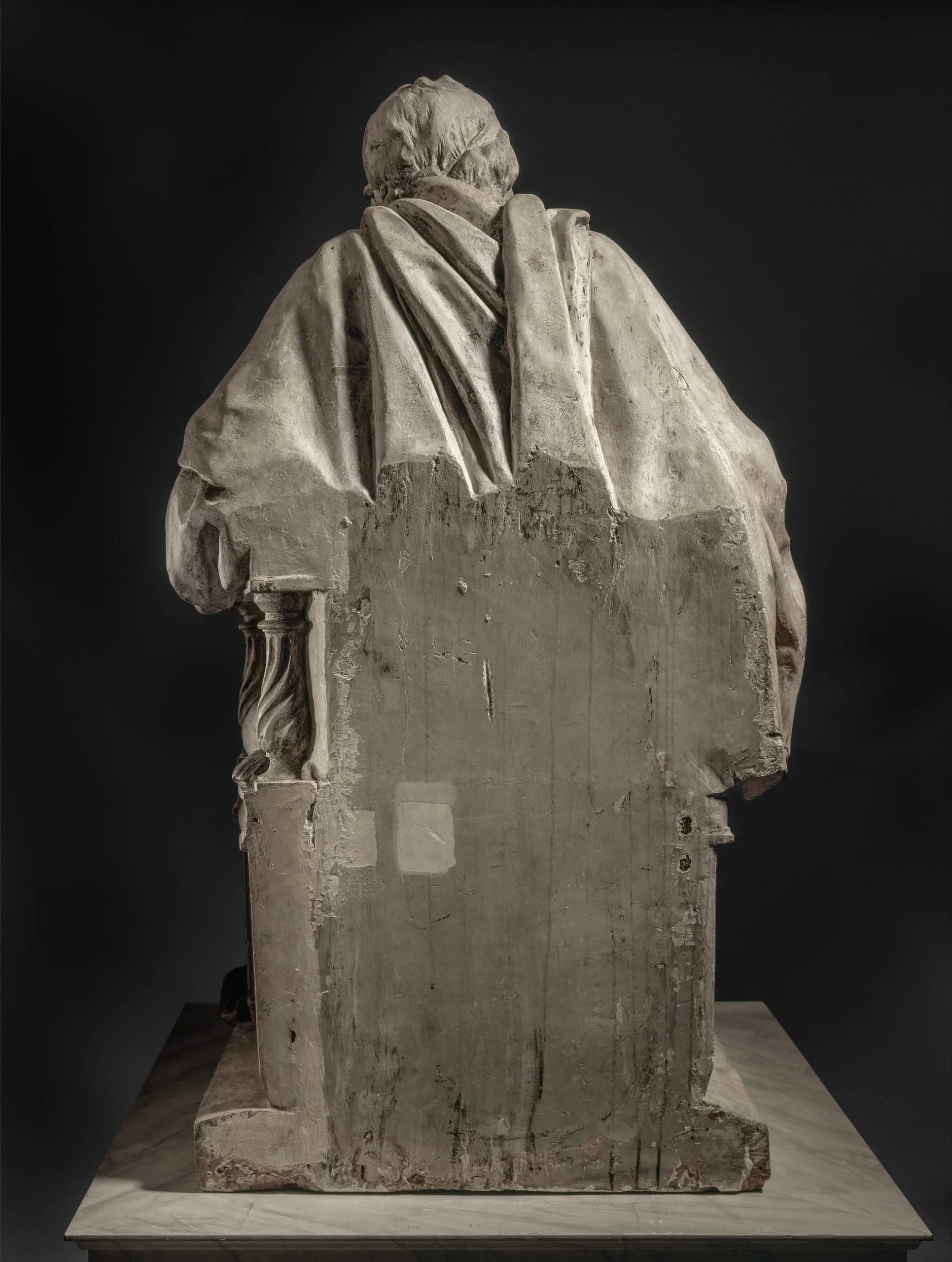
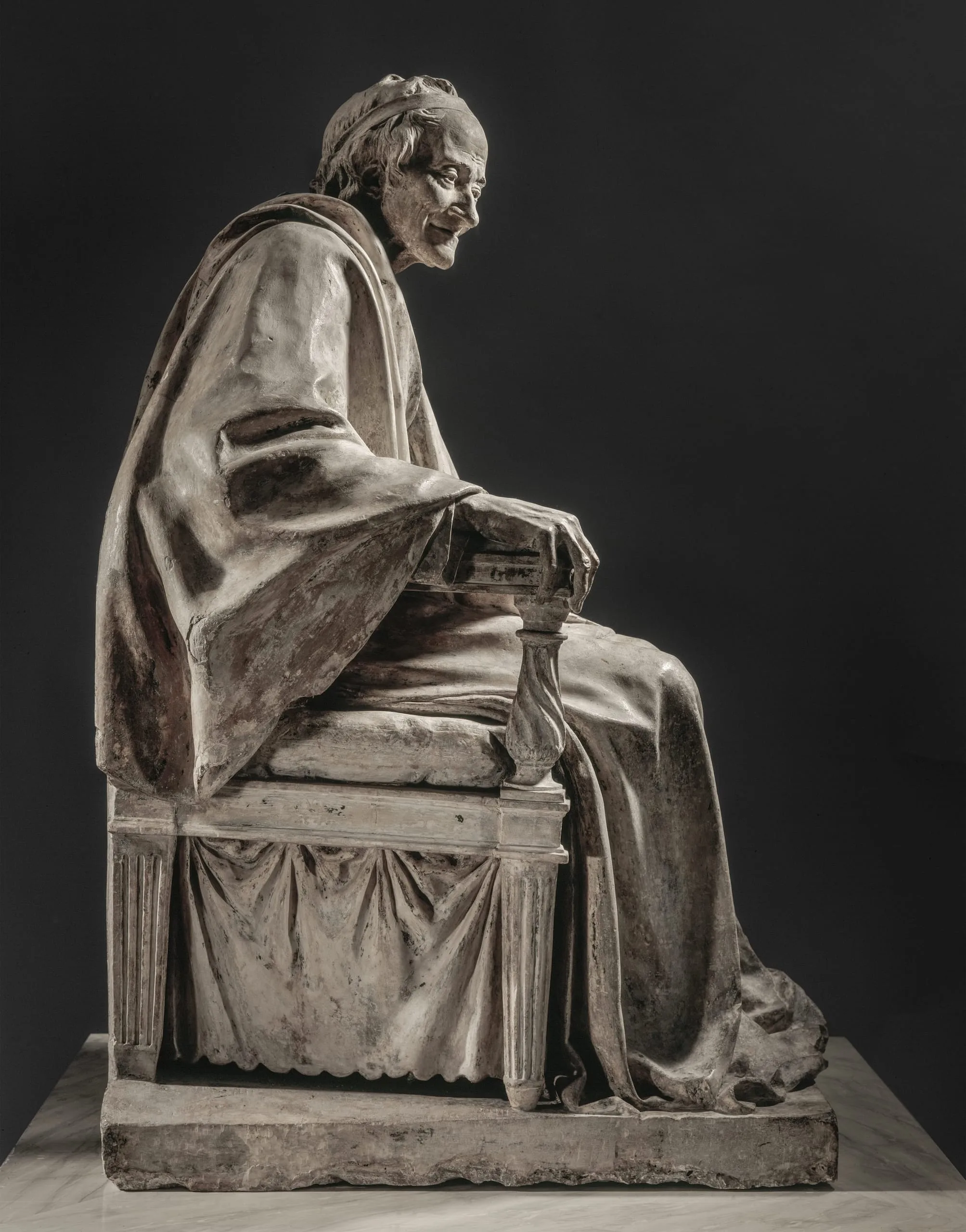
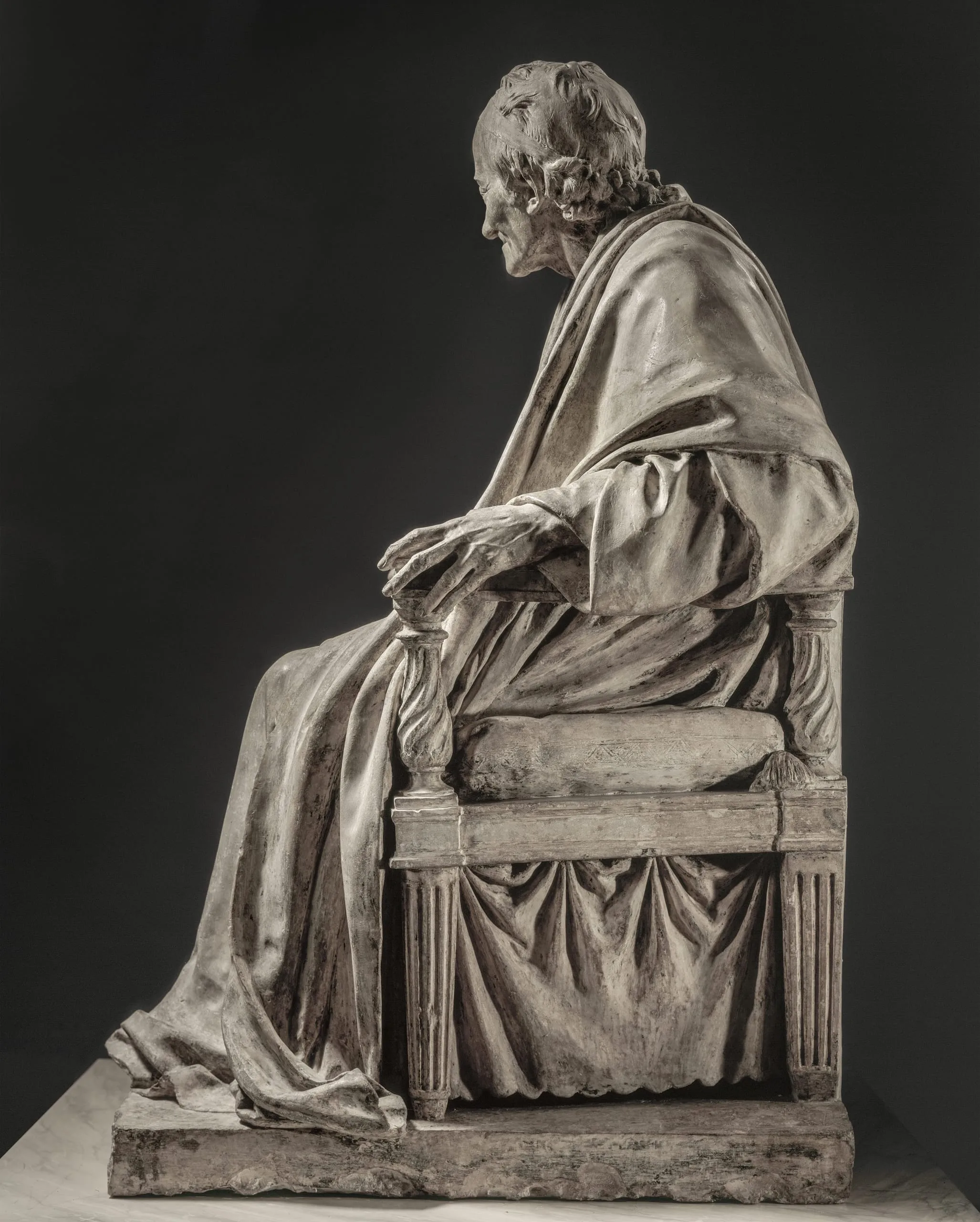
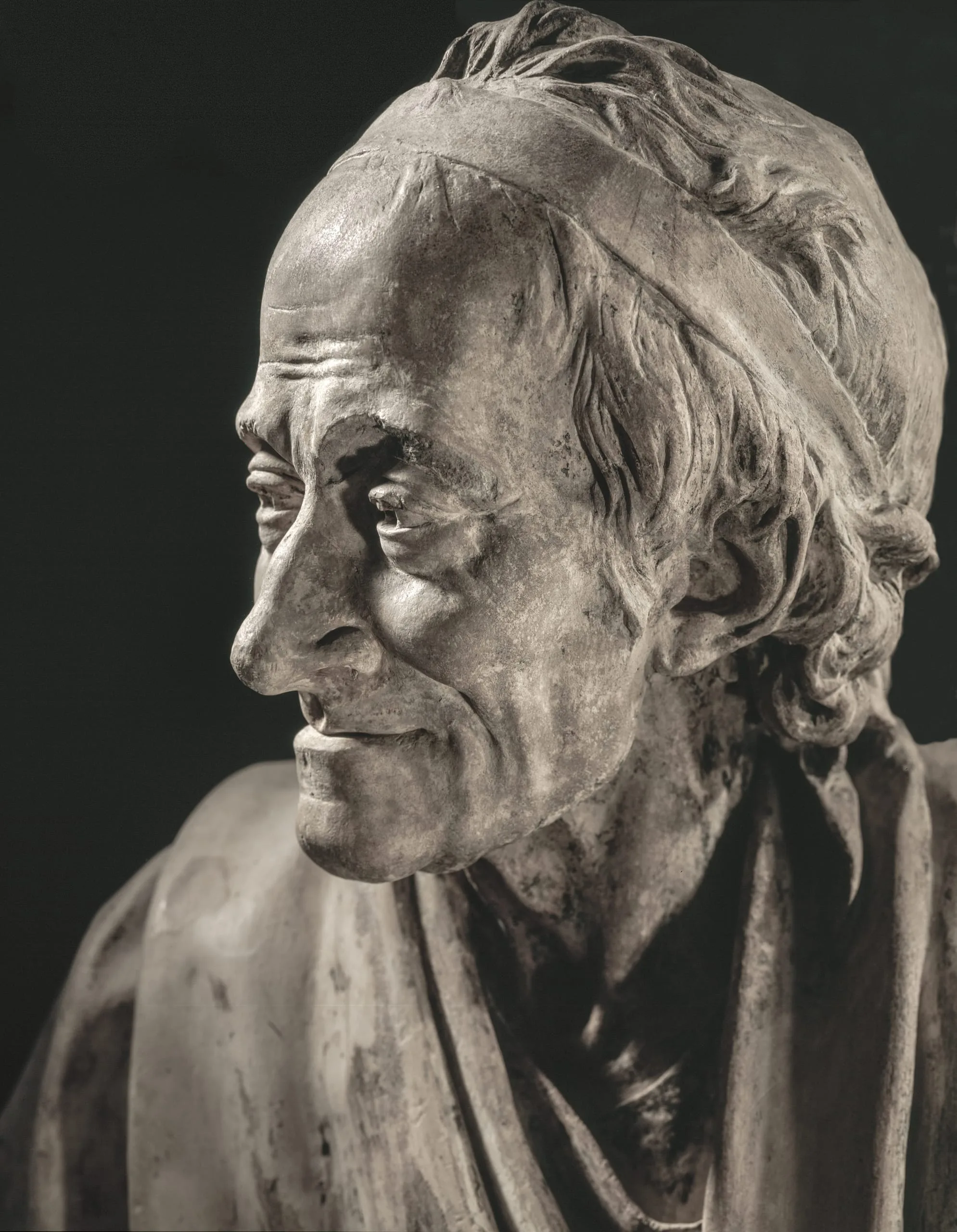
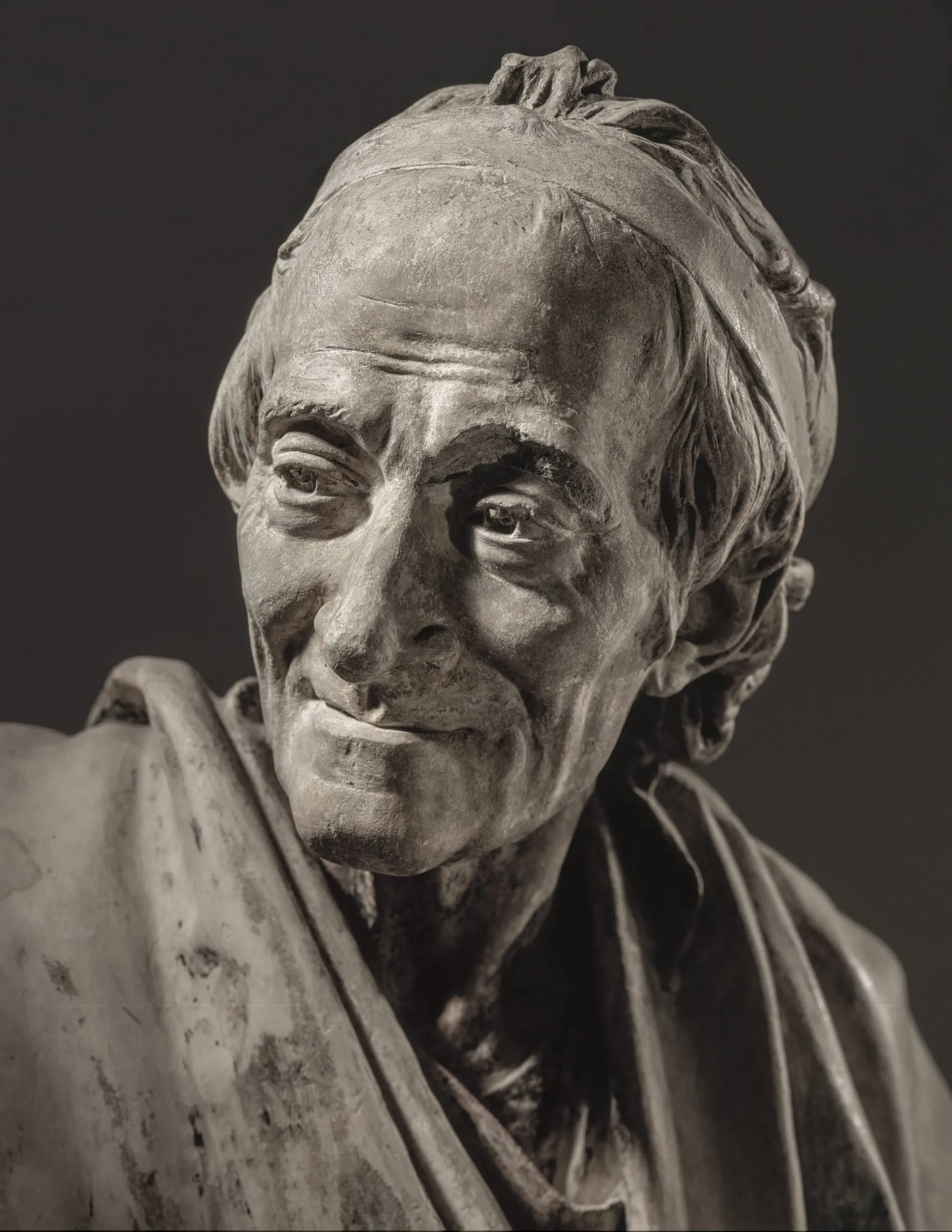
Draped in a robe and crowned with the ribbon associated with ancient Greek poets, the formidable French writer, satirist, and philosopher François-Marie Arouet appears lifelike, as if momentarily interrupted in thought. Known by his pen name Voltaire, the writer’s vocal opposition to religious dogma and autocratic cruelty forced him into exile on two occasions. Upon returning to Paris in 1778, at the age of eighty-four, Voltaire agreed to sit for the equally formidable French sculptor Jean-Antoine Houdon. The life-sized Seated Voltaire was completed just four months before the sitter’s death. While Houdon was adept in various mediums—terracotta, marble, bronze—his plaster casts were known for their precision and vividness, often matching or surpassing the effects of his marble works. For Houdon, the plaster cast was not simply an intermediary stage in the sculptural process; plaster itself had its own artistic potential, allowing for great detail and fluidity in his depictions.
This portrait is one of Houdon’s many likenesses of prominent figures from the revolutionary periods in France and America. Revered by both artists and collectors, the Seated Voltaire was reproduced in small-scale copies and a few life-size versions. It is thought that these sculptures were made from molds that Houdon carefully protected to prevent unauthorized reproductions. While allowing copies in marble, he sold each plaster cast for 100 louis, strictly prohibiting the creation of additional molds. By maintaining control over the production of these casts, Houdon ensured both the integrity and exclusivity of his work.
2024