- Title
- Virgin and Child with a Goldfinch
- Date Made
- circa 1300-1350
- Medium
- Limestone with traces of polychromy
- Dimensions
- 62 1/2 × 20 × 12 in. (158.75 × 50.8 × 30.48 cm)
- Accession Number
- 46.16.1
- Curatorial Notes
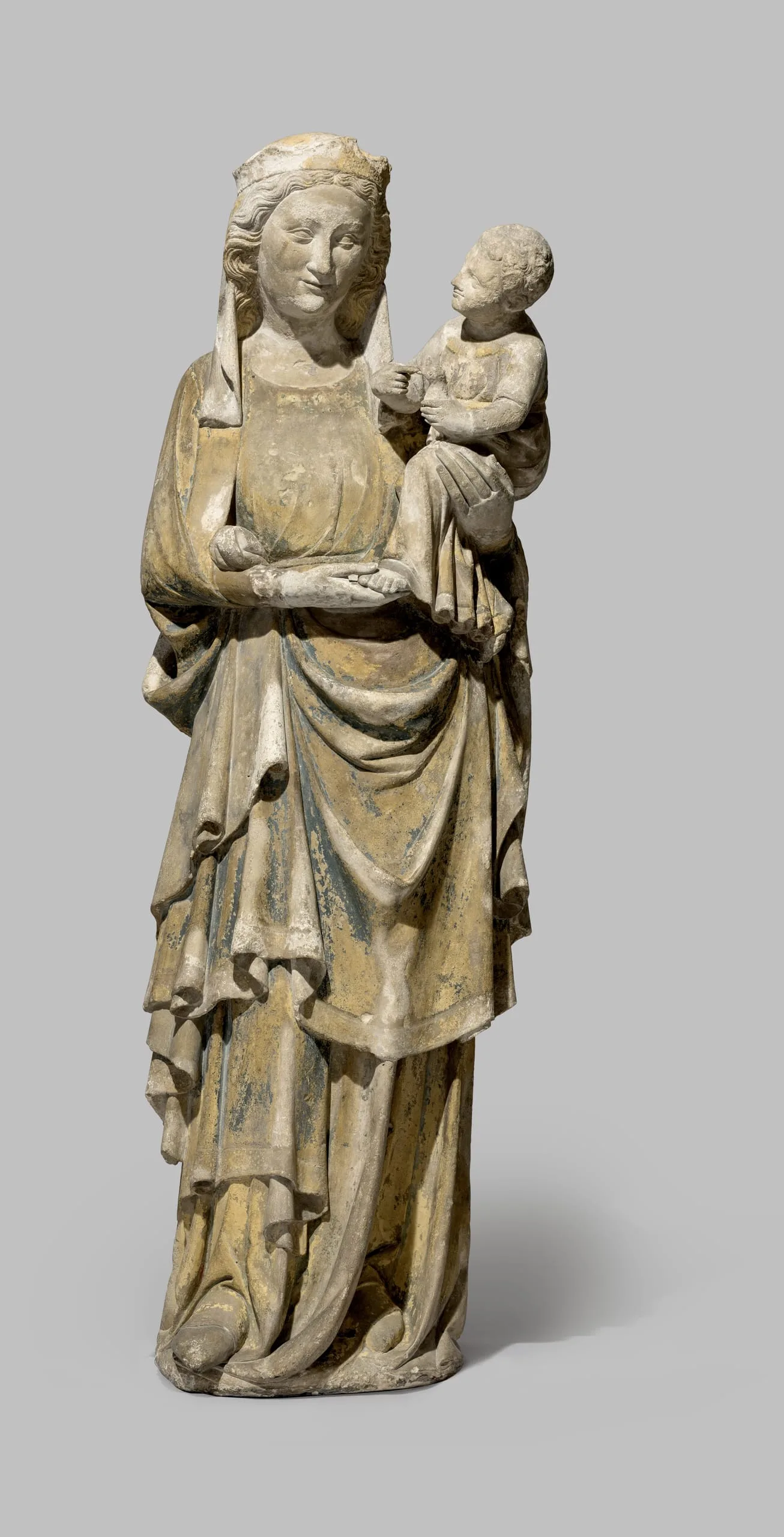
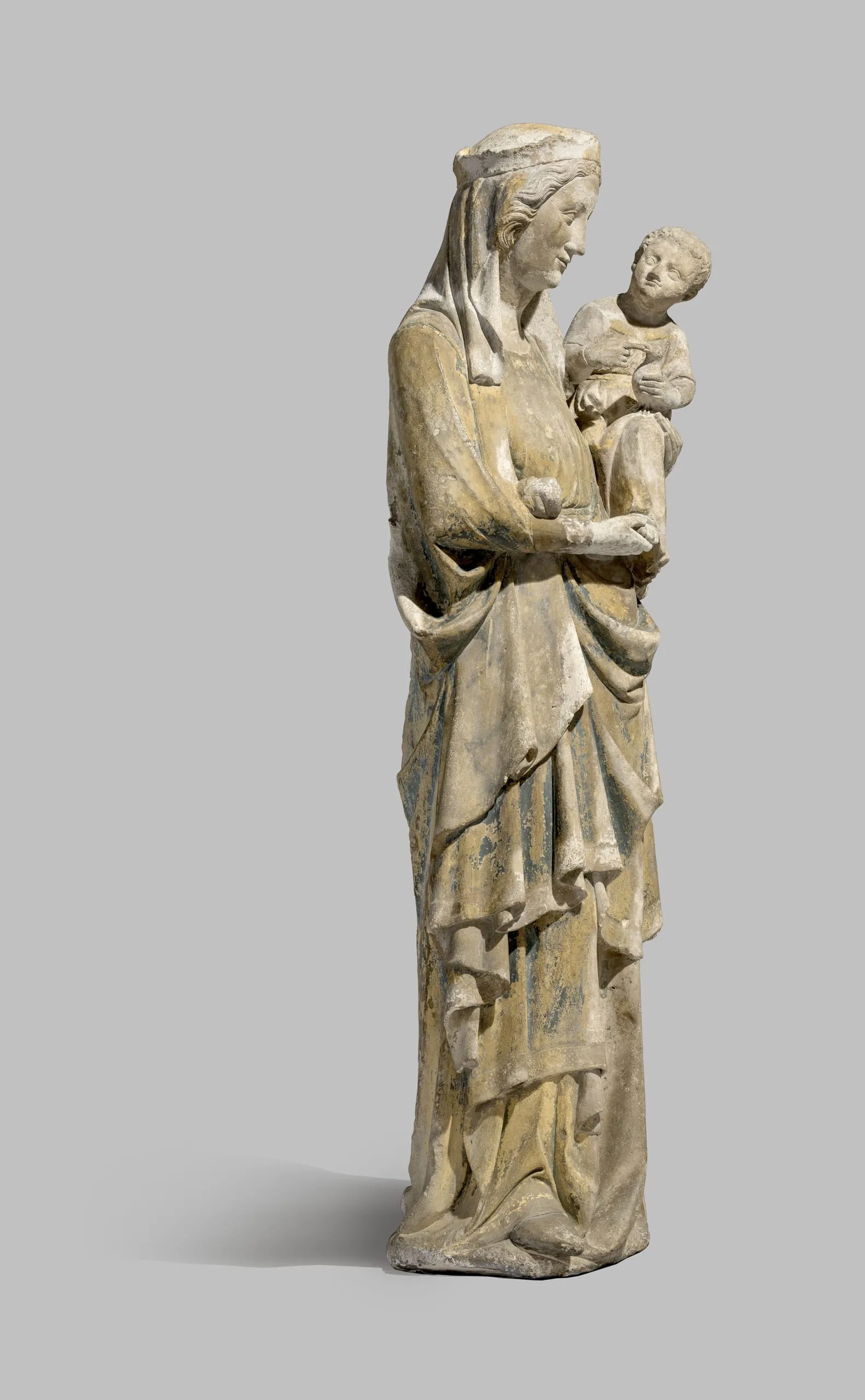
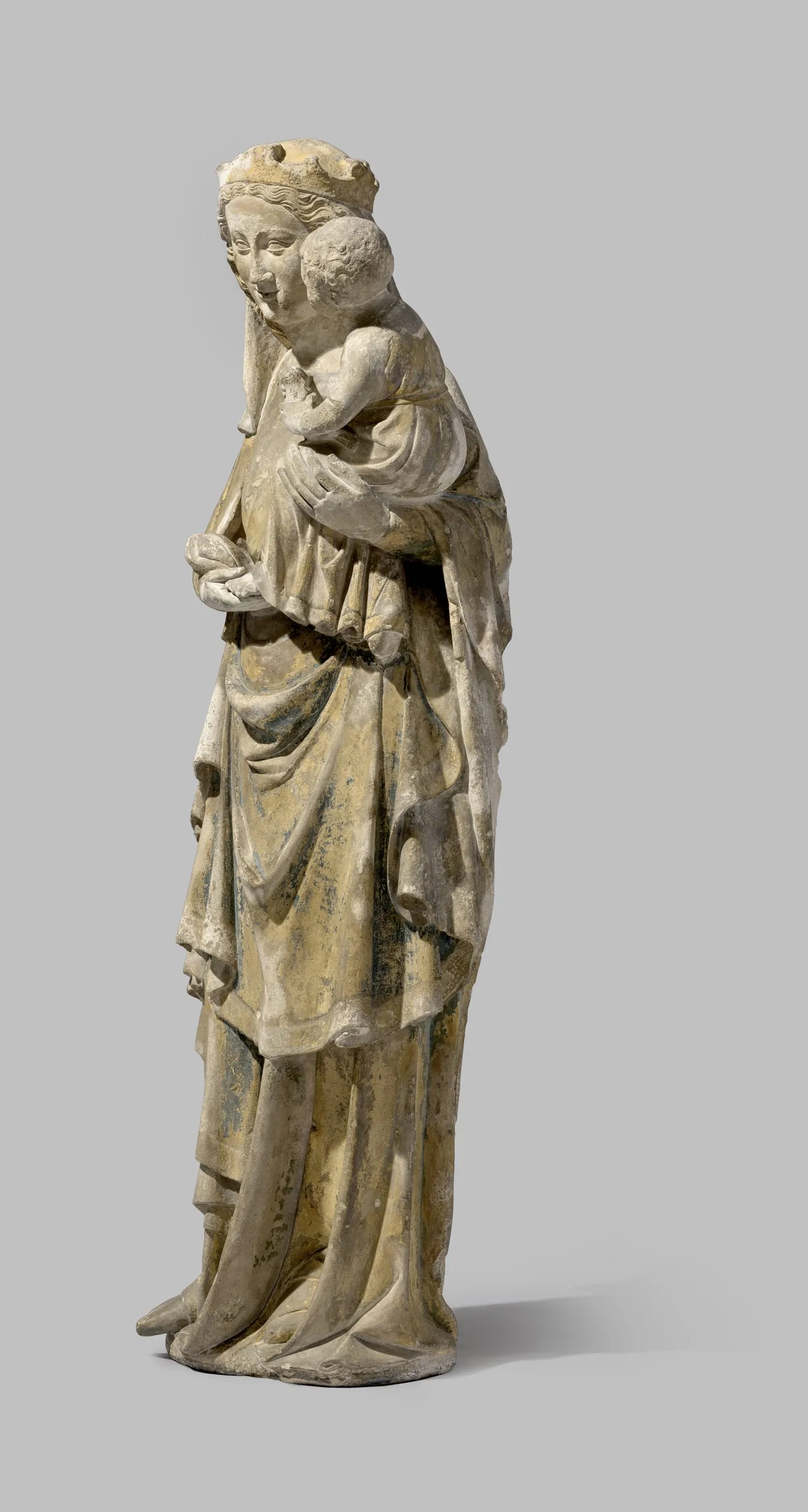
Devotions to the Virgin Mary have long been fundamental to Christian practice, but the popularity of her cult grew exponentially in Europe during the thirteenth and fourteenth centuries, spurring the production of new iconography. This almost life-sized limestone sculpture of the Virgin and Child visualizes Mary’s dual roles as an ideal model of virtue and a powerful intercessor with her son on behalf of the faithful. She tenderly holds the Christ Child’s foot, emphasizing their bodily connection and, by that, his humanity. Traces of polychrome, especially on the Virgin’s robe, hint at the sculpture’s original colorful appearance, further enlivening the figures. The young child looks at his mother and points to the goldfinch in his hand. Although birds were kept as pets during the Middle Ages, here the finch references an apocryphal legend about Christ’s Passion in which a bird removes a thorn from Christ’s head as he travels the road to Cavalry. This scene simultaneously humanizes the infant Christ and reminds viewers of his future sacrifice and the Virgin’s sorrow at his suffering.
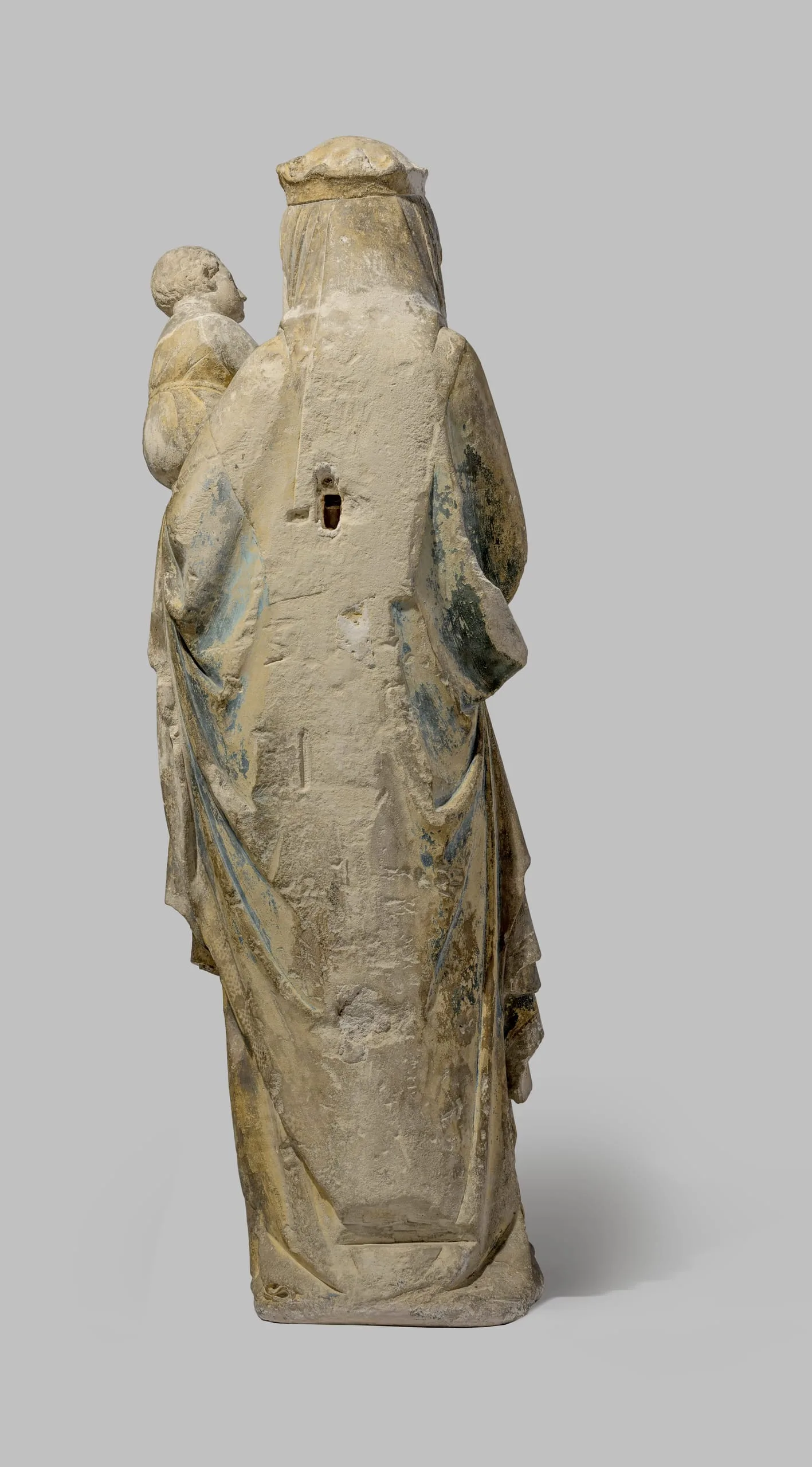
Sculptures that highlight Mary’s maternal care were popular in courtly French circles during the mid-fourteenth century, produced for both private prayer and public worship. The scale and slightly flat back of this sculpture indicate it would not have been seen in the round and belonged to the latter category, likely made for a church space.
2024
- Selected Bibliography
- Valentiner, W.R. Gothic and Renaissance Sculptures: in the Collection of the Los Angeles County Museum. Los Angeles: Los Angeles County Museum, 1951.
- Feinblatt, Ebria. The Gothic Room. Los Angeles: Los Angeles County Museum, 1947.
- Schaefer, Scott, and Peter Fusco. European Painting and Sculpture in the Los Angeles County Museum of Art: an Illustrated Summary Catalogue. Los Angeles: Los Angeles County Museum of Art, 1987.
- Copyright
- photo © Museum Associates/LACMA, by Jonathan Urban