LACMA

ShopMembershipMyLACMATickets
LACMA
Los Angeles County Museum of Art
5905 Wilshire Blvd.
Los Angeles, CA 90036
info@lacma.org
(323) 857-6000
Sign up to receive emails
Subscribe
© Museum Associates 2025

Museum Hours

Monday

11 am–6 pm

Tuesday

11 am–6 pm

Wednesday

Closed

Thursday

11 am–6 pm

Friday

11 am–8 pm

Saturday

10 am–7 pm

Sunday

10 am–7 pm


  • About LACMA
  • Jobs
  • Building LACMA
  • Host An Event
  • Unframed
  • Press
  • FAQs
  • Log in to MyLACMA
  • Privacy Policy
© Museum Associates 2025
Collections

Unknown
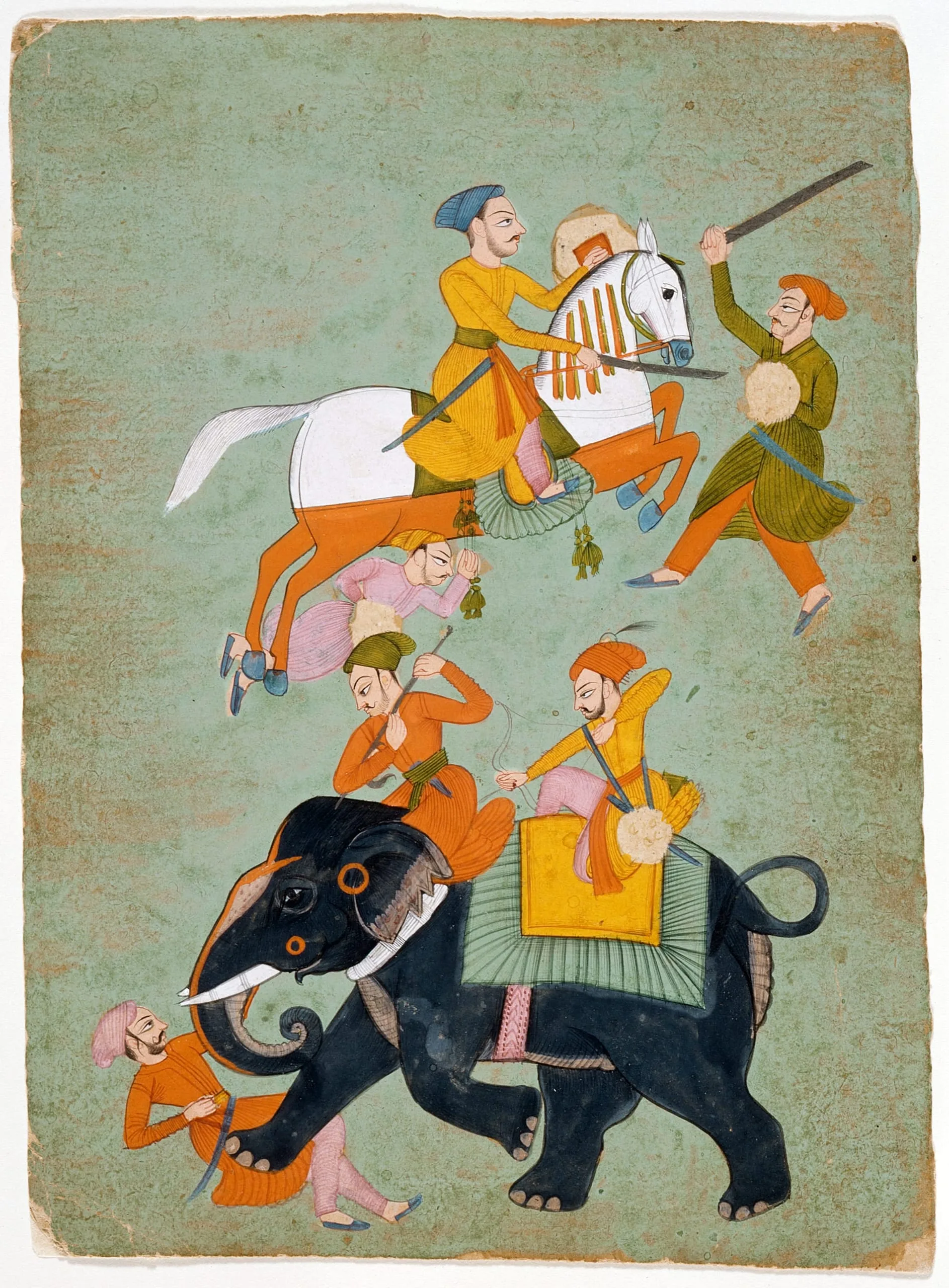
Battle Scene with an Elephant Trampling a Soldier and a Warrior on Horseback18th-early 19th century

Not on view
South Asian manuscript painting in opaque watercolor, depicting six figures in colorful robes engaged in a multi-figure battle scene involving a rearing white horse and a large dark elephant
Maker
Unknown
Title
Battle Scene with an Elephant Trampling a Soldier and a Warrior on Horseback
Place Made
India, Rajasthan, Mewar
Date Made
18th-early 19th century
Medium
Opaque watercolor and silver on paper
Dimensions
Sheet: 8 3/8 x 5 7/8 in. (21.28 x 14.93 cm)
Credit Line
Gift of Jane Greenough Green in memory of Edward Pelton Green
Accession Number
AC1999.127.22
Classification
Drawings
Collecting Area
South and Southeast Asian Art
Curatorial Notes

The elephant, valued for its monumentality and strength, was the most frequently depicted animal in Mughal and Rajput paintings. Elephants are shown in various activities, including processions and hunts, combats with one another, and as in this case, war.

Elephants are reserved animals with a natural fear of fire. Before being used in combat, an elephant had to be trained for years, with firecrackers set off between its legs and muskets fired close to its head. In war, the elephant had to be provoked into battle. Here, the driver (mahout) sitting in the forward position on the animal jabs an elephant goad into its head.

The charging steed lunges at a soldier with his sword upraised. The lower half of the valiant horse is painted orange in a pictorial convention symbolizing the deep pool of blood left on the battlefield after a fierce confrontation.