- Title
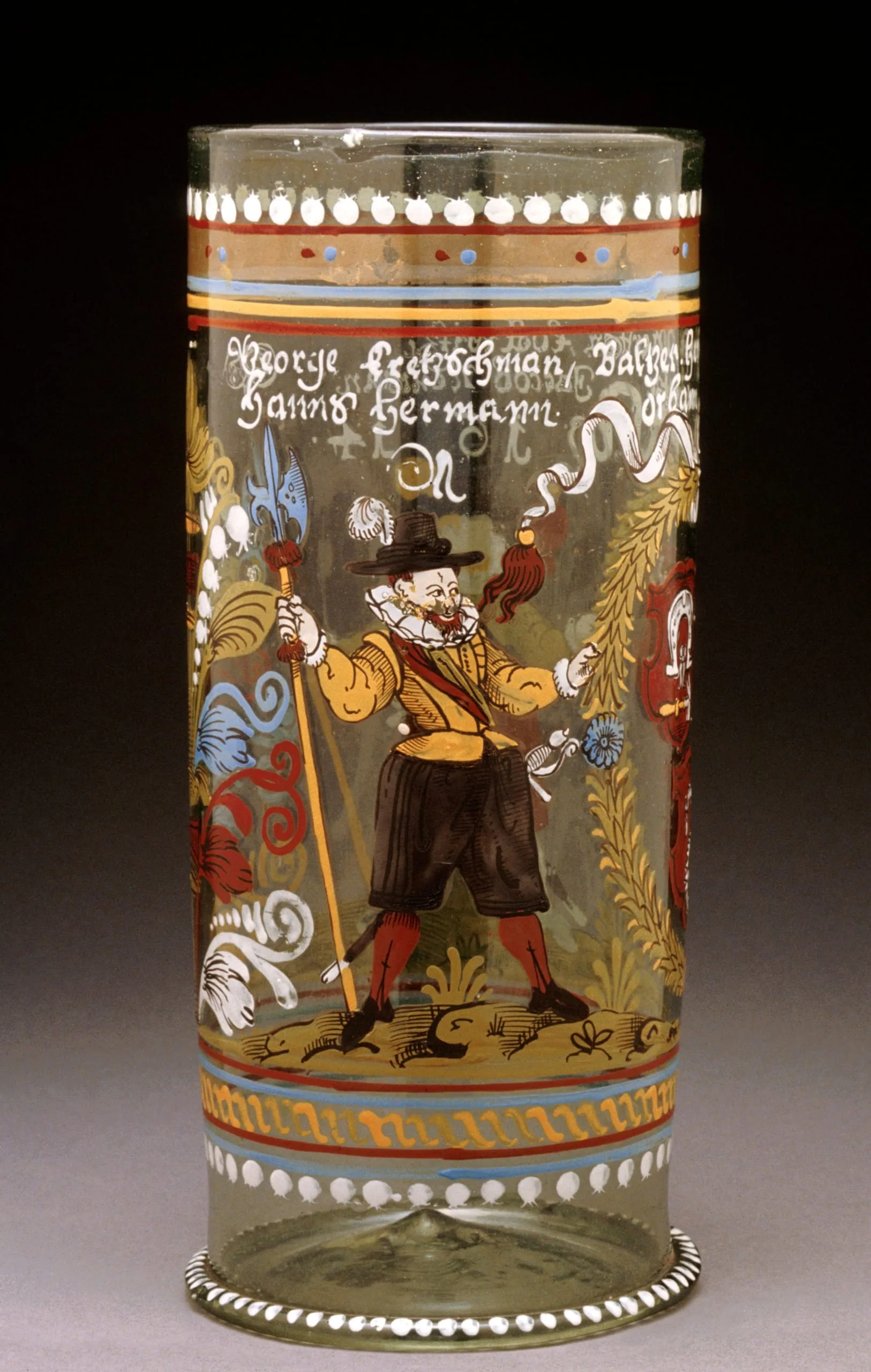
- Beaker of the Guild of Smiths and Locksmiths (Humpen)
- Date Made
- 1614
- Medium
- Glass, enamel, gilt
- Dimensions
- Height: 10 1/2 in. (26.67 cm); Diameter of rim: 4 9/16 in. (11.59 cm); Diameter of base: 4 3/4 in (12.07 cm)
- Accession Number
- 48.24.218
- Curatorial Notes
This large glass beaker (Humpen) was made for communal drinking by members of a German guild of metalsmiths and locksmiths. Their trades are represented by the tools shown in the heraldic shield on the front of the beaker. In Renaissance Europe, guilds represented both makers and merchants. Like modern labor unions, they existed in order to maintain standards of training, to guarantee the quality of goods that different shops produced, and to regulate prices and trade. Members typically met in purpose-built guildhalls, where social interaction was an important aspect of membership. It is not surprising that banquets called for celebratory toasts, and large drinking vessels like this one were filled with ale and passed around the table.
Locks and keys have been important for securing property since ancient times. The earliest examples were made of wood, which was eventually replaced by iron and steel. By the early seventeenth century when this beaker was made, metallurgy was highly developed. After completing years as an apprentice and journeyman, craftsmen aspiring to become masters proved their skill by producing locks and keys that were both intricate and beautiful. Metal locks typically outlast the doors they were made to secure, and many decorative locks and keys are preserved today in museum collections.