- Title
- Bottle with Arms of the Holy Roman Empire (Reichsadler Bottle)
- Date Made
- 1572
- Medium
- Glass, enamel, gilt, pewter cap
- Dimensions
- 13 1/2 x 4 1/2 x 4 1/2 in. (34.29 x 11.43 x 11.43 cm)
- Accession Number
- 48.24.146a-b
- Curatorial Notes
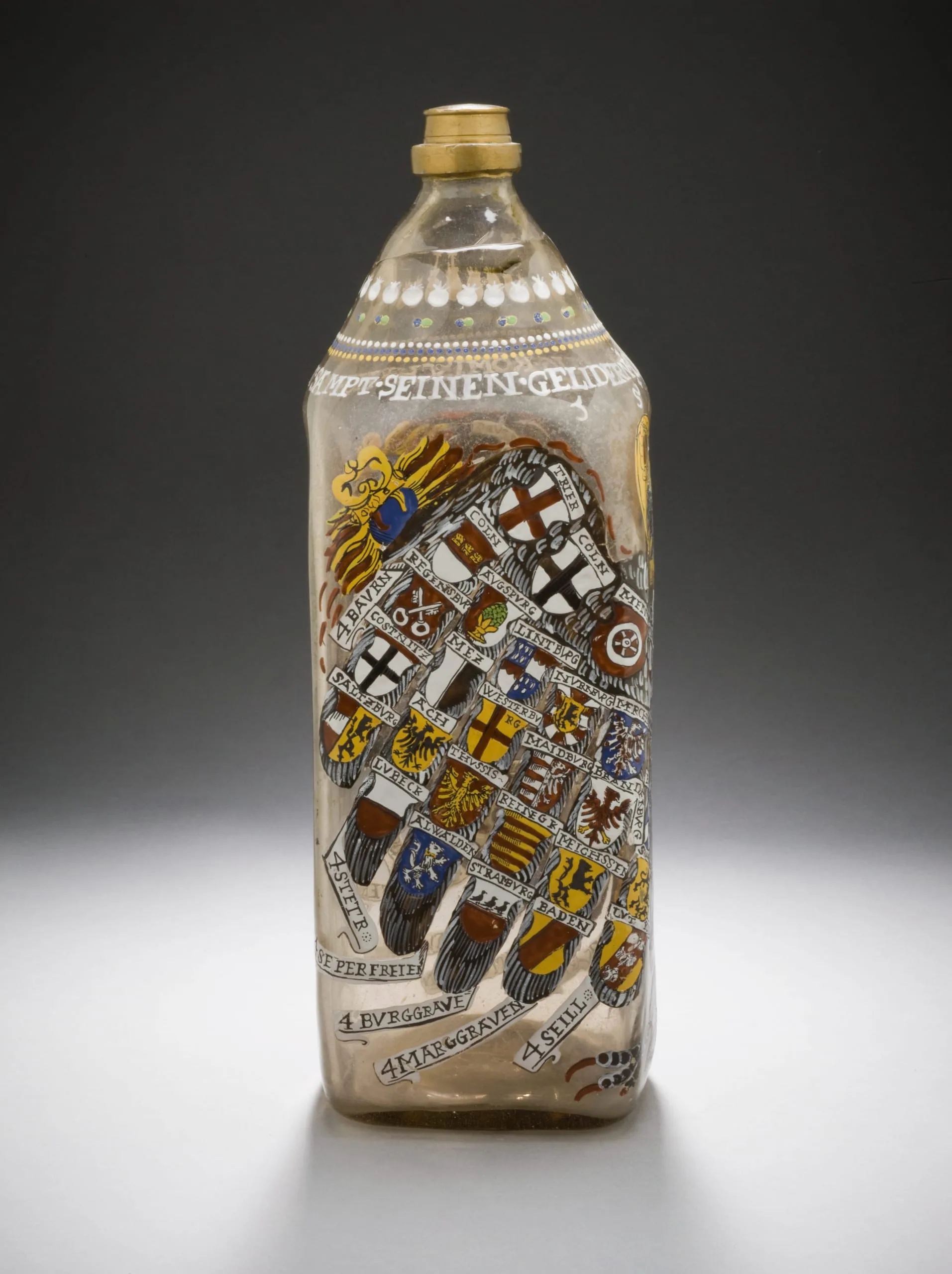
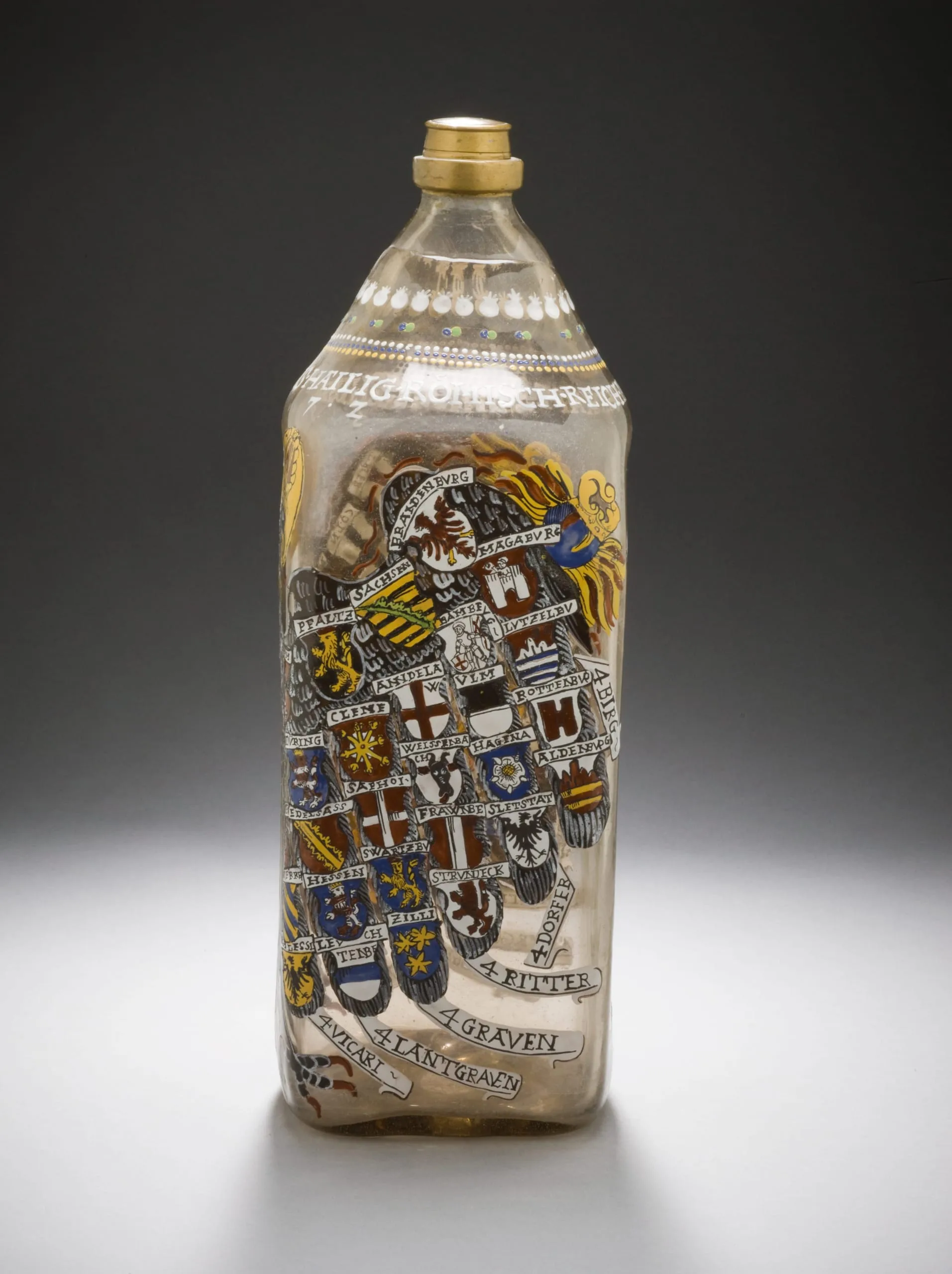
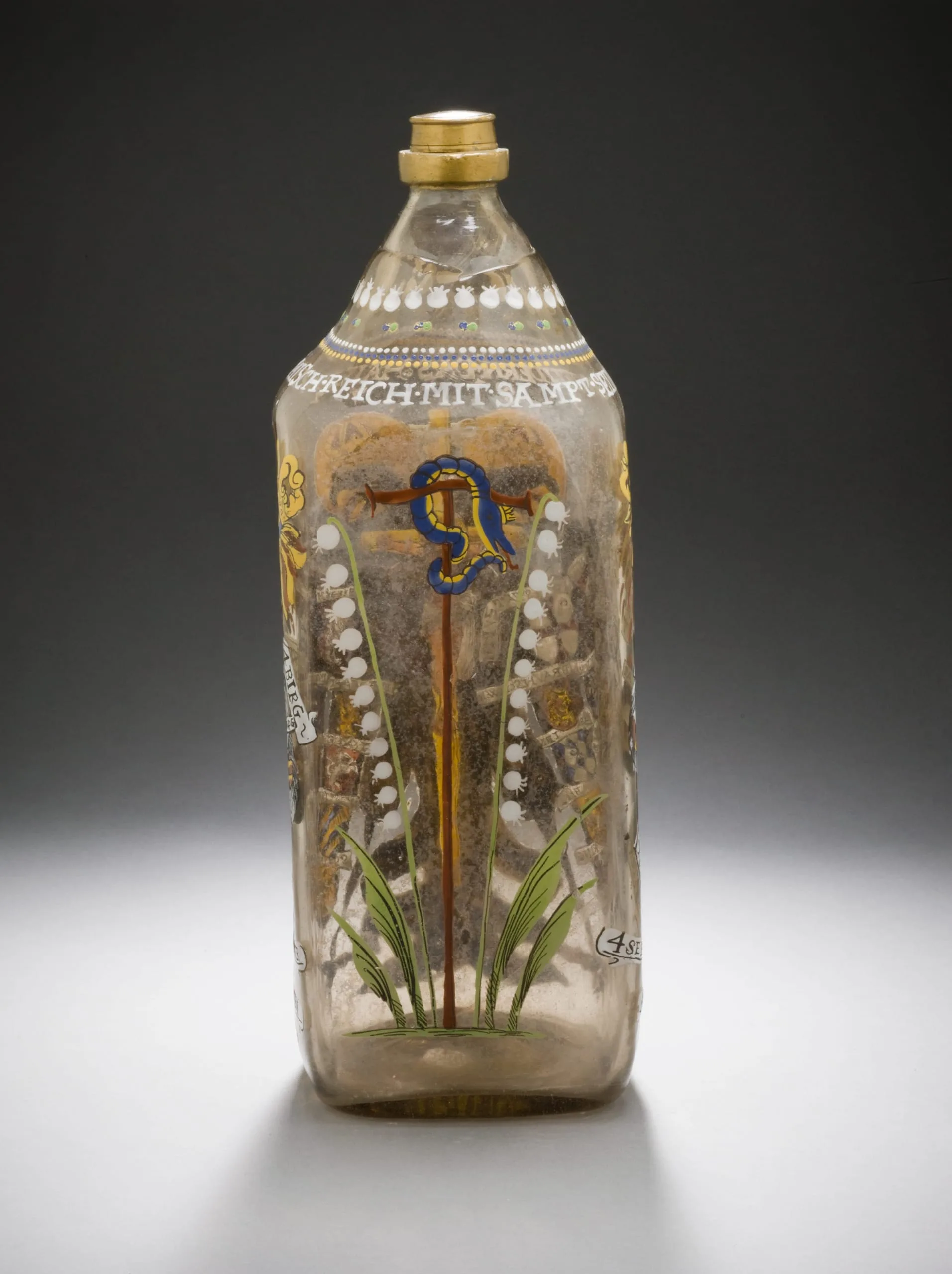
The decoration of this bottle, dated 1572, includes the heraldic shields of the different states that constituted the Holy Roman Empire, a complicated political alliance that dominated Europe from the medieval period until its conquest by Napoleon in 1806. The four sides of the bottle are almost entirely covered by the outstretched wings of a double-headed eagle, known as the Quaternion Eagle, a symbol of the empire based on a design created around 1510 by German printmaker Hans Burgkmair. Across the top of both wings are the names of the ecclesiastical and secular electors who chose the emperor. Below them, each feather has four shields naming the different ranks of member states and their rulers, summarized on the white banners at the bottom. Bottles and beakers with the imperial eagle were popular from the sixteenth to the eighteenth century. They were colorful expressions of patriotism and also served as a helpful diagram, like an “org chart” of the regions and officials in the empire.
In the early twentieth century, this bottle formed part of the extensive collection of German enameled glass assembled by William Randolph Hearst, building upon an earlier collection he had inherited from his mother.
- Selected Bibliography
- Levkoff, Mary L., ed. Hearst the collector. Exh. Cat. New York: Abrams and Los Angeles: Los Angeles County Museum of Art, 2008.