LACMA

ShopMembershipMyLACMATickets
LACMA
Los Angeles County Museum of Art
5905 Wilshire Blvd.
Los Angeles, CA 90036
info@lacma.org
(323) 857-6000
Sign up to receive emails
Subscribe
© Museum Associates 2025

Museum Hours

Monday

11 am–6 pm

Tuesday

11 am–6 pm

Wednesday

Closed

Thursday

11 am–6 pm

Friday

11 am–8 pm

Saturday

10 am–7 pm

Sunday

10 am–7 pm


  • About LACMA
  • Jobs
  • Building LACMA
  • Host An Event
  • Unframed
  • Press
  • FAQs
  • Log in to MyLACMA
  • Privacy Policy
© Museum Associates 2025
Collections

Unknown
Amulet Box Pendant with Green Tara and Manjushricirca 1800-1850

Not on view
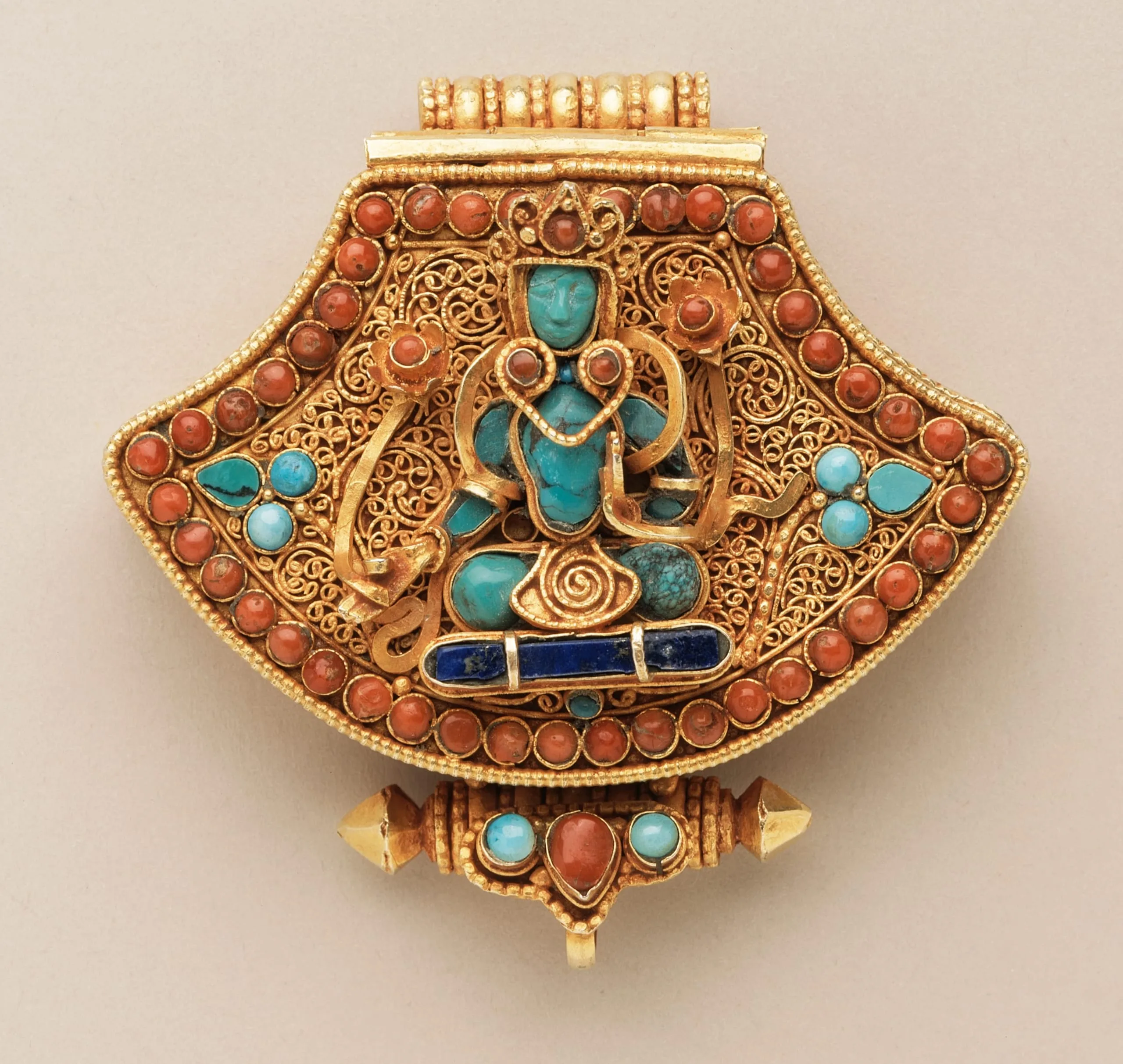
Gold gau reliquary box inlaid with turquoise, coral, and lapis lazuli, with a central multi-armed deity figure in turquoise surrounded by gold filigree scrollwork
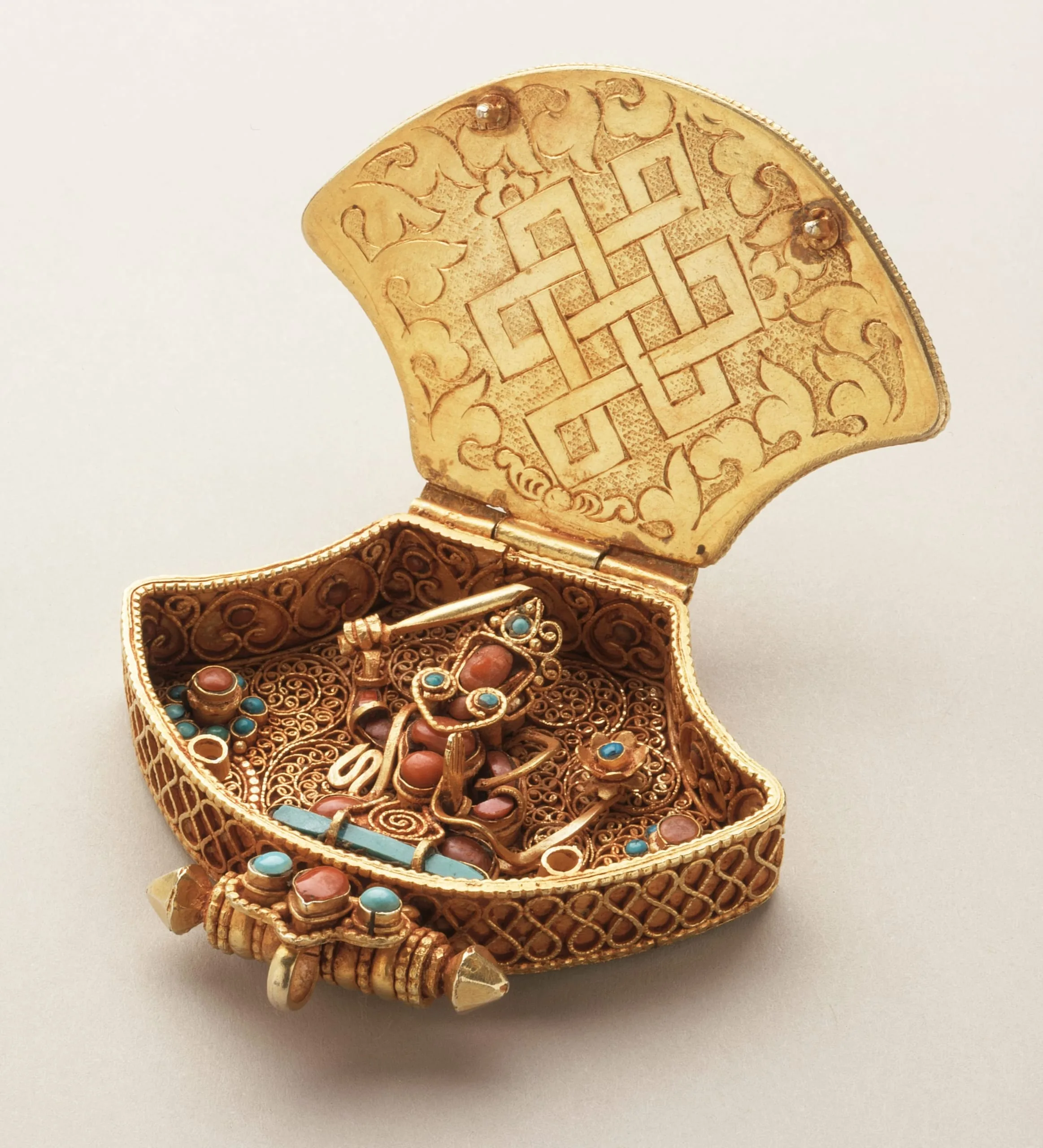
Small gilt metal reliquary box shown open, with a hinged fan-shaped lid engraved with an endless knot pattern and scrolling foliage. Interior features fine filigree work surrounding a seated deity figure inlaid with coral and turquoise cabochons. Exterior has a crosshatch pattern with additional coral and turquoise insets and small conical pendants at the base.
Artist or Maker
Unknown
Title
Amulet Box Pendant with Green Tara and Manjushri
Place Made
Nepal, Kathmandu Valley, Patan
Date Made
circa 1800-1850
Medium
Gilt silver, chased and repoussé, and gilt silver filigree; inset with coral, turquoise, and lapis lazuli
Dimensions
2 7/8 x 2 7/8 x 1 in. (7.3 x 7.3 x 2.54 cm)
Credit Line
Southern Asian Art Council
Accession Number
M.2003.20
Classification
Jewelry and Adornments
Collecting Area
South and Southeast Asian Art
Curatorial Notes

Bejeweled amulets and amulet cases worn by royalty and the wealthy not only serve as bodily ornaments and to display personal wealth, but they can also be visual indicators of political status or a particular cultural, religious, or ethnic identity. Certain amulets or pendants are believed to provide the wearer with prophylactic protection from malevolent forces. Usually made of precious or apotropaic materials, they are often empowered with enclosed sacred verses and/or astrological, numerical, or mystical symbols written on paper (see M.76.2.25).

Here, rather than containing an inscribed sacrament, two revered Buddhist deities are embodied in gemstones. On the cover Green (Shyama) Tara is represented in turquoise with gilt silver and red coral jewelry and lotus attributes. She sits on a throne made of lapis lazuli. She is centered against a flowering tree made of gilt silver filigree and turquoise blossoms. The border is made of red coral and bead molding. In the interior Manjushri is depicted in red coral with gilt silver and turquoise jewelry. His throne is made of turquoise. He is placed against a similar flowering tree. Repeated designs in gilt silver wire scrollwork enrich the exterior and interior edges. The inside of the cover is adorned with an incised Endless Knot, symbolic of the Buddha’s infinite wisdom and compassion, and a vegetal border. The bottom is embellished with a repoussé crossed vajra (vishvavajra). The pendant is suspended by a bead and reel tube.

See numerous comparable amulet pendants in Jane Casey Singer, Gold Jewelry from Tibet and Nepal (New York: Thames and Hudson, 1996); and John Clarke, Jewellery of Tibet and Himalayas (London: V&A Publications, 2004).
Selected Bibliography
  • Xingyun, editor. Encyclopedia of Buddhist Arts. Los Angeles: Buddha's Light Publications USA, 2018.