LACMA

ShopMembershipMyLACMATickets
LACMA
Los Angeles County Museum of Art
5905 Wilshire Blvd.
Los Angeles, CA 90036
info@lacma.org
(323) 857-6000
Sign up to receive emails
Subscribe
© Museum Associates 2026
  • About LACMA
  • Jobs
  • Building LACMA
  • Host An Event
  • Unframed
  • Press
  • FAQs
  • Log in to MyLACMA
  • Privacy Policy
© Museum Associates 2026
Collections

Unidentified artists
Chalice (Cáliz)1575-1578

On view:
Geffen Galleries
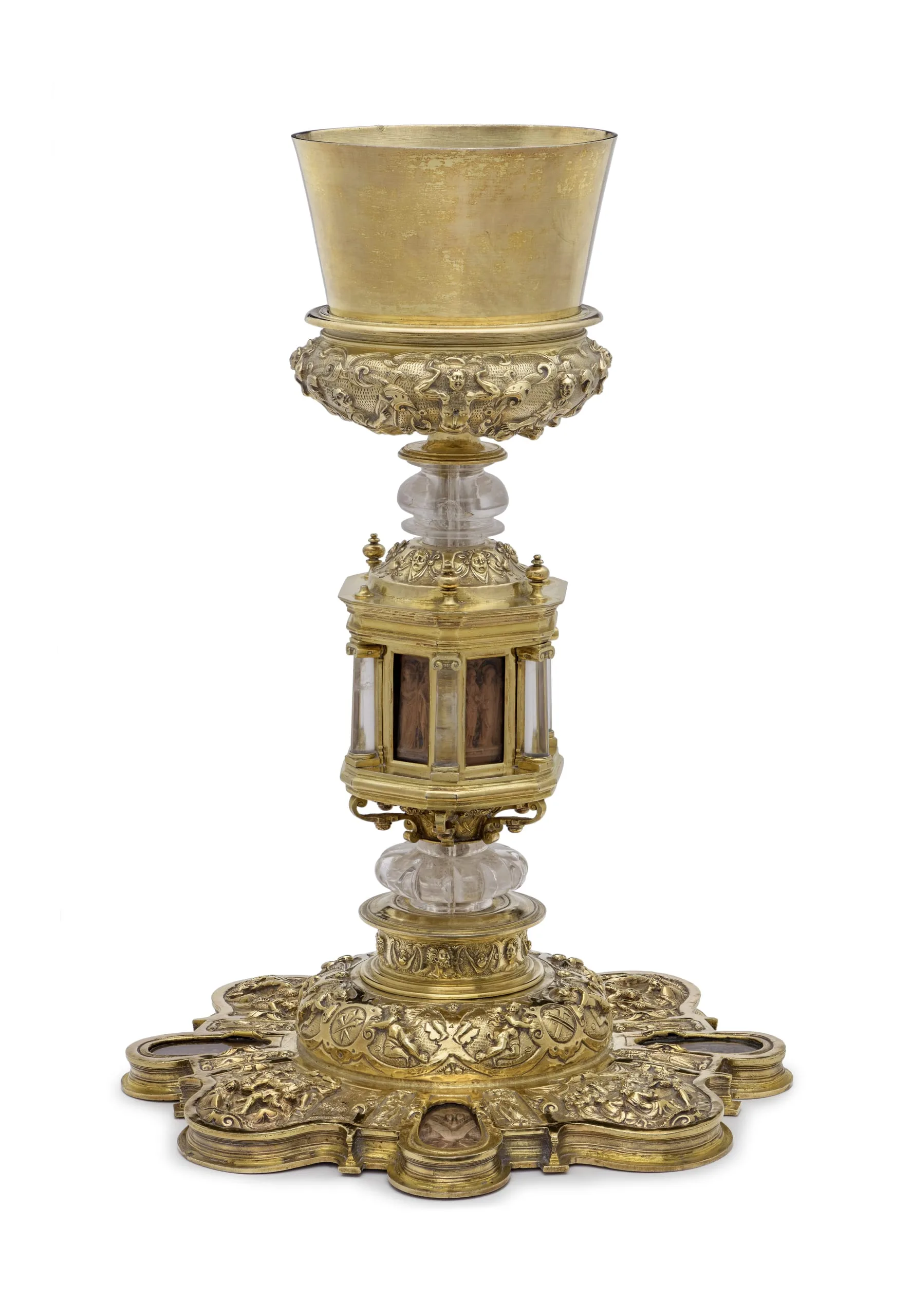
Gilded metal chalice with a smooth cup, relief-carved collar, hexagonal rock crystal and amber-glass stem lantern, and a six-lobed base with embossed figural scenes
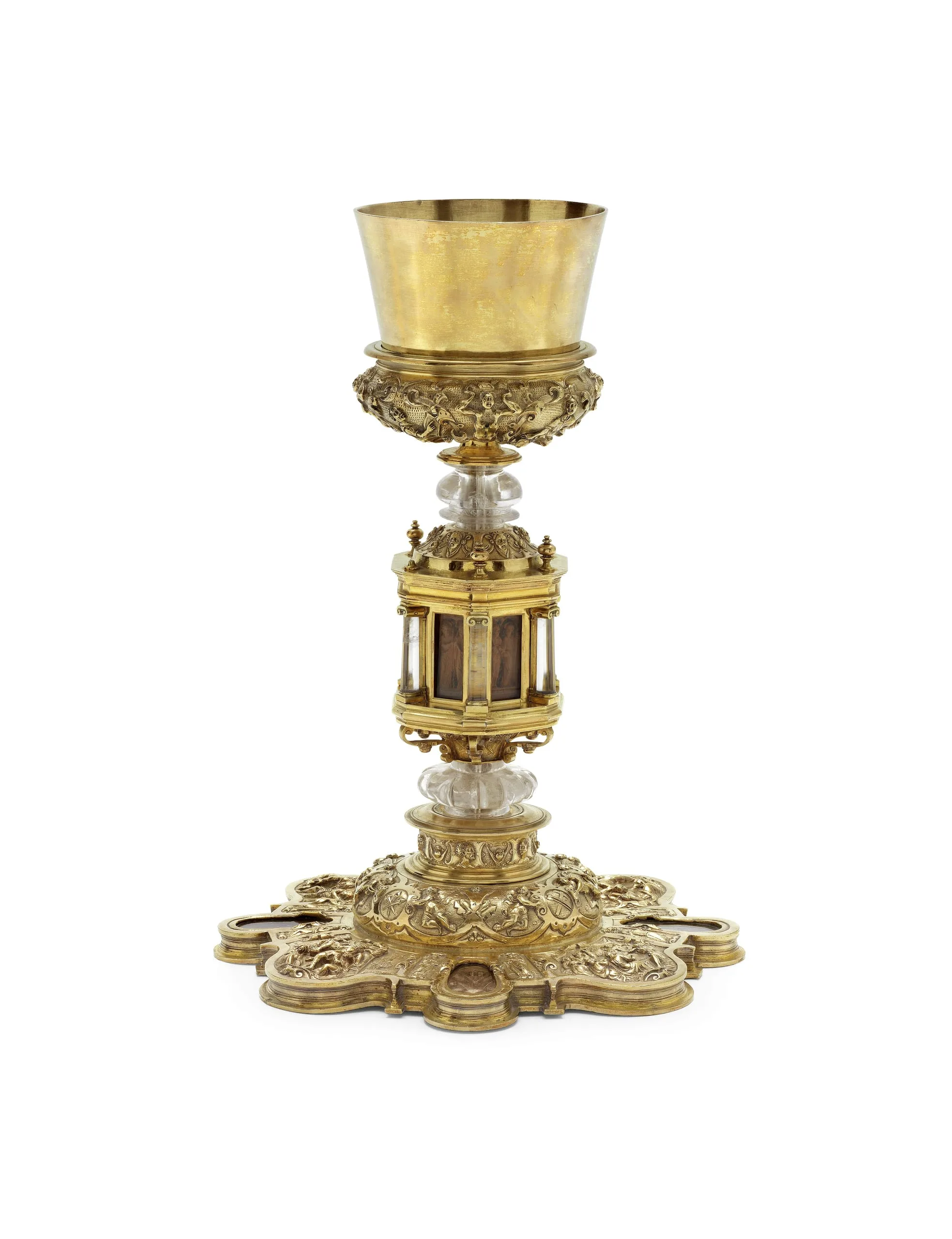
Gilt metal chalice with a wide gilded cup above a band of densely chased figural relief, rock crystal stem sections flanking a hexagonal reliquary node with glazed panels, and a lobed base with repoussé decoration and circular medallions.
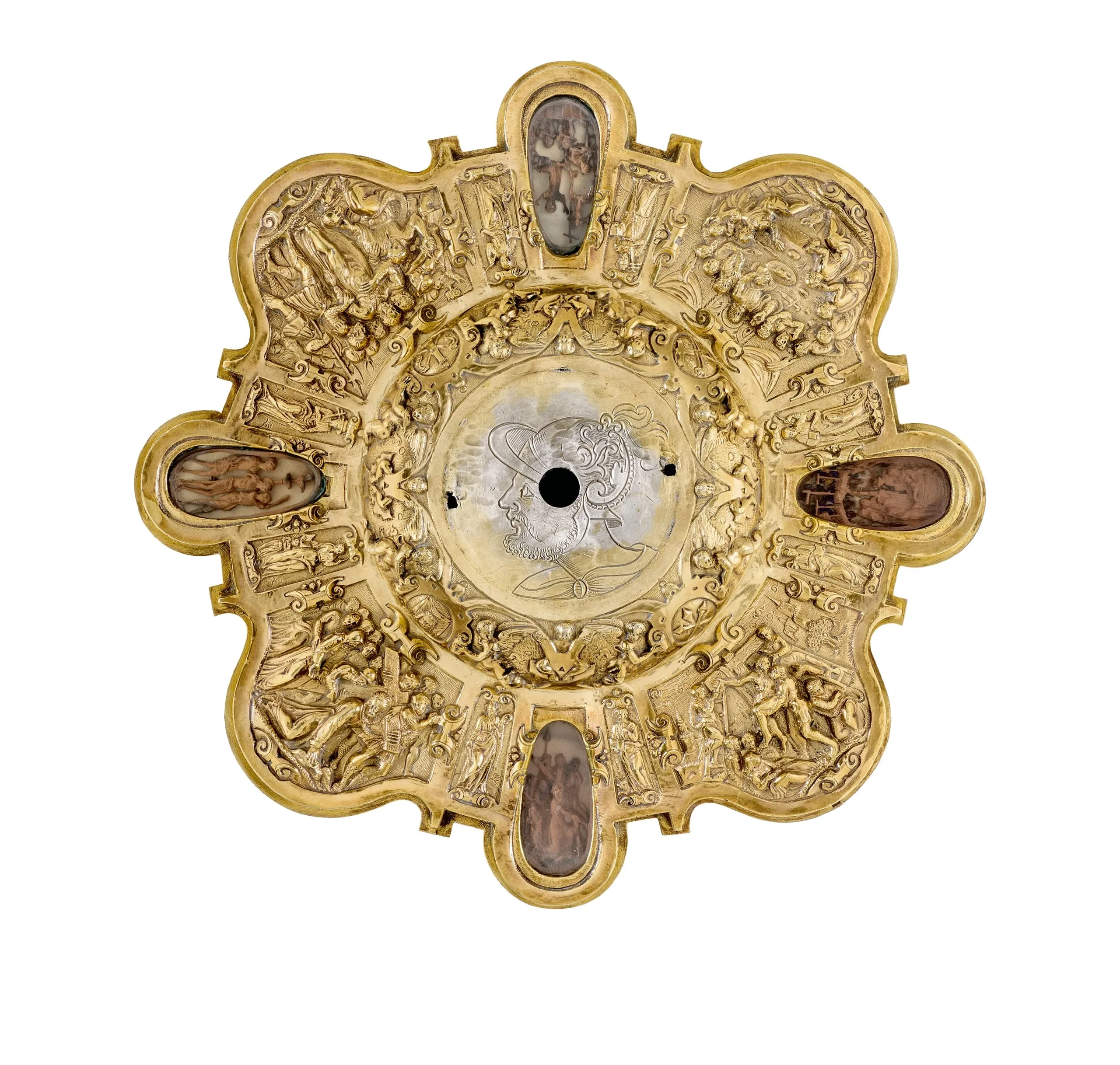
Gilt metal shield or decorative roundel with a scalloped quatrefoil form, densely covered in embossed figural scenes in low relief. A central silver medallion bears an engraved profile portrait bust with a hole at center. Four oval inset plaques alternate around the border—two painted miniatures and two carved stone or shell cameos—set within the radiating ornamental surface.

Unidentified artists, Chalice (Cáliz), 1575-1578, Los Angeles County Museum of Art, William Randolph Hearst Collection, photo © Museum Associates/LACMA

Artist or Maker
Unidentified artists
Title
Chalice (Cáliz)
Place Made
Mexico City
Date Made
1575-1578
Period
Colonial
Medium
Silver gilt, rock crystal, wood, and feathers
Dimensions
Height: 13 in. (33 cm); diameter: 9 in. (22.9 cm)
Credit Line
William Randolph Hearst Collection
Accession Number
48.24.20
Classification
Furnishings
Collecting Area
Decorative Arts and Design
Curatorial Notes

Combining precious metals, feathers, boxwood carvings, and rock crystal, this vessel stands out as one of the most complex works of sixteenth-century Mexican silversmithing. Long used by Indigenous artists and invested with sacred meaning, these materials were redeployed after the Conquest to create Christian objects, demonstrating an important level of local agency.

Chalices were an indispensable part of the Eucharistic ritual, during which the bread and wine are believed to transform into the body and blood of Christ, and great expenditure was often lavished on their creation. The cup is decorated with images of the Four Evangelists, while the hexagonal knop encloses carved wood figures of the twelve apostles set against shimmering feather backgrounds. The foot is decorated with chased medallions with scenes of the Passion, flanked by the four Doctors of the Church and the Four Evangelists. The glass-covered lobes contain additional micro-carvings of the Stations of the Cross. Although mostly deteriorated, the feathers once glistened with ambient light and motion, helping to channel the spirit of the divine.

Ilona Katzew

2024
Provenance
Lionel “Spanish” Harris, Chesterfield Gardens, London, c. 1912–1920s; William Randolph Hearst, c. 1920s; Los Angeles Museum of History, Science, and Art (LACMA’s parent institution), 1948.
Selected Bibliography
  • Los Angeles County Museum of Art. New York: Thames and Hudson, 2003.
  • Levkoff, Mary L., ed. Hearst the collector. Exh. Cat. New York: Abrams and Los Angeles: Los Angeles County Museum of Art, 2008.
  • Rishel, Joseph J., and Suzanne L. Stratton, eds. The Arts in Latin America, 1492-1820. Exh. Cat. Philadelphia: Philadelphia Museum of Art; Mexico City: Antiguo Colegio de San Ildefonso; and Los Angeles: Los Angeles County Museum of Art, 2006.
  • Katzew, Ilona, ed. Archive of the World: Art and Imagination in Spanish America, 1500–1800: Highlights from LACMA’s Collection. Exh. Cat. Los Angeles: Los Angeles County Museum of Art; New York: DelMonico Books/D.A.P., 2022.
  • Katzew, Ilona, and Rachel Kaplan. “‘Like the Flame of Fire’: A New Look at the ‘Hearst’ Chalice.” Latin American and Latinx Visual Culture 3, no. 1 (2021): 4–29.
Selected Exhibition History
  • Contested Visions in the Spanish Colonial World. November 6, 2011 - January 29, 2012
  • Archive of the World: Art and Imagination in Spanish America, 1500–1800. June 12, 2022 - October 30, 2022
  • Archive of the World: Art and Imagination in Spanish America, 1500–1800. October 20, 2023 - January 28, 2024
  • Archive of the World: Art and Imagination in Spanish America, 1500–1800. June 22, 2024 - September 08, 2024

Related Exhibitions