LACMA

ShopMembershipMyLACMATickets
LACMA
Los Angeles County Museum of Art
5905 Wilshire Blvd.
Los Angeles, CA 90036
info@lacma.org
(323) 857-6000
Sign up to receive emails
Subscribe
© Museum Associates 2026
  • About LACMA
  • Jobs
  • Building LACMA
  • Host An Event
  • Unframed
  • Press
  • FAQs
  • Log in to MyLACMA
  • Privacy Policy
© Museum Associates 2026
Collections

Silver dirhamlate 7th century

On view:
Geffen Galleries
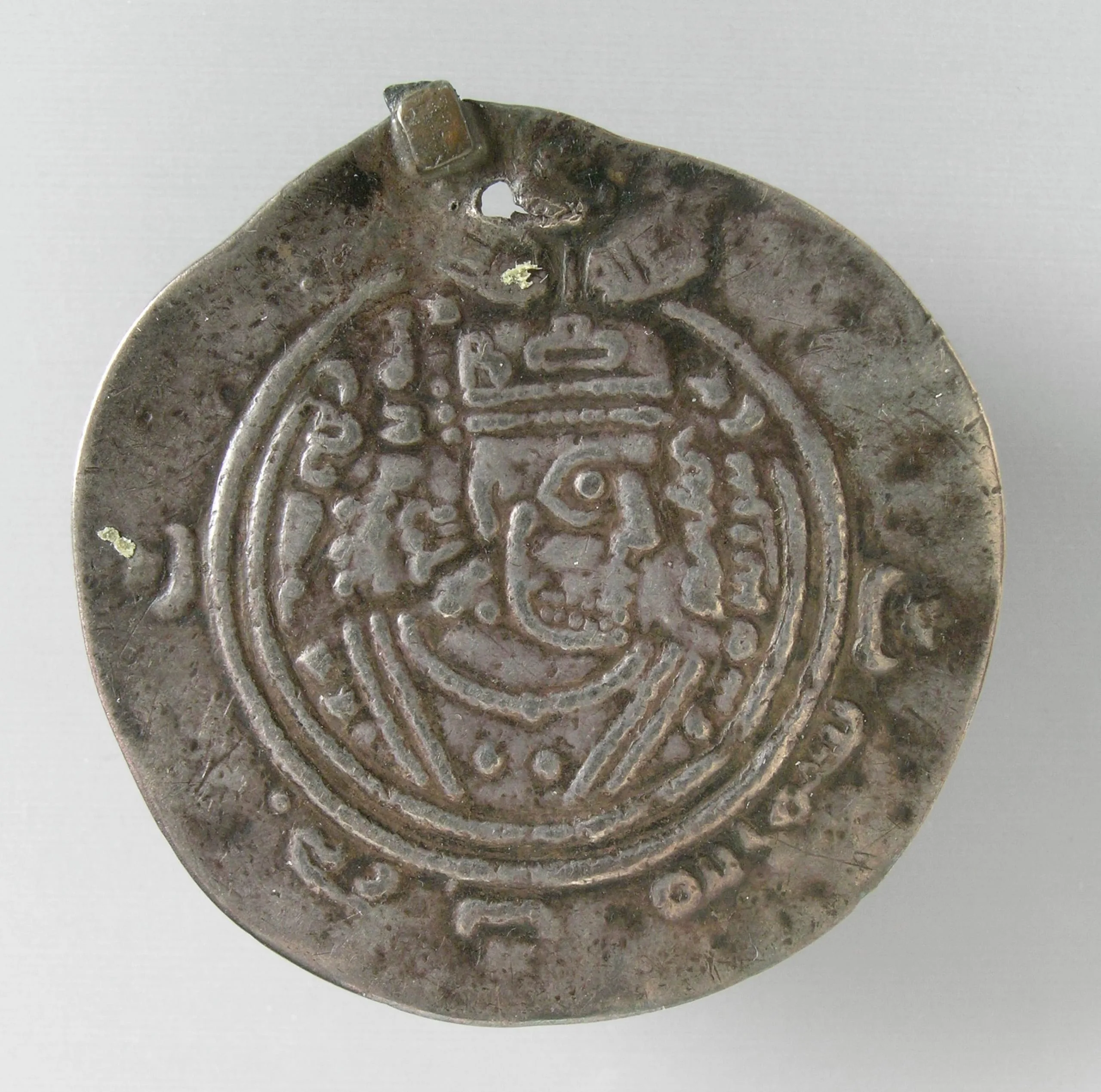
Silver coin-pendant with dark patina, featuring a profile bust in relief wearing a tiered crown, surrounded by bands of cursive script and a suspension loop at top
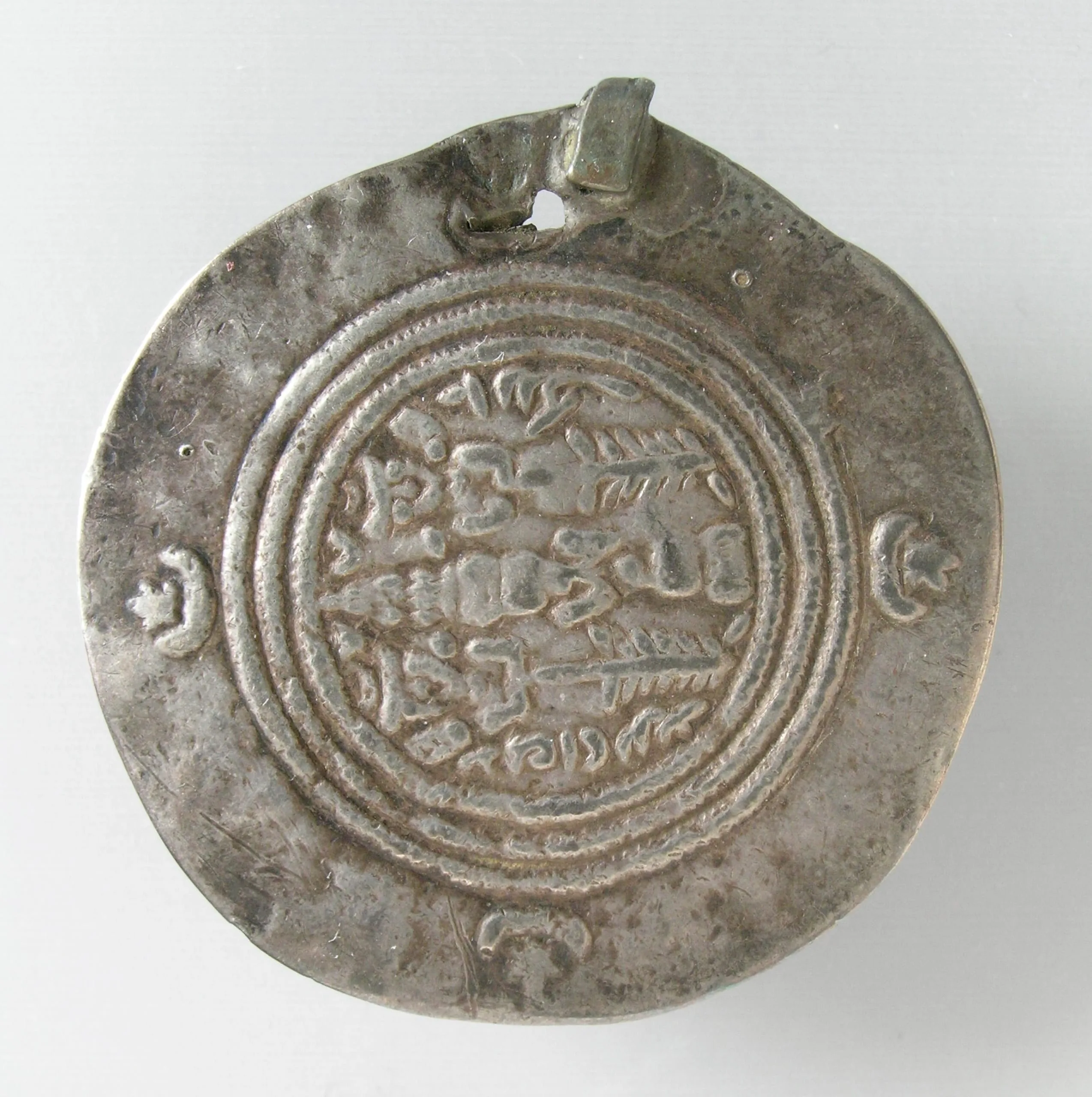
Silver coin pendant with a loop mount at top; central field bears Arabic script in raised relief within concentric circular borders, with small crescent motifs flanking the edges.

Unknown, Silver dirham, late 7th century, Los Angeles County Museum of Art, The Madina Collection of Islamic Art, gift of Camilla Chandler Frost, photo © Museum Associates/LACMA

Title
Silver dirham
Date Made
late 7th century
Period
Umayyad (661-750)
Medium
Silver
Dimensions
Diameter: 1 1/4 in. (3.18 cm)
Credit Line
The Madina Collection of Islamic Art, gift of Camilla Chandler Frost
Accession Number
M.2002.1.426
Classification
Tools and Equipment
Collecting Area
Art of the Middle East: Islamic
Curatorial Notes

Apart from their monetary function, coins in Islamic lands were symbols of the legitimacy, faith, power, and prestige that accrued to the rulers in whose names they were struck. Such gold dinars and silver dirhams were often works of art in their own right, while their inscriptions, designs, and possible archaeological contexts frequently provide key art-historical information. With the advent of Islam, the first Muslim rulers in the former Persian Empire continued to rely upon the coinage of the Sasanian mints, probably to prevent currency shortages and to help maintain confidence in the monetary system. This coin follows the type of silver drachm from the reign of Khusraw II (590−628). As is standard, it depicts a royal bust with characteristic winged crown on the obverse with a Pahlavi inscription at left “may his kingship increase,” and on the reverse a Zoroastrian fire temple with two attendants. It was struck, however, long after the time of Khusraw II, likely using a recut die. Inscribed just outside the margin is bism allah “in the name of God,” attesting that the coin dates to the Islamic era.

2024