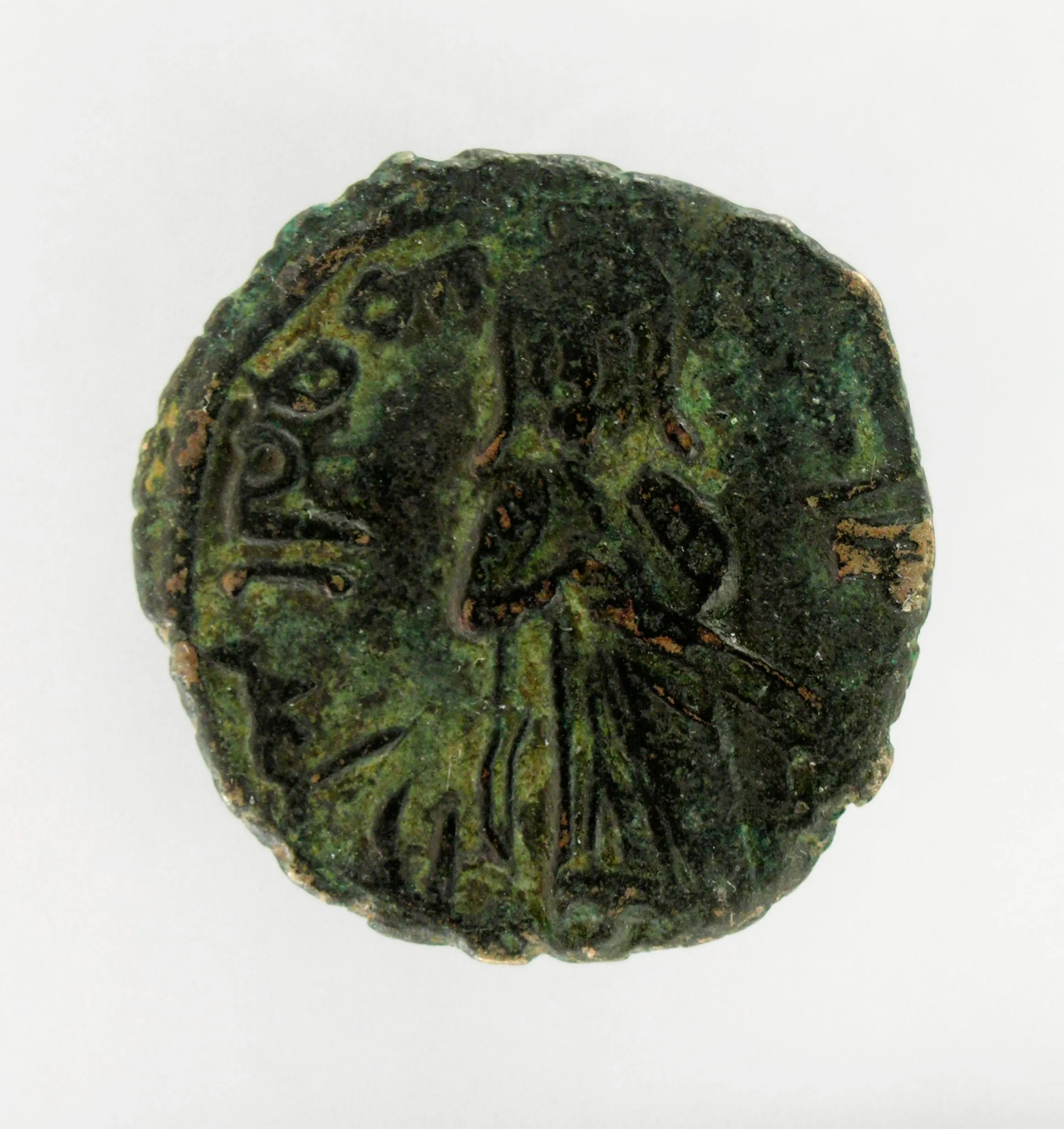
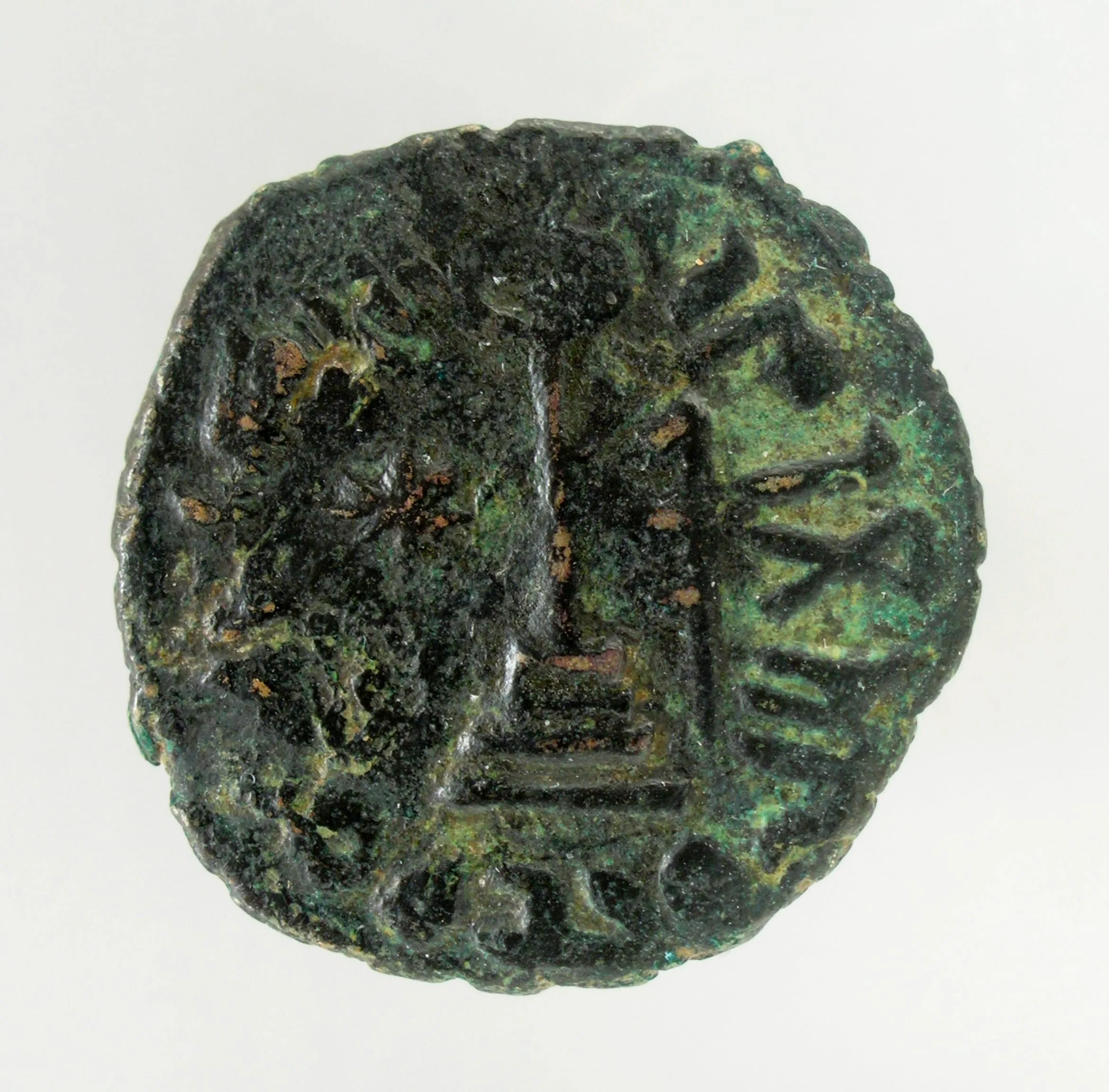
Prior to the 690s and the creation of a universal type of Islamic coinage under the Umayyad caliph ‘Abd al- Malik (r. 685−705) in which the sole markings would consist of writing (see M.2006.143.5), figural imagery briefly predominated. Coins struck in the eastern end of the Umayyad caliphate, in the former territories of the Sasanian Empire, continued to use the image of the Persian king (see M.2002.1.450), while in the west, in the lands lately under Byzantine rule, the coinage incorporated a generic image of the Christian emperor (see M.2002.1.447).
On its face or obverse, this humble fals, which was used for everyday transactions, depicts a bearded figure with a large sword, usually referred to as a “standing caliph.” Comparable to more refined renderings of the same figure on contemporaneous gold dinars, it is likely based on Byzantine coins representing the standing emperor. On the reverse, and modeled on Byzantine numismatic tradition, is a variant of the cross on steps in which the cross element is replaced by an oval form. Arabic inscriptions supply the name of the ruler—‘Abd al-Malik—and the mint where the coin was struck—Aleppo.
2025