LACMA

ShopMembershipMyLACMATickets
LACMA
Los Angeles County Museum of Art
5905 Wilshire Blvd.
Los Angeles, CA 90036
info@lacma.org
(323) 857-6000
Sign up to receive emails
Subscribe
© Museum Associates 2026
  • About LACMA
  • Jobs
  • Building LACMA
  • Host An Event
  • Unframed
  • Press
  • FAQs
  • Log in to MyLACMA
  • Privacy Policy
© Museum Associates 2026
Collections

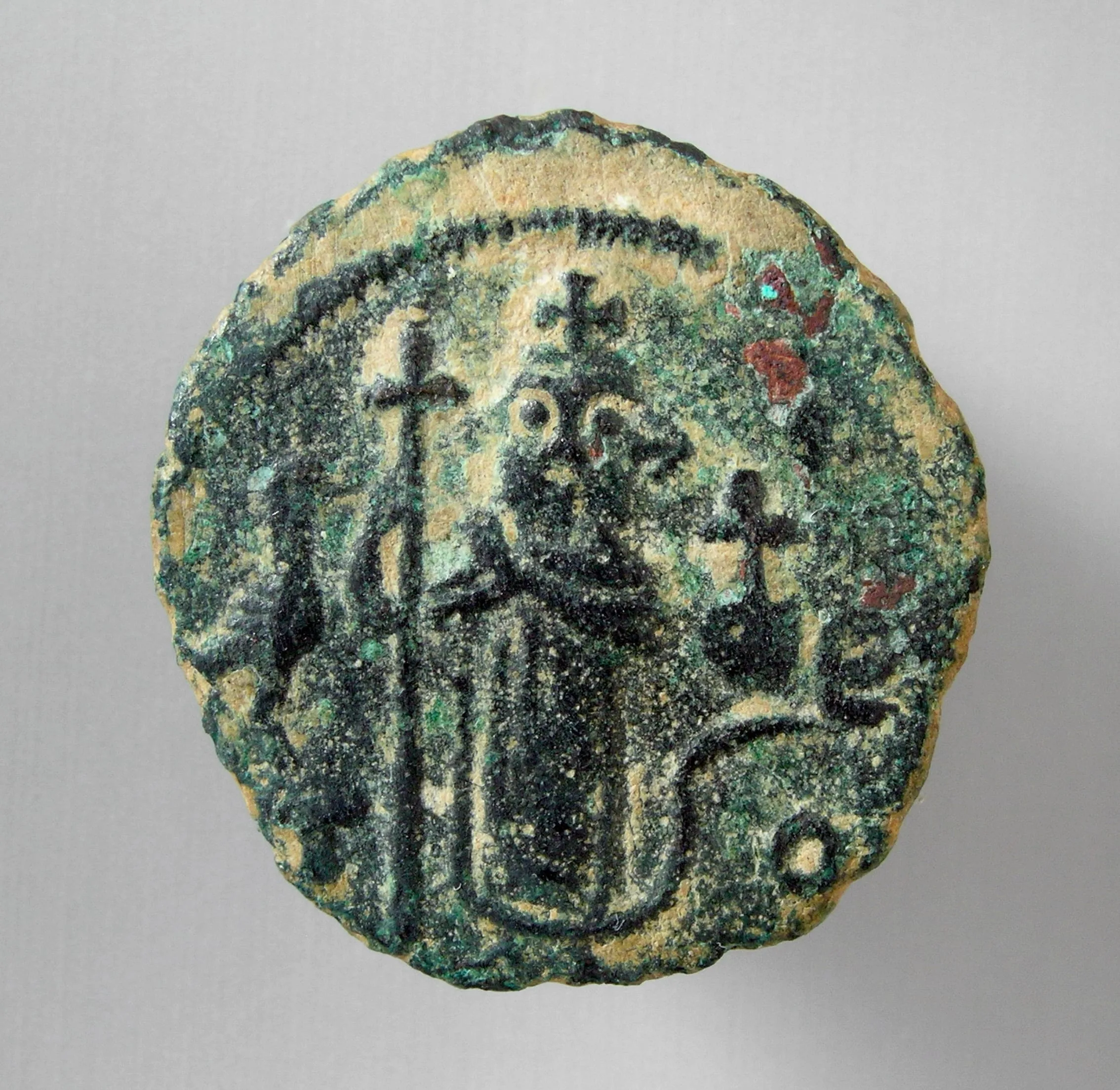
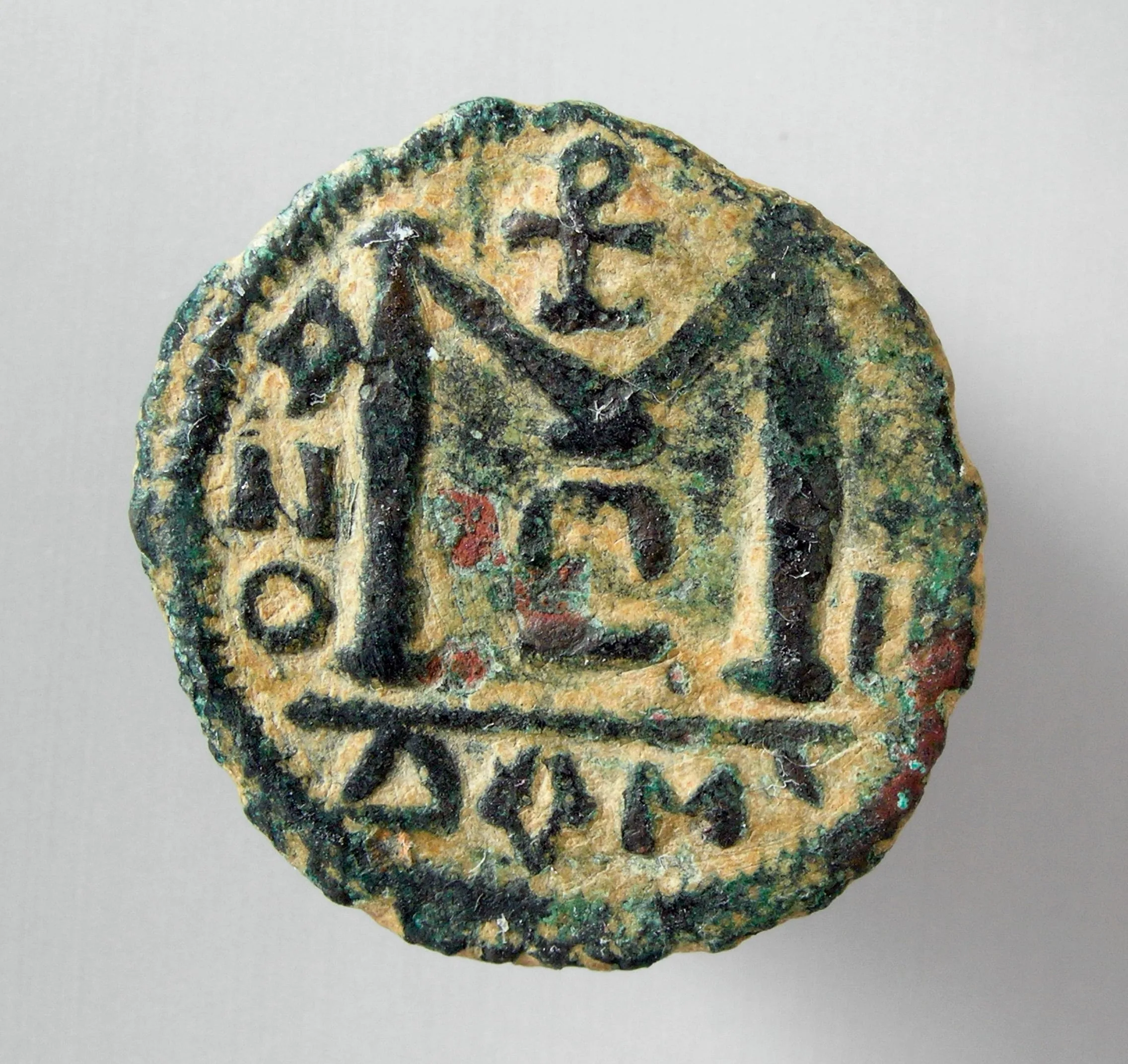
Arab-Byzantine Falscirca 660s-680s

On view:
Geffen Galleries
Ancient bronze coin with heavy green patina, scalloped edge, and low-relief design of a crowned robed figure holding a cross and staff
Byzantine bronze coin with green patina, reverse side showing a large M flanked by standing figures, a cross above, and Latin letters below a horizontal line.

Unknown, Arab-Byzantine Fals, circa 660s-680s, Los Angeles County Museum of Art, The Madina Collection of Islamic Art, gift of Camilla Chandler Frost, photo © Museum Associates/LACMA

Title
Arab-Byzantine Fals
Culture
Umayyad
Place Made
Syria, Damascus
Date Made
circa 660s-680s
Medium
Copper
Dimensions
Diameter: 3/4 in. (1.91 cm)
Credit Line
The Madina Collection of Islamic Art, gift of Camilla Chandler Frost
Accession Number
M.2002.1.447
Classification
Tools and Equipment
Collecting Area
Art of the Middle East: Islamic
Curatorial Notes

Prior to the 690s and the creation of a universal type of Islamic coinage under the Umayyad caliph ‘Abd al-Malik (r. 685−705) in which the sole markings would consist of writing (see M.2006.143.5), figural imagery briefly predominated. Coins struck in the eastern end of the Umayyad caliphate, in the former territories of the Sasanian Empire, continued to use the image of the Persian king (see M.2002.1.450), while in the west, in the lands lately under Byzantine rule, the coinage incorporated a generic image of the Christian emperor, as here.

On its face or obverse, this humble fals, which was used for everyday transactions, depicts an imperial standing figure wearing a diadem with a cross, holding an orb with cross in one hand and in the other a cruciform scepter. On the reverse at center is the Greek letter “M,” indicating the number 40, a denomination mark found primarily on Byzantine copper coins; below is “DAM,” indicating the mint is Damascus. Subsequent figural coinage could be bilingual or exclusively Arabic (see M.2002.1.456).

2025