LACMA

ShopMembershipMyLACMATickets
LACMA
Los Angeles County Museum of Art
5905 Wilshire Blvd.
Los Angeles, CA 90036
info@lacma.org
(323) 857-6000
Sign up to receive emails
Subscribe
© Museum Associates 2025

Museum Hours

Monday

11 am–6 pm

Tuesday

11 am–6 pm

Wednesday

Closed

Thursday

11 am–6 pm

Friday

11 am–8 pm

Saturday

10 am–7 pm

Sunday

10 am–7 pm


  • About LACMA
  • Jobs
  • Building LACMA
  • Host An Event
  • Unframed
  • Press
  • FAQs
  • Log in to MyLACMA
  • Privacy Policy
© Museum Associates 2025
Collections

Unknown
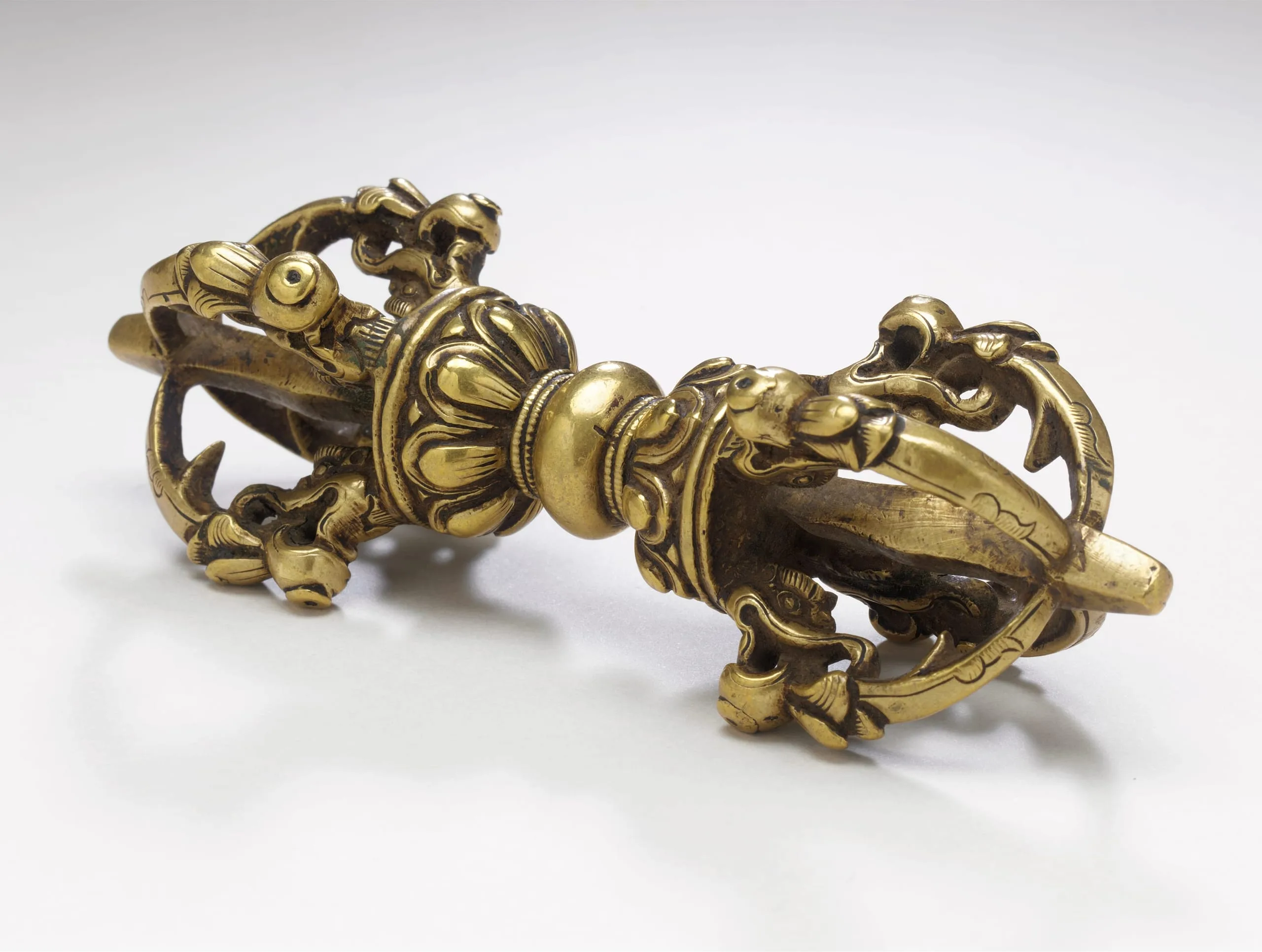
Thunderbolt (Vajra; Tibetan: Dorje)circa 18th century

Not on view
Gilded bronze ritual thunderbolt scepter with symmetrical prong clusters at each end and a lotus-carved central grip, warm amber patina with darkened recesses
Artist or Maker
Unknown
Title
Thunderbolt (Vajra; Tibetan: Dorje)
Place Made
Central Tibet
Date Made
circa 18th century
Medium
Gilt copper alloy
Dimensions
1 7/8 x 5 x 1 7/8 in. (4.77 x 12.7 x 4.77 cm)
Credit Line
Southern Asian Art Council
Accession Number
M.2001.158.1
Classification
Tools and Equipment
Collecting Area
South and Southeast Asian Art
Curatorial Notes

A wide range of ritual objects are used in the myriad Vajrayana Buddhist ceremonies performed to propitiate deities for obtaining boons and mundane blessings, to ensure good weather for agricultural bounty, to exorcise demons and avert calamities, and to overcome negative spiritual forces hindering enlightenment. The sacramental implements include thunderbolts (vajra or dorje), priest’s bells (ghanta), flaying knives, ascetic’s staffs, and mirrors; water ewers and vases, butter lamps, skull cups, conch shells, and other vessels; and musical instruments, especially drums, horns, trumpets, and hand cymbals. Perhaps the two most important ceremonial objects are the thunderbolt and the priest’s bell. The thunderbolt symbolizes the adamantine or unchanging nature of eternity and the male component of compassion. The bell represents the female aspect of wisdom. The pairing of the thunderbolt and bell embodies the enlightened state of compassion and wisdom achieved through the perfect union of the male and female principles.

The thunderbolt’s longitudinal shaft symbolizes the cosmic pillar or axis mundi. The middle has a ring molding abutted by lotus pedestals. The ends are identical but are understood as symbolizing the male and female aspects. Each end has five prongs (four blades issuing from a mythical aquatic monster (makara) and the central axis), which represent the five Jina Buddhas and their respective transcendental insights. See the paired bell (M.2001.158.2).
Selected Bibliography
  • Wang, Michelle C. Mandalas in the Making: The Visual Culture of Esoteric Buddhism at Dunhuang. Leiden; Boston: Brill, 2018.
Selected Exhibition History
  • Ritual Offerings in Tibetan Art. Saturday, September 13, 2014 - Sunday, October 25, 2015
  • Ritual Offerings in Tibetan Art. Saturday, September 13, 2014 - Sunday, October 25, 2015